Jul 192026
 
DPAC Logo with text underneath "Disabled People Against Cuts" and then web address dpac.uk.net
Logos of DPAC Cymru, Voices ADFOCAD, Don't Call Me Special, Social Workers Union, Unite Community Wales, Austerity Action Group, TSSA Wales No.1 Branch, Bakers Food and Allied Workers Union, PCS Cymru, Swansea and district trades council, Cardiff trades council, and the National Shop Stewards Network

A powerful coalition of Welsh disability, carers’, and trade union organisations wrote to the Welsh Government on Tuesday asking ministers to lodge their “strongest possible grievance” with the UK Government over the Timms Review into the PIP disability benefit.

The UK-wide review was announced in parliament late last year, with promises of “co-production” with disabled people, and a pledge of no further cuts until its conclusion. However, Welsh Disabled Peoples’ Organisations are adamant that co-production is not happening, with Welsh disabled people, they claim, treated with particular contempt.

The intervention came in the final week before the Senedd summer recess, after local authorities, including Swansea Council, admitted they have made “no provision” for impending disability cuts in their medium-term budgets.

The groups have asked the new Welsh Government to deliver on its promise of providing practical assistance in achieving a “long standing demand” of “a genuine disability review, led independently and democratically by disabled people and our organisations, including our trade unions.”

The letter was coordinated by Disabled People Against Cuts Cymru (DPAC Cymru). Co-signatories include Disabled Peoples’ Organisations, unpaid Carers’ Organisations, and trade union organisations.

Statements from signatories:

Disabled People Against Cuts Cymru (DPAC Cymru) led several high-profile protests against the disability cuts last year. A spokesperson for the group said they intend to hold the UK Government to the promises they made to parliament:

“The Timms Review was won by protest, but it is not what was promised. We are asking the Welsh Government to join us in setting out a clear expectation that the UK Government may not table further disability cuts while a genuine and independent review takes place in Wales.

“MPs, whatever their views, must also refuse, on principle, to vote for disability cuts for the duration.

“All we’re demanding from Westminster here is a fair fight. Enough with the broken promises, misdirection, and insults.”

VOICES ADFOCAD operates across Wales to promote and advocate for the rights of Unpaid Carers. A spokesperson said:

“Disabled people in Wales have been clear for years: we will not accept reviews that speak about us while shutting us out. The Timms Review has failed to meet even the most basic standards of co‑production, and Welsh disabled people have been treated with disregard throughout the process.

“We are asking Welsh ministers to intervene because our communities deserve a review that is democratic, accountable, and led by disabled people ourselves, not another exercise that reinforces the inequality we are fighting to dismantle.”

Plaid Cymru Anabledd is the disabled members’ section of Plaid Cymru, the party that leads Wales’ new minority government. A spokesperson for the section said:

“The Welsh Government must use every lever it has to demand a genuine, independent review — led by disabled people, our organisations and our trade unions. Anything less is not co-production, it’s a rubber stamp.

“Disabled people were told we would be worked with. Instead we’ve been worked around. That promise the labour Westminster government made has to mean something — or it was never made in good faith.”

Social Workers Union (SWU) General Secretary John McGowan stated:

“Disability benefits are not luxuries. The PIP disability benefit is a crucial support to help disabled people meet the extra costs of disability and long-term ill health and to support their independence. We urge the Welsh Government to join DPAC Cymru in demanding an independent review on PIP cuts which would impact on 275,000 people in Wales.

“No further cuts must be made until a genuinely co-produced disability review has been achieved, and the focus should be on improving the system rather than further restricting access to it. To do otherwise will cause significant hardship for people with physical and mental health conditions – pushing them out of work and into deep poverty – and put further strain on the social care system already stretched to breaking point by chronic underfunding and a staffing crisis.”

Sarah Woolley, General Secretary of the Bakers, Food and Allied Workers’ Union (BFAWU), said:

“Disabled people have the right to dignity, independence and a decent standard of living. If the Timms Review is to have credibility, it must genuinely be led with disabled people, not simply carried out in their name.

“Our members know the reality of low pay, insecure work and rising living costs. Personal Independence Payment helps meet the extra costs of disability, and further cuts would push more people into hardship while placing even greater pressure on public services.

“BFAWU stands in solidarity with Disabled People’s Organisations and supports the call for an independent review, led by disabled people and their organisations, including trade unions. No further disability cuts should be made until that work has been properly completed.”

Mark Evans is the secretary of Swansea and District Trades Council, which brings together affiliated branches and represents the community arm of the trade union movement in the Swansea area. He said:

“Our Trades Council thinks it is deplorable that a Labour Government has not properly and fully consulted Disabled People in compiling the Timms review. Many disabled people are members of trade unions that are affiliated to the Labour Party and many will rightly be considering why their union donates to a party that has attacked disability benefits in the past and given the lack of consultation is likely to do so again. If this is the case we will will be fully supporting disabled trade union members.”

Responding to the Timms Review interim report released last week, a DPAC Cymru spokesperson added:

“The Timms Review is badly dressed in the language of disability activism, but uses none of the methods. About the only thing the interim report gets right is that PIP is not fit for purpose.

“Disabled people, more than anyone, want a better system. The Timms Review will not deliver that because it is not designed to. The review is weaponising our concerns in order to justify cuts in a ‘caring’ way. Meanwhile, the ‘nasty’ arm of the UK Government is demonising us. Caught in that pincer movement, disabled people are a political football.

This has nothing to do with balancing the books. When the last attempt at welfare reform introduced a more punitive benefit system, it too ended up costing more than it saved. The Timms Review is about divide and rule, pure and simple. It is a cynical distraction from falling living standards and a failing economy. Defeating disability cuts is a fight for everyone.”

The letter text

Dear:

Rhun ap Iorwerth, First Minister of Wales
Sioned Williams, Deputy First Minister of Wales

14th July 2026

RE: disability cuts and the Timms Review

The new Welsh Government has made a welcome commitment to delivering a robust and action-oriented Disabled People’s Rights Plan. UK Government disability cuts are a serious risk to that plan, and a crisis in the making.

Concerningly, major Welsh local authorities like Swansea Council already admit they have made “no provision” for disability cuts in their medium-term budgets.

The UK Government was forced to promise in parliament that there would be no further cuts until the conclusion of a review, co-produced with disabled people – the Timms Review. The UK Government has proven itself, many times over, unable and unwilling to keep that promise. Despite its claims, the Timms Review is not delivering co-production, and cuts are continuing.

We are therefore writing to you, as Disabled People’s Organisations, unpaid Carers’ Organisations, and trade union organisations, with two requests:

1. We kindly request that the Welsh Government formally lodge with the UK Government our strongest possible grievance over the delivery of the Timms Review and disability cuts ‘consultation’ process since March 2025. It has been blatant: we have been treated badly because we are disabled people, and we have been treated badly because we are Welsh.

2. We also request the Welsh Government take concrete steps to provide practical assistance in achieving our long standing demand: an independent and genuine disability review, led by disabled people and our organisations including our trade unions, inviting the views of carers and the workers who deliver the services we rely on.

Despite themselves, we intend to hold the UK Government to the promise they made. We hope that you will join us in making clear the expectation that the UK Government may not table further disability cuts while a genuine and independent review takes place in Wales, and that MPs, whatever their views, must also refuse, on principle, to vote for disability cuts for the duration.

Specific points, such as what we suggest by the Welsh Government providing practical assistance, and our specific democratic grievances with the UK Government, are developed in the attached briefing.

Yours sincerely,

Disabled People Against Cuts Cymru (DPAC Cymru)
VOICES ADFOCAD
Don’t Call Me Special
Plaid Cymru Anabledd
Prof. Debbie Foster, Former co-Chair of the Welsh Government’s Disability Rights Taskforce.
Gemma Southgate, TSSA Wales & Western Executive Committee Member
Siân Boyles, PCS National officer for Wales
Mark Evans, Secretary, Swansea and District Trades Council
Cardiff Trades Council
TSSA Wales No.1 Branch
PCS Wales
PCS Proud
Unite Community Wales
Unite Community, Cardiff & Area
Social Workers Union (SWU)
Austerity Action Group (AAG)
Bakers Food and Allied Workers Union (BFAWU)
National Shop Stewards Network (NSSN)

The letter to the Welsh Government and attached briefing is available here

For press enquires contact dpac.cymru+press@gmail.com

Dec 112025
 
DPAC Logo with text underneath "Disabled People Against Cuts" and then web address dpac.uk.net

Contents

McFadden brags about cutting disability benefits, just as his own strategy warns of ‘deep material poverty’ 1

Minister misleads MPs as mystery deepens over new £2 billion cuts to disability benefits 3

Duty to disabled passengers in railways bill is ‘too vague’ and must be strengthened, MPs are told 5

Peers urged to ‘err on the side of caution’ and raise minimum age limit in assisted suicide bill 7

Scottish and UK governments are failing to uphold disability rights, says watchdog 9

Thousands of disabled people in one county should benefit from care charging legal case victory 11

Other disability-related stories covered by mainstream media this week 14


McFadden brags about cutting disability benefits, just as his own strategy warns of ‘deep material poverty’

The work and pensions secretary has bragged about cutting disabled people’s support, three days after launching a child poverty strategy which warned that more than a million children in families where someone was disabled were living in “deep material poverty”.

Pat McFadden told the BBC’s Laura Kuenssberg on Sunday that his government had halved the health element for new claimants of universal credit because “under the Tory system we inherited, people got double the money for declaring themselves unfit for work”.

And he said he did not rule out further cuts to benefits.

But his comments on Sunday morning came three days after his Department for Work and Pensions (DWP), alongside the Department for Education and the prime minister, had launched Labour’s new Child Poverty Strategy.

The strategy’s evidence pack states that “single parent families and families where someone has a disability (are) particularly overrepresented in deep material poverty”.

In 2023-24, according to the strategy, there were 1.3 million children in a family where someone is disabled (22 per cent of those children) who were in “deep material poverty”.

The evidence pack points to disabled people’s “high additional living expenses such as transport, home adaptations, or specialist equipment”, while “caring responsibilities or accessibility issues can mean that it is difficult or not possible to find work that suits [those families’] requirements”.

The report itself says that “deep material poverty is especially pronounced for children in single parent families and children in families with disability”.

And it adds: “There are parents who may not be able to work, for example due to severe disability, or who fall on difficult times outside of their control.

“It is not right that we have a system where children are penalised through no fault of their own.”

Three days later, McFadden boasted to Kuenssberg about doing exactly that by slashing the health element of universal credit for most new claimants by about £50 a week from next April.

Announcing the Child Poverty Strategy, the government said it would lift about 550,000 children out of poverty by 2030 and tackle the “root causes of poverty by cutting the cost of essentials, boosting family incomes, and improving local services”.

Measures include making it easier for new parents who receive universal credit to return to work by extending eligibility for upfront childcare costs to those returning from parental leave; ending the unlawful placement of families in bed and breakfasts beyond the six-week limit; introducing a new legal duty for councils to notify schools, health visitors, and GPs when a child is placed in temporary accommodation; and taking measures to help families buy more affordable infant formula.

The government had already announced at last month’s budget that it was removing the universal credit two-child limit that was imposed by the last government in 2017.

Asked by Disability News Service (DNS) to respond to McFadden’s comments, and to say whether he would apologise for his misleading statement about claimants “declaring themselves unfit for work” – when there is a lengthy and harsh “fitness for work” assessment process – a government spokesperson said: “We are reforming the broken system we inherited by tackling perverse incentives around sickness claims, increasing face-to-face assessments, and investing £1 billion to help sick and disabled people into good, secure jobs.

“We want a welfare state that supports those who need it while helping people into work and delivering fairness to the taxpayer.

“That’s why we’ve launched the Timms Review to make PIP fair and fit for the future, while Alan Milburn’s investigation into young people and inactivity will help us tackle the key barriers behind youth unemployment.

“Thanks to our decision to scrap the two-child limit and introduce a wider package of measures for families we will lift 550,000 children out of poverty by the end of this parliament.”

This week, McFadden also released a written statement updating MPs on his department’s plans to improve its record on safeguarding benefit claimants.

It details a series of actions taken since a report on “safeguarding vulnerable claimants” was published by the Commons work and pensions committee in May.

Much of the statement had already been included in a letter he wrote to the committee on 18 November, on which he was questioned by the committee the following day.

McFadden admitted in this week’s statement that an assessment of DWP’s safeguarding approach had found “some good practice, but also variation in awareness, skills, and accountability”.

He said the first year of a new five-year DWP strategy would focus on “raising staff awareness of safeguarding responsibilities, building capability through training, and strengthening relationships with local authorities, health services, and voluntary organisations”.

He will publish a DWP safeguarding policy framework next year, setting out the department’s “comprehensive approach”.

McFadden said DWP “remains open to adopting a statutory duty” to safeguard claimants, one of the key recommendations in the committee’s report.

But there was no mention in his statement of the committee’s call for a new independent body to investigate cases where claimants have been seriously harmed by DWP’s actions.

DNS has previously shown how senior civil servants and ministers spent more than a decade covering up evidence that linked DWP’s actions with hundreds, and probably thousands, of deaths of disabled people who relied on the social security system*.

Documents secured through freedom of information requests, inquest reports, and investigations by bereaved family members show how DWP destroyed incriminating records, failed to share crucial evidence with its own independent reviewers and grieving relatives, and even lied to a coroner.

*The Department: How a Violent Government Bureaucracy Killed Hundreds and Hid the Evidence, DNS editor John Pring’s book on the years of deaths linked to DWP’s actions and failings, is published by Pluto Press

11 December 2025


Minister misleads MPs as mystery deepens over new £2 billion cuts to disability benefits

The disability minister has refused to apologise after misleading MPs about concerns over nearly £2 billion in new cuts to disability benefits.

The Department for Work and Pensions (DWP) has added to these transparency concerns by itself providing misleading information about the cuts, and again refusing to clarify how many disabled claimants will be affected, and how much they will lose.

Two weeks on from the budget, it is still unclear how DWP and its ministers intend to cut £85 million next year, £310 million in 2027-28, £520 million in 2028-29, £580 million in 2029-30 and £455 million in 2030-31, from spending on disability benefits.

Treasury documents, published on the day of the budget, show the cuts are connected with increasing DWP’s “capacity” to carry out reassessments of claimants through the work capability assessment (WCA), increasing the number of face-to-face benefit assessments, and “extending Personal Independence Payment [PIP] award reviews periods”.

The budget costings document says these changes will “ensure people receive the right health or disability benefit and the system is sustainable”.

But it is unclear from budget documents exactly how these changes will cut spending on disability benefits, and how any cuts will be split between disabled claimants of PIP and universal credit.

Last week, Disability News Service (DNS) reported the government’s refusal to explain how it will cut spending through these measures, despite repeated requests for clarity.

Following the DNS story, the Liberal Democrat work and pensions spokesperson, Steve Darling, asked in Commons work and pensions questions for an explanation of how disabled people would be impacted by the cuts, which he said had been “quietly sneaked into the budget the other week”.

DNS has been seeking clarification on the cuts from DWP and the Treasury since 26 November, the day of the budget.

And on 1 December, DNS copied in Sir Stephen Timms – the minister for social security and disability – to an email to DWP’s press office, highlighting concerns that he was breaching the post-election pledge he made 14 months ago to improve transparency within DWP.

The email asked for an explanation of how the £1.95 billion in cuts would be achieved.

But responding in parliament on Monday (8 December) to Darling’s question about the DNS report, Sir Stephen told him: “I do not know what the honourable gentleman is referring to.

“I will happily look into the report he has spoken of.”

When DNS then asked if Sir Stephen would apologise for misleading Darling and fellow MPs, the DWP press office itself produced a misleading statement.

It said: “The £1.9 billion in welfare savings were announced by the chancellor at the budget and set out in full in the budget document.

“This will be delivered through measures such as tightening eligibility for overseas pension accrual, reforming Motability, and reducing duplication in benefit administration.”

This is not correct.

The budget costings document makes no mention of the Motability tax changes or pensions in its brief section on the £1.95 billion cuts to “health and disability benefits”.

Instead, the document refers to “operational improvements to health assessments”, including the WCA, “changing the frequency of Personal Independence Payment (PIP) award reviews”, and plans to “increase the number of face-to-face health assessments conducted across both PIP and the WCA”.

Asked why it had provided further misleading information on top of Sir Stephen’s misleading answer to Darling, DWP had not responded by 11.30am today (Thursday).

Meanwhile, Liberal Democrat MP John Milne asked Sir Stephen on Monday if he agreed that the widely-ridiculed claim by Tory shadow work and pensions secretary Helen Whately that “millions are getting benefits for anxiety or ADHD along with a free Motability car” was “clearly nonsense” and “one of the least accurate claims ever made by a politician”.

Sir Stephen said he agreed, although he said that “choosing the most misleading claim is a tough contest”.

Another minister was asked by Liberal Democrat MP Caroline Voaden why one of her constituents in South Devon had spent “nearly two weeks calling the DWP every day to find out why his employment and support allowance had been stopped without warning”, but “each time he called, he waited for over an hour, only for the line to be cut off with no reply”.

DWP minister Andrew Western said such service was “unacceptable” and he promised to “look into it on her behalf”.

The SNP’s Chris Law asked Sir Stephen what action he was taking after nearly 1,000 new and existing claimants had a work capability assessment cancelled by private sector contractor Maximus since 9 September 2024.

He said a whistleblower had told him cancellations were “a regular occurrence, largely because of IT services provided by the DWP”, with one of his Dundee constituents having their WCA cancelled five times.

Sir Stephen said he would be “happy to look into the details”.

11 December 2025


Duty to disabled passengers in railways bill is ‘too vague’ and must be strengthened, MPs are told

A statutory duty in the new railways bill to ensure ministers and public bodies promote the needs of disabled passengers is “too vague” and must be strengthened as the legislation passes through parliament, MPs were told yesterday (Wednesday).

The transport select committee was hearing evidence from experts a day after the government’s railways bill passed its second reading in the House of Commons.

Emma Vogelmann, co-chief executive of the disabled people’s organisation Transport for All (TfA), welcomed the inclusion in the bill of a statutory duty that will force those in charge of the railways to take account of “the needs of disabled persons”.

Labour had previously dropped plans to ensure there was a statutory duty on accessibility in the bill.

But Vogelmann told MPs on the committee that the duty’s wording was “very vague” and “too unenforceable” and “doesn’t guarantee improvements for disabled passengers”, despite the “desperate change that is needed in terms of accessibility”.

She said TfA wanted the bill strengthened so there was a duty to “actively and continuously improve accessibility across the rail network” and ensure there are “measurable outcomes” that show what progress is being made every year.

The bill currently says that ministers, Great British Railways (GBR) and the Office of Rail and Road will have a duty to carry out their roles – alongside other statutory duties – in “the manner best calculated to promote the interests of users and potential users of railway passenger services including, in particular, the needs of disabled persons”.

But Vogelmann told the MPs the legislation should be strengthened to “make sure that accessibility is enforceable and that it is an over-riding, consistent priority for Great British Railways as opposed to at the moment where we feel it is potentially not given enough enforcement power and it is subject to political will in some instances”.

She said the current wording of the duty was “almost purposefully vague”, which risked perpetuating the “tick box” culture and lack of meaningful action on accessibility across the rail system.

She added: “The lack of enforceable standards, the lack of enforceable actions, is really why disabled people feel excluded from the rail network at the moment and why many of us face so many barriers.”

The previous day, a string of MPs had highlighted the need for meaningful improvements to accessibility on the railways, during the bill’s second reading.

The bill will create GBR, a new publicly-owned company that will bring together management of passenger services and rail infrastructure.

The government also plans to use the bill to introduce a stronger passenger watchdog and to simplify fares and tickets.

Transport secretary Heidi Alexander told MPs the bill would “sweep away the fragmentation and dysfunction that have plagued the railway for too long and will bring the 17 organisations involved in running the railway together into one public body, Great British Railways, which is the directing mind that this industry has long called for”.

Many MPs in the debate called for improvements to the government’s Access for All programme, which funds access improvements at rail stations.

Conservative MP Mark Pritchard said “more needs to be done on step-free access” because there was “currently very little in the bill that suggests that more will be done, particularly for rural stations such as Cosford, Shifnal or Albrighton in Shropshire.

“If it cannot be done at every station, and there is no money for that, there at least needs to be step-free access and improved disability access somewhere along inter-county railway lines.”

Adam Dance, the Liberal Democrat MP for Yeovil, said: “Too many rural railway stations are not accessible for disabled people.

“Without support staff, constituents in Yeovil have had serious accidents at railway stations.

“Although the government’s accessibility priorities, which we are debating today, are welcome, does my honourable friend agree that we need a strengthened Access for All programme?”

Keir Mather, a junior transport minister, told MPs he had “heard the calls from colleagues across the house about the importance of the Access for All scheme”, and that the government was continuing to fund the scheme.

Disability News Service reported last month that the government’s new “roadmap to an accessible railway” – covering England, Scotland and Wales – appeared to suggest a reduction in real spending on the Access for All programme, with the roadmap promising a future commitment to only spend “up to” £70 million a year.

Conservative and Liberal Democrat MPs voted against the bill receiving a second reading, but it was easily passed by 329 votes in favour to 173 votes against.

11 December 2025


Peers urged to ‘err on the side of caution’ and raise minimum age limit in assisted suicide bill

Peers have been urged to “err on the side of caution” and raise the minimum age limit for an assisted death from 18 to 25, as part of a controversial bill that aims to legalise the practice.

As the House of Lords again debated some of the hundreds of amendments proposed to the terminally ill adults (end of life) bill, peers were told that a minimum age of 18 was “contrary to the mounting evidence of when the brain is fully formed”.

Labour peer Baroness [Luciana] Berger told fellow peers last Friday (5 December) that social media had become “a powerful driver of harm” and that research showed young people in vulnerable situations were “disproportionately exposed to posts that glamorise suicide or present suicidal thoughts as normal, appealing or even fashionable”.

She said she was “haunted” by the words of a young disabled woman who had said in evidence at an earlier stage of the bill: “I’m in care. I’ve got disabilities. The government will pay for me to die under this bill, but it won’t pay for me to live.”

Baroness Berger reminded peers that the children’s commissioner, Dame Rachel de Souza, had said she would “far rather that we erred on the side of caution, protecting those who have had terrible lives, terrible experiences, have been abused, have had their families turn them out, protecting those [with] extreme mental illness, protecting those with special educational needs and disabilities, protecting anorexic children who are heading into adulthood”.

Baroness Berger said: “I am clear that we must continue to say to children and young people: ‘Yes, your life matters. Even if it will be a short life, it matters.’”

Labour peer Lord Falconer, who is sponsoring the bill in the Lords, said he believed 18 was still the right age, but that “maybe the answer is some assurance that there is a more intense assessment for people aged between 18 and 25”.

The issue is likely to be debated again at the bill’s report stage.

Meanwhile, the disabled Conservative peer Lord [Kevin] Shinkwin warned of a further attempt to “weaken” the bill’s protections after Lord Falconer proposed an amendment that would affect the adjustments that must be made for those with language and literacy barriers, including people with learning difficulties.

The bill currently states that doctors assessing someone for an assisted suicide “must first ensure the provision of adjustments for language and literacy barriers”.

But Lord Falconer suggested in his amendment that doctors should instead “take all reasonable steps to ensure… effective communication”.

Lord Shinkwin said he failed to see how the change would “do anything other than weaken this bill” and would “fundamentally weaken one of the bill’s safeguards, such as they are”.

He said the bill “makes a mockery” of the Labour party’s “fine, noble and honourable tradition” of “advancing disability rights”.

He said: “It shreds a tradition that deserves to be preserved, not sacrificed in such a profoundly cynical and misleading way as to make out, as the amendment does, that this is somehow only a drafting change.

“There is a reason why not one organisation of or for disabled people supports the bill; they know that disabled people need the bill like a hole in the head.

“I marvel that the noble and learned lord does not seem to realise that the bill is dangerous enough already without the removal of provisions that would at least acknowledge the obligation to first ensure that communication adjustments were made; for example, for people with learning disabilities or users of British Sign Language.”

There was also criticism of Lord Falconer’s proposed amendment by Baroness [Nuala] O’Loan, the human rights expert and former police ombudsman for Northern Ireland, who said his amendment would introduce “a far less specific test, and consideration must be given to setting standards for the level of communication which is required”.

She asked Lord Falconer whether his amendment would “inadvertently disadvantage those with specific learning difficulties and similar vulnerable groups”.

Lord Falconer insisted that the amendment was “not a watering down at all” but he said he would discuss Lord Shinkwin’s concerns with him before the next stage of the bill, although “at the moment, it looks to me to offer just as good, if not better, protection”.

Peers have now dealt with only six groups of amendments, out of the – currently – 84 they will need to get through to move onto the next stage of the bill in the Lords, with further debate planned tomorrow (Friday).

The Hansard Society said this week that if the Lords continued at its current pace it would “far fall short of what is needed to complete the remaining groups in time”, with parliament’s current session due to end in the spring, probably in May.

11 December 2025


Scottish and UK governments are failing to uphold disability rights, says watchdog

The Scottish and UK governments are both failing to uphold the rights of disabled people in key areas, according to an annual report by Scotland’s human rights watchdog.

Two of the 10 areas of “urgent concern” highlighted by the Scottish Human Rights Commission in its State of the Nation 2025 report focus on continued breaches of disabled people’s rights.

The report – presented this week to the Scottish parliament – says the support for people with learning difficulties and autistic people to live in their own homes is “inadequate”, with many forced to live in accommodation that is “institutional, inappropriate, and not in the area that they would call home”.

The Scottish government has failed to put in place the necessary community-based support to deliver the right to independent living, it says.

It also points to the lack of “transparency and monitoring” to ensure action in this area meets human rights requirements.

The report also warns that disability benefits fail to provide a “decent standard of living” and are at risk of being cut, even though disabled people are more likely to live in poverty than people living in households where no-one is disabled.

Disabled people and disabled people’s organisations told the commission last year that social security payments that are meant to cover additional disability-related costs for daily living “are in fact being used to cover basic household expenses such as food”.

Disabled people are “going without enough income to meet costs” and facing rising debt, and are often unable to pay for fuel, including the cost of charging their medical equipment.

The report adds: “Despite these impossible choices, UK politicians have been actively considering further cuts and changes to disability support.”

And, it says, some of the proposed policy choices “actively undermine the rights of disabled people”.

It particularly highlights the £50-a-week cut to the health element of universal credit for most new claimants, from next April, which is happening at a time when disabled people “are struggling to make ends meet”.

The cut, it says, “is particularly inconsistent” with the UK government’s obligation to realise rights progressively under the UN International Covenant on Economic, Social and Cultural Rights.

Despite the UK government failing to rule out future cuts to spending on personal independence payment (PIP), the Scottish government – which is now responsible for its own version of the extra costs benefit, adult disability payment (ADP) – has “indicated that it does not intend to change ADP to reduce spending”, the report says.

But it says that the Scottish government has still not demonstrated that it has taken a human rights approach to budgeting “that both aims to ensure there is no worsening of disability-related poverty” and, where there is such poverty, to reduce it.

It adds: “Devolution is no excuse for failing to respect, protect and fulfil human rights.”

Derek, a disabled person interviewed for the report, says: “It feels like a lot of the human rights are being chipped away.

“We keep working away to make sure disabled people’s voices are being heard, but sometimes it can be disheartening, and I feel like I don’t have the energy.”

He has been supported by Glasgow Disability Alliance, and he told the commission: “My confidence came, not as an individual but from being involved in and as an ally to a movement.

“The barriers affect so many areas of life. It took me 20 years of fighting my local housing authority to get information in an accessible format, never mind accessible housing.”

Among the report’s calls for action from the Scottish government, it says the necessary housing and social care support must be in place to ensure a right to independent living.

And it says ADP and “other forms of social security and financial support to cover the costs of disability” must “meet those specific needs”, in line with the UN Convention on the Rights of Persons with Disabilities.

Other areas of concern highlighted by the report include healthcare provision; the housing crisis that is denying people across Scotland access to “safe, affordable and adequate housing”; high levels of food insecurity and unaffordability; and changes to the UK social security system that “disadvantage the most marginalised people and families”.

Professor Angela O’Hagan, chair of the Scottish Human Rights Commission, said: “People are struggling to heat their homes, feed their families, or access basic services, and this is fuelling real frustration and tension across our communities.

“At times like these, human rights matter more than ever. They provide the framework that requires public bodies to act fairly, protect people’s dignity, and direct resources to those who need them most.

“The most effective way to rebuild trust and reduce anger is to make these rights a lived reality for everyone.”

She added: “This report is a clear call to action.

“We urge the Scottish parliament and all public bodies to use its findings to make better decisions about legislation, budgeting and service delivery.

“Human rights set the minimum standards that people in Scotland should be able to depend on, especially during tough times.”

Meanwhile, the Equality and Human Rights Commission (EHRC) has warned the UK government it is failing to uphold “fundamental” human rights, including access to healthcare for disabled people, the right to peaceful protest, and freedom from exploitation for migrant workers.  

In a new report, published on Human Rights Day, the commission assessed progress on some of the 302 recommendations (PDF) made by other UN member states at the UK’s Universal Periodic Review in November 2022.

The EHRC report says successive government disability strategies and action plans have failed to focus on improving health services for disabled people, despite data showing disabled people in England face greater barriers to healthcare and are more often on NHS hospital waiting-lists than non-disabled people.  

11 December 2025


Thousands of disabled people in one county should benefit from care charging legal case victory

Hundreds, or even thousands, of service-users in Kent should benefit from a legal case taken by a disabled woman who spent years over-paying care charges because the county council failed to tell her about crucial rules.

Kent County Council – which is now run by the right-wing Reform UK party after a landslide election victory earlier this year – has now backed down and agreed to do more to tell disabled people in the county how calculating their disability-related spending could reduce their care charges.

A disabled woman known as PXA had been forced to cancel her council-funded support because she could not afford the higher charges imposed in September 2024 when the council changed its charging policy, leading to her and thousands more disabled people in the county seeing sharp increases in their weekly care charges.

After seeking legal advice, she learned that she had been overpaying her care charges for years because her disability-related expenses had never been assessed.

PXA won permission for a judicial review of the council’s actions, but the local authority backed down and settled the case, days before a trial was due to begin last week.

The case revolved around the council’s failure to do enough to tell disabled people about the disability-related expenditure (DRE) system.

When calculating a person’s social care charges, a local authority must – if it treats their disability benefits as income – deduct what that person spends in DRE.

But Kent County Council’s policy since 2003 had been to deduct a standard amount for DRE and only to carry out an assessment of their actual spending if the disabled person asked for one.

The council set this standard amount at £21 in 2003, and reduced it to £17 in 2011, failing to increase it to allow for inflation for the next 14 years.

Legal firm Gold Jennings, which represents PXA and three other claimants, found that between them they had overpaid tens of thousands of pounds in care charges.

The firm believes there are “hundreds if not thousands” of other disabled people in Kent who were unaware that they should request an assessment of DRE to try to reduce their care charges.

The council’s own statistics show that, of about 16,000 individuals paying for their care in the county, only a few hundred had requested a DRE assessment.

Gold Jennings said PXA’s case was assisted by “compelling” evidence from the disabled people’s organisation Inclusion London, which used its virtual DRE assistant to highlight how disability-related spending for many people was likely to be significantly more than the £17 per week used by Kent County Council.

Even the council’s own figures – using individual assessments carried out in the 11 months after the September 2024 policy change – put average DRE at £55.46 per week.

Disabled people with this average level of DRE would have been overpaying care charges by nearly £2,000 per year.

PXA provided evidence that she had “never properly been told about DRE or that she could request an assessment”, said Gold Jennings.

The council has now agreed to make significant changes to its policy, including referring to DRE in its annual charging letters; providing clearer guidance in its DRE factsheet; and changing guidance to ensure council staff tell claimants about DRE and its importance in cutting charges.

It has also agreed to credit a “goodwill” amount to PXA to reduce her future care charges.

Svetlana Kotova, director of campaigns and justice at Inclusion London, said: “We are pleased with the outcome of this legal challenge and sincerely hope the changes that Kent agreed to make will enable many disabled people who use social care to keep more of their money.

“This case shows very powerfully the problems in practice with the DRE assessment process, which in theory allows disabled people to prove their extra disability costs so that they can keep more of their disability benefits, but is often unworkable.

“People don’t know about DRE and the process of claiming it is very complicated and often demeaning.

“It is wrong that people with very high support needs end up being overcharged for the essential care they need.

“This just pushes disabled people into deeper poverty.

“This is why Inclusion London have been campaigning to scrap care charging altogether.”

Clare Jennings, head of public law at Gold Jennings, said the consequences of the council’s actions were that her clients had been overpaying by thousands of pounds a year for their care, for many years.

She said: “I am deeply concerned that my clients’ situation is not unique and that there will be hundreds, if not thousands, of others like them in Kent, and thousands more in other local authority areas who operate similar policies, who have overpaid for their care, enriching local authorities by tens of millions of pounds.”

A council spokesperson said: “Faced with increasing demands for complex care, rising costs of care and a lack of adequate funding from central government, we are having to take tough decisions to make sure future essential services are sustainable.

“Unlike a number of other UK councils, Kent County Council delayed using powers given to local authorities under 2014’s Care Act to take into account higher, or enhanced, rates of disability benefits when assessing how much people should contribute to the cost of their care.

“Following public consultation in 2024, the decision to change this policy and increase the amount some people contribute to the cost of their care was not taken lightly and we included a £900,000 contingency in the budget to help with increased disability-related expenses.”

11 December 2025


Other disability-related stories covered by mainstream media this week

Health secretary Wes Streeting is launching an independent review into rising demand for mental health, ADHD and autism services in England. It will look at both whether there is evidence of over-diagnosis and what gaps in support exist: https://www.bbc.co.uk/news/articles/ce8q26q2r75o (this confirms the launch of a review that DNS first reported on two months ago: https://www.disabilitynewsservice.com/alarm-over-governments-choices-to-lead-over-diagnosis-review-that-could-help-ministers-cut-benefits/)

The Conservatives have begun a policy review to slash the scope and cost of the benefits system, with Kemi Badenoch saying an “age of diagnosis” for “low-level mental conditions” was fast making it unaffordable. While it is up to the review to come up with specific policies, the Conservative leader hinted that some payments could become time-limited, saying one element would examine “at what stage support should come in, and how long it should last”: https://www.theguardian.com/society/2025/dec/09/badenoch-announces-tory-review-of-which-conditions-qualify-for-benefits

Senior Scottish politicians fear there could be a risk of “death tourism” from terminally-ill people travelling from other parts of the UK to end their lives in Scotland. A cross-party group of MSPs, including deputy first minister Kate Forbes, said the looser controls on eligibility written into an assisted dying bill for Scotland could attract people who are unhappy with stricter rules planned for England and Wales. The Scottish bill is expected to have its final vote in February: https://www.theguardian.com/society/2025/dec/10/scotlands-looser-rules-on-assisted-dying-could-lead-to-death-tourism-say-senior-politicians

A new strategy focusing on disabled people in Northern Ireland will go out for public consultation. Communities minister Gordon Lyons outlined details of the draft plan on Tuesday in the assembly. Disabled People Against Cuts has already issued a briefing paper spelling out the draft strategy’s “failures”: https://www.bbc.co.uk/news/articles/cm21zg3jlxdo

One of the most senior civil servants in the Department for Work and Pensions (DWP) has placed the blame for the carer’s allowance benefits crisis on victims, many of whom have been left with life-changing debts. In an internal blogpost written for Whitehall colleagues, Neil Couling, director general of DWP services, said individual failings by carers were “at the heart” of the issue that has been likened to the Post Office Horizon scandal: https://www.theguardian.com/society/2025/dec/06/senior-dwp-civil-servant-blames-victims-for-carers-allowance-scandal

Scottish Labour’s education spokesperson has quit over her friendship with a convicted sex offender. Disabled MSP Pam Duncan-Glancy resigned after the Daily Record approached her and her party about her links to disgraced former councillor Sean Morton: https://www.dailyrecord.co.uk/news/politics/scottish-labour-education-spokeswoman-quits-36358285

11 December 2025


News provided by John Pring at www.disabilitynewsservice.com


May 262020
 
DPAC Logo with text underneath "Disabled People Against Cuts" and then web address dpac.uk.net
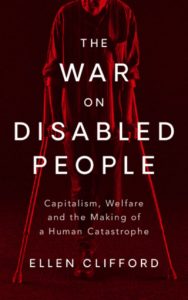
A picture of the front cover of the book titled: "The War on Disabled People: capitalism, welfare and the making of a human catastrophe by Ellen Clifford". Behind the text is the image of a man on crutches. The full background, including the image of the disabled man, is rendered in shades of red and black. The text is in white.
The War on Disabled People is now available to pre-order from Zed Books:
Zed are offering a discounted price but DPAC realises that the cost will still be beyond the reach of many people – not least because of the issues covered in the book.
We will be giving away a few free copies kindly donated by Zed to names pulled out of a hat on 15th June. To enter please email your name to mail@dpac.uk.net with ‘Book Draw’ in the subject line.
Very sadly the battle for accessible formats to be available is ongoing… watch this space.
Oct 212016
 
DPAC Logo with text underneath "Disabled People Against Cuts" and then web address dpac.uk.net

As some of you will know there were changes in Blue Badge entitlement as a result of the introduction of PIP which meant that anyone who could walk regardless of other impairments such as Autism, MH or visual impairment were no longer able to qualify for a Blue Badge.

This change affected one of our supporters whose son had previously been entitled to a Blue Badge for around 30 years and the Local Authority involved refused to renew their badge when it ran out earlier this year. The result of that has been that the person became virtually housebound as he frequently had meltdowns and his PAs needed to be able to get him into the car quickly.

We referred this person to one of the solicitors we often work with Louise Whitfield of Deighton Pierce Glynn and we are delighted to report a very successful outcome.

Not only have the Local Authority backed down and renewed the Blue Badge but even without the case having to go to court The Department for Transport have agreed to carry out a review of the entire Blue Badge policy and its approach towards people with “non-physical disabilities.

The DfT have said: “I can confirm that the review process has now begun internally. The Department’s Blue Badge policy team is undertaking the review. They intend to involve the Department for Work & Pensions, Department for Health, lawyers, local authorities, DPTAC, disability organisations and mental health experts.  

They will look at how the scheme works for people with non-physical disabilities, with a view to ensuring that equalities issues are addressed and that the scheme continues to be sustainable for disabled people. Following the initial work, a public consultation is likely. Local authorities are also likely to need fresh guidance. It is not possible to give timescales at this stage but further information on the review will be provided in due course.”


 Posted by at 20:38
Jan 292016
 
DPAC Logo with text underneath "Disabled People Against Cuts" and then web address dpac.uk.net

Following the winning of two Bedroom Tax cases this week by the grandparents of a young disabled man and the survivor of domestic violence in the Court of Appeal the government announced within hours that it intended to appeal against this decision and has allocated an unlimited amount of our money to defend their totally unjust policies.

You can read the full  so-called justification for this from the so-called minister for disabled people, Justin Torysnake in this link here
Under-occupancy Penalty (28 Jan 2016)
https://www.theyworkforyou.com/debates/?id=2016-01-28a.415.0&s=%22housing+benefit%22#g424.0
“Justin Tomlinson: We are not ignoring the ruling; we are appealing it.
We are doing that because we feel that discretionary housing payment is
the correct way to do it. Reforms take time to come in, as I said
earlier. *Housing benefit* cost £24.4 billion this year. Had we not
brought in reforms, every single one of which was opposed by the Labour
party, it would have cost £26 billion this year.”…..


Until this appeal has been heard in the Supreme Court anyone currently appealing against a bedroom tax decision will have their appeal ‘parked’ pending the outcome however in the meantime the government has produced new guidance for anyone affected specifying that their extra costs should be met from a Discretionary Housing Payment.

Bulletin for HB staff HB U1/2016, effective from 28 January 2016

The important point is that this states very clearly that any additional costs incurred in meeting disability related housing needs should be met by a DHP. The bulletin states -:

Court of Appeal judicial review decision concerning the maximum rent (social sector)

  1. Yesterday the judgment of the Court of Appeal was handed down in the joined judicial review cases R v. Secretary of State for Work & Pensions, ex parte Rutherford and R v. Secretary of State for Work & Pensions, ex parte A. The full judgment is available at: https://www.bailii.org/ew/cases/EWCA/Civ/2016/29.html


  1. The Court has found that the claimants have suffered discrimination contrary to A14 of the European Convention on Human Rights. However, the Court of Appeal repeated the finding at first instance that the Secretary of State had complied with the Public Sector Equality Duty.


  1. The Court has granted the Secretary of State permission to appeal the decision to the Supreme Court, and it is the Secretary of State’s intention to appeal.


  1. No action needs to be taken by local authorities following this judgment. It has not changed the applicability of the maximum rent (social sector) provisions and no action should be taken to re-assess the Housing Benefit (HB) of claimants in the appellants’ situation.


  1. The Department remains of the view that Discretionary Housing Payments (DHPs) are the appropriate means of protecting HB claimants in the appellants’ circumstances.


  1. Provided below are some Q&A to enable you to respond to any enquiries you might receive.


Q&A


  1. Is the government going to appeal?


  1. The Court of Appeal granted permission to appeal and it is the government’s intention to appeal.


  1. What does this mean for claimants with panic rooms or a disabled child who requires overnight care?


  1. The maximum rent (social sector) must continue to be applied to all claimants as before yesterday’s judgment.


  1. As a local authority should we continue to apply the maximum rent (social sector) in these cases?


  1. Yes, the legislation underpinning the size criteria remains in force. DHPs remain the appropriate mechanism for providing support where there is an under-occupancy deduction because of a panic room or a bedroom used to accommodate an overnight carer for a disabled child.


Applying for and Being refused a DHP

We know that although DHPs should be being made to people this is yet another post-code lottery and whether or not you get one and how long it is for varies from one LA to another.

We know that some LAs take DLA into account as available income when they should not do so.

You can’t appeal against being refused a DHP but you can still challenge it being refused through a Judicial Review. DPAC would encourage anyone who is refused a DHP to seek legal advice with regard to making a legal challenge against being refused and also they should apply again. (It is possible to have more than one JR against refusals at the same time).


Why discretionary DHPs are not an adequate replacement for rights

Disabled people need Rights not Charity or Discretionary Payments and access to this right was proven in a previous case relating to Local Housing Payments using right enshrined in article 14 of the European Convention of Human Rights. In particular the arguments used by the solicitor representing Trengrove vs Walsall Metropolitan Borough Council are particularly relevant in arguing this.

https://ukhumanrightsblog.com/2012/05/19/housing-benefit-system-discriminated-against-disabled-people-rules-court-of-appeal/


 Posted by at 20:05
Jul 122015
 
DPAC Logo with text underneath "Disabled People Against Cuts" and then web address dpac.uk.net

Has your Council taken out or turned off safe street crossings to create a so-called Shared Space? As these are desperately dangerous for people with any and all impairments, Unity Law are now taking action against 5 councils.Please consider joining the action if you have a Shared Space where you live. Unity Law will represent you at absolutely no cost to yourself and the more people and places they have on board the better.

You can contact Chris Fry at Unity Law on 0114 361 0000 or info@unity-law.co.uk


 Posted by at 19:49
Feb 212015
 
DPAC Logo with text underneath "Disabled People Against Cuts" and then web address dpac.uk.net
The Save the ILF Campaign was successful in all parts of the UK except England, where the Labour Party repeatedly refused to save it on and coming to power they followed through on this non-promised. The guidlines they had promised to send to Local Authorities where duly sent and had were of no help whatsoever to former ILF recipients.

The Save the ILF Campaign was successful in all parts of the UK except England, where the Labour Party repeatedly refused to save it. Then Shadow Minister for Disabled People Kate Green said “I do need to start by being clear that it’s not Labour’s position to retain the ILF”.

September 2015: The Legacy of the First 100 Days of a Labour government elected with a majority. Disabled people throughout the devolved nations of the UK are celebrating the continuing existence of their own Independent Living Funds. Yet in England those with the same support needs have little to cheer about as Labour themselves abandoned disabled people in England and continued forcing through the closure of the ILF, refusing disabled people the right to have the support they need to continue to live independently in the community.

Labour kept its pre-election promises on cuddly animals, and unfortunately kept to it's pre-election policies on disability as well
Labour kept its pre-election promises on cuddly animals, and unfortunately kept to it’s pre-election policies for disabled people  as well

But resilient as ever disabled people are cheering the fact that under Labour there are a significant number of improved rights for animals. After all we accept that not being pretty and fluffy and not enjoying being patted on the head by people passing us on the street- we were never likely to get the same sort of attention as cute little animals.Besides which, after 5 years of Condem austerity measures we’ve come to accept that the main political parties view us as stock with no human rights.

One of the first acts of the new Labour Government was to pass legislation to improve the lives of dogs and cats-they must now all be fed daily, be allowed out to go to the toilet regularly and have a daily walk. Not so for disabled people who have lost their care and support funding and who can only watch wistfully the new freedoms that pets have- imprisoned as they now are inside the walls of their homes unable to leave and take any active part in society. Many social services have introduced toileting regimes allowing disabled people to go to the toilet only at set times, or replaced human support with incontinence pads and catheters.

Fresh food has become a distant memory as more and more 3 minute short visits are all that is available to humans. Along with the wild animals which Labour is protecting by banning them from being used in circuses some of us are also being relocated to new ‘homes’. Sadly for disabled people this means we’re being removed totally from society and pushed out of sight and mind since the closure of the ILF in England.

Ed Miliband and Ed Balls back when every disabled child mattered

Ed Miliband and Ed Balls back in 2006 when every disabled child mattered

Many young disabled people have now been sentenced to spend the rest of their lives in old people’s homes which provide the only residential care available for them. Meanwhile the search for suitable re-homing of our circus animals is being supported by a new independent and well-funded task force set up by Ed Balls. Equitably the re-homing of disabled people by Local Authorities is being done following a set of non-compulsory guidelines drawn up by the new minister of disabled people Dick Ensien.

When asked why he has abandoned the previous legacy of the last labour Governments Every Disabled Child Matters Campaign which he spear-headed Ed replied “ Although I find some disabled children cute I can’t stand them once they reach adulthood and besides which having had 'a hand up' while children the Labour party now no longer need to do anything more for them. They’ve already had equality of opportunity as outlined in Tony’s Third Way ideology and should just be jolly grateful for that.”

Before the election, Rachel Reeves promised "Labour will be tougher then the Tories on Benefits ......" (https://www.theguardian.com/politics/2013/oct/12/labour-benefits-tories-labour-rachel-reeves-welfare)

Before the election, Rachel Reeves promised “Labour will be tougher then the Tories on Benefits ……” (https://www.theguardian.com/politics/2013/oct/12/labour-benefits-tories-labour-rachel-reeves-welfare)

Thankfully, as well, we’re delighted that the hunting ban has been confirmed to continue, and all culling of badgers has been stopped however the culling of disabled people through the new Work Capability Assessments carried out by Maximus – Same Circus, Different Clowns - continues unabated. The DWP as usual have refused to release figures of how many disabled people have died as a result of this process since the Labour government came to power. Disabled people also continue to be disproportionately sanctioned for failing to meet the conditionality in the WRAG as well as those flung onto JSA. Unqualified Job centre staff are free to decide which disabled people can be left to starve and for how long. But we are all so pleased dogs and cats now have a right to at least one meal a day. Tesco’s should also be applauded for continuing to collect food for us in their shops next to their baskets collecting cat and dog food. We do love being passive recipients of charity and being made to feel so thankful for any scraps thrown our way.

David Freud has now also returned to the Labour fold as a Labour Lord advising on benefits reform.

David Freud has now also returned to the Labour fold as a Labour Lord advising on benefit reform.

Of course David Freud has now also returned to the Labour fold as a Labour Lord advising on benefits reform. He has recommended to a Labour government bent on imposing further and harsher austerity measures that any disabled person in work should only be paid a maximum rate of £2 per hour since we are worth so much less to employers than non-disabled people. Since the alternative to this for many of us is unpaid work placements we are of course willing to accept this meagre rate if it allows us to be more employable.


Who 2 Vote 4 Logo


Jan 112015
 
DPAC Logo with text underneath "Disabled People Against Cuts" and then web address dpac.uk.net

Although this case will take place in Scotland we believe that if won it would be carried over into legislation in other parts of the UK and is therefore vitally important so that the situation where people need care and support but are unable to pay for it can be ended once and for all. If you do live in any of the areas where volunteers are being sort please get in touch with us at mail@dpac.uk.net or driectly with Ian at office@ldascotland.org


Care charges and the legal case

Scotland Against the Care Tax

8 Jan 2015 — Dear All

As you know, over 20 councils in Scotland discriminate against people under the age of 60 by allowing them to keep less money before charging them for social care. This can mean that young people are up to £50 a week worse off.

We believe that this is illegal and we have secured the help of one of Scotland’s top Human Rights lawyers, Tony Kelly to help take this forward. Tony will seek to prepare cases under the Equality Act 2010 for discrimination on the grounds of age.

With the help of one of Scotland’s foremost advocates, Niall McCluskey who is preparing a legal opinion, we should have a really strong case.

I am looking for some volunteers to come forward to be part of the first stage of a legal aid case to take on this challenge.

The volunteers need to be under 60/65 and pay care charges in one of the listed local authorities. They can be on Employment Support Allowance or have a restricted income in some other way up to a limit of £26,000 per year perhaps through a pension. Volunteers should have less than £13,000 in savings. Volunteers may be subject to some publicity but we would like to have at least half a dozen people so the demands on any one person should not be too onerous. Guardians can do this on behalf of the person they care for.

The local authorities we could pursue this in are below. Ideally we would like to group volunteers for the test case from 1 or 2 of these local authorities but will work with whoever comes forward.

Aberdeen City Angus Clackmannanshire East Ayrshire
East Lothian East Renfrewshire Falkirk Inverclyde
Midlothian Moray Renfrewshire Scottish Borders
Shetland Islands South Ayrshire South Lanarkshire Stirling
West Dunbartonshire Argyll & Bute Dumfries & Galloway

A legal case like this not only will bring justice to thousands of people who are illegally paying more than they have to but will help to undermine the whole system of care charging which relies on these illegal payments to justify itself and will force politicians to act or risk being seen to endorse illegal acts against disabled people.

Please get in touch with me directly to talk about volunteering or encouraging anyone you know to volunteer. Please forward this message on to others who might be able to help.

All the best
Ian
office@ldascotland.org

 Posted by at 15:09
Jan 032015
 
DPAC Logo with text underneath "Disabled People Against Cuts" and then web address dpac.uk.net

Different forms of Government Propaganda began and ended the year. We saw delays, backlogs, more cuts, more campaigns and direct actions. We reproduce some of the DPAC actions, research and call outs from 2014. Highlights included the Westminster Abbey Occupation against the closure of ILF as part of the #saveilf campaign, lowlights included the court case that arrived at the decision that Penning had taken appropriate process into account by saying that ILF users could be entitled to less under local authorities. Chaos with the DWP, PIP, ESA was compounded by misinformation, dodgy stats , backlogs and increasing sanctions. The brilliant Hammersmith and Fulham Coalition against Cuts achieved the abolition of ‘care’ charges by their local authority-proving it can be done. Esther McVey was awarded Scrooge of the year. DPAC was threatened with legal action for our support of the Anthony Kletzander campaign -in response we increased the campaign, and the relationship in the propaganda against disabled people between the DWP and the Mail was finally exposed

News that the UNCRPD Committee had initiated its first ever inquiry into grave and systematic violations of the UN Convention against the UK identified how far our disability rights and independent living had been eroded by the Coalition-although the Mail didnt seem to like it much

Our constant court cases against the DWP continued, and we have more lined up for this year too- yes, we could be talking to you Motability!

We look forward to 2015 and a change in the regime that has seen the poor grow poorer, while the richest grew richer. A year in which we launch Who2vote4? and the DPAC revenge tour. We will continue to fight for #saveilf with an event on 6th Jan at the House of Commons and an online twitter event.

For an excellent review of the fight against cuts from 2010-2014 please download From Cuts to Resistance and if you want a count down to the election , then the DPAC downloadable calender can help

Here’s to a better year in 2015 with thanks to all our members and supporters. Keep up with news in 2015 by subscribing to posts through our website www.dpac.uk.net or follow us on twitter @Dis_ppl_protest

Some selected actions of DPAC in 2014

January saw the posting of a call for those who were waiting for PIP due to backlogs. This post has received over 40,000 views,shares and many comments. The situation has now been described as a backlog that , at the current rate , could take 42 years to clear. For those claiming ‘reforms’ are working have a look to see that they are not: https://dpac.uk.net/2014/01/have-you-waited-months-for-a-pip-assessment/ and let’s not forget the backlog in ESA either-in short complete chaos for disabled people.

In ‘Austerity Street: the real impacts’ we reproduced some of the stories we had received from those left without cash and homes via sanctions, delays and backlogs. This was in response to Love Production’s poverty porn , Benefits Street, part of the media’s continued demonization regime -the campaign incorporated a twitter fest against the format of biased programming. We supported our partners in Canada Sudbury Coalition Against Poverty (SCAP) and Ontario Coalition Aginst Poverty (OCAP). In an international campaign against increasing homelessness. Austerity is global. We supported Boycott workfare against CAPITA cashing in on poverty.

Through the excellent work of Nick Dilworth we exposed more BBC media double dealing and the fact that they weren’t publicizing the 88% success rates of those claiming ESA and asked ‘Are the DWP failing apart at every level? When a freedom of information response incorrectly claimed that PIP was subjected to sanctions. In another they claimed that the cap would be cut for those without children, both were incorrect. With Inclusion London we campaigned against the Care Act’s exclusion of ‘independent living’ and DPAC also  joined Hands off London Transport against ticket office closures, as well as regional Rail protests

February We joined  the many direct actions against the removal of legal aid. Raquel Rolnik ‘s report on the bedroom tax is published and recommends immediate suspension of the bedroom tax. The Government’s response is to accuse her of giving sacrifices to Marx and telling her to ‘sort out her own country’. We republish the excellent ‘Why the rise of UKIP is dangerous for disabled people’ and receive the usual abuse from Kippers proving the point. DPAC, Black Triangle and Wow publish a joint statement on Atos exit strategy , calling again for an end to the WCA. We expose how 9 out of 10 sanctions are dismissed when challenged

March More direct actions against proposed cuts in legal aid for judicial review.We publish ‘Punching Holes in Austerity’ an insightful analysis of DPAC and direct actions. DPAC supports #stopchanges2A2W against punitive changes in Access to Work. We publish an update on Anthony Kletzander and questions for HSE in Ireland with ENIL , a story of human rights abuse in Dublin, Ireland, a stand that we would later find invoked a threat of legal action against one of our co-founders.

DPAC joins protests against DWP and ATOS country wide. Protests that were reminiscent of the very first DPAC protests against Atos carried out by DPAC from 2011 onwards, culminating in the 2012 DPAC Atos games that saw Atos tarnished forever. DPAC leads direct actions and online protests against the despised disability Con-fident, leading to the highest number of tweets and retweets ever, exposing the scheme as no more than a Government gloss while they were cutting access to work and removing the means for disabled people to work. We produce a critical analysis of Pennings impact assessment regarding ILF. We reproduce the piece by John Pring asking ‘Where was your MP during the Wow Debate’

April The brilliant Ellen Clifford travels to Canada to embark on a successful speaking tour with raise the rates. We hold a well attended DPAC Grassroots Fightback conference. DPAC, Inclusion London, Equal Lives and the Greater Manchester Coalition of Disabled People promote the #saveilf postcard campaign. Top Corrie stars support the postcard campaign to #saveilf.  DPAC supports Lifeworks and protests against cuts to mental health support. DPAC gives its response to Labour on reform of WCA

 May DPAC releases its research documents for download. DPAC and ILF users block the DWP in protest. We learn that disabled students allowances are now under threat of cuts. DPAC publishes a powerful piece by one of our readers that sums up many peoples’ feelings: ‘I’ll never forgive or forget what this Government has done to me and thousands of others‘. We pay homage to the strength of Quiet Riot, celebrate the #dpactour and the success of the Freedom Riders.

June The Independent Living Fund’s Birthday protest happens in June with lots of action outside the DWP. We see JSA benefit sanctions sky rocket under the coalition Government. More actions happen to fight the bedroom tax.

We publish a piece by Angela 28 on how ‘care’ support has been threatened and why that threatens independent living and rights– legal representation was found for many people, but we were aware that this was happening to many more people through emails to dpac mail. Unlike some organisations we attempt to challenge these instances and reject the rhetoric that there is more ‘choice and control’ for disabled people.

At the end of June DPAC with UKUNCUT, and Occupy carry out a daring occupation of Westminster Abbey , after months of planning to highlight the #saveilf campaign. There were 3 police to every protester , and while we had no support from the dear old church , messages of support and publicity poured in

 July We publish a joint statement in response to the Work and Pensions Committee on the WCA from DPAC, Black Triangle, the Mental Health Resistance Network, Pats petition, Wow and New Approach in which we again say the WCA should be scrapped.

An ILF user makes a plea to Disability Rights UK (DRUK) on ILF after he was denied the right to speak at their independent living conference. DRUK did not feel the need to offer any response.  In Disability Rights UK : independent Living or new visions in Neo-Liberalism we ask why the DRUK ‘independent living ‘ conference was sponsored by an organisation running institutions, segregated schooling and ‘hospitals for those with mental health issues. We also launched a highly successful twitter campaign asking the same questions, again DRUK did not feel they owed disabled people any response to this outrage.

DPAC highlights more chaos at the DWP on appeals and sanctions. John McDonnell launches an Early Day Motion to #saveilf. Positive updates and actions on the WCA court case regarding mental health claimants by the Mental Health Resistance Network. We ask that people write to IDS to raise issues happening regarding mental health.

August Rethink calls people with mental health issues a ‘disease burden’ Mental Health Resistance Network respond to the outrage. We call for a stop to discrimination for those transferring from DLA to PIP who do not get backdated payments. DPAC continues to support anti-fracking protests with Reclaim the power.

We republish the excellent Nick Dilworth’s piece on how the media are ignoring what’s happening to disabled people https://dpac.uk.net/2014/08/a-national-scandal-4-million-people-face-chaos-in-this-country-and-are-ignored-by-the-media/

ILF user John Kelly speaks to BBC on the impacts of the potential loss of ILF. We ask what happens when ILF funds are not ring fenced to local authorities

September sees a national day of Protest against sanctions, bedroom tax and benefit caps.

The fantastic Brian Hilton produces a set of pics for party conference season on #saveilf. DPAC crash the Tory Party Conference via a successful tweet attack and in person. We do the same to Labour.

We publish The Great Farago: UKIP sleight of hand and receive more abuse from Kippers, Richard Howitt Labour MEP quotes the piece and receives even more abuse.

New short film launched with the Daily Mirror on ILF.

The first inkling that the DWP are wrongly asking those in the ESA support group to attend work focused interviews comes to our notice.

DPAC is threatened with legal action for supporting Anthony Kletzander and publicising the abuse of his human rights in Ireland, our response is to publish an interview with Anthony’s parents  on the injustice Anthony and his family have endured.

October We reblog the excellent Johnny Void piece on the boss of Maximus https://dpac.uk.net/2014/10/meet-richard-a-montoni-the-five-million-dollar-maximus-boss-here-to-fleece-the-uks-benefits-system/.

We publish an open letter to Freud who declared that disabled people can work for less than minimum wage. DPAC and Occupy pay another visit to the DWP Caxton House building for ‘Freud must go!’ protest

In Secrets and Lies :maximus the new leader of the inhumans we ask why Disability Rights UK have agreed to a) be part of the Maximus testing process on the WCA and b) why they’ve teamed up with Unum and other insurance companies to develop a TV program showing how much better off disabled people will be if they take out private insurance- with user-led disability organisations like these we dont need enemies.

ILF users return to court to challenge the DWP on ILF. A successful #saveilf vigil happens with road blocks, many messages of support and some great pics.

Welfare assistance fund is next under threat of closure. Campaign to save it is launched.

November The Final Litchfield Review shows that the WCA should be scrapped.

One of our favourite reports of the year : IDS is chased around a building to drown out shouts of murderer at Ipswich- congratulations to the local dpac group for that one!

We ask people to come forward to launch a legal challenge on cuts to the disabled student allowance

£86 million goes missing from Pudsley’s children in need account BBC to blame for mislaying -complainants are actually advised to write to Pudsley via his BBC email

DWP increase attacks on disabled benefit recipients with claims they can harress them off benefits. We put out an urgent call-out https://dpac.uk.net/2014/11/urgent-people-awaiting-wca-assessments-particularly-in-birmingham-please-read/

Work Providers A4E are exposed again in relation to ESA and workfare. The Rev Paul Nicolson wins in court against council tax. Class War’s continuing protests against ‘poor doors’ get to the authorities who make arrests- and Boris is burnt. Meanwhile DPAC discovers Motability’s sneaky backdoor changes to individuals needing to be in work to qualify for support https://dpac.uk.net/2014/11/motability-and-the-deserving-and-undeserving-charity-not-rights/

December ILF users lose court case on ILF but its not over.

DPAC launches an Open letter to Ed, Kate and Rachel on ILF– we’re still waiting for a response

Hammersmith and Fulham abolish home ‘care’ charges, showing it can be done. Congratulations for a great campaign to the excellent Kevin Caulfield and Debbie Domb and all at Hammersmith and Fulham Coalition against Cuts

Esther McVey is named scrooge of the year, which we though was a little too kind to the creature

Unsurprisingly the Work and Pensions report slammed the Government ‘mismanagament of Access to Work – the stop the changes to Access to Work campaign continues.

Questions are asked on the Government costs in fighting against disabled peoples’equality

The link between the DWP and the Mail propaganda is finally nailed and exposed as the DWP is caught out https://dpac.uk.net/2014/12/dwp-caught-giving-disability-propaganda-to-daily-mail/

Dec 102014
 
DPAC Logo with text underneath "Disabled People Against Cuts" and then web address dpac.uk.net

Please Help Us. Save Our Independent Living Fund

We, disabled people, family, friends, supporters and allies, are asking for your help. We are asking you to pledge to keep the Independent Living Fund open to existing applicants, pending a review of Independent Living for all disabled people.

As you may know, on the 8th of December at the High Court, a ruling was given against our challenge to the closure of the ILF [1], and we were not given leave to appeal.

The closure of the ILF effectively signals the end of the right to independent living for disabled people in the UK. Whilst never perfect the ILF represents a model of support that has enabled thousands of disabled people to enjoy meaningfully lives and to contribute to society as equal citizens. 

Since the closure of the Fund to new applicants in December 2010 we have seen disabled people left with their most basic needs unmet and unable to seek employment, to volunteer or go into education or simply even to leave the house.

But we have vowed to fight on against the ILF closure,  disabled people will not be pushed back into the margins of society, we will not go back into the institutions, our place is in the community alongside our family and friends and neighbours and we are fighting to stay.

We ask you to imagine what it will be like, for people who have been enabled  to live a full life, be with friends and family, go out, work, study and enjoy recreation, to have all that taken away, and find themselves trapped inside, all day, every day, with choices over what they do, when and how, removed.

To severely disabled people the Independent Living Fund represents the difference between having an existence, and having a life.

Please Ed, keep our Independent Living Fund open. Keep Our Lives Open. It means the world to us.

References

[1] https://dpac.uk.net/2014/12/disabled-people-vow-to-continue-the-fight-to-save-

to sign as an organisation or individual please go to 

https://docs.google.com/document/d/11ZpbvcgSdYeOciEj9NZtnHFaI-3gGzMvRKLX4RblGTs/edit

or email: mail@dpac.uk.net

deadline for all signatures is 12pm Tues 16th Jan

Background: The Government won a case in the Royal Courts of Justice on Monday 8th December, which made their decision to close the ILF – Independent Living Fund – lawful; and this closure will now go ahead on 30th June next year.
Unless, of course the families, friends, supporters and others stand in solidarity with ILF Users campaign to Save the ILF, and together apply the sort of political power which changes minds and policy. You can do that today by signing the Open Letter to Ed Miliband (full text below), asking him, that should he become Prime Minister in May’s General Election, to keep the Fund open while ordering an independent review into the benefits of a model such as the ILF.
We know that many disabled people will lose some or all of their support, isolating people in their homes – at best. For many more, being institutionalised in residential homes is once again a grim reality. To save on average just over £300 per person. Don’t let this happen. Stand in support with ILF Users in this action, and the many more on-going & to come

Dec 092014
 
DPAC Logo with text underneath "Disabled People Against Cuts" and then web address dpac.uk.net

John Healey (Wentworth and Dearne) (Lab): What legal costs his Department has incurred in legal proceedings involving disabled people relating to the under-occupancy penalty and the closure of the independent living fund. [906481]

The Minister for Disabled People (Mr Mark Harper): The Government have robustly defended their policies in relation to the closure of the independent living fund and the removal of the spare room subsidy. The total known legal costs to date, in respect of both policies where disability formed part of the grounds of the claim, are £415,000: £236,000 for the ILF and £178,000 for the removal of the spare room subsidy.

John Healey: That is a part answer to a very direct question about the cost to the taxpayers of Government lawyers defending the indefensible—axing the ILF and introducing the hated bedroom tax. Will the Minister not recognise that many severely disabled people flourish with the fund but are now frightened of losing their independence when he shuts it down next year? He might have won the legal case this year, but he has lost the moral and policy arguments, so even at this 11th hour will he rethink the protection available to ILF users?

Mr Harper: No, I will not. I have talked to disability organisations about this matter, and they agree with the Government. More than 1 million people get social care through the mainstream social care system. The Government are not making any savings by moving the ILF to local authorities and devolved Administrations, and we are working closely with each local authority to ensure that the amount of money being transferred at the point of closure next year will be exactly what is needed and what is being spent by the ILF, meaning that disabled people will be protected.

Barbara Keeley (Worsley and Eccles South) (Lab): Some £4.3 billion has been taken out of adult social care budgets over the past four years because of the Government’s cuts. If that funding transfers across, as is planned, it will plug only a very small part of the gap. If they will not rethink this policy, as my right hon. Friend the Member for Wentworth and Dearne (John Healey) just suggested, will Ministers require that the funding be ring-fenced to ensure that 70 people in Salford and 18,000 people across the country with disabilities can look forward to keeping their independence and to this continuing support?

Mr Harper: Of course local government has had to play its part in the savings, but local authorities can make choices. My local authority in Gloucestershire has protected the value of social care because it thinks that protecting older people—[Interruption.] No, my local authority has faced cuts, like all local authorities, but it has chosen to—[Interruption.] If Opposition Members want me to answer their hon. Friend’s question, they should stop yelling. My local authority has prioritised funding for older people and people of working age. Clearly, the hon. Lady’s local authority has made different decisions. If those on her local authority want to ring-fence the money transferred from the ILF, they are absolutely free to do so, so I suggest she take that up with them.


8 Dec 2014 : Column 632

We want to thank John Healey MP for raising these questions

But other questions arise: which disability organisations did Harper speak to and why did they agree with the Government that closing ILF was a good thing for disabled people with high support needs and their employees? Did Harper speak to ILF users?

Watch this space……

Oct 222014
 
DPAC Logo with text underneath "Disabled People Against Cuts" and then web address dpac.uk.net

Today was the first day of two days of a second court case against the DWP against the closure of the Independent Living Fund. Messages of support poured in. Many people turned out to support the vigil. The Strand was later blocked , as Kate Belgrave said : blocking roads is not extreme, cutting care is. There was wide support from Inclusion London, Norfolk and Suffolk DPAC local DPACs, the Greater Manchester Coalition of Disabled People, Transport for All, Winvisable, PCS Union, the TUC, Ros Wyne Jones Real Lives at the Daily Mirror, OCAP  and from as far as Toronto Canada where a simultaneous vigil was held. John McDonnell MP a great supporter of DPAC also came to speak.

Many messages of support came through some of which are below.

“@Dis_PPL_Protest good luck today! Amazing work being done in the face of such powerful opposition :)”
“Let’s hope justice prevails to counter rabidly cruel government”
“Best of luck and so many thanks to all at #ILF court case”
“many thanks for time and effort to all involved”
“Sending support from Toronto to London today. Disabled lives are worth it. #SaveILF @Dis_PPL_Protest pic.twitter.com/90YJEt7bL4”
“vigil at the RCJ supporting the campaign to #SaveILF”
“Good luck. You are courageous. The world is watching”.
“Good to see the likes of @Dis_PPL_Protest taking up the incentive to challenge the Govt on the ILF, much needed support lacking from orgs.”
.”@johnmcdonnellMP speaking in solidarity at #saveilf vigil today at Royal Courts of Justice”
“Shoutout to the awesome campaigners the #saveilf campaign, outside the Royal Courts of Justice today”
“Grateful thanks to @Dis_PPL_Protest & all who are fighting so hard to #SaveILF, ILF support for the disabled means having a life to LIVE”
“The TUC general council sends its solidarity and support for the Group fighting against the closure of the ILF in the High Court. Sean”
“All best wishes from WinVisible for ILF case – sorry we can’t make it but thinking of you all there. Claire”

Also check out some great media pieces
https://www.theguardian.com/commentisfree/2014/oct/20/disabled-lord-freud-austerity
https://www.mirror.co.uk/news/uk-news/tory-bid-cut-lifeline-profoundly-4477839

Thanks to everyone for making this such a success on the streets and on social media! We’re back at court tomorrow -maybe we’ll see Freud joining us too

(left to right) - Mark from PCS Union who is equalities officer London. John McDonnell MP Andrew Lee, People First.

(left to right) – Mark from PCS Union who is equalities officer, London.
John McDonnell MP
Andrew Lee, People First.

Andrew Lee, People first.

Andrew Lee, People first.

John McDonnell MP Linda Burnip, co founder of DPAC

John McDonnell MP
Linda Burnip, co founder of DPAC

(left to right) - Linda Jack liberal left, Liberial Democrats.  John McDonnell MP Andrew Lee, People First.

(left to right) –
Linda Jack liberal left, Liberial Democrats.
John McDonnell MP
Andrew Lee, People First.

Natasha  Burgess, Campaign and policy officer PCS Union, London.  John McDonnell MP Linda Burnip, DPAC Mark, eqaulities rep PCS London.

Natasha Burgess, Campaign and policy officer PCS Union, London.
John McDonnell MP
Linda Burnip, DPAC
Mark, eqaulities rep PCS London.


DPAC protestors showing solidarity and support with ILF activists with Linda Jack and John McDonnell MP

DPAC protestors showing solidarity and support with ILF activists with Linda Jack and John McDonnell MP

DPAC protestors showing solidarity and support with ILF activists with Linda Jack and John McDonnell MP

DPAC protestors showing solidarity and support with ILF activists with Linda Jack and John McDonnell MP

DPAC protestors showing solidarity and support with ILF activists with Linda Jack and John McDonnell MP

DPAC protestors showing solidarity and support with ILF activists with Linda Jack and John McDonnell MP

DPAC protestors showing solidarity and support with ILF activists with Linda Jack and John McDonnell MP

DPAC protestors showing solidarity and support with ILF activists with Linda Jack and John McDonnell MP

John Kelly outside royal courts of justice London.

John Kelly outside royal courts of justice London.

(Left to Right) Jenny Hurst.  Paula Peters DPAC

(Left to Right)
Jenny Hurst.
Paula Peters DPAC

Jenny Hurst with save ILF campaign postcard

Jenny Hurst with save ILF campaign postcard

B0jMETCIgAARSsL B0jQrHmIcAA-0Sp
B0jMETCIgAARSsL B0jQW-6IYAAtank
B0jTz8mIIAEyIJH B0jW8KSCAAI3L2M
B0jwp9ZCQAAxVcI B0jwr7UCQAEVkS_
B0jwtJTCEAAAP3o B0jYK5uIEAAYqQu
10354169_725881680798687_6051529399852839286_n 10384118_725880527465469_6775580639279853354_n
B0iyF5YIEAEaR9O B0j7OAoCIAA1cn3
B0jae-fIIAAHp5q B0jeA8DCAAA6lKI
B0jGoH3IcAAuJtn B0jKBevIYAEMw6H
B0jmC2lIAAMared B0jIuK-CIAAMAti
B0jH-etCAAAc1W3  IMG_5439
Oct 022014
 
DPAC Logo with text underneath "Disabled People Against Cuts" and then web address dpac.uk.net
Tuesday 7 October
Support Rev Paul Nicolson at the High Court
Legal challenge vs extortionate court costs added to Council Tax bills
——————————————————
9.30am — Vigil outside
10.30am – one-hour court hearing
The more of us the judges see in the public gallery, the better!
Royal Courts of Justice, Strand (off Kingsway)
London WC2A 2LL
Rev Paul Nicolson of Taxpayers Against Poverty is valiantly refusing to pay his Council Tax to Haringey, and is ready to go to jail because he objects to the poorest people being unfairly targeted.  He always defends the right to a decent income for all, including single mothers and children, and for pregnant women to afford a nutritious diet. This hearing seeks a judicial review of the Tottenham magistrates who repeatedly refused to tell him at his council tax hearing in August 2013, how they arrived at £125 costs for a summons to late and non-payers of council tax.
**Contact Rev Nicolson TAP 07961 177889  **SMSD / WinVisible 020 7482 2496
·         Haringey has decided to “ensure that maximum possible is charged for court costs” to “act as a deterrent to late and non payers”. However, costs imposed by magistrates should be “reasonably incurred”.
·         Low-income people are bullied into paying Council Tax we can’t afford from our disability benefits and low wages. Summonsed to court for tiny arrears (such as £2.59), we then have punishing court costs added to our bills.
·         The DWP deducts Council Tax from poverty-line benefits – starving us into relying on foodbanks!
·         Council Tax has become the number one debt problem which people seek help with, since the abolition of Council Tax Benefit last year.
 Posted by at 21:33
Sep 112014
 
DPAC Logo with text underneath "Disabled People Against Cuts" and then web address dpac.uk.net
Motion to be debated at full council on Tuesday 16th September
The ability to be able to live independently is a fundamental right for disabled people – it is enshrined in Article 19 of the United Nations Convention on the Rights of Persons with Disabilities [1]. Over 18,000 disabled people in the UK, including over a hundred in Bristol, are only able to live independently by accessing the support they need through the Independent Living Fund (ILF).
Green Party Leader Natalie Bennett holding a Save ILF Postcard
Therefore, the Coalition Government’s decision to close the ILF will have seriously repercussions for many of our fellow citizens, denying them the right to choose to live in their own home, and to be active members of their local communities.
On Wednesday, the Bristol Green Party will ask the council to vote to ring-fence all funds transferred from the ILF, and to call upon the national leaders of the main political parties to reverse the closure of the ILF.  If passed, it is believed that Bristol will become the first city to take an official position against the closure of the ILF.[2]
“We are calling for the funds that will be transferred locally to be ring-fenced but we also need any future national government to commit to providing the necessary resources to enable disabled citizens to live independently.” said Tony Dyer, the Green Party candidate for Bristol South, “Welfare reform, including changes to incapacity benefit and the introduction of personal independence payments have badly affected many disabled people – they have too often borne the brunt of this government’s cuts.
“Changes to the ILF fund in particular are causing stress for many people who depend on the fund for their support needs and who fear that it will be cut” he continued; “Disability rights groups are also concerned that some people who will have been eligible for ILF support have not been able to apply to the fund since it was closed to new applicants and thus we are also calling for the Council to ensure that these people are not forgotten.”
What is the Independent Living Fund? [3]
The ILF was originally set up in 1988 as a national resource dedicated to the financial support of disable people, enabling them to choose to live in their communities rather than being forced in to residential care.
The ILF is amongst the most efficient of all public sector organisations, with administration costs of just 2% compared to an average of 16% for local authorities. It also has a 98% satisfaction rating amongst its users. In addition, the average weekly ILF fund of £345 to allow disabled people to live at home should be compared with an average weekly cost to the taxpayer of £738 per week to provide residential care.
Despite this exemplar performance, the Coalition government announced in December 2012 it will close the scheme.  This decision was subsequently overturned at the Court of Appeal where a judge found that the decision breached the government’s equality duty.
However, the Coalition Government has since repeated its intention to close the fund in June 2015 and transfer its funding responsibilities to local authorities but has only committed to funding local authorities for one year. Disabled groups have already stated their intention to also challenge this decision in the courts. Meanwhile, in August, the UK became the first country to be the subject of an investigation by a high level United Nations commission into “grave violations” of the rights of disabled people. [4]
“I am proud that the Green Party is raising this issue with the Council.”

said Rob Telford, Green Party councillor for Ashley. “The UN  human rights investigation to find out if Coalition Government policies have led to ‘grave violations’ of the rights of disabled people comes in the wake of studies showing that those with disabilities have been impacted disproportionately by the cuts – almost 20 times as much. Here in Bristol we must aim to do everything we can to ensure disabled people can live independent, dignified lives and be allowed to contribute to our communities. Any effective future solution needs to directly involve disabled people themselves in the decision making process”
Many of the actions called for by the Greens are based on the concerns raised by Disability Rights UK following responses to Freedom of Information requests sent to all the relevant local authorities.  Only 10 local authorities confirmed they were planning to ring-fence ILF transfer funding. [5]


References
(1) United Nations Convention on the Rights of Persons with Disabilities; https://www.un.org/disabilities/convention/conventionfull.shtml
(2) Green Party motion to full council on Independent Living Fund is now available on the Council website – it is motion a, under agenda item 10 – and will be the first motion debated
(3) House of Commons Library Standard Note on the Independent Living Fund is available here; https://www.parliament.uk/business/publications/research/briefing-papers/SN05633/independent-living-fund
UK is first country to face UN enquiry into disability rights violations
(5) Most councils will not ring fence ILF resources
Further Information on
Tony Dyer (named as Green Party candidate in Bristol South)
Rob Telford, Green Party councillor for Ashley Ward
 Posted by at 14:02
Aug 092014
 
DPAC Logo with text underneath "Disabled People Against Cuts" and then web address dpac.uk.net


Disabled people have been expressing their disquiet at the news that the Independent Living Fund (ILF) will cease to exist in 2015, and that the money will be transferred to Local Authorities. To date, out of the 153 surveyed Local Authorities and from 106 responses, only 10 Local Authorities have said they will ringfence the transferred funds to ILF recipients, which means that in all other areas, ILF recipients face a potential reduction of their care packages. How is it likely to happen?

An interesting article was published this morning by Joe Halewood (@SpeyeJoe): https://speye.wordpress.com/2014/08/09/dhp-dubious-hoodwinking-practices-or-how-ids-pulled-the-woolsack-over-the-courts-eyes/

which shows that 16% (UK average) of Discretionary Housing Payments (DHPs) allocated by the Department of Work and Pensions (DWP) to Local Authorities to mitigate the impacts of welfare reforms, and specifically of the infamous bedroom tax have been awards unrelated to welfare reforms. See Table 5 and 6 here: https://www.gov.uk/government/uploads/system/uploads/attachment_data/file/322455/use-of-discretionary-housing-payments-june-2014.pdf

It would be interesting to know what the money was spent on, but more to the point, DWP has twice relied on the DHP argument to win a legal case against claimants challenging the bedroom tax policy, and although DWP’s spokesperson said that the government has put in £345m to mitigate the bedroom tax, the figures shown in the Table 5 and 6 not only disprove this but also show that out of the money disbursed, 16% of the allocated funds have been used for awards totally unrelated to welfare reforms. This shows that disabled people are right to be worried about the future of the transferred ILF funds and about the willingness or unwillingness of Local Authorities to allocate these funds to disabled people who have been assessed as having the greatest needs. The ILF should be retained until assurance is given that these people will not see a reduction in their care packages.


Jul 172014
 
DPAC Logo with text underneath "Disabled People Against Cuts" and then web address dpac.uk.net

DPAC have had an odd kind of non-relationship with DRUK. We’ve disagreed about many things. For example, DPAC is for saving ILF, DRUK’s Sue Bott suggests this is something we should probably forget about, and that ‘Whilst the ILF has benefited many disabled people, claims that it has been at the forefront of independent living are a little exaggerated’[1]. This is not the view of ILF users. See their stories, their lives, their experiences  It is amazing that anyone can believe that passing ILF to local authorities who already say that without ring-fenced funding many ILF users will lose support and/or be institutionalised is something we need to accept while we all get together to talk about ‘new visions’.


The DRUK conference dedicated to a ‘new vision’ for independent living is also a confusing affair, not only are they embracing Simon Steven’s approach[2] ( He who accused DPAC of murdering disabled people and was dropped from Leonard Cheshire’s sponsor program because of his outright abuse to other disabled people[3]), but one of their advertised partners for this conference are Craegmoor .


Craegmoor are part of the Priory Group owned by Avent International which is a US Equity Company- changing times you may say-and you’re right. Maybe that’s what these new visions are about: capitalising on the market, private equity companies taking public money, and disability organisations getting in on the act- maybe neo-liberalism rather than disabled peoples’ rights and equality now make up ‘new visions’ of independent living


Craegmoor ‘s target market are those labelled with autism, learning difficulties and mental health issues. They take 85% of their funds from public funds[4]. Craegmoor’s  web site boasts of its residential homes:

We provide understanding and support for people with learning disabilities, autism and mental health problems in a variety of settings based on the individual’s abilities and needs. Our nationwide residential care services support people to develop the skills they need to live as independently as possible’.


Wait, since when were residential homes part of independent living? Weren’t these the very oppressions that early activists fought to get out of, and current activists (and ILF users) are fighting to stay out of?


Their brochure[5] goes further:

Craegmoor is part of the Priory Group of Companies. From education to hospitals, care homes and secure facilities, the Priory Group of Companies offers individually tailored, multidisciplinary treatment programmes for those with complex educational needs or requiring acute, long-term and respite mental healthcare’.


Treatment programs? Not sounding very independent living or social model. As well as residential homes, secure ‘hospitals’ and segregated schools. It all sounds very daunting.


But there’s much more on the Priory group of companies too which is even less palatable concerning cover-ups and abuse. Until July 2013 Phillip Scott was Chief Executive if the name isnt familiar, he was also the Chief Executive for Southern Cross. Itself a subject of inquiry on institutional abuse and 19 unexplained deaths[6] Craegmor say they transform lives, but in what way?


In May 2013 there was Melling Acres, ‘where inspectors reported major concerns about the care and welfare of its seven residents – care plans were poor, with scant information about physical health needs, there were limited activities and a lack of advocacy to enable people to express concerns about their care’. In September 2012 ‘following an anonymous tip, inspectors found residents at risk of abuse in Lammas Lodge, a home for young adults. There were not enough staff and what staff there were, inspectors found, were not properly trained to meet residents’ complex needs. There were six major areas of concern, including care and welfare, medication and safeguarding. The home, which was warned it must improve or face closure, has since been given a clean bill of health by the regulators’. Both homes were registered under Parkcare Homes’ so neither Priory or Craegmoor got the fall-out despite ownership[7].


This was not the case in 2012 when concerned relatives hid CCTV cameras in the room of Highbank hospital in Bury Manchester to reveal abuse by staff[8], not so with the Bentley Court home in Wolverhampton suspended by the council for what it called ‘safeguarding issues’ in 2010, a council that stopped sending those with dementia to Bentley Court[9], and not so in 2012 when what was described as the ‘Priory mental hospital’ in Windes on Bennet Lane was closed due to not meeting 10 standards of Government quality and safety including: Patients not being fully protected from the risk of abuse and their privacy, dignity and independence not being respected, staff not receiving necessary training, a lack of systems to assess and monitor the quality of the service provided, care plans did not always cover patients’ needs. There were also reports of patients attempting to escape during supervised visits into Widnes town centre[10].


So as said definitely NOT independent living.


In 2004 the then CEO of the Priory group Chai Patel said ‘My view is, if there is ever a conflict that involves choosing between care and profit, then we should not be involved in that environment,’[11] Given the examples above it seems profit is the defining factor.


It didn’t take long to find this information, it didn’t take long to realise that these are not the partners who should be with any organisation claiming to support independent living, even ‘new visions’. So maybe the question that needs to be asked is what exactly do DRUK support?


There are a few clues, in a recent blog piece by DRUK (dated 16th July) mentioning a very good Guardian piece by independent living activist John Evans[12], an ILF user, the last paragraph says: ‘Sue Bott, Director of Policy and Development at Disability Rights UK, has written a new blog which also discusses the role of the ILF but proposes that disabled people should concentrate their campaigning towards achieving a single integrated system that assesses people’s needs and allocates assistance and support based on the outcomes people could achieve in their communities and contribute to society’.


John Evans says everything we need to know-we have a vision for independent living and we already have a model forged by international independent living activists. There is nothing wrong with that model. There is no reason to stop fighting for it, abandon it or develop ‘visions’ or hallucinations of lesser systems in which we divide disabled people by perceived contributions to society-all disabled people are of value, all deserve to be supported. It is the ILF model that needs to be built upon and expanded to all-something that promotes real independent living.


The fact that a so-called user led organisation is putting forward anything different with the spectra of institutionalisation added to the mix is a tragic condemnation of all that disability activists have ever worked and fought for. We are appalled that DRUK are willing to sacrifice disabled people’s futures in this way and sadly can only assume this is to ensure on-going funding from the government.

follow @dis_ppl_protest for more

If you want to email DRUK you can do so by emailing:  liz.sayce@disabilityrightsuk.org


[1] https://disabilityrightsuk.blogspot.co.uk/2014/07/we-need-new-vision-for-independent.html

[2] https://disabilityrightsuk.blogspot.co.uk/2014/07/we-need-new-vision-for-independent.html


[3] https://davidg-flatout.blogspot.co.uk/2014/07/inclusion-forgotten-ambition-lost-i.html?spref=tw

[4] https://www.craegmoor.co.uk/library/files/Craegmoor%20Locations%20&%20Services%20Brochure(1).pdf

[5] https://www.craegmoor.co.uk/library/files/Craegmoor%20Locations%20&%20Services%20Brochure(1).pdf

[6] https://www.bbc.co.uk/news/uk-24581693

[7] https://beastrabban.wordpress.com/2013/07/20/private-eye-on-failure-of-care-at-more-care-hospitals-owned-by-american-private-equity-firms/


[8] https://www.dailymail.co.uk/news/article-2227229/Nurses-quizzed-police-abusing-patient-Priory-Hospital-concerned-family-hid-secret-camera-room.html


[9] https://www.expressandstar.com/news/2010/01/15/elderly-will-no-longer-be-sent-to-care-home/


[10] https://www.runcornandwidnesweeklynews.co.uk/news/health/failed-priory-mental-hospital-widnes-5875608


[11] https://www.managementtoday.co.uk/news/432103/Man-Priory/?DCMP=ILC-SEARCH


[12] https://www.theguardian.com/society/2014/jul/16/independent-living-fund-closure-disabled-people-residential-care

Jun 182014
 
DPAC Logo with text underneath "Disabled People Against Cuts" and then web address dpac.uk.net

Derbyshire Anti Cuts campaigners witnessed the Disgraceful move by Labour-controlled Derbyshire County Council Cabinet yesterday voting through cuts and charges to adult social care services that Derbyshire disabled people rely on.


Derbyshire Anti Cuts campaigners were at Derbyshire County Council headquarters, County Hall, Matlock yesterday June 17th 2014 supporting disabled people from Derbyshire Disabled People Against the Cuts (DPAC).


Their spokesman, the brilliant Gary Matthews,  other disabled people and allies challenged council leader Cllr Anne Western, Cllr Andy Botham and Cabinet Member for Adult Social Care, Cllr Clare Neill on the steps leading in to County Hall yesterday and then submitted questions in the Cabinet meeting itself raising the alarm that if these cuts and charges were voted through today, then councillors would in effect be complicit in the victimisation and persecution of Derbyshire’s disabled people and their families.


Good luck to Derbyshire DPAC in sorting out a legal challenge to this victimisation and persecution.


We say SHAME on Labour controlled Derbyshire County Council for being complicit accomplices to the Con Dem robbery of Derbyshire people’s rightful money and to the victimisation and persecution of disabled people and those with long term health issues.


Gary Matthews from DPAC handed out leaflets with the following text on to all councillors and people who attended the protest and the council meeting:


“Think before you vote!”


The report to the Derbyshire County Council Cabinet being voted on this morning is a very depressing document. We believe that the three recommendations are an attack on disabled people across Derbyshire.


Increasing the eligibility threshold for those who need support will impact seriously on the daily lives of disabled people.


We are talking about not just cuts, but life and death issues.

The report admits that there will be more accidents at home and people will no longer be safe if their care is cut.It also predicts worsening personal health for those deprived of care in the future.


The proposals on co-funding (paying for care) and on charging £5 for transport trips will drive hundreds of disabled people into poverty.

30% of disabled people already live in poverty and this will just add to it.

The report does not have a proper equality impact report and the consultation process was highly defective.


We attended a two hour meeting yesterday (June 16th 2014) with Cllr Clare Neill where we put our concerns.

We told her in straight terms what the effects on our disabled community would be.

We asked her to advise the Labour cabinet to delay these cuts for 12 months and lead a campaign against the Coalition cuts together with trade unions and disabled peoples groups.


We are fed up with hearing the Labour mantra and excuse that there is no alternative.


We have now given the Labour cabinet a clear alternative.If they ignore this, they will only have themselves to blame.

Will they act as agents to Eric Pickles and force through these cuts, or will they stand alongside disabled people and oppose all cuts.


“We believe that cuts in welfare benefits and in essential adult care services amount to nothing more than crimes against humanity”.


Gary Matthews

Email: matthews354@btinternet.com


Where injustice becomes the law, resistance becomes necessary.


An injustice to one is an injustice to all.


They say cut back, we say FIGHT BACK


Liz Potter on behalf of Derbyshire Anti Cuts Campaign in solidarity with Derbyshire Disabled People Against the Cuts (DPAC).


https://www.derbytelegraph.co.uk/Disabled-campaigners-stage-protest-cuts-adult/story-21248190-detail/story.html


Apr 212014
 
DPAC Logo with text underneath "Disabled People Against Cuts" and then web address dpac.uk.net

DPAC would like to thank everyone for making last week’s (April 12 2014) National Conference such a huge success. There was a huge turnout with over 150 disabled activists from all over the UK including many new DPAC members attending, but just as important there were hundreds of members and supporters beyond the venue taking part through social media – watching the video live-stream, tweeting and sharing comments, views and sending messages of support. This was fantastic work by everyone and a truly inspiring collective effort.

DSC_1030 con

Here’s a brief outline of how it went.

Programme
The day was timetabled into sections beginning with practical reports and voting on policy motions. This was followed by two workshop sessions and then a closing session for everyone to feedback on the day. Four workshops were available to choose from in each Workshop session. Detailed reports on these will follow later.

John McDonnell MP, a longstanding friend and supporter of DPAC, gave a rousing opening speech to encourage everyone and remind us of the victories achieved so far. He congratulated disabled people and DPAC for fighting back, along with our sister organisation Black Triangle and WoW Petition initiators

As he finished he mentioned his own recent health condition which he said he felt brought him closer to our movement. Ellen reacted quickly by giving him a DPAC t-shirt and declaring him a full DPAC member to instant applause and cheers.

photo1jm tshirt

Finances
The Finance Report showed a healthy state of affairs for the time being thanks to individual donations, t-shirt and badge sales plus grants from the Edge Fund, the Network for Social Change, Trust for London  and the Andrew Wainwright Trust. More fund-raising is necessary going forward.

Motions
1. Government Honours
This proposed that any future candidates for the DPAC Steering Group could thwart the network and collective ethos of DPAC if they had received a national honour like an OBE or MBE. The ‘BE’ refers to the imperialist British Empire which is still celebrated despite what we know of the suffering and oppression this caused. The motion conversations also suggested that any media attention would be focused on those with honours and titles, rather than on the collective network ethos that DPAC ascribes to. The motion was put forward as a rejecting of this possibility and that of the honours system more generally. This was defeated.

2. Discrimination
This motion stated DPAC opposition to discrimination on the grounds of gender, sexuality, age, faith, disability, ethnicity or status. It also empowered the Steering Group to terminate the membership of anyone who supported a party which holds discriminatory policies, like UKIP. This motion passed based on an appeals process being put in place

3. Steering Group Size
This motion sought to expand the Steering Group from 8 members to 12 in order to respond to increased activity and maintain a broad, diverse and inclusive profile. This was passed.

Steering Group
There were 11 nominees for the Steering Group. Conference took a vote on whether to vote for accepting all 11 nominees, or vote for them one by one. Conference voted to accept all 11 nominees. The new steering group are currently reviewing co-opted places and will get back to the additional people that applied past the deadline as soon as possible

Steering Group:
Andy Greene
Bob Ellard
Ciara Doyle
Conan Doyle
Debbie Jolly
Eleanor Firman
Ellen Clifford
Linda Burnip
Paula Peters
Roger Lewis
Sabina Lahur

It was highlighted that the working groups are important in taking DPAC forward. The co-chair said she hoped those who did not stand for the Steering Group but were still interested in getting involved would join these as soon as possible.

Finally, a big thank you to the Conference Organising group and Workshop leaders who worked so hard to make this wonderful event a reality.

Links to videos from the day are here with thanks to Occupy for live streaming on the day to make the conference inclusive to all are here

Links to pictures can be found on DPAC flicker here
Thanks to Pete Riches, Szucs Gabriella and Rob Peters

The powerpoint on highlights of the last year can be found DPAC Report
A link to 2013 and some of the things DPAC did is here

See you on the streets!

DPAC www.dpac.uk.net
Twitter: Dis_ppl_protest
Also find us on Facebook with a group and open page under ‘Disabled People against Cuts’

contact: mail@dpac.uk.net


Apr 182014
 
DPAC Logo with text underneath "Disabled People Against Cuts" and then web address dpac.uk.net

We read with interest the piece in the Independent by Rachel Reeves and Kate Green regarding Labour’s response to the Work Capability Assessment [1]

Labour should realise that disabled people are deeply distrustful of any Labour reform of a Work Capability Assessment system, which Labour introduced in the Welfare Act of 2007 with the stated aim of removing 1 million claimants from the benefit system [3].

Our position has been and will be that the Work Capability Assessment is deeply flawed in its basic concept, not just in terms of the details of its delivery, and inclusion in the workplace for disabled people cannot simply be achieved by a ‘back to work’ test.

manifesto

In the Reclaiming Our Futures, Disabled People’s Manifesto [4], we state that a priority demand from government is that:

A comprehensive and strategic plan of action is developed with disabled people and our organisations to tackle the discrimination and exclusion disabled people face in work and employment including: increasing quality and range of personalised support available to disabled people, strengthening disabled employees rights and tackling employer discrimination and poor practice

Other key demands include that:

Economic productivity must not be the only measure of people’s worth and value, volunteering offers as much value to society as paid employment. While we recognise that volunteering can offer additional skills, it should not be the default option for disabled people because of our exclusion from paid work

There must be policy and media recognition that there will always be disabled people who are unable or too ill to work. These individuals must be supported by a publically funded system. They should not be penalised or demonised as they are currently.

For true inclusion in the workplace for disabled people a wider approach is necessary including but not limited to:

• Will Labour commit to the restoration of Disabled Student’s Allowance,
• Will Labour commit to the restoration of the Independent Living Fund,
• Will Labour commit to the extension of Access to Work (AtW) to include unpaid voluntary positions,
• Will Labour commit to the reversal of the reduction of people who currently receive DLA, but will not receive PIP and also lose their Motability access,
• Will Labour commit to the reinstatement of the requirement for councils to produce equality schemes on employment and access
• Will Labour commit to the provision of accessible transport.
• Will Labour commit to the reinstatement of “day one” protection from unfair dismissal in employment law
• Will Labour commit to the provision of Employment Tribunals enforcing mandatory organisation-wide measures on preventing disability discrimination
• Will Labour commit to the provision that all government contracts, at a national, regional and local level, are only awarded to companies that are fulfilling measurable equality targets for the employment of disabled people

(for further points see reference 2)

These currently are some of the barriers to inclusion in the workplace for disabled people, and they will not be fixed by simply amending the WCA. The issue must be seen within the context of the wider interconnected system of barriers in place. It must be seen in terms of what a large majority of disabled people have already identified as key problems.

In terms of inclusion we also need from Labour, a recognition that for many disabled people to be able to work there has to be a nationally transportable social care system with a guarantee that people would keep the same levels of funding wherever they needed to move to work.

We need recognition that there is an onus on government and employers to fully accept the spirit of the Equality Act 2010 [4] with its requirement to the opening of work opportunity to disabled people. Without this, no “fit for work test” aimed at cutting disability benefits will make any impact whatsoever on the numbers of disabled people who can attain and sustain employment.

We also need from Labour a stronger recognition that there are many disabled people who cannot enter the work place and should not have to live in fear of being pressured into doing so.

There is much that the article leaves out and that leaves us with a number of serious concerns and questions.

While we are not yet prepared to endorse in any way Labour’s new approach to the Work Capability Assessment, we do see the article by Rachel Reeves and Kate Green as a helpful starting point for discussions on the future of inclusion of disabled people, who want and are able to work, in the workplace and we would welcome an opportunity to meet with them and discuss this further. We would like meet with Kate Green and Rachel Reeves to ask the following questions:

1. Will Labour commit to stop spending public money on private
contractors and return any assessments of disabled people back to GPs
with medical evidence taken into account as well as give a commitment to
look at the barriers to work for disabled people who can and want to
work (in line with the social model of disability)?

2. Will Labour commit to a time and date to talk with DPAC, My Legal,
the Mental Health Resistance Network, Black Triangle, Deaf activists,
those with learning difficulties ( with an outreach of ½ a million
disabled people) to listen to the views of the largest network of grass
roots disabled people on the WCA and ESA?

3. If Labour are committed to scrapping the WCA when will Deaf and
disabled people, and those with mental health issues have sight of the
detail of any alternative Labour is proposing?

4. If Labour accepts the harm, devastation and premature deaths that have
been an outcome of the WCA why have they chosen to suspend their
prospective parliamentary candidate for St Austell and Newquay, Deborah
Hopkins for speaking out in public about the harm caused by the WCA.

5. Will Labour address the disproportionate harm that the WCA and
sanctions on ESA and JSA are causing to all disabled people, in
particular those with mental health issues and learning difficulties?

6. We along with many others insisted that a centralised Independent Living Fund
for Scotland be established and it has been done. They have also promised to re-open ILF to new users, with a commitment of additional funds and recognition of its importance to independent living and obligations to article 19 of the UN Convention on the Rights of Persons with Disabilities. Why has the Labour
Party not promised to re-establish it south of the border?

Many of the Statements included in this response are taken from the UK Disabled Peoples’ Reclaiming our Futures Manifesto and are endorsed by a UK network of disabled people and Deaf and Disabled Peoples Organisations, including: ALLFIE, Inclusion London, Equal Lives, DPAC, Inclusion Scotland, Disability Wales and the TUC Disabled Workers Committee [2], who between them reach several million disabled voters.
References
1. How Labour would reform the Work Capability Assessment https://www.independent.co.uk/voices/comment/how-labour-would-reform-the-work-capability-assessment-9265479.html
2. The Reclaiming Our Futures, Disabled People’s Manifesto https://disability-studies.leeds.ac.uk/files/library/UK-Disabled-People-s-Manifesto-Reclaiming-Our-Futures.pdf
3. The Green Paper: The new deal for welfare: Empowering people to work. 2006 https://webarchive.nationalarchives.gov.uk/+/https://dwp.gov.uk/docs/a-new-deal-for-welfare-empowering-people-to-work-full-document.pdf
4. Equality Act 2010 https://www.legislation.gov.uk/ukpga/2010/15/contents


Apr 072014
 
DPAC Logo with text underneath "Disabled People Against Cuts" and then web address dpac.uk.net

DPAC_coloured_Logo_2__biggerWe are very much looking forward to seeing everyone who can come to our national conference on Saturday but it is also important that those of you who can’t get there in person are able to take part. There are a number of ways you can do this:

  • Send messages of support and your ideas for what DPAC should focus on over the next year to mail@dpac.uk.net or @dis_ppl_protest.These will be put up on the graffiti wall at the conference and included in the notes from the day.
  • Watch the conference live on:

https://bambuser.com/channel/OccupyLondon and https://bambuser.com/channel/DPAC

  • Live tweet your questions and contributions to @dis_ppl_protest

  Or email: mail@dpac.uk.net

 The program for the day is at DPAC Conference 2014 Saturday 12th April – Conference Programme

Apr 042014
 
DPAC Logo with text underneath "Disabled People Against Cuts" and then web address dpac.uk.net

We’ve had a great response to bookings for the DPAC conference on Sat 12th April in London, but places are now running out. Please email:  dpacfightback@yahoo.co.uk

with your details, number of places needed and any access needs.

12th April 2014 – 11am until 5pm

London Met University, Tower Building, 166 – 220 Holloway Road, London, N7 8DP

Since we started in October 2010 Disabled People Against Cuts has been at the forefront of the fight against austerity. With Atos on the run, and the bedroom tax on the ropes we are seeing the results of hard campaigning. But there is much more to do to ensure disabled people’s rights to live independently and with an adequate income.


The national conference is a chance for DPAC members to come together, to share experiences and discuss your ideas for moving forwards.


DPAC are working hard to bring to conference a surprise guest, a person who, if anyone has, has been the catalyst for the re-emergence of disability activism in the last few years, someone DPAC has enjoyed a close relationship with from visiting him at home to donating underpants to supporting his select committee appearances.


Workshops will look at: –  Where Now for the Independent Living Fund campaign,  – Developing a Social Model of Distress,  – Winning the Argument,  – Disability, Art and Protest,  – Building a National Network of Disabled People’s Organisations and Direct Action practical skills among others.

 Please note places are limited so priority will be given to DPAC members. For information about joining please contact mail@dpac.uk.net

The venue is wheelchair accessible. BSL and a note taker will be provided. For access information go to: https://www.disabledgo.com/access-guide/islington-council/london-metropolitan-university-tower-building

For access queries including booking parking please contact DPACfightback@yahoo.co.uk
To book places or for more information please contact DPACfightback@yahoo.co.uk


Mar 092014
 
DPAC Logo with text underneath "Disabled People Against Cuts" and then web address dpac.uk.net

The Government has announced that the Independent Living Fund will close on 30th June 2015 despite losing a Court of Appeal battle over this plan.

The Department for Work and Pensions originally planned to abolish the fund on 31 March 2015, but was forced to review the move after the Court of Appeal ruled that it had failed to comply with its legal duty to promote equality when making the decision.

The fund provides cash payments to top-up local authority social care support to around 18,500 severely disabled people so they can live more independently.

This fund is ESSENTIAL to disabled people up and down the country -a lifeline for many and must be re-opened to new applicants.

The fund closing after the next general election gives us a window of opportunity.
This petition is to Nick Clegg and David Cameron and it is calling on them to not close the Independent Living Fund. *As the PM does not have a public email address, this petition will send email to offices of IDS*

The fact that this fund will not end until after the next general election puts the onus on the Labour Party to either continue the fund or create an alternative fund that will be in place post-30th June 2015.

This petition calls for the Labour party to put forward their proposals for a replacement fund at the earliest possible time and have this proposal in their 2015 manifesto. We need to make them understand how important this support is to sections of the disabled community.

Sign -up, share and fill up IDS’ and other MPs inboxes so they cant ignore us at

https://aworkingclassman.com/govt-announces-closure-independent-living-fund-3/


Feb 122014
 
DPAC Logo with text underneath "Disabled People Against Cuts" and then web address dpac.uk.net

The care system in the UK today is desperately under funded and not fit for purpose. Every day we hear of local authorities closing, withdrawing or cutting back on essential facilities and services. One of the areas causing great concerns is  Community Care Assessments .

CarerWatch are working with supportive MPs, and collecting evidence of how our members, and others, may be affected.

If you have experience of a Community Care Assessment, could you please complete this survey.

https://fluidsurveys.com/surveys/carerwatch/community-care-assessments/

Feel free to share with others.

We will also be doing a survey next on Carers’ Assessments too.

Any questions please contact admin@carerwatch.com

Many thanks

Reposted with thanks from CarerWatch https://carerwatch.wordpress.com/2014/02/08/share-your-experience-of-community-care-assessments-survey/

Twitter: @CarerWatch


Feb 092014
 
DPAC Logo with text underneath "Disabled People Against Cuts" and then web address dpac.uk.net

Next week, there is a unique and valuable opportunity for us to question and confront the NSFT Board members, management and local commissioners over the decision to close another 25 beds and the on-going cuts and chaos.

We want to overwhelm the Trust and the commissioners not only with our arguments but also with our numbers. The public meeting is taking place between 6 p.m. and 8 p.m. on Thursday 13 February at The Sanctuary, North Lowestoft United Reformed Church, London Road North, Lowestoft NR32 1HB (click the link for a map). We are also hoping to arrange our own public meeting afterwards – we will let you know by email and social media if we are able to secure a suitable venue.
We need a great turnout for this important event. This isn’t just a local issue – more than one quarter of these beds are used by people from the rest of Norfolk & Suffolk and we need to support each other. Please forward this email to people and groups who might be willing to support us and do go if you possibly can – and take people with you.
Our initial response to the consultation, with links to the CCG/NSFT closure consultation document, is here. There is a forum topic for arranging and offering lifts here. The venue is only about ten minutes walk from Lowestoft train station for those who will be using public transport. We can also help with reasonable transport costs for those suffering genuine financial hardship.
email enquiries to dpacsuffolk@yahoo.com
Feb 092014
 
DPAC Logo with text underneath "Disabled People Against Cuts" and then web address dpac.uk.net

The Don’t Cut Us Out Campaign have organised a demonstration in protest against the £100+ Million in cuts planned by the County Council over the next 4 years.

On February 14th, councillors will vote on whether to approve these brutal cuts. We will send the leader of the County Council, Louise Goldsmith a valentine’s card to show that West Sussex residents need their vital services.

£79 million has already been cut since 2010 which has caused untold misery for the vulnerable by decimating public services they rely on.

Make your voice heard. Lobby your County Councillor, tell them that you oppose these cuts. Attend the Council debate which follows this protest.


We say there is no more fat to cut.


Join us on February 14th at 9.30am

County Hall, Chichester (Main Entrance)


Yours,


Don’t Cut Us Out