Contents
‘Disastrous’ cuts bill that leaves legacy of distrust and distress ‘must be dropped’ 1
Four disabled Labour MPs stand up to government over cuts to disability benefits 4
Silence from MP sister of Rachel Reeves over suicide linked to PIP flaws, just as government was seeking cuts 7
Disabled people receiving care were ‘ignored by design’ during the pandemic, Covid inquiry hears 9
Disabled activists warn Labour MPs who vote for cuts: ‘The gloves will be off’ 12
GB News says it has nothing to apologise for, after guest suggests starving disabled benefit claimants 15
SEND inspections find services in just one in four areas usually lead to ‘positive’ outcomes for disabled children 17
Other disability-related stories covered by mainstream media this week 19
‘Disastrous’ cuts bill that leaves legacy of distrust and distress ‘must be dropped’
Disabled activists have called on the government to scrap its “dangerous” and “disastrous” disability benefits bill, despite forcing ministers into last-minute changes that scrapped all their planned cuts to personal independence payment (PIP).
Chaotic events in parliament on Tuesday, and three months of activism since the publication of the Pathways to Work green paper, have left disabled people’s organisations (DPOs) appalled, shocked, and struggling to trust the government.
Their activism, together with the efforts of a small group of backbench MPs, forced ministers into a series of U-turns and concessions on the universal credit and personal independence payment bill.
The lack of trust in the government, and in the minister for social security and disability, Sir Stephen Timms, now creates a significant barrier as he begins a year-long review of personal independence payment (PIP), including an examination of its eligibility criteria and assessment process.
A chaotic few hours in parliament on Tuesday led eventually to ministers withdrawing all their proposed cuts to PIP, at least until the end of the review next autumn.
The bill passed its second reading by 335 to 260 votes, and it will return to the Commons on Wednesday (9 July) for its committee stage, with significant cuts to the health element for most new claimants of universal credit from next April remaining in the legislation.
Disabled people’s organisations were united yesterday (Wednesday) in their call for the “sham of a bill” to be dropped, with many expressing distrust in the government.
And there was little celebration that their successful activism – led by Disabled People Against Cuts (DPAC) and other grassroots groups such as Taking the PIP – had forced the government into gutting its bill.
DPAC described the bill as a “complete and utter mess”.
Paula Peters, a member of DPAC’s national steering group, said the process had done nothing but “cause more anxiety and more distress for disabled people”.
She told Disability News Service (DNS) that she did not trust Sir Stephen as he had “shown time and again he doesn’t listen to charities, DPOs or disabled people”.
And she pointed to the concerns – expressed also by some MPs – that the government will merely introduce a new series of cuts to PIP at the end of the review, through a parliamentary mechanism that means they will not need to be approved by MPs.
Svetlana Kotova, director of campaigns and justice at Inclusion London, was also distrustful of the government’s motives.
She said: “The social security system needs reform, but not like this.
“It is clear that this was never about reform, it was about balancing the books at the expense of disabled people.
“Removing PIP cuts from the bill is a positive step, but there is no guarantee the government will be open to true co-production; more likely, they will want us to engage in ‘co-producing cuts’.
“The bill still includes deeply harmful cuts to universal credit.
“The government should admit they made a mistake, drop this harmful bill and go back to the drawing board.”
National Survivor User Network (NSUN) said the decision to gut the bill was “the direct result of tireless campaigning by disabled people and their organisations in recent weeks”.
But it said that the chaotic and confusing way it was passed showed “callous disdain for the lives of disabled people”, while the bill “should have been withdrawn in its entirety”.
An NSUN spokesperson said: “It is vital that co-production through the Timms review meaningfully involves disabled people, putting power in the hands of those whose lives will be most impacted.
“We have seen the violence of the government’s rubber-stamp consultations so far and demand genuine co-production rather than inadequate and tokenistic consultation on an already-decided course of action.”
And it said the refusal to remove the cuts to the health element of universal credit for most new claimants from the bill showed the government “remains willing to attack disabled people” and was “a shameful attempt to divide the disabled community and stifle solidarity”.
The NSUN spokesperson added: “We will continue to organise with DPO allies, push for the rights-based reform which our deadly social security system needs, and ensure there are electoral consequences for those who go after disabled people in this way.”
Disability Rights UK (DR UK) said disabled people would be “enormously relieved” that the PIP cuts had been dropped from the bill, although “serious concerns” remained about the cuts to the health element of universal credit for most new claimants, which would make hundreds of thousands of the poorest people in the country even poorer.
A DR UK spokesperson said: “We’ve known all along that the public, disabled people and our organisations have found this bill to be unjust and unfair.
“Yet the government has used every tool in its arsenal, every procedural trick, to push this dangerous bill through.”
DR UK said the government’s “floundering and chaos” was “a direct result of the steadfast work of disabled campaigners and our allies, who have made it clear that this bill is unworkable.
“Despite attempts to silence us, through our collective campaigning, we made them drop billions of pounds worth of cuts, and we will continue to resist this disastrous bill.”
Rick Burgess, campaigns lead at Greater Manchester Coalition of Disabled People, said Tuesday’s events had demonstrated the “arrogance and disrespect” of the government, and he also called for the bill to be scrapped.
He said the bill still contained cuts to the health element of universal credit, and it imposed “extremely restrictive” criteria on those who will be offered some protection through the “severe conditions criteria”.
He said disabled people would seek to stop these elements of the bill through amendments.
Burgess added: “The PIP review must be to a specified standard of coproduction agreed with our organisations and be subject to statutory public consultation.
“Given our experience to date, however, we have low confidence in the government.
“However, it must also be said, while we lost the vote, we won a victory in gutting the bill and exposing the utter shambles of Starmer’s administration.”
The grassroots, user-led mental health group Recovery in the Bin (RITB) delivered a bleak assessment last night of the impact of the government’s actions.
An RITB spokesperson told DNS: “The whole sequence of events from the announcements, to constant vilification in the media, and from ministers, especially Kendall and Timms, has caused such distress that Labour have ended any hope of support.
“They are loathed and despised, and we have no trust whatsoever in them not to attack us.”
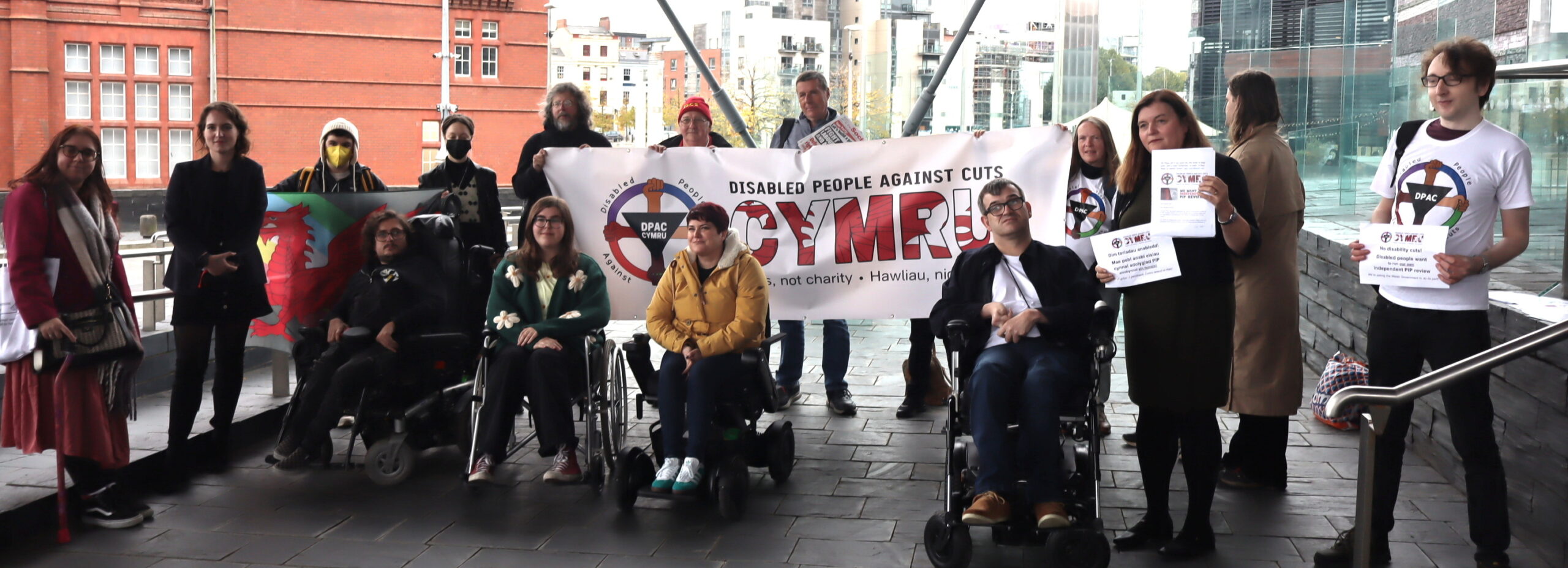
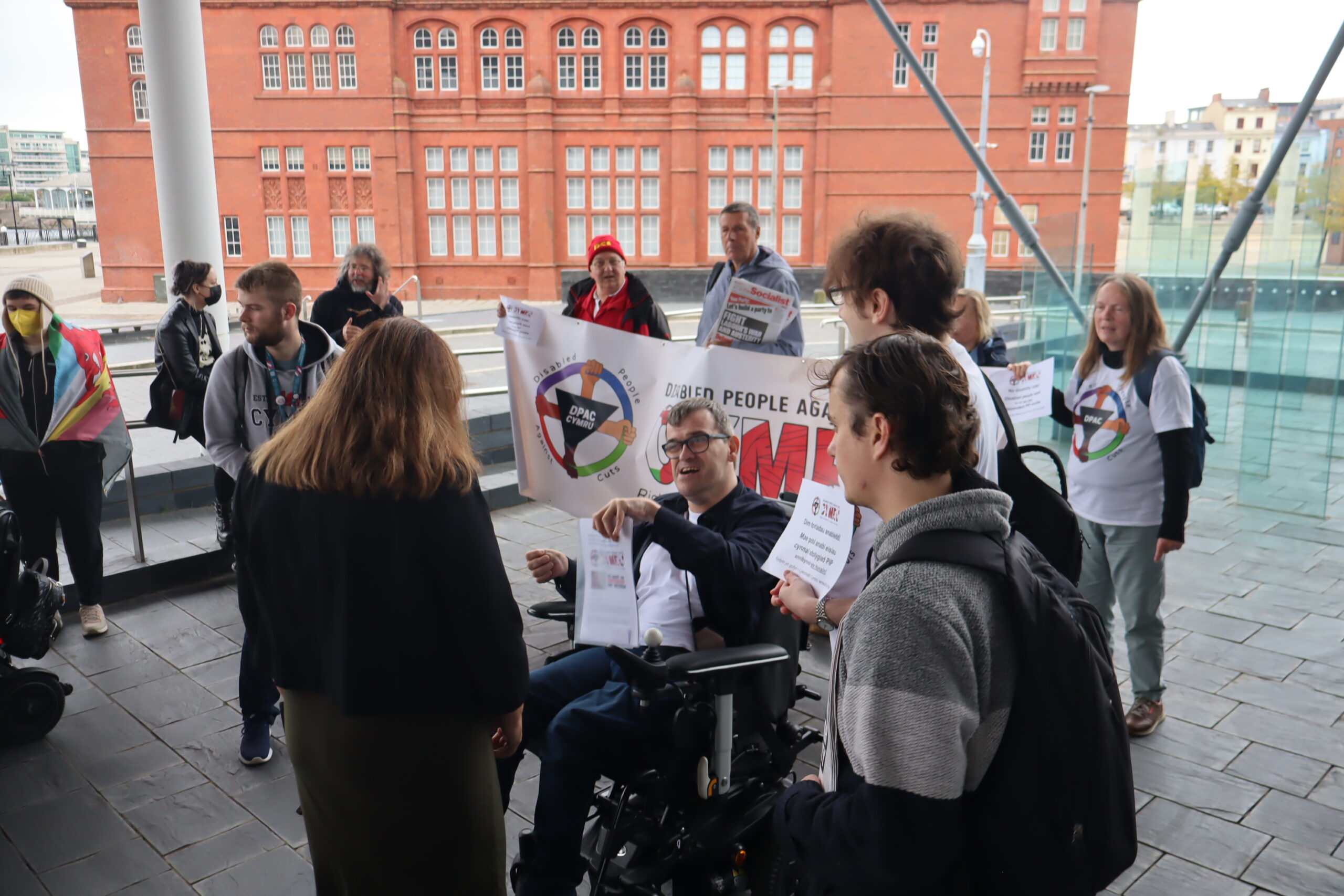
AJ Le Brun, a disabled activist with DPAC Cardiff and Valleys, said the bill had been “rushed through” with no thought for disabled people.
She said: “The changes and promises made in the final hours before the vote may have soothed the consciences of some MPs, but we see through these shaky promises.
“The changes to universal credit will push more of us into poverty, when we are already struggling with the rising costs of aids and support needed to live with dignity.
“I do not trust Stephen Timms and his department to conduct a fair PIP review.
“They have shown us they are not listening to disabled people by only providing one face-to-face consultation for Wales, and holding the vote the day after the consultation formally closed.
“What confidence can we have that this review will be any better?”
Because of the number of changes to the original bill, DNS asked DWP to confirm exactly what the bill would now do.
Here is the list provided by the department (edited for clarity by DNS):
- The bill will make changes to universal credit (UC) from April 2026
- It will not bring forward any changes to the PIP eligibility criteria
From April 2026:
- The standard allowance of UC will rise above inflation in each of the next four years
- The health element of UC for new claimants will be reduced to £50 per week
- Existing claimants of the health element and those new health element claimants meeting the severe conditions criteria (SCC) or considered under the special rules for end of life (SREL) will see their UC standard allowance combined with the UC health element rise in line with inflation in the next four years
- People in the SCC group will be exempt from future UC reassessments
3 July 2025
Four disabled Labour MPs stand up to government over cuts to disability benefits
Four disabled Labour MPs stood up to their government’s attempts to reduce vital disability benefits, despite ministers’ chaotic last-ditch concessions to rebels that removed a significant chunk of their cuts bill.
Marsha de Cordova, Marie Tidball and Emma Lewell all voted against the universal credit and personal independence payment bill, and each of them delivered powerful speeches in the House of Commons on Tuesday.
Another disabled Labour MP, Marie Rimmer, also voted against the bill.
But a fifth disabled Labour MP, Vicky Foxcroft – who had played a key role in the rebellion that forced a series of government concessions – voted for the bill and its significant cuts to the health element for many new claimants of universal credit.
She and many other Labour MPs who had previously opposed the cuts bill voted with the government after the minister for social security and disability, Sir Stephen Timms, suddenly announced at 5.25pm on Tuesday – nearly four hours after the debate began and just 95 minutes before MPs voted – that there was to be another concession.
Ministers had already announced that existing PIP claimants would not now be subjected to new rules that meant they would have to be awarded at least four points on at least one “activity” to qualify for the PIP daily living component, which were to be introduced from November 2026.
Work and pensions secretary Liz Kendall had also announced the previous day that the government would no longer freeze the health element top-up for existing claimants of universal credit, and that they and new claimants who were terminally-ill or were placed in the “severe conditions group” would instead see the combined value of their universal credit standard allowance and health top-up “rise at least in line with inflation”.
But in a dramatic intervention, Timms then also announced at 5.25pm that no cuts at all to PIP would go ahead until his own review into PIP – which Kendall said would be “co-produced with disabled people, their organisations, clinicians, other experts and MPs” – was completed in the autumn of 2026.
This final concession ensured that the bill passed by 335 to 260 votes.
The committee stage of the bill will take place in just a few days, on Wednesday (9 July), but without any measures to cut PIP.
Marsha de Cordova, a former shadow minister for disabled people, was one of the few MPs in the debate to warn how previous Department for Work and Pensions (DWP) cuts and reforms had led previously to the deaths of many disabled people.
Speaking before the final concessions were announced, she pointed to the many internal process reviews into deaths linked to DWP actions, and the long-delayed second inquest into the death of Jodey Whiting, which found last month that DWP’s decision to wrongly stop her benefits after a string of safeguarding failings was the “trigger” for her to take her own life.
De Cordova told fellow MPs: “I set that out because it is important that we understand that disabled people’s lives have not been valued or respected for the last 14 years.”
She also pointed to the findings of the UN committee on the rights of persons with disabilities, which last April found successive Conservative-led governments had made “no significant progress” in the more than seven years since a finding of “grave and systematic” violations of the UN disability convention.
Marie Tidball delivered an emotional speech, in which at times she appeared close to tears, in which she told MPs she would be voting against the bill “with a heavy, broken heart”.
She said she had been in discussions with ministers since April, “making clear that I could not support the proposals on PIP”.
She added: “PIP is an in-work benefit designed to ensure that disabled people can live independently.
“Low-level support such as PIP helps to build the bridge to the deinstitutionalisation of disabled people, keeping us out of the dark corners of hospitals, prisons and social care settings.”
Tidball voted against the bill despite the late concession from Sir Stephen Timms that ruled out all PIP cuts until the end of his review.
Emma Lewell also voted against the bill, despite the late concession.
She had told MPs that past Conservative social security reforms had not led to any cost savings but instead to “an increase in poverty, an increase in suicides, strain on the NHS and other public services, and, in the long run, higher welfare spending and reduced growth”.
But two other disabled Labour MPs, Liam Conlon and Jen Craft, voted for the bill, although they did not speak during the debate.
Steve Darling, the disabled Liberal Democrat MP and his party’s work and pensions spokesperson, voted against the bill, as did the rest of his party.
He had told MPs: “We all know that rushed bills are poor bills, and the law of unintended consequences will come to haunt the government if this bill goes through.”
Rachael Maskell, who was among leaders of the rebel Labour MPs – and proposed an amendment that would have killed the bill, but was defeated by 328 to 149 votes – told MPs in another passionate speech that she was voting against the bill because it was “a matter of deep conscience, as it should be and will be for us all”.
She was another MP who highlighted the harm caused by previous cuts and reforms to disability benefits, pointing to the 600 suicides between 2010 and 2013 that were linked to the programme to reassess incapacity benefit claimants.
Maskell said: “When they are managing discomfort, despair, pain and prejudice, are isolated and lonely, or their life has spiralled out of control, disabled people want anything but this bill.
“They are already discriminated and dehumanised, so I plead that we do not leave them desperate, too.”
There was disappointment among many disabled people that among those voting for the cuts to the universal credit health element was Labour’s Debbie Abrahams, chair of the work and pensions committee, who had been outspoken about her concerns about the “dog’s breakfast of a bill”.
She had told MPs that “too many people relying on social security support to survive have died through suicide, starvation and other circumstances exacerbated by their poverty” in the last 15 years as a result of the “punitive, even dehumanising, social security system in which not being able to work has been viewed with suspicion or worse, with devastating consequences”.
But she still voted for the bill, despite its significant cuts to the rate of universal credit that will be paid to most new recipients of the health element of universal credit from next April, who will see the health element nearly halved and then frozen.
Asked last night (Wednesday) why she had voted for the bill, despite the significant cuts to disabled people’s support that it still contains, Vicky Foxcroft referred Disability News Service to a statement on her website.
She did not mention those cuts in the statement, but she said that securing the concessions was “a huge victory for Labour backbenchers” and that she voted for the bill because it was “now in a much better form than it was two weeks ago”.
She said she would only vote for the bill at its final Commons stage “if the final proposals reflect the commitments ministers have made”, and that she would be “looking for ministers to take these commitments forward and ensure we have co-production right across government”.
Because of the number of changes to the original bill, DNS asked DWP to confirm exactly what the bill would now do.
Here is the list provided by the department (edited for clarity by DNS):
- The bill will make changes to universal credit (UC) from April 2026
- It will not bring forward any changes to the PIP eligibility criteria
From April 2026:
- The standard allowance of UC will rise above inflation in each of the next four years
- The health element of UC for new claimants will be reduced to £50 per week.
- Existing claimants of the health element and those new health element claimants meeting the severe conditions criteria (SCC) or considered under the special rules for end of life (SREL) will see their UC standard allowance combined with the UC health element rise in line with inflation in the next four years
- People in the SCC group will be exempt from future UC reassessments
3 July 2025
Silence from MP sister of Rachel Reeves over suicide linked to PIP flaws, just as government was seeking cuts
Labour’s chair has refused to answer questions about a disabled constituent whose suicide was closely linked to flaws in the personal independence payment (PIP) system, just as her government was trying to cut PIP spending by billions of pounds a year.
Three months after an ombudsman found that failings within the Department for Work and Pensions (DWP) and its PIP system were a factor in the death of Tracie, from south London, her MP, Ellie Reeves, is still refusing to comment on that report’s findings.
Reeves is chair of the Labour party and a Cabinet Office minister, but she is also the sister of chancellor Rachel Reeves, who many disabled people blame for the government’s decision to attempt to slash spending on PIP and other disability-related benefits.
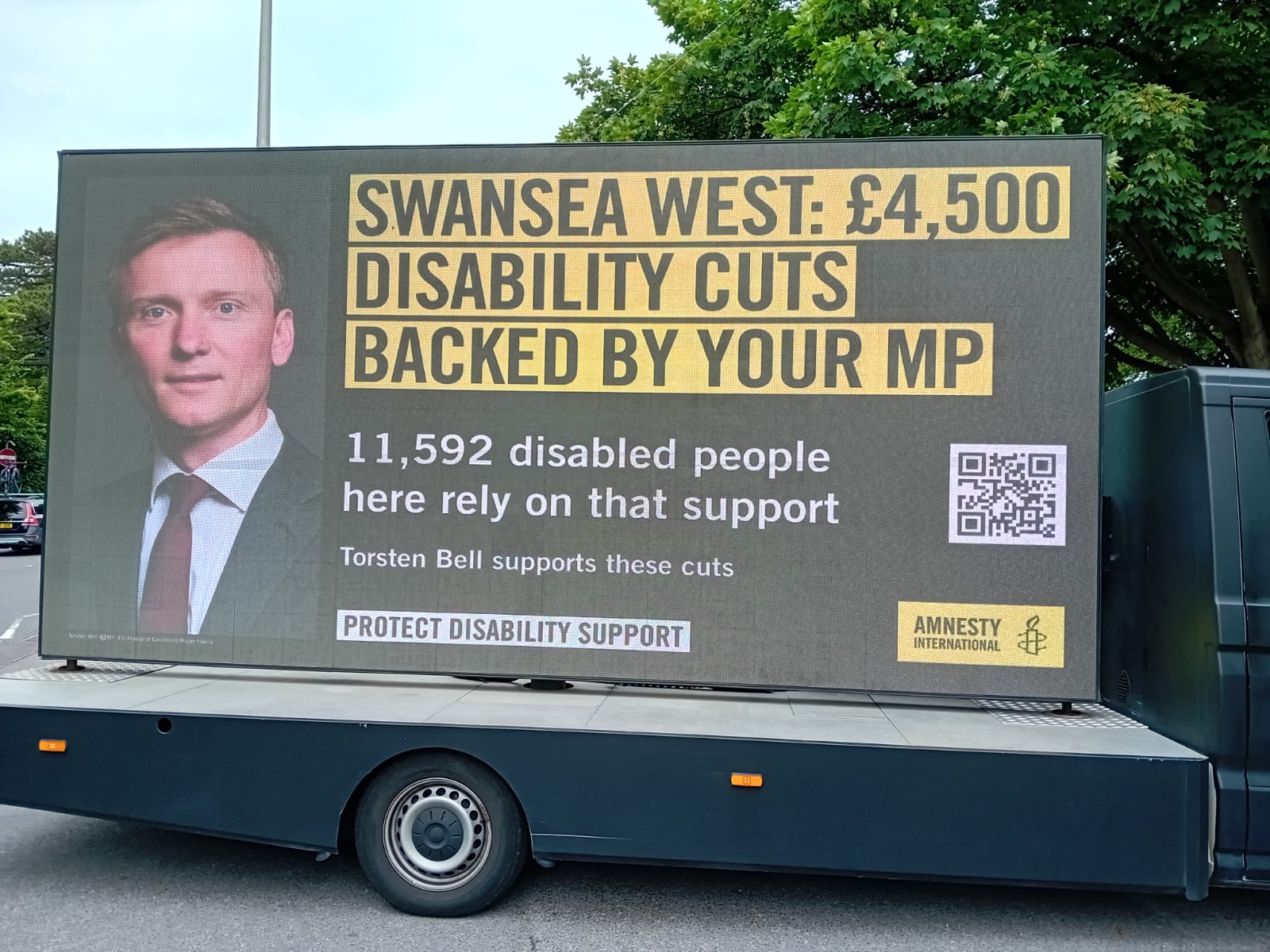
The ombudsman’s ruling was delivered to Tracie’s husband, Mustapha, just five days after Rachel Reeves announced, at the spring statement, that she would be making cuts to PIP spending of £4.5 billion a year by 2029-30.
It was Ellie Reeves, the MP for Lewisham West and East Dulwich, who referred the case to the Parliamentary and Health Service Ombudsman in December 2021, when Labour was still in opposition, and her office has supported Mustapha for nearly five years.
But since the ombudsman finally produced its report in March, Mustapha has not yet been able to discuss its contents with his MP.
He was originally told that Reeves was happy to discuss the report but had not yet received a copy, so he visited her office last month and posted a hard copy through the letterbox after an emailed copy apparently did not reach her.
Her office claims it did not receive a copy of the report until 18 June.
The ombudsman has apologised for not sending her a copy on publication, as it usually would; it finally emailed her a copy this week, but it is not clear why her office did not attempt to secure a copy of such an important report herself.
A member of her casework team has now told Mustapha that she – although not the MP – would be happy to discuss the report with him.
Mustapha has provided permission to Ellie Reeves to discuss the case with Disability News Service (DNS).
But the MP has so far failed to respond to questions from DNS, including what conclusions she has reached about the safety of the PIP system, in the context of the billions of pounds her sister has been trying to cut from PIP spending, and whether she would be taking any action on her constituent’s behalf.
Reeves has also refused to comment on the possible harm that could be caused to other disabled people like Tracie if the billions of pounds of cuts to PIP had gone ahead.
DNS first put the questions to Reeves on 7 April, nearly three months ago.
The ombudsman had concluded that DWP’s failings in dealing with Tracie’s PIP claim were a “significant contributing factor” in her decision to take her own life in March 2020.
Tracie’s mental health had been stable, but she “spiralled into a deep depression” after DWP removed the daily living part of her PIP following a review of her eligibility in July 2019.
The ombudsman concluded that DWP – which eventually admitted that its decision on her claim had been wrong – failed to consider the relevant evidence properly.
The ombudsman is now looking at whether DWP needs to make “wider changes to its service and the way it considers benefit claims”, as part of a broader piece of work which includes an investigation into the death of another disabled claimant.
Asked for an update on this work, a spokesperson for the ombudsman said: “This work involves an ongoing investigation.
“By law we investigate in private so we cannot comment further on this.”
DWP eventually decided – after her death – that Tracie should have been entitled to the enhanced daily living rate of PIP.
DWP accepted that Tracie had needed help from another person to get in and out of the bath; couldn’t wash all her body herself; relied on incontinence pads; needed assistance to take her medication; had paranoid thoughts and felt anxious when others were around; rarely left the house; avoided mixing with other people; and experienced significant mental distress and suicidal thoughts.
But despite her significant support needs, the report shows that someone with Tracie’s level of impairment would not have qualified for even the standard rate of the daily living part of PIP if the chancellor’s cuts had been implemented from November 2026.
This is because to qualify for PIP daily living, a new claimant would have needed at least four points in at least one “activity”, and the most Tracie qualified for in any single activity was three points.
The ombudsman’s findings have therefore been posing a political headache for Ellie Reeves, although that eased this week when a chaotic parliamentary debate saw ministers withdraw all cuts to PIP from the universal credit and personal independence payment bill, with future cuts not to be considered until after a ministerial review (see separate stories).
The ombudsman finally sent Reeves a copy of the report on Monday, three days after DNS had asked when the MP had received the report.
A spokesperson for the ombudsman said: “The usual procedure after a parliamentary investigation is closed is that the report would be sent to the referring MP on the same day as the complainant and organisation involved.
“In this case, human error meant the report was not sent to the MP.
“We have apologised to the complainant and MP for this error.
“We will learn from this mistake to prevent it from happening again in the future.”
*The following organisations are among those that could be able to offer support if you have been affected by issues raised in this article: Mind, Papyrus, Rethink, Samaritans, and SOS Silence of Suicide
3 July 2025
Disabled people receiving care were ‘ignored by design’ during the pandemic, Covid inquiry hears
Four national disabled people’s organisations (DPOs) have told the Covid inquiry that people who receive care and support were “ignored by design” during the pandemic.
The inquiry heard on Monday that there were more than 43,000 deaths involving COVID-19 in care homes across the UK between March 2020 and July 2022, although there were no figures given for how many disabled people died in their own homes while receiving care services.
The inquiry also heard that, during the first two peaks of the pandemic, before vaccines became widely available, people with learning difficulties were seven to nine times more likely to experience a COVID-19-related death than people without learning difficulties.
And more than a quarter of all deaths from COVID-19 in 2020 were in people with dementia, even though they only made up two per cent of the total adult population.
Disability Rights UK (DR UK), Disability Action Northern Ireland, Disability Wales and Inclusion Scotland have together been granted “core participant status” in module six of the UK Covid-19 Inquiry, which is examining the impact of the pandemic on the adult social care sector across the UK.
Their opening statement for module six was delivered on Monday by barrister Danny Friedman, from Matrix Chambers.
He told the inquiry that the pandemic saw care settings become life-threatening, while “care services to sustain everyday basic quality of life were withdrawn”.
He highlighted how the Scientific Advisory Group for Emergencies (SAGE), which provides advice to government during emergencies, stated in May 2022 that no UK country was able to “routinely identify who is resident in care homes, who is receiving social care at home, and who works in or visits a care home or a person’s home”.
These data weaknesses meant the “recipients of care, the way they live, and the way that many of them died, was ignored by design”, said Friedman.
The DPOs’ opening statement said that care staff were allowed to move from care setting to care setting, spreading the virus, because those in charge knew the system would “collapse” if staff were forced to work only in one location.
Friedman said: “Care homes would go under. People would be abandoned. It was decided that the lesser of evils was hazardous movement of staff.”
The DPOs also highlighted how the “very first thing” the UK government did in the pandemic was to “legislate to take their rights away” under the Care Act.
But Friedman said that only eight local authorities in England lodged reports to show they were operating under these emergency care laws, even though the evidence showed there were “vastly reduced services across the country”, which meant local authorities must have “embarked on mass violations of the law”.
He said: “Some local authorities reduced their services to basic life and limb protection, social contact services were drastically cut, leaving people with dementia, learning disabilities and learning difficulties and mental ill-health totally isolated for long periods.
“The singular benefit of easements was that the law required reasoned, recorded, and open decision-making about withdrawal of services and disclosure of that fact to central government, but across the system, that is the one thing that local authorities near uniformly appear not to have done.
“Government then helped to misrepresent the human cost by finding false consolation that only eight reports were made.
“Rather than taking steps to enforce the law, the result is one of the singularly worst failures of accountability, and indeed illegality, across the period.”
The DPOs also highlighted that the government had focused on care homes and not domiciliary or supported care settings when it thought about issues such as providing personal protective equipment, testing for the virus, and getting hold of food.
Friedman said: “All these things were afterthoughts, grafted on to government responses far later than for hospitals and residential settings, if at all.”
The inquiry had heard earlier that its module six investigation had gathered more than 200,000 pages of evidence.
The hearings will last five weeks, and about 55 witnesses will give oral evidence.
Nearly 47,000 people have shared their experience of the care sector during the pandemic with the inquiry’s Every Story Matters listening exercise, the inquiry heard.
After the hearing, Georgia Bondy, who is working for DR UK on the inquiry, said: “The government needs to take responsibility for the fact that its lack of planning, consultation and care is part of the reason so many disabled people receiving care died and suffered during the pandemic.”
Rhian Davies, chief executive of Disability Wales, said: “Curtailing disabled people’s rights under the Social Services and Wellbeing (Wales) Act (2014) was one of the earliest decisions taken by Welsh government at the outset of the pandemic and paved the way for Wales experiencing the highest death rate from Covid-19 amongst disabled people in the UK.”
And Nuala Toman, head of accessibility at Disability Action Northern Ireland, said: “The pandemic exposed a brutal truth: disabled people were not only forgotten, they were disregarded through planning and service design failures.
“The UK and Northern Ireland’s fragmented and underfunded care system, combined with institutional ableism, led to preventable deaths and trauma.
“Unless our governments act now, we are knowingly walking into the next crisis with the same failures.”
Heather Fisken, chief executive of Inclusion Scotland, said: “If there was ever any emergency planning around these vital services and supports, disabled people were unaware and not involved.
“As a consequence, tens of thousands of disabled people lost vital support, often overnight, and were put at increased risk of contracting COVID.
“Today, some still don’t have the support they had prior to the pandemic.
“Governments need to take this learning forward and work with our organisations to ensure social care support is invested in and systems around it are strengthened and people-led so that this never happens again”.
3 July 2025
Disabled activists warn Labour MPs who vote for cuts: ‘The gloves will be off’
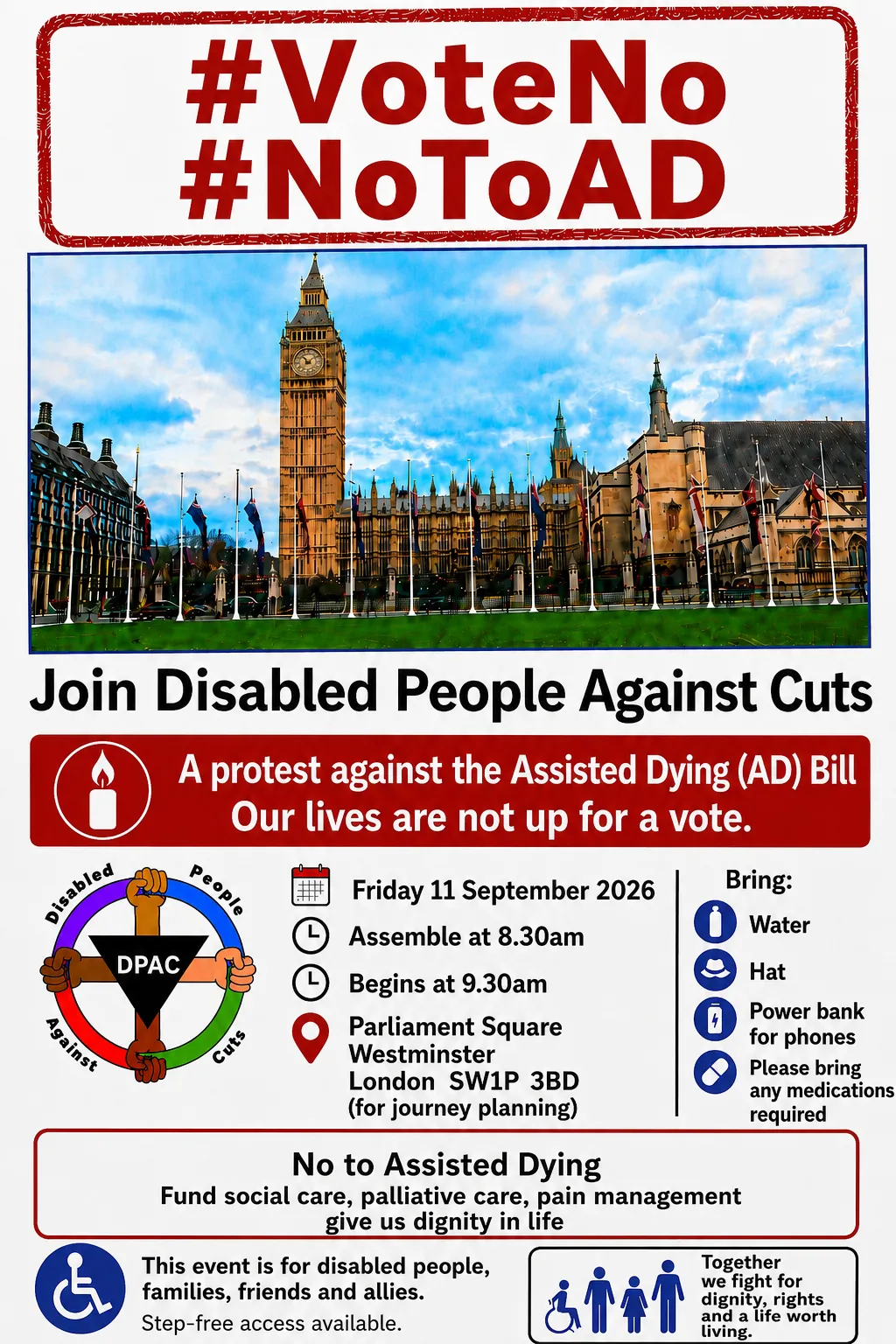
Labour MPs were given their final warning by disabled activists at a sweltering rally outside parliament on Monday that, if they vote for cuts to disability benefits, the “gloves will be off”.
Ellen Clifford, one of the key organisers of the rally and award-winning author of The War on Disabled People, warned MPs of the consequences if they voted for the cuts.
She told the #WelfareNotWarfare rally, which took place a day before MPs voted on the cuts in the universal credit and personal independence payment bill (see separate stories): “I know that disabled people will fight to the end.
“We are not going to let this through without one hell of a fight. And if it does, we are not going to forgive any Labour MPs who either vote for it or abstain.”
Paula Peters, from Disabled People Against Cuts (DPAC), said any Labour MPs who voted for the cuts would be forced from their seats.
She said: “Let’s tell these MPs: the gloves come off. We turn the anger into action and we’re not going to back off.”
John McArdle, co-founder of the Scottish grassroots group Black Triangle Campaign, warned Scottish Labour MPs – including his own MP, Ian Murray – that disabled people would “wipe the floor” with them at the next general election if they backed the cuts.
“Any of these MPs that vote for this bill… if you vote to push us into the most appalling poverty and despair, we will wipe the floor with you at the general election, we will boot you out of Scotland.”
Among the speakers was Joy Dove, who has fought for justice for eight years for her disabled daughter Jodey Whiting.
She took her own life in February 2017 after the Department for Work and Pensions (DWP) wrongly removed her out-of-work disability benefits following five missed chances to save her.
Dove read out part of the ruling given by the coroner at a long-awaited second inquest last month, which concluded that her daughter’s benefits had been “wrongly” withdrawn.
And she warned that other disabled people could die if the cuts went ahead.
She had a message for the department: “DWP, you killed my daughter, and I don’t want it to happen to anybody else.”
Dr Natasha Hirst, disabled activist and former president of the National Union of Journalists, also spoke of the harm the cuts would cause.
She said the bill would take money from disabled people “who are already struggling to survive.
“We know this will harm them, we know this bill will kill people.
“MPs need to listen to their disabled constituents. Take the money from those who can afford to pay, not those who can’t.
“We will not forget how you vote.”
Welfare rights adviser Emma Cotton told the rally of the damage already caused by 15 years of austerity.
She said: “I have seen the damage that austerity has done. I have been a witness to a near-total degradation of the UK social security system.”
Fazilet Hadi, from Disability Rights UK, was among those who mentioned the government’s pledge that it was now going to start co-producing policy with disabled people.
She said: “That is absolute rubbish. If they had wanted to co-produce with disabled people, they should have talked to us a year ago… they should have put these proposals in the green paper… they should have stopped rushing this bill through.”
She said earlier: “It is absolutely shameful what this government is doing to disabled people, and it will be shameful for Labour MPs if they vote with the government.
“Successive governments have made us poor, successive governments have put the NHS on its knees, successive governments have taken away social care, successive governments have made us a society where disabled people are becoming sicker and new disabled people are coming on stream because of homelessness, poverty, and lack of food.”
There were regular outbursts of anger among speakers, including from Mac, from Crips Against Cuts, who told the rally: “Tax the wealthy, instead of killing the crips.”
Several disabled speakers – including Clifford – also spoke of their pride in a disability community that continues to fight, despite 15 years of battling against austerity cuts.
The rally was led by DPAC, and supported by the Taking The PIP campaign and Crips Against Cuts, as well as mainstream campaign groups Stop the War Coalition, The People’s Assembly, The Trade Union Coordinating Group, and We Demand Change.
There were several speeches from members of the disabled people’s Taking the PIP anti-cuts campaign, including actors Cherylee Houston, Lisa Hammond and Cerrie Burnell.
Houston said: “How dare they try to reduce our futures, how dare they try to infer that we are of less value, a lesser part of society.
“We need to stand up and hold firm. They cannot strip away years of legacy within our community.
“I’m here alongside everyone else to say stop this bill, stop it now before more people die.”
Hammond said the concessions made by ministers were “nothing more than political spin.
“They are designed to buy off rebellion, not to protect our rights.”
Among others who warned of the consequences of the cuts was Angela Grant, president of the DWP group of the PCS union, who said: “Many of us, including me, depend on PIP to keep us in work.
“I would not be able to work if they came after PIP.”
She added: “They do not care, they are not listening, until we make them listen.
“We stand together because if we start letting them divide us, divide us in our communities, they will break us down one by one.”
Hamza spoke of the impact on fellow disabled asylum-seekers, and he told the rally: “We are here today to fight for our fundamental human rights.
“We fight to win, or we die fighting.”
The rally was temporarily disrupted by protesters from a rival rally who supported the right of Israel to continue its genocide in Palestine and to continue bombing Iran, and supported the son of Iran’s former Shah and want to see regime change in Iran.
They had edged closer and closer to the disabled people’s rally, and several of their supporters appeared intent on antagonising and intimidating disabled activists, with several reports of aggressive disablist abuse.
When disabled activists saw this begin to happen, they linked arms with allies to protect disabled people and their rally and continued to chant “welfare not warfare” until the pro-Israel protesters eventually melted away.
Although police officers had been seen dragging away at least two members of the pro-Israel rally, the Metropolitan police said afterwards that they were not aware of any arrests.
Several of the pro-Israel supporters refused to talk to Disability News Service, but one of them claimed they were opposed to Stop the War Coalition, which was supporting the anti-cuts rally, and he criticised the argument that cutting spending on bombs would allow increased spending on social security.
The disabled people’s rally also included songs from disabled activist and singer-songwriter Sophia Kleanthous, who minutes earlier had been part of the human barrier.
Her songs included a new anti-cuts anthem written for the rally: Cut Us Until We Bleed.
As she introduced the song, she told the rally: “We will not allow people to divide us.
“We will not support war, and we will not support these cuts.”
At the end of the song, activists displayed a huge new banner, which said: “You Cut We Bleed.”
A string of MPs spoke at the rally to express their solidarity with disabled people, including Labour’s Ian Lavery, Andy McDonald, Richard Burgon, Lorraine Beavers and Brian Leishman, former Labour leader – and now an Independent MP – Jeremy Corbyn, and fellow Independent MP Adnan Hussain.
Burgon told the rally: “You’re saying, and we support you, that enough is enough.
“Let’s be clear: this bill was brought to save money. This bill was brought to do that by making things worse for disabled people in this country.”
And he sent a message to fellow Labour MPs: “Certain votes in parliament define you, certain votes in parliament will be remembered not only for the rest of your political career, but probably for the rest of your life.
“It’s about time that my colleagues got an inch of the guts, an inch of the courage of disabled people outside here today, and did the right thing.
“Don’t talk to me about agonising over the vote – the people agonising are disabled people across the country who are worried about the future.
“Don’t talk to me about agonising on £93,000 a year, do the right thing for God’s sake.”
3 July 2025
GB News says it has nothing to apologise for, after guest suggests starving disabled benefit claimants
A British news channel has said it has nothing to apologise for after a right-wing commentator and comedian suggested the best way to cut the number of disabled people claiming benefits was to starve, or even shoot, them.
It is just the latest example of disability hate speech broadcast and published by mainstream media organisations over the last 35 years that have run in parallel with government attempts to cut spending on disability benefits.
GB News presenter Patrick Christys had told viewers that “welfare needs to be cut” – while ignoring the evidence that working-age social security spending is stable as a proportion of GDP* – before claiming that the prime minister was not “doing much” to cut disability benefits.
He then asked his guest Lewis Schaffer how he would “get them off their backside”.
Schaffer replied: “Just starve them, that’s what people have to do, that’s what you’ve got to do to people, you can’t just give people money.”
He then added: “What else can you do? Shoot them? I mean, I’d suggest that, but I think that’s maybe a bit strong.”
Christys then replied: “Yeah, it’s just not allowed these days.”
On his X/Twitter profile, Schaffer describes himself as a “virologist, cardiologist, climatologist, historian”, but elsewhere he is described as a “comedian and broadcaster”.
One of the earliest commentators to pick up Schaffer’s comments was “Maximilien Robespierre”, who described the comments on his YouTube channel as “dangerous rhetoric”.
GB News originally refused to comment, but it eventually produced the following statement for Disability News Service (DNS): “Having reviewed the comment, which is clearly comedic, GB News does not consider there is anything that requires an apology, or further explanation.”
But Dr Natasha Hirst, disabled members’ representative for the National Union of Journalists, told DNS: “It is appalling and unacceptable for an Ofcom-regulated broadcaster to encourage and allow discriminatory and harmful commentary about disabled people.
“Suggesting violence towards disabled people is no joke and has real-life consequences by emboldening hate speech and harassment.
“We expect Ofcom to do its job as a regulator and investigate the complaints raised with a recognition of the wider context of exclusion and abuse that disabled people experience in their daily lives.”
Disabled campaigner Ben Scott called for GB News to be shut down by the broadcasting regulator Ofcom because of the “astronomically shocking” and “appalling” rhetoric.
He said Schaffer’s comments reminded him of Nazi “useless eater” rhetoric from the 1930s, which eventually led to the targeted killing of hundreds of thousands of disabled people in Germany through the Aktion T4 programme.
After Scott criticised him on X, Schaffer repeated some of his comments, posting: “I’m suggesting ‘starving’ or and then ‘shooting’ the disabled, to lower costs!”
This week, Schaffer’s website appeared to have been taken off-line, but Wikipedia describes him as “an American comedian and broadcaster” who is also a GB News presenter.
The comments come just three months after the Department for Work and Pensions drew horrified comments after publishing figures that showed the total cost to the economy of disabled people who cannot work, which was described as a “chilling” echo of the propaganda of 1930s Germany.
Ofcom confirmed that there had been complaints about Lewis Schaffer’s comments, but because there were less than 50, it was unable to say how many.
An Ofcom spokesperson said: “We are assessing complaints about this programme against our broadcasting rules before deciding whether or not to investigate.”
*Gross domestic product, the size of the country’s economy in a particular year
3 July 2025
SEND inspections find services in just one in four areas usually lead to ‘positive’ outcomes for disabled children
Only one in four inspections of local services for disabled children in England last year concluded that they usually lead to “positive experiences and outcomes” for those young people, the education regulator has announced.
The findings from Ofsted showed that 28 inspections of special educational needs and disabilities (SEND) services in local areas were carried out in 2024, but only seven led to a positive report.
Six of the inspections – which do not involve inspections of schools – concluded that there were “widespread and/or systemic failings” in local services which led to “significant concerns”, while the other 15 concluded that there were “inconsistent experiences and outcomes” for children and young people with SEND.
The inspections are carried out jointly by Ofsted and the Care Quality Commission, a process which began in January 2023, with every area supposed to be inspected at least once every five years.
Only about a third of 153 local areas have been inspected so far.
Dr Edmore Masendeke, policy and research lead for The Alliance for Inclusive Education, said the figures were “not surprising” and reflected the continuing segregation and exclusion of disabled children and young people within the education system.
He said: “What ALLFIE sees is a growing investment in segregation and deliberate dismantling of any progress made towards inclusive education.”
He said this was happening in areas such as Newham, in east London, where Sir Stephen Timms, the minister for social security and disability, is MP for part of the constituency.
In January 2024, there were 576,000 children and young people aged up to 25 with an EHC plan, and another 1.2 million pupils receiving SEN support in school.
The worst-performing area since the inspections began in January 2023 is the East Midlands, where four areas were found to have “widespread/systemic failings” and just one was found to be “typically positive”.
The North West has also performed poorly so far, with four failing areas, three inconsistent, and one positive.
The best was North East, Yorkshire and the Humber, with four positive, five inconsistent and none found to be failing; London is not far behind, with three positive, six inconsistent, and just one failing.
Masendeke said: “For years, ALLFIE has repeatedly warned that disabled children and young people are being harmed by all forms and practices of segregated education, which continue across all areas of learning but does not lead to inclusive education experiences, where all students are taught together in the same classroom and settings alongside their peers.”
He added: “ALLFIE is also deeply concerned that just a third of local areas have been inspected so far.
“How many more disabled children and young people are enduring the same poor educational experiences, or worse?”
He said the findings came at a time when there were serious threats to the legal protections provided by education, health and care plans.
And he said there appeared to be a “wider move by government to disrupt inclusive education by reducing disability provision and support, redirecting funding from mainstream settings to expand segregated provisions, including building more units within mainstream schools and increasing the number of segregated schools”.
An Ofsted spokesperson said: “These statistics highlight that the outcomes and experiences of too many children with SEND are not as positive as they should be.
“We recognise the SEND system is under significant pressure; however, it is vital that improvements are made so children get the support they need.”
The inspections evaluate arrangements for all children and young people with SEND aged up to 25, including those who have an education, health and care (EHC) plan and those who receive special educational needs (SEN) support.
They examine the education, social care and health services provided to disabled children and young people in the local area, including the structure of the local education system, school attendance figures, school transport, employment data for those who have left education, provision of short breaks, transition into adult social care, and performance data on health services.
As part of the inspections, they visit schools and other settings and services, and gather the views of parents and carers, children and young people.
CQC had not commented by noon today (Thursday).
The Department for Education had also not commented by noon today.
3 July 2025
Other disability-related stories covered by mainstream media this week
Discharging untested patients from hospitals to care homes during the Covid pandemic was the “least worst decision”, the former health secretary Matt Hancock has told a public inquiry. In his testimony to the UK Covid-19 inquiry, Hancock defended the decision – which was later ruled illegal in a high court judgment – to move hospital patients into care homes during the early weeks of the pandemic to free up space: https://www.theguardian.com/uk-news/2025/jul/02/matt-hancock-covid-inquiry-care-homes-hospital-discharge-policy
3 July 2025
News provided by John Pring at www.disabilitynewsservice.com