Nov 242026
 
DPAC Logo with text underneath "Disabled People Against Cuts" and then web address dpac.uk.net

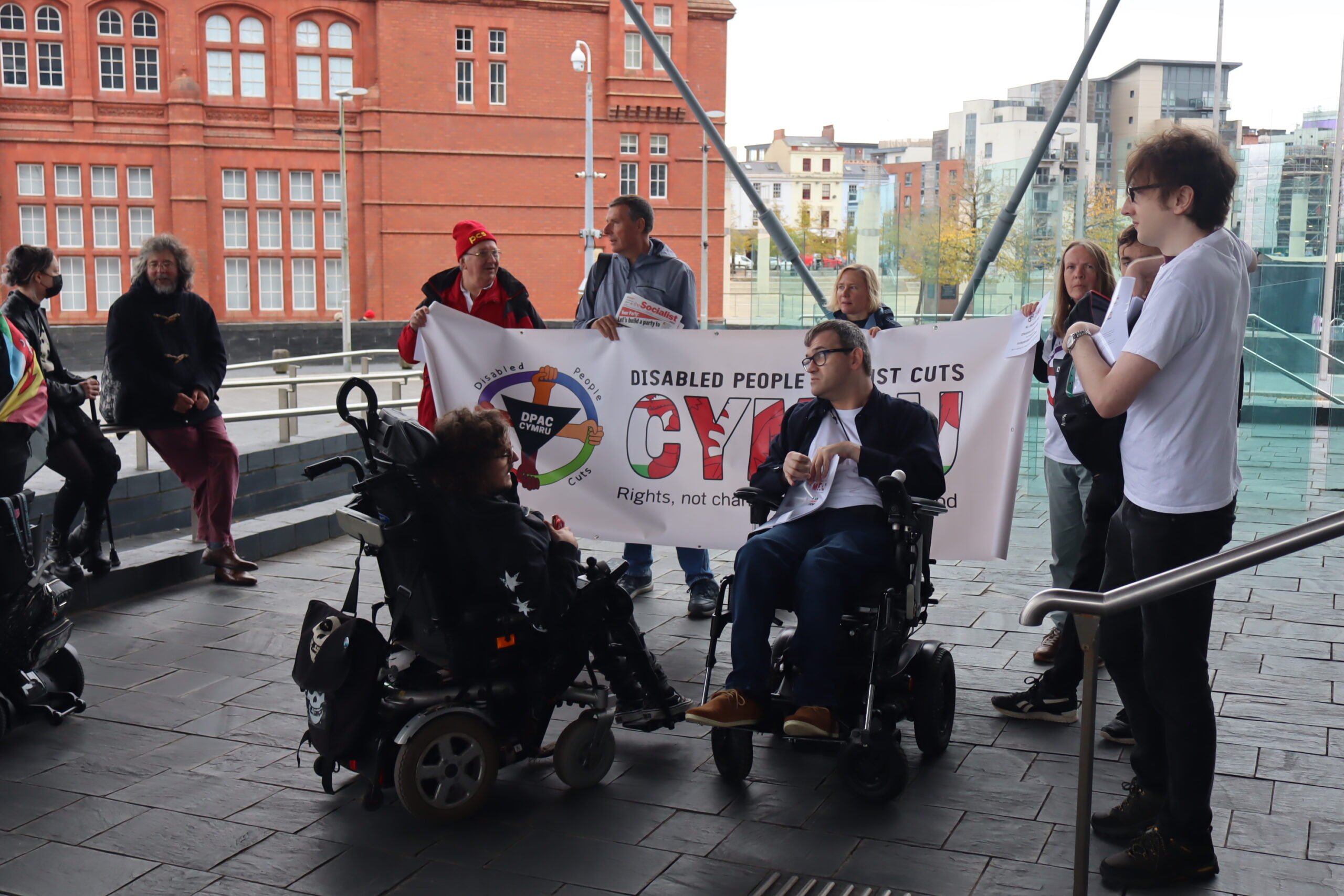
Disability campaigners have slammed the publication of the Timms Review this afternoon, claiming it “misrepresents the record by omission” by failing to reflect participants’ overwhelming opposition to plans to cut disability benefits for under-25s.

Disabled People Against Cuts Cymru (DPAC Cymru) also expressed disappointment that “despite assurances”, issues raised by Welsh disabled people have been “completely sidelined.”

The UK Government claimed the Timms Review would be delivered in “co-production” with disabled people and their organisations.


One review participant, Ben Golightly, from DPAC Cymru, said:

“The Timms Review was a flawed consultation, but an honest account of the responses would mean two DWP-backed reviews, Timms’ and Milburn’s, a week apart, taking diametrically opposite stances on youth disability benefit cuts.”

Golightly added that:

“These cuts were an open secret, which the DWP dishonestly left out of the official consultation, even as they briefed the press. Nonetheless, representative organisations of disabled people made it clear to Mr. Timms, to his face, and in front of a dozen civil servants, that it was a red line.

“In South Wales, the randomly selected Timms Review workshop participants, all disabled people, insisted on confronting the issue, unanimously voting to reject the cuts.

“And Timms Review panel members directly instructed the DWP to publish that view. Its omission is a scandal.”

DPAC Cymru said that they “would not leave young disabled people behind” and would campaign to defeat cuts to disability support.


A spokesperson for DPAC Cymru also expressed anger that the review sidelined issues raised by Welsh disabled people:

“We had explicit assurances that the review, which used AI to process responses, would not ignore important views expressed by a minority of people, including Welsh disabled people, or gendered experiences.

“The review has flattened all nuance, and will not meet the diverse needs of disabled people. It continues the pattern of disabled people in Wales being treated as an afterthought by the UK Government.

“Even though it is the policy of the Welsh Government, and the national association of disabled people’s organisation in Wales, the review does not engage with calls for devolution of welfare with funding based on need. These calls were raised by Welsh Disabled people during their limited to have their say as part of the review.

“We will now be pressing Welsh Government ministers to deliver on their pre-election pledges, and commission a genuine and independent review, led by disabled people and our organisations, including our trade unions, and reject UK Labour’s disability cuts.”

END

Notes on devolution of welfare:

  • There exists “a distinctive body of law on equality and human rights applies in Wales; one that differs to other UK jurisdictions.” (Wales Institute of Social and Economic Research and Data) e.g. wellbeing of future generations (wales) act 2015.
  • More scope for genuine co-production with tradition of Welsh Government having political courage and being willing to genuinely share power e.g. Disability Rights Taskforce

Press contact: dpac.cymru@gmail.com

Nov 242026
 
DPAC Logo with text underneath "Disabled People Against Cuts" and then web address dpac.uk.net

Key Points from Disabled People Against Cuts ahead of the publication of the Timms Review Recommendations for the future of Personal Independence Payment

Who we are: Disabled People Against Cuts is a Deaf and Disabled people led campaign group set up in 2010 to oppose the brutal and disproportionate impacts of austerity and welfare reform on UK Deaf and Disabled people. We have a national group co-ordinating across England, Scotland, Wales and Northern Ireland and local branches active across the UK. We also work with Deaf and Disabled People’s Organisations (DDPOs) on reporting to the United Nations Committee on disability rights about implementation of the Convention on the Rights of Disabled People (UNCRDP) within the UK.

Summary of key points:

  1. PIP needs overhauling to make it more rather than less generous.
  1. Redesigning the system to be focused around specific disability-related costs will cost more than the current system unless the new system introduces arbitrary rules about costs it will and will not cover.
  1. Redesigning the system to be focused around specific disability-related costs without making the UC health element more generous in amount and with wider eligibility will lead to greater poverty among Deaf and Disabled people.
  1. Deaf and Disabled People’s Organisations and campaigners have serious concerns about this review and how it has been undertaken.

In detail:

PIP needs overhauling to make it more rather than less generous.

Any changes that tighten eligibility will make poverty worse in the UK at a time when there is already an entrenched relationship between disability and destitution.

  • A new report from the Joseph Rowntree Foundation on Destitution in the UK shows that the relationship between disability and destitution – which is the worst form of poverty – has not improved since 2022. They warn that benefit cuts proposed by Milburn and any changes that tighten eligibility through Timms risk making this situation even worse.
  • JRF found that whereas 46% of the population report a long-term health condition or disability, we are over-represented making up 61% of those in destitution.
  • Between 2023 and 2024, the proportion of Disabled people using foodbanks rose from 69% to 74% according to the Trussel Trust – five percent over three year.
  • Social care charging has become unaffordable to many Disabled people, pushing them out of the social care system where their needs are likely to increase, creating greater pressures on the NHS. More than 60,000 disabled adults and people with long-term illnesses in England were chased by councils for home social care debt in 2021–2022, with legal action taken against 330 people.

The disability benefits system is insufficiently generous both in terms of levels of award and eligibility rules which currently exclude people who need it.

Pushing people out of the benefit system might meet arbitrary DWP targets but it doesn’t solve the social problem, rather it makes it worse.

  • According to research by the Joseph Rowntree Foundation in 2016, poverty costs the UK £78 billion per year with £69 billion of that spent on direct services.
  • According to analysis by the Disability Policy Centre, every £1 cut from disability benefits can generate around £1.50 in additional cost pressures or impact across other public services, such as local council social care and the NHS.
  • Poverty pushes Deaf and Disabled people further from employment. Research findings showing new successful PIP applicants decreasing their working hours do not provide a robust basis from which to conclude that Deaf and Disabled people are choosing a benefit life-style in place of working for a living. A lived experience perspective suggests instead that these new applicants were previously working in a way that was not sustainable for them due to their disabilities and that the additional income allowed them to better meet their own needs thus reducing need for and pressures on public services.


Redesigning the system to be focused around specific disability-related costs will cost more than the current system unless the new system introduces arbitrary rules about costs it will and will not cover.

We have serious questions about how the Timms Steering Group has reached their conclusions, what evidence was examined and whether existing evidence and research findings were sufficient for the panel to make fully informed decisions.

– When Disability Living Allowance (DLA – the predecessor to PIP) was designed it was decided to base assessments around levels of support need as a proxy for levels of disability-related expenditure in order to reduce bureaucracy, the burden on claimants and administration overheads.

– Government intention behind any changes to PIP is to reduce spend but this approach fails to acknowledge the additional pressures on other public services that disability benefit cuts during a cost of living crisis will entail and consequences requiring unplanned spend in those other areas, for example policing and the criminal justice system and addressing needs arising from greater poverty.

PIP awards are less than the average monthly disability-related costs that Deaf and Disabled people incur.

  • Enhanced PIP for both the care and the mobility component totals £778.40 per month for the 2026/27 tax year. Scope’s latest Disability Price tag findings show that disabled households need an extra £1,095 each month on average. This is just to have the same standard of living as non-disabled households. This makes a shortfall of over £300 per month.
  • Individual claimants are often able to directly purchase services at a lower cost than the same services would cost if provided as part of a wider bureaucratic system.
  • It is not true that living with invisible disabilities such as mental distress and neurodivergence does not create the same levels of additional costs as physical impairments as has falsely been claimed by at least one panel member of the Timms review.
  • Recent research by the Resolution Foundation found that excluding certain claimants from accessing PIP, for example those with ADHD or anxiety, would not yield major savings because those claimants also report high levels of extra cost.
  • PIP has long been picking up gaps in the system left by struggling or hard to reach services such as social care, housing, Disabled Facilities Grant or Access to Work for example, as found by the responses to the Timms review call for evidence.

Timms is expected to recommend greater use of support services in place of PIP cash payments when enough services simply don’t exist to meet the levels of additional need this will create.


Redesigning the system to be focused around specific disability-related costs without making the UC health element more generous in amount and with wider eligibility will lead to greater poverty among Deaf and Disabled people.

Increasingly Deaf and Disabled people are having to use our PIP for everyday survival. Focusing PIP around disability-related expenditure will leave many unable to meet their essential living costs leading to higher levels of disability-related poverty, debt and mental distress.

  • Responses to the Timms Call for Evidence found that PIP is often used for basic ‘survival’ rather than being dedicated to the extra costs of living which arise from a disability or health condition.
  • An unpublished in-house DWP report called “Triggers to Claiming PIP” obtained through a Freedom Of Information request found that most new applicants surveyed “…cited financial support as the driving purpose of PIP, with bills and basic survival mentioned prominently.”
  • The working age PIP recipients surveyed by the Resolution Foundation reported using some or all of their award for general living costs rather than solely for the extra costs of their disability.
  • Even when accessing disability benefits, some claimants are nevertheless destitute due to the inadequacy of benefit rates of payment. The new report from JRF found that 63% of Disabled people in destitution are nevertheless accessing disability benefits
  • Around half of all UK poverty is disability-related.

Timms recommendations to overhaul PIP alongside Milburn’s proposed cuts to disability benefits for young people (and recommended by him to be extended to over 25s as well) would have serious adverse impacts for large numbers of Deaf and Disabled people.

  • The Joseph Rowntree Foundation has warned that UK disability benefit cuts risk worsening youth destitution, with millions left unable to regularly afford everyday basics.
  • Barriers, poverty, exclusion and lack of opportunity for Deaf and Disabled young people can cause trauma which goes on to negatively impact the rest of their lives, resulting in poor life outcomes and greater long-term dependence on that services.


Deaf and Disabled People’s Organisations and campaigners have serious concerns about the Timms review and how it has been undertaken.

We have question-marks over the robustness of research findings, and adequacy of data and information that have informed the recommendations.

  • When Deaf and Disabled people are not involved in designing research on issues that affect us, important aspects are often missed, resulting in findings that may not accurately reflect reality.
  • We have questions over what data was looked at and consideration given to the extra costs required for administering a system focused more around disability related expenditure.
  • We have questions over what data was looked at and consideration given to the impact and additional pressures on other public services which will result from the recommended overhaul.
  • We have questions over what data was looked at and consideration given to the equalities impacts including on disability destitution and child poverty that a more disability-related system will entail.

Co production element

  • The review claimed to be co-production but we would question how far it meets the standard of true co-production.
  • The parameters of the review were consulted on with Deaf and Disabled People’s Organisations but we do not know what criteria was used for establishing which organisations are and are not proper DDPOs.
  • We would question how far the recommendations fit with the responses received to the Call for Evidence which clearly call for greater investment in disability benefits to cover unmet basic living costs as well as disability related needs.

How fit with Milburn?

  • The recent independent report from Alan Milburn makes recommendations affecting PIP yet for true co-production this should have been left to the Timms review steering group.

Individual members of the Timms review steering group have questionable qualifications for appointment which discredits the review itself.

  • One panel steering group member has revealed through public comments on X views that are opposed to the social model of disability and which reflect a very poor understanding of disability including questioning the existence of neurodivergence.
  • Another steering group member has co-authored a report recommending cuts to DLA for children, which reflects a pre-existing ideological agenda.


See also

Timms Review scandal: misrepresents the record & fails Wales, say participants

Nov 172026
 
DPAC Logo with text underneath "Disabled People Against Cuts" and then web address dpac.uk.net

Disabled People Against Cuts (DPAC) public statement

Young Disabled People Deserve Rights, Dignity and Financial Security – Not Benefit Cuts disguised as Employment Reform

We strongly condemn the removal of Personal Independence Payment (PIP) and the health element of Universal Credit for disabled people under the age of 25 proposed in Alan Milburn’s review of young people, employment and economic inactivity.

Young disabled people should not have to sacrifice their financial security, dignity, choice or control over their own lives to satisfy a political ambition to increase employment figures.

These proposals risk punishing an entire generation for structural and systemic barriers they did not create.

Disability is not a lifestyle choice. Being unable to work, needing additional support or requiring financial assistance does not represent a failure of ambition, motivation or personal responsibility.

PIP exists to help meet the additional costs of disability. It is not an unemployment benefit. It is not a reward for being economically productive. It is support intended to enable disabled people to exercise choice and control over their lives, access the support they need, participate in society and enjoy equal rights. Removing or reducing this support because someone is under 25 fundamentally misunderstands the realities of disability.

It has already been reported that the Government is looking to roll out these same benefit cuts to Disabled people 25 and over. Whether existing claimants end up at the sharp end of these proposals or whether we are targeted instead through increasingly harsh benefit reassessments, we believe that the cuts proposed by Milburn are the intended direction for the entire disability benefit system.

The discriminatory ideology behind these proposals

There is a deeply concerning assumption underpinning this approach: that young disabled people should be pushed towards employment, and that financial support can be reduced on the expectation that work will somehow become accessible.

This places the responsibility for systemic discrimination onto disabled individuals.

It risks reinforcing the idea that disabled people must continually demonstrate their economic worthiness to society before they deserve financial security.

Young disabled people are not statistics, budgetary liabilities or a problem to be managed.

They are individuals with rights, aspirations, complex circumstances and different support requirements.

An employment policy that measures success through reduced benefit expenditure rather than improved quality of life, genuine opportunities, equality and financial security is fundamentally misguided.

From a social model perspective, the focus must be on identifying and removing the structural, institutional and attitudinal barriers that disable people, rather than treating disabled people themselves as the problem.


Access to Work: Fix the barriers before threatening people’s benefits

It is particularly unacceptable to discuss reducing disability benefits while the Access to Work system itself continues to present significant barriers to disabled people seeking and maintaining employment.

Disabled people experience delays, administrative difficulties, uncertainty around funding, problems obtaining workplace adjustments and challenges accessing the practical support they need.

Access to Work is supposed to remove barriers to employment. Yet disabled people can find themselves waiting for essential equipment, support workers, transport assistance and workplace adjustments.

New applicants for Access to Work are now commonly denied support under the justification that they should be using their PIP to cover additional costs associated with accessing employment. So far we are unaware of any further investment in AtW linked to Milburn’s proposals. Without either PIP or AtW, disabled young people will lose rather than gain access to employment.

How can the Government credibly demand that young disabled people enter employment while failing to ensure that the support infrastructure necessary to make employment accessible is functioning effectively?

It is contradictory to threaten people’s financial security in the name of employment when the very systems designed to remove barriers to employment are not consistently delivering.

Before considering any change to disability benefits, the Government must address:

● The fact that the UN Committee for the rights of disabled people has now twice found the UK government to be guilty of grave and systematic violations of disabled peoples’ rights since 2010.

● Inadequate funding and uncertainty over workplace support.

● Difficulties accessing assistive technology and specialist equipment.

● Insufficient support for disabled people entering employment.

● Employer discrimination and inaccessible recruitment processes.

● The lack of flexible, sustainable and genuinely inclusive employment opportunities.

● Labour market structures and practices that systematically disadvantage disabled people.

● The financial insecurity created when disability-related support is treated as conditional on employment.

Employment must be made accessible. Disabled people must not be pushed into poverty or financial desperation in order to force participation.


Young disabled people deserve rights and equality, not punishment

For many young disabled people, PIP and Universal Credit health-related support are essential to survival.

These payments can help with food, heating, transport, specialist equipment, personal assistance and the additional costs associated with disability.

Replacing established entitlements with a standard youth allowance and discretionary local funding risks creating greater insecurity, uncertainty and reliance on decisions made by local authorities or funding panels.

A short-term discretionary grant cannot necessarily replace the reliability of an ongoing entitlement.

Disabled people need to know they can afford to live, not be left repeatedly applying for emergency assistance.

There must also be no assumption that someone who can undertake some work, education or volunteering no longer experiences significant additional disability-related costs.

Being able to work does not mean being free from disability-related costs.

Having aspirations does not mean having the financial resources to meet those aspirations without support.

And being young does not make someone’s support needs less legitimate.

We must also challenge the language used to describe disabled people. Disabled people are not inherently vulnerable. It is discriminatory policies, poverty, inaccessible services, hostile labour market forces, inadequate social security and systemic exclusion that create and reinforce conditions in which disabled people are placed at greater risk of harm and disadvantage.

The responsibility must be placed on the structures and systems that create these inequalities, not on disabled individuals.


We demand a different approach

If the Government genuinely wants to improve employment opportunities for young disabled people, it must invest in removing the barriers that prevent participation.

That means:

1. Protecting existing disability benefit entitlements and rejecting blanket age-based restrictions.

2. Guaranteeing that young disabled people are not made financially worse off through these reforms.

3. Reforming Access to Work so that support is timely, reliable, properly funded and accessible.

4. Tackling disability discrimination in recruitment and employment.

5. Investing in genuinely inclusive education, apprenticeships and employment opportunities.

6. Ensuring disabled young people are directly involved in designing policies that affect their lives.

7. Recognising that financial security, independent living, choice, control and disability rights must never be conditional on employment.

Independent living must also be understood in its proper social model context. It does not mean expecting disabled people to do everything for themselves, without assistance or support. It means having choice and control over how you live your life, including access to the assistance, resources and support necessary to exercise those rights on an equal basiswith others.


Our message to Alan Milburn and the Government

Young disabled people do not need their benefits taken away to teach them self-reliance.

They do not need financial insecurity to motivate them.

They do not need to be treated as a generation of economic failures waiting to be corrected.

They need a society that removes barriers, respects their rights and recognises their value beyond their ability to work.

The right to financial security should not depend on someone’s age, employment status or perceived economic contribution.

We reject the idea that disability support should become a bargaining tool in employment policy.

You cannot claim to be creating opportunities for disabled young people while simultaneously threatening the financial foundations that allow them to live with dignity and exercise choice and control over their lives.

You cannot demand inclusion while tolerating discrimination.

And you cannot call something empowerment if it leaves disabled people poorer, subject to greater economic insecurity and with fewer choices.


Young disabled people deserve better.

Their rights, dignity, autonomy, choice, control and financial security must be protected.

Nothing about us without us.

Solidarity to all disabled people.

Disabled People Against Cuts (DPAC)


See also:

Key points on the Milburn Report

Fight Milburn – join the N20 international youth walkouts

Manchester Disabled People’s protest and celebration outside No. 10 North


Nov 172026
 
DPAC Logo with text underneath "Disabled People Against Cuts" and then web address dpac.uk.net

General Points

  1. These are proposals that seek to fund employment support for mainly non-Disabled young people by removing essential benefits from Disabled young people with the highest levels of need and their families.
  2. The majority of the public want a social security system that is targeted at those most in need. These proposals are at odds with that, removing essential support from Disabled young people in violation of their human rights while at the same time investing in wider employment support for all young people.
  3. Acceptance of the Milburn recommendations within the Timms review makes a mockery of the Timms co-production panel. Incorporation of co-production within the Timms review was given as a concession to persuade Labour MPs to vote with the government on 1 July. It is no surprise to Deaf and Disabled people and our organisations that the Government has found a route to sidelining that co-production input shortly before publication of its findings.
  4. It needs to be restated yet again that welfare costs are not spiralling and there is no urgency about tackling the disability benefits bill. There are multiple factors influencing the increase in applications for PIP, all of which highlight the needlessness of panicking. Welfare spending as a proportion of GDP has remained broadly stable for the past decade and is not set to rise for another five.

Young people, disability and NEET status

  1. Only 28% of NEETs in this age group claim disability benefits with 44% not claiming any benefits at all. Of this 28%, roughly 70% (seven in ten) of young people aged 16 to 24 receiving PIP in England and Wales previously received child DLA and transitioned via a reassessment.
  2. The Government is worried about rising numbers of young people Not In Education, Employment or Training. There are again multiple factors behind this, not least the impacts of Covid and austerity measures.
  3. The Government is choosing to wrongly conflate increased applications for disability benefits with rising numbers of young people who are NEET in order to scapegoat Disabled young people and make Disabled people pay for the failure of previous Government policies.
  4. What is known so far about the Milburn proposals omits further investment in Access to Work. Applicants for AtW are increasingly denied support on the basis that their needs should be covered by their PIP. For young people without PIP, and without additional investment as part of these proposals, it is unclear how these support needs will be met.

Poverty

  1. Receiving Universal Credit Health and/or Personal Independence Payment (PIP) currently keeps 120,000 young people out of poverty.
  2. Disability-related poverty already now accounts for nearly half of all poverty in the UK: around 48% to 50% of all people in poverty in the UK either have a disability themselves or live with someone who does.
  3. A recent figure being used to justify cuts to PIP is highly questionable: the Resolution Foundation recently cited survey findings of 1 in 6 PIP recipients reporting no specifically disability-related expenditure, however DRE is notoriously difficult to identify without some form of explanation. RF have so far ignored requests to share their survey questions.
  4. Reassurances that those most in need will be protected do not add up. It is unlikely that a single replacement benefit will cover the same as separate UC health and PIP payments.
  5. At the moment we have separate disability unemployment and disability costs benefits and even then, there are additional costs both from long-term unemployment and disability-related that are not covered anywhere, leading to high levels of disability poverty and widening disability inequality.
  6. Scope estimates that Disabled households in the UK need an average of £1,095 extra per month (£13,140 a year) to have the same standard of living as non-disabled households, rising to £1,224 per month by 2029 to 2030 financial year.
  7. Disabled young people who are neurodivergent or who live with overwhelming psychological and/or emotional distress also face these additional costs as much as – sometimes more than – people with physical impairments. Social care support policies often effectively exclude them from eligibility and appropriate therapy available on the NHS is frequently only available after symptoms have already escalated an become entrenched or not at all.
  8. Workplaces often find it easier to employ people with physical impairments than people with social, communication and behavioural support needs.
  9. Plans for local funds for specific items of equipment will leave unmet the majority of support and therapeutic needs that a new single benefit is unable to cover, taking us back decades and effectively pushing Disabled people even further to the margins of society.
  10. We know from experiences with the closure of the ILF how central funding streams are able to ensure less burdensome and much more effective support for Disabled people than overly bureaucratic and less efficient local authorities which have considerably greater overheads.
  11. Both the UC health component and PIP are insufficiently generous and less Disabled people get it than need it. Further tightening of eligibility will have devastating impacts on our communities during a cost of living crisis including rising levels of debt, neglect, mental distress, self-harm, suicide, substance dependency and pressures on the criminal justice system.
  12. We are deeply concerned about the impact of these proposals in sending Disabled young people on direct pathways to prison and/or substance dependency from which they never escape.

Wider impacts on Disabled young people

  1. 260,000 young people currently receive Universal Credit Health without mandatory requirements to move toward work, education, or training. Milburn’s proposals recommend replacing this with an alternative system with tighter eligibility.
  2. Any tightening of eligibility that exposes more Disabled young people to conditionality and sanctions places them at risk of losing income unfairly when they are unable to meet job search requirements for disability related reasons.
  3. PIP already plugs gaps left by Access to Work and social care services. These gaps need to be filled before PIP can be taken away.
  4. Disabled young people with high needs generally transition into adulthood later and the move from children’s to adult support services is already described as a cliff edge that is extremely difficult for families to navigate. Adding removal of essential disability-related income into this period of their lives is going to create unimaginable strain on families and set up Disabled young people for even poorer life outcomes.
  5. Disabled young people and their families who lose their Motability vehicles as a result of these cuts will be badly impacted. It will also make it more difficult for Disabled young people to participate in education, employment or training
  6. There is a danger that these proposals could create a bias for segregated education as parents look for more ways to evidence high level needs in order to be more certain of their child receiving a disability top up to standard UC once they reach 16.
  7. We are concerned about young people carrying trauma being pushed into employment instead of focusing on therapeutic programmes. Addressing trauma earlier in life can ensure far better life outcomes and reduced long-term dependency on public services. Experiences with unsuitable employment in place of therapy can conversely have very adverse impacts on long-term life chances.
  8. The impact on care leavers without family to help with unmet needs due to loss of income is a particular worry.

Negative impacts on the wider economy

  1. Increased disability poverty will put further strain on already over-stretched public services. The Disability Policy Centre calculates that every £1 cut from disability benefits increases cost pressures on public services by £1.50.
  2. Poverty has a high public overall cost. Estimates place the broader cost of poverty to UK public services and the economy at around £78 billion per year (about £1 in every £5 spent on public services).
  3. Local authorities will also lose out financially from loss of income from social care charging (because most LA policies now take income from DLA/PIP into account when assessing financial contributions).

Long-term direction

  1. Overhauling the disability benefit system in this way is going to require significant investment at a time when the Government should be fixing broken services in the public interest. They would not spend the amount required to do this unless the long-term plan is for this to apply to all Disabled benefit claimants.
  2. If the Government is allowed to create such a two tier tax system it is unlikely the younger generation of Disabled people will ever get access to the levels of financial support received by existing claimants – we expect the new system to roll out with them until it entirely replaces what exists now.
  3. This current attack on disability benefits has been accompanied by continuing attacks on Disabled people who are neurodivergent and who live with trauma and overwhelming mental distress. These proposals are clearly part of a co-ordinated attempt to demonise Disabled people as justification for overhauling our disability benefit system in a way that excludes certain groups of Disabled people and without other available support to fill the gaps. The consequences will be terrible at an individual level and will be felt across society and the economy.

Funding for youth employment support

  1. Government rhetoric highlights a “moral” need for more young people to be in either education, employment or training. We would cite a “moral” issue with cutting essential funds from Disabled young people to cover the costs of wider youth employment.
  2. As newly released figures from the Fair Tax Foundation showing the widening $300bn global tax gap of the Silicon Six demonstrate, there is wealth available. Across the wider digital economy, the shortfall from unpaid tax is likely to be above £5 billion a year.
  3. Plans to bring forward the Jobs Guarantee scheme from after 18 months of unemployment to 12 months and reach 90,000 young people will increase Government funding of free labour for big companies such as Lidl GB and Boots UK, who increased their most recent annual pre-tax profits by £48.7 million and £68 million respectively.
Nov 122026
 
DPAC Logo with text underneath "Disabled People Against Cuts" and then web address dpac.uk.net

The Milburn report is set to recommend cutting incapacity and disability benefits for young people, alongside increased conditionality and sanctions – being forced into unsuitable work or training under the threat of absolute poverty.

The report was completely predetermined. Government ministers have been quite candid about wanting these cuts, even if the proposals were dishonestly hidden from public consultations.

At an official Timms Review workshop, attendees confronted the issue and unanimously voted to oppose youth disability cuts. In meetings with Mr. Timms, we also made it clear to his face: this is a red line. We won’t let the Government attack young disabled people to pay for war.

Across Europe, on November 20th, young people are walking out under the slogan “fight for our future, not their wars.”

In the UK, there will be more than 250 walkouts and 50 rallies (find your nearest here).

It is being supported by several education and teaching unions including the National Union of Students.

Disabled people should take part where we are able. We can appeal for support to fight the continuing cuts and demonisation of young disabled people. We can also bring a message of hope: last year, disabled people fought the Government and won, and we intend to do it again.

In bold red it says: Youth international strike against war

Young people are demanding:

1. An end to militarisation, rearmament, and austerity imposed in the name of war. Investments in welfare, public education, healthcare, and youth instead of weapons and militaries.

2. The abolition of all forms of conscription. Schools and universities must be spaces of critical thinking and liberation, not instruments of military recruitment or the war industry.

3. Freedom, justice, and solidarity for all oppressed peoples. An end to imperialism, colonialism, occupation, apartheid, and genocide, as well as to our governments’ complicity in them, starting with the cut of all ties with genocidal states (such as Israel).

4. Climate and social justice for all. End fossil capitalism, extractivism, climate and environmental destruction.

5. Radical system change against authoritarianism and repression, and in defense of our democratic rights. For the end of racism and patriarchy, and for the defeat of the far right in all countries.

Oct 202026
 
DPAC Logo with text underneath "Disabled People Against Cuts" and then web address dpac.uk.net

Letter and model motion to unions for support

Dear Branch Secretary

Disabled people celebrate 20th anniversary of the UN Convention on the Rights of Disabled People (CRPD)

This December marks the Twentieth Anniversary of the UN CRPD. This is a unique Convention as it is the only UN Human Rights Treaty that has been written by the subjects – Disabled people. To mark this historic event the Disabled people’s rights movement is organising a celebration, protest and rally in Manchester on Friday 4th December to also coincide with International Day of Disabled People (3rd December).

We are holding a protest and rally to highlight the continuing attacks by UK Government’s over the last 16 years on our rights, living standards, social security, employment, social care, access to inclusive education and inclusion in society as equal citizens. Disabled People Against Cuts (DPAC) reported the Tory Government to the UN and they investigated and agreed that there had been ‘grave and systematic’ violations of our rights.

We were hopeful that the election of a Labour Government in 2024 would end this sorry situation, but sadly we have been and continue to be in a battle to defend our basic rights with the Starmer and now the Burnham regime.

With support from many MPs and allies in the unions we were able to defeat the cut to Personal Independent Payments (PIP). However, the Timms review looks set to go back on its promises not to cut PIP. The widely publicised proposals to remove the universal credit (UC) health element for disabled people under 25 comes on top of the cuts to UC made last year which has created a two-tier system based on age. It costs the same to buy a wheelchair, specialist equipment, use transport or social care if you are 20 or 55. None of this makes sense but we need your support to highlight and reverse this situation.

Our appeal for funds is to cover the costs for organising the celebration of the Convention and the protest and rally in Manchester. We appreciate your solidarity and support.

Linda Burnip

On behalf of DPAC and the Organising Committee

Bank Account Details for donations:

Name: Disabled People Against Cuts

Sort Code: 08-92-99

Acc No: 65454743


Model Motion for Labour Party and Union Branches

This branch supports Disabled people and their fight for justice and equality. We celebrate with you the 20th Anniversary of the UN Convention on the Rights of Disabled People (CRDP). We support your protest and rally in Manchester on 4th December 2026.

We condemn the continuing attacks by the UK Government over the last 16 years on the rights, living standards, social security, employment, social care, access to inclusive education and inclusion of disabled people in society as equal citizens.

DPAC and allies were able to defeat the cut to Personal Independent Payments (PIP). However, the Timms review looks set to go back on its promises not to cut PIP. The widely publicised proposals to remove the universal credit (UC) health element for disabled people under 25 comes on top of the cuts to UC made last year which has created a two-tier system based on age. It costs the same to buy a wheelchair, specialist equipment, use transport or social care if you are 20 or 55. None of this makes sense but we need your support to highlight and reverse this situation.

This branch will make a financial donation to support Disabled people’s celebration of the UN Convention of £?

Bank Account Details:

Name: Disabled People Against Cuts

Sort Code: 08-92-99

Acc No: 65454743


See also: our Crowdfunder

Oct 062026
 
DPAC Logo with text underneath "Disabled People Against Cuts" and then web address dpac.uk.net
A graphic urging people to write to their MP. It says "The Timms Review" in the Government's font on a blue background, and beside has the word "Rebellion" in the style of cut up newspaper letters. Also pictured are three women with a red flag and a placard. One of the women is a wheelchair user. "Write to your MP" is in bold rounded text overflowing a comic-book style yellow star shoutout.

Benefits and Work is urging readers to begin challenging the Timms review right now, rather than waiting until its final report is published.

We’ve carried the full article below.

Afterwards, we’ve provided some template/example letters that you might find helpful. There are also more template/example letters in the comments on the original article from Benefits and Work.

You can jump straight to our template/example letters here.


Benefits and Work said:

Benefits and Work is urging readers to begin challenging the Timms review right now, rather than waiting until its final report is published.  We’re providing some suggestions about issues you can raise with your MP.

Many people feel that it is best not to speculate about what will be in the final Timms review and only respond when we see what it recommends.  But there is a danger of leaving things too late if this approach is taken, for at least three reasons

Backbench opinion is changing

Firstly, it is clear that the government have been working hard to move backbench opinion in favour of welfare reform, having learnt the hard lessons of their disastrous four-point PIP proposal.  Some of the MPs who were at the forefront of the rebellion last year are now talking much more positively about benefits change.

As far back as June of this year, Meg Hillier – a leading rebel against the PIP four-point plan – said that Alan Milburn’s interim report on youth unemployment was a “game-changer” and that opinion in the Labour party on welfare reform is “worlds apart” from last year.

Louise Haigh, another leading welfare rebel, who the Guardian calls “an influential adviser to Burnham”, said  on the eve of the release of the Timms review interim report that welfare reform is essential to tackle the ballooning welfare budget.

Lack of real detail

Secondly, it seems increasingly possible that the final report will tell us very little more than we already know about two of the most important issues:  assessment pathways and disability-related costs.

With so little time left after the current workshops conclude, it is now looking more likely that the Timms review will only set out the broad principles of a wholly new disability benefit.  The details of how it will actually work – where pathways will lead, how eligibility for PIP or its replacement will be decided and how disability-costs will be calculated – may be left to the DWP to decide later, perhaps with some token consultation.

There is no point in waiting for a detailed report that may never appear.

Failure to consult

Thirdly, there is no need to even address the possible recommendations of the Timms report.  The utter failure to genuinely consult with disabled claimants, let alone co-produce the report, is grounds for objections right now.

Once the final report is out, attention will be on what is in it, rather than how it was created. The opportunity to question the whole legitimacy of the report may be lost once it is published.

Challenge now

So, we are encouraging claimants to begin contacting MPs now, in order to challenge the legitimacy of the whole Timms review process before it is complete.

Because we can be certain that the Timms review final report will insist that disabled people have been involved at every stage of the review.  This is one of the major ways they will aim to get backbench support.

This slide, shown to participants of the September to October workshops, demonstrates the kind of claims they will make.

It lists:

  • A Call for Evidence submitted by 38,713 people
  • A national survey with disabled people
  • DWP administrative data
  • Workshop in a box submissions
  • Sessions with experts and resources shared by SG [steering group] members

This is the kind of evidence that the DWP will be thrusting at MPs, but the reality is very different.

Above all, the DWP will claim that the report was co-produced with disabled people and Disabled People’s Organisations. Timms himself gave repeated undertakings to co-produce the review with disabled people, such as:

“The Timms Review will be co-produced with disabled people, the organisations that represent them and other experts to ensure that expertise from a wide range of perspectives is drawn upon. This means the Government will share ownership and responsibility for how the Review runs and what it recommends.”

(Stephen Timms, Parliamentary written answer. 20 October 2025)

“Hearing from disabled people across the UK is vitally important to inform the Review.

“That is why we are co-producing this review with disabled people every step of the way — to make sure that PIP is truly fair and fit for the future.”

(New engagement toolkit puts disabled people at the heart of the Timms Review 8 June 2026)

In reality, there is overwhelming evidence that this level of shared ownership and co-production never happened.  Below are some of the issues we think are worth raising with MPs.

Co-chairs were recruited by an unexplained process

The two co-chairs were appointed by the DWP using a process that was never open to scrutiny, with no published selection criteria or account of how they were selected or by whom.  That is secrecy, not co-production.

The steering group member selection criteria ruled out most PIP claimants

The Timms review steering group members were selected by Timms and the co-chairs using criteria that were always likely to rule out many ordinary PIP claimants who had much lived experience of the benefit, but not of policy or strategic engagement.  One of the essential criteria was that applicants needed:

“Experience being involved in strategic engagement on matters relating to disability, long-term health conditions or social security-related issues.”

This was always likely to rule out most applicants, as the DWP would have been aware.

The steering group members are not representative of most PIP claimants

Because of the criteria used to select steering group members, they are extremely unrepresentative of the majority of PIP claimants.  Around 80% of PIP claimants are not in employment, although many will have been employed in the past.

Yet the review steering group is made up of high-achieving Paralympians, company directors, academics, policy specialists and entrepreneurs.  There is no reason why such people should not be on the steering group, but there is every reason for them not to make up the entire steering group.

Only two of the steering group members could be regarded as welfare benefits specialists, according to the biographies published by the DWP.

One of these, Jean-André Prager, was a Downing Street special adviser covering the DWP in 2024, when Rishi Sunak’s Conservative government published their infamous Modernising Support for Independent Living Green Paper, which called for a disability-costs based PIP system with some cash payments being replaced by vouchers, equipment or services.

He is also the lead author of a report published this October by a right-leaning think tank calling for savage cuts to reduce the number of children getting DLA for mental health, learning difficulties and neurodevelopmental conditions by up to 70%.

The other benefits specialist is Professor Ben Geiger who was seconded to the DWP in 2015-16 and who had already told Timms years before the review that the DWP should “have a look at the extra costs that people face and how those match up to the assessment”.  If the DWP already had in mind a disability-related costs-based replacement for PIP, these are two experts they would have been happy to have on the review.

There has been no general consultation with disabled people

There has been no general consultation with disabled claimants about the September proposals for cost-based assessment system.

There was a confusing Call for Evidence with just four questions, including some extremely complex ones, such as:

“Does the PIP assessment, including the assessment criteria, effectively capture the impact of long-term health conditions and disability in the modern world, and provide fair access to the right support at the right level across the benefits system?”

The DWP have made much of the fact that the Call for Evidence received over 38,000 responses.  But this was not a consultation and it did not set out options for change and ask respondents to say which they preferred.

The review also commissioned a survey of 2,000 working-age disabled people which allegedly asked for their views on welfare reform.  But the survey ended on 17 August 2026, before the review unveiled its costs-based PIP awards recommendation in September, and absolutely no details of the questions or results have so far been made public.

Disabled People’s Organisations (DPOs) were not involved in creating the Timms review recommendations.

DPOs were not given any opportunity to shape the recommendations of the Timms review, according to Disability Rights UK, they are only being asked to comment on them now they have been published:

Sophia Kleanthous, Campaigns and Policy Officer at Disability Rights UK said:

“The Government has consistently failed to properly include Disabled People’s Organisation’s in decisions and processes that affect us, including a lack of notice of significant updates and decisions during the Timms Review process, and not co-producing any part of the Review with DPOs despite promises to do so. The next stage is for the draft Review recommendations to be considered by Disabled people, DPOs and charities at a number of round tables, to gain feedback on the draft Review recommendations”

DRUK have produced a briefing paper for disabled people who want to challenge the Timms review, which you can download from this page.

The Timms review workshops were not co-produced and the Timms review has admitted this.

The Timms review scheduled a series of workshops between 15 September and 7 October.

However, these were not co-produced with disabled people, as the DWP admitted in the slides sent out to attendees which explained:

“The steering group recognise that these workshops have not been co-produced but are important opportunities to hear directly from people who interact with PIP.”

The Timms review workshops asked for responses to proposals that were meaningless because of lack of detail.

Disabled people have never had an opportunity to give their opinions about the final proposals because these have never been set out in sufficient detail to be able to assess them.

On the massively important issue of PIP awards being calculated on the basis of disability-related costs in the future, the only information given at workshops was:

“The award will contribute fairly to the extra costs that arise from disability and long-term health conditions and reflect fluctuating and cumulative impacts.

“Cost categories used to discuss the person’s circumstances, and therefore determine their award, could include: equipment and aids; mobility and transport; clothing and bedding.”

It is nonsensical to claim that such scant information could form the basis of a genuine consultation, let alone co-production.

It’s also worth noting that when we put these few details to Benefits and Work readers, 80% of over 5,000 respondents did not support the idea of a disability-costs related award.

The DWP only wanted to fund Timms initiatives it selected

The DWP awarded £1 million to a private sector company, The Public Service Consultants (PSC), for assistance in the co-production of the Timms review. PSC facilitated the workshops at which attendees were asked to put counters on a stripey sheet of paper to show their degree of support for different proposals.  Funding was provided to ensure venue accessibility, pay transport and support costs and make payments to each individual attendee.

By contrast, when it came to the “Workshop in a box” initiative in which disability groups were given access to some slides and other material to run their own workshops, the DWP initially failed to provide any funding whatsoever.

After protests, the DWP agreed to fund some “Workshop in a box” events, but only “up to 50” organisations selected by the Timms review itself and “proactively contacted by the DWP”.

In other words, these were not even necessarily the organisations that had initially wanted to run the workshops.  Instead, cash-strapped organisations not hand-picked by the Timms review were left to cover all the costs of organising and facilitating the events themselves – or not run them at all.

The Commons Work and Pensions Committee (WPC) has concerns about the degree of co-production by the review.

On 17 September 2026, the WPC wrote to the Timms review asking a series of questions.  The WPC said they were concerned that the review’s approach to co-production “does not ensure, for example, disabled members of the Review have shared power in decision-making”.

In other words, MPs are worried that even Timms steering group members may not have real power to decide how the review is run or what recommendations it makes.

Tellingly, the letter also asks for information about “how many of the 63 UK DPOs were engaged in the review” and “when you will publish proposals on assessment criteria and descriptors”

Contact your MP

It is overwhelmingly clear that disabled people and their organisation did not “share ownership and responsibility for how the Review runs and what it recommends”.

It is also the case that no detailed proposals will have been consulted on – they probably won’t even have been published – prior to the final report being passed to the secretary of state.

You might want to raise some or all of the issues above with your MP.

Or you may just want to tell your MP that you don’t consider that there has been any real effort to consult with disabled people about the actually recommendations of the Timms review and you want your MP to be clear about this when the Timms review final report is published.

There’s more on how to contact your MP here

If you do contact your MP, please consider posting a copy of what you wrote below – removing any personal details – to give other readers ideas and encouragement. It may be worth trying to avoid using AI to write your email, as MPs are probably getting very adept at spotting AI generated content and may pay it less attention. Something short and from the heart may be more effective.

And if you do get a response, we’d love to see that too.

Comments can be posted on the original article by Benefits and Work


Here are some template/example letters by DPAC:

How to contact your MP here

It is always better to use your own words, but these may help give you some ideas.

Always be respectful in your email, because otherwise the MP will have an excuse to not even read it.

Always give your postcode. Ideally give your full address. MPs will not respond if they cannot check you are their constituent.


Template/example 1

Dear [MP’s name],

The Government is looking at the money given to Disabled people. This is called the Timms Review.

The Government said it would listen to disabled people and we would work together to write the review. This is called coproduction.

But this has not happened properly. Disabled people are worried that some of the changes will be bad.

Please stand up for Disabled people like me. Tell the Government to listen to us. Don’t let the Government lie about coproduction.

From

[Name and address]


Template/example 2

Dear [MP’s name],

I am writing as your constituent about the Timms Review and potential cuts and changes to disability benefits like PIP.

Sir Stephen Timms promised that the review would be coproduced with Disabled people and our organisations. I want you to be clear that this has not happened at all.

Instead, £1 million of public money went to private consultants to manage us.

I hope that you will vote against any future disability cuts, even if purely on the principle that the promise that Mr. Timms made to MPs like you in parliament should mean something.

PIP needs to change, but please don’t support short-sighted proposals designed over the objections of Disabled people.

When PIP was first introduced, it was intended to save 20%. Instead, it delivered a punitive system that ended up costing even more.

I’m worried the same thing is going to happen again.

We need a genuine review, led independently by Disabled people and our organisations. That’s the only way we will create a better system that works for everyone.

Yours sincerely,

[Name and address]

Oct 022026
 
DPAC Logo with text underneath "Disabled People Against Cuts" and then web address dpac.uk.net
A graphic about the Timms Review. Over the official government colours is the word "rebellion!" in ransom-style newspaper cut-out letters on a ripped scrap of paper. Two scraps of paper are presented below. The first is a newspaper clipping saying "Disabled people issue 'direct warning' over proposed benefit cuts for under-22s" with a black and white photo and some text about how attendees in Cardiff forced a vote over proposed cuts. The second scrap of paper is lined. Above, a caption says: "During the workshop, participants unanimously approved a counter-recommendation." The paper itself says, in a handwritten font: "That the PIP process works for you, whatever age you are, whatever condition or impairment you might have, whatever class you are, whatever ethnicity you are, whatever your circumstances." There are decorative foreground details such as a paperclip and tape. One of the pieces of tape is red, adding a rebellious splash of colour.

Graphic by DPAC Cymru – no AI used

In South Wales last week, Disabled people, including DPAC members and allies, asserted control of the Timms Review workshop to send a positive message of defiance.

Why?

‘Whitehall sources’ are briefing papers about possible future disability cuts:

– Removing the health element of Universal Credit entirely for claimants under the age of 25.

– A separate PIP system for under-25s with “reduced or withdrawn” entitlements.

Prior to this, Stephen Timms was frank that he still intended to cut some or all health and disability benefits for under-22s.

It is easy to feel afraid, upset and powerless when politicians talk about our lives like this. That’s why Disabled people need to make our own headlines.

In an indicative vote at our Timms Review workshop, we made clear our total opposition to any cuts aimed at young disabled people.

We said to tell Timms that those plans needed to be dead and buried.

We also discussed other groups of people that the Government demonises, like disabled migrants.

We unanimously approved our own positive counter-recommendation:

“The PIP process must work for you, whatever age you are, whatever condition or impairment you might have, whatever class you are, whatever ethnicity you are, whatever your circumstances.”

If the Government picks this fight with young disabled people, they will lose. Again.

We won’t leave anybody behind: an injury to one is an injury to all.

We urgently call on all disabled workers to hold the TUC General Council to account over its cowardly abdication in failing to implement TUC 2025 motions 38 and 39, and for individual trade unions to commit to emergency action.

Sep 242026
 
DPAC Logo with text underneath "Disabled People Against Cuts" and then web address dpac.uk.net

Government tender notices reveal that the DWP signed a contract worth at least £1 million with private consultants the PSC to manage “co-production” of the controversial Timms Review.

The Public Service Consultants website reveals it also holds lucrative taxpayer-funded contracts and interests relating to AI, the NHS, social care, the civil service, aerospace, satellite surveillance, and defence. [1]

Disabled People’s Organisations, meanwhile, had to fight for even minimal funding for accessible engagement with the Timms Review.

The Work and Pensions Select Committee has since written to Sir Stephen Timms MP “concerned” at the approach to co-production.

Protests in Wales organised by disabled people, carers, and trade unions, have forced the DWP to cancel an upcoming in-person workshop in Cardiff and move it online, in an almost blow-by-blow repeat of protests last year.

Disabled People Against Cuts Cymru (DPAC Cymru) had also previously also exposed how local Disabled People’s Organisations were told they would have no say over the running of Timms Review workshops.

A spokesperson for the group said:

The DWP need to ask themselves why Disabled people feel the need to protest a review that is supposedly “co-produced” with them.

The Timms Review won’t become another one of the Public Service Consultants’ glossy case studies. Instead of delivering co-production, the PSC is managing a top-down review that is proving politically radioactive. Even the DWP’s one million pieces of silver might not buy enough soap to wash off the stink.

We have not been given the co-production we were promised by Timms and MPs must hold him to account. What’s needed now is an independent disability review, democratically led by disabled people and our organisations, including our trade unions. The DWP should turn up, shut up, and listen.

END

Please direct press enquiries to dpac.cymru+press@gmail.com

Footnotes

[1] The PSC are also really quite hawkish about space being “a warfighting domain” where the UK must “act fast or risk becoming a second – tier space power”; they also have their hand in privitisation, urging the government to “partner with the third and private sectors to co-fund projects.”

Aug 242026
 
DPAC Logo with text underneath "Disabled People Against Cuts" and then web address dpac.uk.net

Welsh disability campaigners reject invitation to be “glorified doorstaff” in controversial DWP review.

DPAC Cymru statement

On Friday, the Timms Review Steering Group wrote to Disabled People Against Cuts Cymru (DPAC Cymru), inviting us to “co-host” one of the upcoming ‘shaping recommendations’ workshops looking at changes to the PIP disability benefit.

This put us in a difficult position. DPAC Cymru has consistently fought against the failings of the Timms Review. We have been clear that the review has repeatedly failed us as disabled people, and as Welsh people. We are clear that it is not the ‘co-production’ that was promised by Sir Stephen Timms to parliament last year – which even review co-chair Dr Clenton Farquharson acknowledges.

We did not want our name used to legitimise a review that was entirely unfit for purpose. But we also did not want to miss an opportunity to make it better.

Most importantly, we have consistently argued that we need an independent review, democratically led by disabled people and our organisations including our trade unions, that invites the views of non-disabled carers, volunteers, and workers in health, social care, housing, transport, education, and welfare.

Being ‘appointed’ by the DWP as co-hosts would take us no nearer to the independent review we need.

However, the briefing attached to the document made the decision easier for us. It explained what the DWP meant by “co-hosting.”

It said plainly that we would not be “deciding or designing workshop content” or “facilitating discussions during workshops” as these were “out of scope.”

Instead, this would be done by Public Service Consultants (PSC) facilitators and a West-England disabled people’s organisation.

We would also “not be part of the workshop participants in an organisational capacity” and would “not be expected to provide feedback on recommendations.” In other words, we would have even less input as co-hosts than as attendees.

Instead, our role on the day would be to “welcome participants to the venue and help them settle in”, “set the scene” at the start, and “thank participants at the end”, for which we would be paid £37.50 per hour.

What the Timms Review have described as an invitation to “co-host” a workshop, is instead a request for glorified doorstaff.

We are not boycotting the review. We responded to the Call for Evidence. Our members want to attend the workshops and have our say on the record. We also intend to simultaneously protest outside the workshops, as we did in high-profile protests last year during the sham Pathways to Work consultation.

But we will not be there to smile and take people’s coats.

—

Press queries to dpac.cymru+press@gmail.com

Jul 192026
 
DPAC Logo with text underneath "Disabled People Against Cuts" and then web address dpac.uk.net
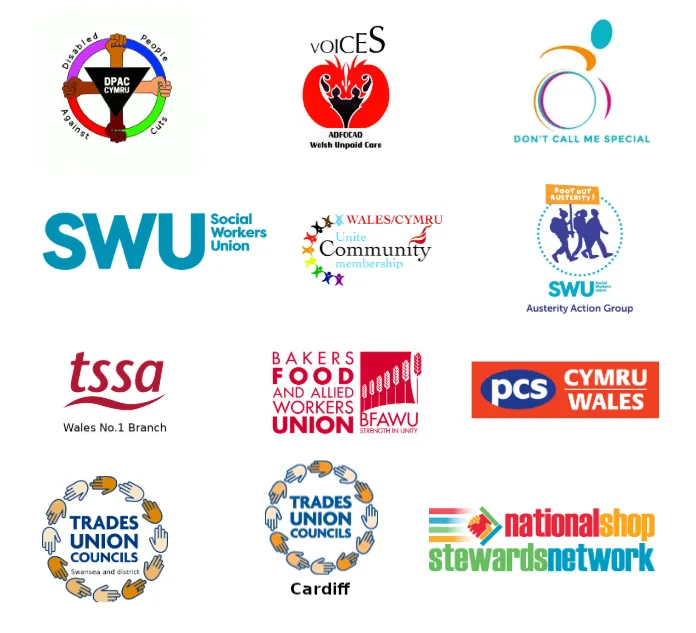
Logos of DPAC Cymru, Voices ADFOCAD, Don't Call Me Special, Social Workers Union, Unite Community Wales, Austerity Action Group, TSSA Wales No.1 Branch, Bakers Food and Allied Workers Union, PCS Cymru, Swansea and district trades council, Cardiff trades council, and the National Shop Stewards Network

A powerful coalition of Welsh disability, carers’, and trade union organisations wrote to the Welsh Government on Tuesday asking ministers to lodge their “strongest possible grievance” with the UK Government over the Timms Review into the PIP disability benefit.

The UK-wide review was announced in parliament late last year, with promises of “co-production” with disabled people, and a pledge of no further cuts until its conclusion. However, Welsh Disabled Peoples’ Organisations are adamant that co-production is not happening, with Welsh disabled people, they claim, treated with particular contempt.

The intervention came in the final week before the Senedd summer recess, after local authorities, including Swansea Council, admitted they have made “no provision” for impending disability cuts in their medium-term budgets.

The groups have asked the new Welsh Government to deliver on its promise of providing practical assistance in achieving a “long standing demand” of “a genuine disability review, led independently and democratically by disabled people and our organisations, including our trade unions.”

The letter was coordinated by Disabled People Against Cuts Cymru (DPAC Cymru). Co-signatories include Disabled Peoples’ Organisations, unpaid Carers’ Organisations, and trade union organisations.

Statements from signatories:

Disabled People Against Cuts Cymru (DPAC Cymru) led several high-profile protests against the disability cuts last year. A spokesperson for the group said they intend to hold the UK Government to the promises they made to parliament:

“The Timms Review was won by protest, but it is not what was promised. We are asking the Welsh Government to join us in setting out a clear expectation that the UK Government may not table further disability cuts while a genuine and independent review takes place in Wales.

“MPs, whatever their views, must also refuse, on principle, to vote for disability cuts for the duration.

“All we’re demanding from Westminster here is a fair fight. Enough with the broken promises, misdirection, and insults.”

VOICES ADFOCAD operates across Wales to promote and advocate for the rights of Unpaid Carers. A spokesperson said:

“Disabled people in Wales have been clear for years: we will not accept reviews that speak about us while shutting us out. The Timms Review has failed to meet even the most basic standards of co‑production, and Welsh disabled people have been treated with disregard throughout the process.

“We are asking Welsh ministers to intervene because our communities deserve a review that is democratic, accountable, and led by disabled people ourselves, not another exercise that reinforces the inequality we are fighting to dismantle.”

Plaid Cymru Anabledd is the disabled members’ section of Plaid Cymru, the party that leads Wales’ new minority government. A spokesperson for the section said:

“The Welsh Government must use every lever it has to demand a genuine, independent review — led by disabled people, our organisations and our trade unions. Anything less is not co-production, it’s a rubber stamp.

“Disabled people were told we would be worked with. Instead we’ve been worked around. That promise the labour Westminster government made has to mean something — or it was never made in good faith.”

Social Workers Union (SWU) General Secretary John McGowan stated:

“Disability benefits are not luxuries. The PIP disability benefit is a crucial support to help disabled people meet the extra costs of disability and long-term ill health and to support their independence. We urge the Welsh Government to join DPAC Cymru in demanding an independent review on PIP cuts which would impact on 275,000 people in Wales.

“No further cuts must be made until a genuinely co-produced disability review has been achieved, and the focus should be on improving the system rather than further restricting access to it. To do otherwise will cause significant hardship for people with physical and mental health conditions – pushing them out of work and into deep poverty – and put further strain on the social care system already stretched to breaking point by chronic underfunding and a staffing crisis.”

Sarah Woolley, General Secretary of the Bakers, Food and Allied Workers’ Union (BFAWU), said:

“Disabled people have the right to dignity, independence and a decent standard of living. If the Timms Review is to have credibility, it must genuinely be led with disabled people, not simply carried out in their name.

“Our members know the reality of low pay, insecure work and rising living costs. Personal Independence Payment helps meet the extra costs of disability, and further cuts would push more people into hardship while placing even greater pressure on public services.

“BFAWU stands in solidarity with Disabled People’s Organisations and supports the call for an independent review, led by disabled people and their organisations, including trade unions. No further disability cuts should be made until that work has been properly completed.”

Mark Evans is the secretary of Swansea and District Trades Council, which brings together affiliated branches and represents the community arm of the trade union movement in the Swansea area. He said:

“Our Trades Council thinks it is deplorable that a Labour Government has not properly and fully consulted Disabled People in compiling the Timms review. Many disabled people are members of trade unions that are affiliated to the Labour Party and many will rightly be considering why their union donates to a party that has attacked disability benefits in the past and given the lack of consultation is likely to do so again. If this is the case we will will be fully supporting disabled trade union members.”

Responding to the Timms Review interim report released last week, a DPAC Cymru spokesperson added:

“The Timms Review is badly dressed in the language of disability activism, but uses none of the methods. About the only thing the interim report gets right is that PIP is not fit for purpose.

“Disabled people, more than anyone, want a better system. The Timms Review will not deliver that because it is not designed to. The review is weaponising our concerns in order to justify cuts in a ‘caring’ way. Meanwhile, the ‘nasty’ arm of the UK Government is demonising us. Caught in that pincer movement, disabled people are a political football.

This has nothing to do with balancing the books. When the last attempt at welfare reform introduced a more punitive benefit system, it too ended up costing more than it saved. The Timms Review is about divide and rule, pure and simple. It is a cynical distraction from falling living standards and a failing economy. Defeating disability cuts is a fight for everyone.”

The letter text

Dear:

Rhun ap Iorwerth, First Minister of Wales
Sioned Williams, Deputy First Minister of Wales

14th July 2026

RE: disability cuts and the Timms Review

The new Welsh Government has made a welcome commitment to delivering a robust and action-oriented Disabled People’s Rights Plan. UK Government disability cuts are a serious risk to that plan, and a crisis in the making.

Concerningly, major Welsh local authorities like Swansea Council already admit they have made “no provision” for disability cuts in their medium-term budgets.

The UK Government was forced to promise in parliament that there would be no further cuts until the conclusion of a review, co-produced with disabled people – the Timms Review. The UK Government has proven itself, many times over, unable and unwilling to keep that promise. Despite its claims, the Timms Review is not delivering co-production, and cuts are continuing.

We are therefore writing to you, as Disabled People’s Organisations, unpaid Carers’ Organisations, and trade union organisations, with two requests:

1. We kindly request that the Welsh Government formally lodge with the UK Government our strongest possible grievance over the delivery of the Timms Review and disability cuts ‘consultation’ process since March 2025. It has been blatant: we have been treated badly because we are disabled people, and we have been treated badly because we are Welsh.

2. We also request the Welsh Government take concrete steps to provide practical assistance in achieving our long standing demand: an independent and genuine disability review, led by disabled people and our organisations including our trade unions, inviting the views of carers and the workers who deliver the services we rely on.

Despite themselves, we intend to hold the UK Government to the promise they made. We hope that you will join us in making clear the expectation that the UK Government may not table further disability cuts while a genuine and independent review takes place in Wales, and that MPs, whatever their views, must also refuse, on principle, to vote for disability cuts for the duration.

Specific points, such as what we suggest by the Welsh Government providing practical assistance, and our specific democratic grievances with the UK Government, are developed in the attached briefing.

Yours sincerely,

Disabled People Against Cuts Cymru (DPAC Cymru)
VOICES ADFOCAD
Don’t Call Me Special
Plaid Cymru Anabledd
Prof. Debbie Foster, Former co-Chair of the Welsh Government’s Disability Rights Taskforce.
Gemma Southgate, TSSA Wales & Western Executive Committee Member
Siân Boyles, PCS National officer for Wales
Mark Evans, Secretary, Swansea and District Trades Council
Cardiff Trades Council
TSSA Wales No.1 Branch
PCS Wales
PCS Proud
Unite Community Wales
Unite Community, Cardiff & Area
Social Workers Union (SWU)
Austerity Action Group (AAG)
Bakers Food and Allied Workers Union (BFAWU)
National Shop Stewards Network (NSSN)

The letter to the Welsh Government and attached briefing is available here

For press enquires contact dpac.cymru+press@gmail.com

May 182026
 
DPAC Logo with text underneath "Disabled People Against Cuts" and then web address dpac.uk.net

We are disappointed with the TUC statement on PIP today calling for reform on PIP by linking PIP with work.

General secretary Paul Nowak says: “The Government has a vital opportunity to support more disabled people into work through the Timms Review…. Only a genuine reform of Pip will ensure that disabled people who can work receive the support they need to move into and stay in work.”

But PIP is paid to people who work and who don’t work.  It is not paid on the basis of work – it is paid on the basis of daily living and mobility/getting around.  Work does not come into the assessment, nor should it. It may help people to access work, but that is not the primary purpose of it.

The TUC statement suggests that PIP reform and the Timms review is justified and should involve consideration of work. It is now being reported in the media as ‘PIP rules should be changed to get disabled people into work.’


DPAC member Bill Scott says: ‘I’m a lifelong trade union member and long time activist but I feel utterly betrayed by what Paul Nowak has said and so will hundreds of thousands of other disabled people. Honestly I’ve spent over 20 years trying to build bridges between the trade union movement and disabled people and I feel as though I’ve totally wasted my time as all the suspicions that disabled people had about them are borne out.’

DPAC member Lee Starr Elliot  moved a motion at the CWU conference calling on the TUC to do better when it comes to the gov attack on social security for deaf and disabled people: Recommitting to Action Against Disability Cuts. It was passed unanimously. Video and text below.

I stand before you today because we are witnessing a coordinated, systemic attack on disabled workers – an attack that is being dressed up as “reform” but feels like a declaration of war on our class.  Last year, at the TUC Congress, we stood together. Motions 38 and 39 were passed unanimously. The entire trade union movement pledged coordinated and sustained action against disability cuts. The CWU was at the heart of that fight.

But today, there is a dangerous silence coming from Congress House.

The TUC leadership has suggested that because of minor concessions on PIP, the “emergency” has passed. They claim they no longer need to implement the actions we voted for.

Conference, they are wrong.

These concessions are a sticking plaster on a gaping wound. They are temporary, lasting only until the conclusion of the Timms Review. And let’s be clear: the promised “co-production” with disabled people is a sham. We aren’t being consulted; we are being managed.
While the TUC waits, our members are suffering. Cuts to Motability, the gutting of Access to Work, and the squeezing of the Universal Credit Health Element are not “policy adjustments” – they are life-altering emergencies.

And it’s not just the Department for Work and Pensions. Decades of austerity and the systematic underfunding of local councils have decimated social services, transport, and education. When a council can’t provide a bus or a carer, it is the disabled worker who is imprisoned in their own home.

Perhaps most sickening is the targeting of the next generation. Through the Milburn and Streeting reviews, we see a government obsessed with “over-diagnosis” and “work-readiness.” They are threatening to abolish Education, Health and Care Plans (EHCPs) and forcing 55,000 young disabled people into compulsory placements under the shadow of sanctions.

This is not “support.” This is state-sponsored bullying.

That is why this motion is vital. We are instructing our NEC to stop the TUC from dragging its feet. We are calling for:

1.  *A coordinated movement-wide campaign* that exposes the cumulative impact of these cuts.

2.  *An accessible, static demonstration* and a mass lobby of Parliament. We need to show them our faces and our strength.

3.  *A weekend demonstration against Labour’s austerity plans.* We must send a message to this government: You cannot balance the books on the backs of disabled workers.

4.  And finally, we demand an *independent disability review* – one led democratically by disabled people and trade unions, not by Whitehall bureaucrats working for the benefit of their mates and their pockets.

Conference, we don’t just want a seat at the table; we want to change the menu.

The TUC must recommit and be led by the disability community not the politicians. We must support the movement to  move united and We must stand with our disabled members, not just in words, but in struggle. I move. Solidarity


Jan 152026
 
DPAC Logo with text underneath "Disabled People Against Cuts" and then web address dpac.uk.net

The words "We want an Independent PIP Review" in bold and black text, with Independent highlighted in red. On the left there is a tear-out effect of a greyscale photo of a disability protest, and a red-tinted photo of Stephen Timms, the disability minister.

As the UK Government review into the Personal Independence Payment (PIP) gets underway, a disability campaign group in Wales has today launched an open appeal to the panel members.

The ‘Timms review’, named for the Minister of State for Social Security and Disability Sir Stephen Timms, could affect more than 275,000 people in Wales claiming the disability benefit.

Disabled People Against Cuts Cymru (DPAC Cymru) have, however, raised a number of concerns over the fairness of the review.

They say there are longstanding unaddressed concerns with the way the Pathways to Work consultation was carried out last year, particularly in Wales, and they want the review to examine this to make sure those mistakes aren’t repeated.

They say they are also appealing to the panellists to make sure that the review is genuine, that the outcome is not predetermined, and are calling for participation to be widened.

DPAC Cymru’s call for an independent review, democratically led by disabled people and their organisations, received wide support in Wales from disability groups, trade union organisations, and politicians.

At a lobby of the Senedd late last year, Sioned Williams MS, Plaid Cymru, said “Plaid Cymru backs their call for an independent review of PIP, led by disabled people.”

Dr. Atlaf Hussain MS, Shadow Cabinet Secretary for Equalities & Social Justice, Conservative, also said “I fully support Disabled People Against Cuts Cymru (DPAC Cymru) and their call for an independent, disabled-led review of Personal Independence Payment (PIP).”

Click here to read the letter to the panel members.

Click here for the Easy Read version.

A graphic of the DPAC Cymru logo. There is the main DPAC logo to the left, which is a red, pink, blue, and green circle being held by four hands of different skin tones, with the words "disabled people against cuts" surrounding it, and an upside-down black traingle in the middle bearing the letters D P A C. On the right is the word Cymru (pronounced cum ree) (C Y M R U) in large letters, and the background of the letters are cutouts of the Welsh flag. Above Cymru (pronounced cum ree) is written the words Disabled People Against Cuts. Below Cymru (pronounced cum ree) are the words Rights, not charity, and the equivilant phrase translated into the Welsh language.

The six “headline” asks of the appeal letter are that:

1. The review should examine how disabled people in Wales were treated unfairly by the UK Government last year, and make sure those mistakes aren’t repeated.

2. The review must be genuine, not predetermined.

3. The review must be independent, democratically led by disabled people and our organisations.

4. The review must have wide participation.

5. The review needs a wider scope for it to be successful.

6. The review must engage with the 1.4 million disabled workers organised democratically in their trade unions.

No matter what the review concludes, the final say rests with ministers. DPAC Cymru will do our part to ensure that disabled people & carers are prepared to defeat the Government again if necessary.

Oct 222025
 
DPAC Logo with text underneath "Disabled People Against Cuts" and then web address dpac.uk.net
The words "We want an Independent PIP Review" in bold and black text, with Independent highlighted in red. On the left there is a tear-out effect of a greyscale photo of a disability protest, and a red-tinted photo of Stephen Timms, the disability minister.
Disability campaign group Disabled People Against the Cuts Cymru pose for a group photo outside the Senedd (Welsh parliament) with Sioned Williams MS. Sioned is holding up the DPAC Cymru letter. There are 15 people in the photo. Two people are wearing DPAC t-shirts. Four people are using wheelchairs. Two people are wearing face-masks. One person is holding a flag showing a Welsh dragon with a disability equality colour background. Behind everyone is the DPAC Cymru banner. It is very large, and has five people holding it. It says Disabled People Against Cuts and then the word Cymru with a Welsh dragon background effect on the text. It has the DPAC logo which is a red, green, purple, blue wheel being held by four arms with different skin tones. At the center of the logo is an upside-down black triangle bearing the letters D P A C and the word Cymru. Behind the campaigners are various tall buildings in Cardiff. The nearest building is made of a striking orange brick.

On Tuesday 14th October, members and supporters of Disabled People Against Cuts Cymru (DPAC Cymru) met outside the Senedd (the Welsh Parliament) to protest the disability cuts and hand over a letter to Senedd members. The letter, co-signed by over 700 individuals and organisations, outlined DPAC’s request to the Welsh Government to support an independent review of Personal Independence Payment (PIP). The letter calls for a PIP review that is truly led independently by disabled people and our organisations, to allow our lived experience to influence the policies and decisions that will ultimately affect us.

We are grateful to the members of the Senedd who met with us or wrote to us about this matter, and we hope that all members will take into consideration what the letter said.

The lobby happened on the same day that the Minister for Social Security and Disability, Sir Stephen Timms, declined an invitation to meet with the Senedd Cross Party Group on Disability due to “diary pressures”. Timms is currently responsible for the PIP review, and we feel that his response highlights how disabled people and Disabled People’s Organisations (DPOs) are being excluded from the review and decision-making process.

Timms’ promise that the PIP review would be a genuine co-production with disabled people is not being upheld, and the Senedd lobby was part of an ongoing campaign to ensure that disabled people’s voices are being heard.

As a new member of DPAC Cymru, it was wonderful to see so many people at the Senedd to support what DPAC is working to achieve. Given the current situation, it is vital that disabled people’s voices are amplified in a way that is accessible, impactful, and authentic. We will continue to campaign for the rights of disabled people and to push for a fairer, independent PIP review to create a system that truly supports the needs of disabled people across the UK.

Briallen Symons-East
Disabled People Against Cuts Cymru (DPAC Cymru)


Disability campaign group Disabled People Against the Cuts Cymru pose for a group photo outside the Senedd (Welsh parliament) with Sioned Williams MS. Sioned is holding up the DPAC Cymru letter. There are 15 people in the photo. Two people are wearing DPAC t-shirts. Four people are using wheelchairs. Two people are wearing face-masks. One person is holding a flag showing a Welsh dragon with a disability equality colour background. Behind everyone is the DPAC Cymru banner. It is very large, and has five people holding it. It says Disabled People Against Cuts and then the word Cymru with a Welsh dragon background effect on the text. It has the DPAC logo which is a red, green, purple, blue wheel being held by four arms with different skin tones. At the center of the logo is an upside-down black triangle bearing the letters D P A C and the word Cymru. Behind the campaigners are various tall buildings in Cardiff. The nearest building is made of a striking orange brick.

Photo: Disability campaigners from Disabled People Against Cuts Cymru outside the Senedd in Cardiff.


A photo of a disability lobby at the Senedd (Welsh parliament). Lee Ellery, who is a wheelchair user, is handing over pack of documents to the Welsh politician Sioned Williams. Lee is smiling and in the middle of talking. In the background is the Disabled People Against Cuts Cymru (DPAC Cymru) banner.

Photo: Lee Ellery hands a pack of documents to Sioned Williams MS.


Sioned Williams MS talks to campaigners from Disabled People Against Cuts Cymru (DPAC Cymru) outside the Senedd. There are about 20 people in shot. Four people are users of powered wheelchairs. One person is wearing a yellow medical face mask and is draped in a Welsh flag with disability equality colours. Another wears a black medical face mask. People are standing around chatting, while Sioned is at the center of the photo. At the right of the photo is the DPAC Cymru banner being held by several people. The banner says "rights not charity." One person wears a hat that says PCS. One has a copy of the Socialist newspaper.

Photo: Lee Ellery hands a pack of documents to Sioned Williams MS – from another angle!


Disability campaigners from Disabled People Against Cuts Cymru at the Senedd (Welsh Parliament) talk with the politician Jenny Rathbone MS.

Photo: DPAC Cymru talk with Jenny Rathbone MS outside the Senedd.


Disability campaigners Lee Ellery and Joshua Reeves, who are both wheelchair-users, are conversing. Around them are other campaigners from Disabled People Against Cuts Cymru.

Photo: Disability campaigners Lee Ellery and Joshua Reeves BEM conversing.


Lee Ellery, Ben Golightly, John Williams from Disabled People Against Cuts Cymru are talking to Sioned Williams MS. In the background is the Senedd building. Lee is using a powered wheelchair. He is wearing smart clothes. Sioned is holding a pack of documents and smiling and looking at Lee attentively. Ben is wearing a DPAC t-shirt and is holding a small placard with text. John is holding a copy of the Socialist newspaper and looking at Ben.

Photo: disability campaigners converse with Sioned Williams MS.


Darren Millar MS and staff converse with disability campaigners outside the Senedd. In the background are trees and the sea. It is picturesque, although overcast.

Photo: DPAC Cymru spoke with Darren Millar MS and his staff outside the Senedd.


Lee Ellery and Ben Golightly from Disabled People Against Cuts Cymru (DPAC Cymru) pose for a photo with Sioned Williams. Lee Ellery is a wheelchair user and is in smart clothes. Ben is wearing a DPAC t-shirt. Ben is holding a sheet of paper with the DPAC Cymru logo that says "No disability cuts! Disabled people want to run our own independent PIP review!" Sioned is holding a sheet of paper with the same message translated into Welsh. She is also holding up the DPAC Cymru letter with 700 signatures. In the background, John Williams is standing to their leftwith a copy of a newspaper called the Socialist. On the cover of the newspaper, it says: "Your party: let's build a party to fight labour's war and austerity. defend the right to protest."

Photo: We posed for photos with Sioned Williams MS holding bilingual (English and Welsh) signs that said:
“No disability cuts! Disabled people want to run our own independent PIP review!”

Sep 132025
 
DPAC Logo with text underneath "Disabled People Against Cuts" and then web address dpac.uk.net

Calls for an independent PIP review with UK minister under fire

A Welsh disability group is calling for an independent review of Personal Independence Payments (PIP).

Disabled People Against Cuts Cymru (DPAC Cymru) has accused the disability minister Stephen Timms of failing to properly lead his own review into the disability benefit, saying that “co-production is not taking place as promised.”

Speaking exclusively to LBC’s Welsh Correspondent Caitlin Parr, the group’s comments follow the Minister of State for Social Security and Disability, Sir Stephen Timms MP, meeting with the Welsh Government Disability Equality Forum on Tuesday 2nd.

LBC news reported that DPAC Cymru had long fought for disabled people’s voices to be heard in changes to welfare reforms, but were concerned that the minister, despite promises to engage widely over the summer, had so far left Welsh disabled people out of discussions around the review, outside of those forum meetings.

DPAC Cymru claims that Timm’s attendance at those recent forum meetings is “far too little and far too late for Welsh disabled people after months of stonewalling from Timms,” and said they were frustrated by “more promises but no action.”

Ben Golightly, from Swansea, is a coordinator for DPAC Cymru. He told LBC, “he [Timms] agreed in that meeting that it was important for Welsh disabled people and Welsh disabled people’s organisations to be heard. He was meant to talk about how he was delivering co-production. It was his job to do it. And he had no real update, because he hasn’t been doing that job.”

Despite promises from government ministers, DPAC Cymru say that co-production has not taken place, and they are “back to square one.”

Ben said, “We had hoped that after a major defeat in parliament that when he [Timms] promised co-production with disabled people, that we wouldn’t have to go through all of this again. There is so little trust in the way the government has treated disabled people that we need an independent review, led by disabled people, and Stephen Timms and the government should turn up and listen, but they should have no say over how it’s run because they’ve shown, throughout several months, that they’re unable to do it.”

Lee Ellery, an independent disability activist and lead press coordinator for DPAC Cymru, who has Cerebral palsy quadriplegic, agreed, telling LBC news it’s time more Welsh voices were heard.

Lee said, “people with disabilities, particularly in Wales, are left to the bottom of the pile so to speak, and we should be at the forefront of everything. I’m worried about what the result of the [PIP] review might come out to say, if the person who’s leading it doesn’t understand the whole process.”

LBC news reported that “the Timms review into PIP assessments is expected to conclude in Autumn 2026, when changes already decided on for new PIP claimants will come into force.”

DPAC Cymru’s calls for an independent review, made in an open letter released last Monday, has already received wide support, collecting 600 signatures and the support of representatives of more than twenty-five organisations.

Comments collected from respondents talk about their feelings of hurt, being “belittled,” “completely disregarded and isolated,” and the “harm and loss of trust” caused by Timms and the government.

Signatures on the open letter are open until the end of September.

Sign here

A notice graphic with a red tinted photograph of Stephen Timms as the background. Title text to the left of him reads: "We want an independent PIP review" with emphasis on the independent. A divider then separates the next header text that reads: "Nothing about us, without us!", followed by another divider. Body text then reads: "Please sign and share our open letter!" with an arrow pointing to a link: "bit.ly/independent-pip-review". The DPAC Cymru logo sits at the bottom of the screen.
Sep 012025
 
DPAC Logo with text underneath "Disabled People Against Cuts" and then web address dpac.uk.net

The words "We want an Independent PIP Review" in bold and black text, with Independent highlighted in red. On the left there is a tear-out effect of a greyscale photo of a disability protest, and a red-tinted photo of Stephen Timms, the disability minister.

This is an open letter from DPAC Cymru, produced with feedback from six Disabled People’s Organisations.

Disclaimer: DPAC Cymru didn’t have time to reach 100% agreed wording with DPAC UK, as we would have liked to. Even within DPAC Cymru, the letter wording is somewhat of a compromise. However, for important tactical reasons in Wales, we felt it was important to publish without delay. DPAC have therefore agreed to share the letter with this disclaimer.

Click here for the Easy Read version.

To:

The Welsh Government,

The Scottish Government,

The Northern Ireland Executive,

The UK Government,

1st September 2025

After a major, if partial, defeat in parliament over disability cuts, the disability minister Stephen Timms promised MPs that the PIP benefit review would be co-produced by disabled people and their organisations.

There is widespread skepticism if this will genuinely be the case. Promises to “engage widely over the summer” have not been met, and there has been no transparency over Timms’ plans for “ten people” to have “a lot of sway”. His comments reveal that he does not understand what co-production means. Timms has also repeatedly declined to acknowledge the many serious failures of the Pathways to Work green paper consultation process, particularly felt in Wales.

We counterpose this to the Disability Rights Taskforce, initiated in partnership with the Welsh Government, which brought together 350 stakeholders and 200 policy experts, as a model of what co-production can look like. However, many Taskforce participants were frustrated that much of their work was ultimately missing from the Welsh Government draft plan. This is a lesson that even co-produced policy will fall flat without accountability. Disabled people’s organisations must be given the necessary resources and powers to carry out the implementation and monitoring of decisions.

[Some of us] cautiously welcome[d] the announcement of the Government’s new Independent Disability Advisory Panel. This panel is separate to, but will feed into, the Timms review of PIP. However, trust remains very low, and the terms – of “up to 10” people – have already been set for us. [See update, below]

We the undersigned demand that:

• The new Independent Disability Advisory Panel must be genuinely independent, representative, transparent, and have real powers of oversight.

• The UK government must acknowledge its failures in delivering the Pathways to Work consultation and legislative process, as a precondition to rebuilding trust and ensuring those mistakes are not repeated.

• The PIP review must be independently led by disabled people and our organisations, inviting the views of carers, volunteers, and workers in health, social care, housing, transport, and welfare.

• Any review of welfare reform must also, in a process led by disabled people, involve trade unions as democratic organisations representing 1.4 million disabled workers as well as representing the workers responsible for the day-to-day delivery of services that disabled people rely on.

• The scope of the PIP review must be widened to all aspects of welfare and employment for disabled people, guided by the principle: from each according to their ability, to each according to their need.

• Dedicated funding must be provided to Disabled Peoples Organisations to support outreach, accessible engagement, and the collection of views from disabled people, including those without internet access or digital skills.

• The devolved governments of Wales, Scotland, and Northern Ireland, and councils, should recognise and support this independent review even if the UK government refuses to.

• The UK government must immediately halt all cuts to disability and incapacity benefits for the duration of the review, and urgently fix Access to Work.

• Parliament must be given time to properly scrutinise any new legislation.

• The UC bill should be repealed. It is flawed, and was rushed through in an abnormal and undemocratic way.


[Update 4th September] Statement from DPAC Cymru regarding the “Independent Disability Advisory Panel”:

“The recently published terms for the so-called Independent Disability Advisory Panel, including the requirement to sign a non-disclosure agreement, are completely unacceptable. We are going to go back to a full consultation with all of our members and allies and take time for discussion to correct the weakness in our compromise wording of ‘cautiously welcome’ and come back united, realigned on the strongest possible response. We hope you will continue to support the demand for an independent PIP review, led by disabled people, and support this letter with your signature.”


For a full list of signatures and footnotes, see here.

To add your support to the letter, add your signature here

Here are short URLs for sharing the letter:

Non-Easy Read: Bit.Ly/independent-pip-review

Easy Read: Bit.Ly/easy-read-independent-pip-review