Aug 262015
 
DPAC Logo with text underneath "Disabled People Against Cuts" and then web address dpac.uk.net

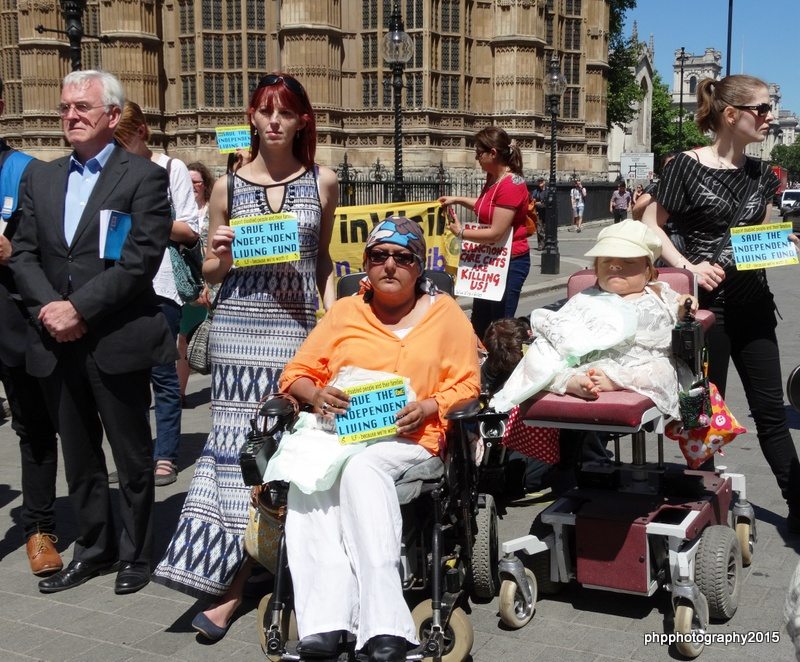
DPAC are going to Manchester and the Tory Party Conference 

Our main action will be on Monday October 5th at noon. Meet at Central Library opposite the Midland Hotel, just off St. Peter’s Square 

https://www.google.co.uk/maps/place/The+Midland/@53.4772841,-2.2451292,17z/data=!3m1!4b1!4m2!3m1!1s0x487bb1c27381b90b:0xf4daf7

The theme of this event will be

IDS Wanted for Crimes Against Disabled People

A second action together with others will be held on Wednesday October 7th from 9am.  Public meeting point is Albert square outside the Town Hall

https://www.google.co.uk/maps/place/Manchester+City+Council/@53.4791675,-2.2443142,17z/data=!3m1!4b1!4m2!3m1!1s0x487bb1c18b1ea

As usual we need donations, but only from those of you who can really afford them, to help pay for people to get to these actions. We have already set aside an amount of £2,000 to help fund our members to get to these events. However with train fares and the need for accessible accommodation that disabled people need this is likely to just be enough to fund 10- 12 people to attend.

If anyone can donate or are union members and could ask their union branch to donate you can pay through paypal or email us at mail@dpac.uk.net for BACS details or details of where to send cheques.

If any DPAC members want to apply for financial support also email us at mail@dpac.uk.net

This will be on a first come first served basis


 Posted by at 19:25
Aug 032015
 
DPAC Logo with text underneath "Disabled People Against Cuts" and then web address dpac.uk.net

– Urgent Action for DDPOs and Disabled Rights Campaigners to oppose the legalisation of Assisted Suicide

Book NOW for Assisted Dying bill briefing session and media training -13 August

The Reclaiming Our Futures Alliance is calling on Deaf and Disabled People’s Organisations (DDPOs) and individual Disabled Rights campaigners and supporters to join Not Dead Yet UK in speaking out about the dangers that the legalisation of assisted suicide poses to Disabled people.

There are currently two bills to legalise assisted suicide before Parliament. Lord Falconer’s Assisted Dying bill had its First Reading in the House of Lords on 4 June and Rob Marris’ Assisted Dying No.2 Bill had its first reading in the House of Commons on 24 June. Marris’ bill will have its Second Reading debate in the House of Commons on 11 September when Parliament returns from its Summer recess. For the first time in years MPs will get to vote on this highly controversial subject.

There are many different ways you can be involved but one important ask is for DDPOs to sign up to the ROFA statement opposing legalisation.

Inclusion London is also running an Assisted Dying bill  briefing session and media training workshop facilitated by Liz Carr from the Not Dead Yet campaign on Thursday 13th August at 336 Brixton Road, SW9 7AA.

The day is open to representatives and members from national as well as London Disabled People’s Organisations and campaigns. For more information visit the Inclusion London website  or contactellen.clifford@inclusionlondon.co.uk.

To read more about the Assisted Dying bills, the issues surrounding the legalisation of assisted suicide and ways you can be involved in the campaign see the Inclusion London (www.inclusionlondon.co.uk/Campaigns) and DPAC (www.dpac.uk.net) websites.


 Posted by at 17:16
Aug 012015
 
DPAC Logo with text underneath "Disabled People Against Cuts" and then web address dpac.uk.net

We have all been disappointed over the last few days by the case of the disappearing DWP ESA Sanctions leaflet-first it was there, then it was gone.  The DWP link tells us that the leaflet is coming soon, but what happened to the original?

A few of us had seen the leaflet before it was removed and noted that the DWP were using photos and examples, apparently in an effort to appear humane ( stop laughing).

One of the examples: Sarah’s story, happily tells of her being sanctioned for two weeks because she didn’t see the value of completing her CV as ordered by the DWP Job Centre goons. Sarah is almost in raptures as she recounts how she’s learned her lesson and recognises the error of her wilful ways-she’s grateful for losing 2 weeks of her ESA and for being sanctioned- the moral is: its good to be punished and put on the right path by potential starvation when you’ve already been told you’re not fit for work after a dehumanising assessment by Maximus .  See excerpt from original leaflet below

sarah's story

But there was a problem which the DWP seems to have recognised- no, not that ESA is about being unfit for work-but that smiling Sarah with her remarkable tale of the kindly people at the job centre probably doesn’t exist other than as a stock photo. Here she is again, this time as a cover girl for the despised Universal Credit ‘standing out from the crowd’ at https://dailyjobseeker.tumblr.com/post/101666827899/standing-out-from-the-crowd

We are quite used to this kind of behaviour from the Daily Mail who use actors to pose as ‘benefit scroungers’ for their readers

but then there isn’t that much difference between the lies of the Mail and the lies of the DWP is there? See DPAC’s DWP caught giving disability propaganda to Daily Mail

Naturally DPAC has the original DWP ESA Sanctions leaflet which also features the story of Zac. It can be downloaded at the link employment-and-support-allowance-sanctions

We’d appreciate word of any sightings of Zac in TV ads, magazines or other DWP propaganda in the meantime you might like to follow Steven Preece’s Freedom of Information request on this.

..and remember DWP we’re watching you….


With thanks to Anita Bellows, Rik B and Steven Preece

 Posted by at 23:10
Jul 122015
 
DPAC Logo with text underneath "Disabled People Against Cuts" and then web address dpac.uk.net

Has your Council taken out or turned off safe street crossings to create a so-called Shared Space? As these are desperately dangerous for people with any and all impairments, Unity Law are now taking action against 5 councils.Please consider joining the action if you have a Shared Space where you live. Unity Law will represent you at absolutely no cost to yourself and the more people and places they have on board the better.

You can contact Chris Fry at Unity Law on 0114 361 0000 or info@unity-law.co.uk


 Posted by at 19:49
Jul 052015
 
DPAC Logo with text underneath "Disabled People Against Cuts" and then web address dpac.uk.net

In 2012, thanks to an award from The Winston Churchill Travelling Fellowship, disabled actor and activist Liz Carr travelled to the then five countries where assisted suicide and/or euthanasia are legal ie Belgium, The Netherlands, Switzerland, Luxembourg and in the USA, Oregon and Washington State.  (Assisted suicide is now also legal in the US state of Vermont and in Canada).


Liz is opposed to the legalisation of assisted suicide and wanted to discover for herself how these laws work in practice and how, if at all, their existence changes the culture of a country.  She shares her discoveries in a two-part BBC World Service radio documentary entitled, “When Assisted Death is Legal” and which is available to listen to here: https://www.bbc.co.uk/programmes/p014dkq5


In under an hour of listening time, these programmes provide important new information and perspectives on this most difficult of topics.  For example:


* In Luxembourg, Jean Huss and Lydie Err, who co-sponsored the Assisted Suicide and Euthanasia Bill 2012, admitted they were disappointed in the law because they said it failed to include children and those with dementia.  When I asked why these groups were not included in their law, they said that they knew it was easier to pass the law initially for terminally ill people only and then, once passed, to increase the law’s application.


* In Oregon, where the law is the blueprint for the Assisted Dying Bill currently before you in the House of Lords, the 2013 statistics reveal that pain is infact not one of the main concerns of people requesting assisted suicide.  Instead, the three main reasons are loss of autonomy (93%), decreasing ability to participate in activities that make life enjoyable (88.7%) and loss of dignity (73.2%).  By comparison, inadequate pain control or concern about it was one of the least important concerns at 28.2%.


*  Since this documentary was produced, Washington State’s 2013 annual report has shown that 61% of all those who were supplied lethal drugs in order to commit suicide listed the feeling of being a burden on family, friends or caregivers as one of their main reasons for their request.


* In Switzerland, assisted suicide has been legal since the late 1800’s and one of its most stringent safeguards is that each case is investigated by the police


* The Netherlands are currently debating something called ‘Completed Life’ which would legalise assisted suicide for those 70+ who are tired of life


* In the first 10 years since the Belgium Euthanasia law was enacted, there has not been one case of abuse reported.  Is this because there have been no abuses (the BMJ reported in 2010 that only half of all euthanasia cases are properly reported) or because, as in most other countries, reporting and monitoring are self-regulatory?


Liz’s personal conclusion is that the risks to the safety and wellbeing of the majority should continue to outweigh the individual needs of those who want an assisted suicide.  She hopes you agree and will vote ‘no’ to the Assisted Dying Bill.

Jul 052015
 
DPAC Logo with text underneath "Disabled People Against Cuts" and then web address dpac.uk.net

Wolverhampton South MP Rob Marris’s Assisted Dying Bill is going to be debated and voted upon in what’s known as it’s Second Reading in the House of Commons on September 11th.  This is the first time in 18 years that MPs will have had the chance to vote on an assisted suicide (AS) law.


We want to make sure that MPs vote ‘NO’ and kill the bill on September 11th. see also info about the lobby on 14th July


We need to talk to our MPs about our fears and concerns about such a bill, to find whether they’re for or against it and if the latter, we desperately need them to attend on 11th September to vote against this bill.


This information sheet is the legal one.  It details the current legal situation and looks at the details of these assisted dying bills.


The current situation


Those of us who oppose a change in the law, believe the current situation is adequate.  Under the 1961 Suicide Act, killing yourself is not illegal but encouraging or assisting another person’s suicide is and can lead to up to 14 years imprisonment.  The current law acts a deterrent to malicious or manipulative assistance with suicide.


But the Director of Public Prosecutions (DPP) also has a discretion not to prosecute if, for example, it is clear that assistance has been given reluctantly / after serious soul-searching or for ‘wholly compassionate’ reasons to ill or disabled people.  It is this discretion that has allowed the high profile assisted suicide cases to avoid prosecution.


There are a list of factors considered when deciding if the law has been broken but in reality, if a person has made it clear that they want to end their life by an assisted suicide for health / impairment reasons and a friend or family member aids them (as opposed to a medical professional) then whilst they may be investigated, it is unlikely that they will be prosecuted.  Infact less than 20 cases a year throughout the whole of England and Wales cross the desk of the DPP and few of them call for prosecution.  And yet apparently this law isn’t working?


But laws send out messages – when something is legalised, it acquires the stamp of social approval.  An assisted suicide law says, in effect, that if you are terminally ill, ending your life is an option that it is appropriate to consider.

And by putting assisted suicide into the hands of the medical profession, it’s feared it could become a treatment option.


Critics of the current law say that it’s unfair for families and friends to have to help an ill or disabled person to end their lives and not know in advance whether or not they’ll be investigated and charged.  We say the illegatlity of the assisted suicide acts as a deterrent and ensures it is not the easy option.


Supporters say that because it’s not currently legal for a Dr to assist, that people have to kill themselves with amateur means which may fail.  We say that everyone has the means to commit suicide and why should ill / disabled people be given a 100% successful method when over 90% of suicides for everyone else actually fail?


They say that dying people may have no choice but to take themselves off to somewhere like Dignitas before they’re ready to die but while the person is still well enough to travel – and that travelling to Dignitas is costly and difficult for those involved.  We say that rather bringing assisted suicide to the masses and make it an easy option,  that there should be improvements to end of life care for all people to ensure everyone can have a peaceful and pain free end to their life.


Supporters say they want the right to die.  We believe the right to die already exists for each and every one of us. What those wanting a change in the law are actually asking for is the right for someone else to kill them.


Instead of a discretionary power where very few assisted suicides are ever prosecuted, supporters of a change in the law want to lay down in advance, the situations when it is okay for a Dr to assist a person to end their life.  We say the law as it is enables the choice of a few whilst protecting the many.


What’s in the Assisted Dying Bill?


At the time of writing the text of the Marris bill is unknown but it’s likely that it will be very similar to the Lord Falconer Assisted Dying Bill that Not Dead Yet UK protested against in the previous Parliament. (Lord Falconer has also re-introduced his Assisted Dying Bill into the House of Lords so even if we defeat the Marris Bill in the Commons, we will still have to contend with Falconer at some point in the future!).  Firstly they’re calling it an assisted dying and not an assisted suicide bill.  They say it’s because it’s only for those who are actually dying but we say it’s to make the term more palatable, after all, the current campaigning group Dignity in Dying used to be called the Voluntary Euthanasia Society.


If passed, the ‘assisted dying bill’ would license doctors to supply lethal drugs to:

  • terminally ill patients with less than 6 months to live and who have,
  • a settled intent to end his or her life
  • the capacity to make such a decision and
  • are making the request voluntarily, on an informed basis and without pressure or duress


Two doctors are required to certify that these criteria have been met and their decision is to be referred to a judge of the High Court for confirmation.  There is no requirement for a psychological assessment to assess capacity.  The doctors do not have to be your regular doctors.  If approved, the person would be supplied with the lethal drugs to enable them to commit suicide.

A medical professional (but not necessarily a doctor) would remain with the person until they died but they cannot help them to take the drugs – to do so would cross the line between assisted suicide and euthanasia.


Many people who support this bill believe it is to assist those who cannot kill themselves to have the same opportunity as everyone else but in fact, if someone cannot physically ingest or do the final act themselves would not technically come under this bill.


The proposed law – unsafe to change


Critics of the bill are meant to be reassured by ‘safeguards’ to protect ‘the vulnerable’ from abuse – and ultimately murder.  So what safeguards exist to protect someone from being killed without their fully informed consent?


The proposals list a number of qualifying criteria for assisted suicide – such as settled intent, capacity to make the decision and freedom from pressure – but they do not translate these criteria into concrete safeguards.  Instead, they

propose that these issues should be dealt with by the Secretary of State in codes of practice AFTER Parliament has agreed to change the law.  SO MPs don’t even know the full extent of what they’d be voting for on September 11th. In effect, the issue of safeguarding has been side-stepped and Parliament is being asked to sign a blank cheque.


After concern about lack of safeguards was raised when the House of Lords debated the Assisted Dying Bill, Lord Falconer added a proposal that when a doctor assessing a request for assisted suicide considers that it meets the designated criteria, the decision should then be referred to a judge of the High Court for confirmation.  The bill does not, however, require the Court to undertake any investigations of its own and as such, the role envisaged for the Court is little more than that of a rubber stamp.  It is expected this will also be included in the Marris Bill.


Many aspects of a request for assistance with suicide go beyond a doctor’s professional competence.  It may be fair to ask a doctor to confirm that a patient is terminally ill, to offer a prognosis and to advise on possible treatments.  But most doctors are in no position to judge whether a request for assistance with suicide derives from a settled wish or whether there are any pressures operating in the background that could be influencing the request.  In today’s world of busy multi-partner GP practices and declining home visits doctors often know little of their patients beyond what they pick up in the consulting room and they do not have the time or resources to set about investigating such matters.


The Oregon Experience


The Oregon Death with Dignity Act has been the blue print for the Falconer Bill and will be no doubt for the Marris Bill too.  Here are some of the problems with the Oregon law:


  • Individuals seeking assisted suicide can resort to doctor shopping- visiting doctor after doctor until one agrees to write the lethal prescription.


  • Patients are often misdiagnosed as terminally ill with less than 6months to live when in fact they live for months and even years beyond what was originally expected.


  • Individuals with a new illness or disability are often faced with depression, which requires more than Oregon’s 15 day waiting period to be treated.


  • Many patients experience outside pressure to commit assisted suicide, which often goes unnoticed and unpunished.


  • Individuals are often portrayed as a burden on their families and are made to feel that their life is not as valuable.


  • In 2007, none of the individuals that requested assisted suicide in Oregon were referred for a mental health evaluation.


  • Under Oregon law, depressed or mentally ill individuals can still be considered “competent” to request assisted suicide.


  • Under Oregon law, doctors that fail to report or file incomplete or inaccurate reports face no penalties.


  • All records are sealed and all underlying data is destroyed after the annual report is published.


  • The 2013 Oregon statistics reveal that the three main reasons given for requesting an assisted suicide are loss of autonomy (93%), decreasing ability to participate in activities that make life enjoyable (88.7%) and loss of dignity (73.2%).  By comparison, inadequate pain control or concern about it was one of the least important concerns at 28.2%.


  • Assisted suicide is also legal in Washington State. The 2013 annual report has shown that 61% of all those who were supplied lethal drugs in order to commit suicide listed the feeling of being a burden on family, friends or caregivers as one of their main reasons for their request.


  • 64 year old Barbara Wagner was diagnosed with metastatic lung cancer. Her oncologist prescribed chemotherapy to slow cancer growth, reduce symptoms, and extend her life.  The Oregon Health Plan however would not cover the costs for her chemotherapy prescription, but sent her a letter saying they would instead pay for assisted suicide drugs.


Jul 012015
 
DPAC Logo with text underneath "Disabled People Against Cuts" and then web address dpac.uk.net

It was all at once a sad day, a day of loss, a day of gathering, a day of determination.

Words cannot adequately convey what the day was to the people who were there, and the people who couldn’t be there but watched on twitter and facebook.

Here, instead are some pictures to commemorate that day, and you can also see more about that day by Kate Belgrave here 

30th June 2015

The Closure of the Independent Living Fund

[Pictures thanks to Paula Peters]

The wreath to the death of Independent Living, at the entrance to Downing St

The wreath to the death of Independent Living, at the entrance to Downing St

Dame Tami Grey Thompson next to the giant Save the ILF Postcard that was produced for the Westminster Abbey Grounds Occupation, and has been on every ILF protest since

Dame Tami Grey Thompson next to the giant Save the ILF Postcard that was produced for the Westminster Abbey Grounds Occupation, and has been on every ILF protest since

The 38 Degrees ILF Petition which 25,000 people signed to save the ILF, Petition was handed into Downing street during closing ceremony of ILF

The 38 Degrees ILF Petition which 25,000 people signed to save the ILF, Petition was handed into Downing street during closing ceremony of ILF

Incontience pad with message "the right to be free to wee"

Incontience pad with message “the right to be free to wee”

Schimmel the horse at closing ceremony of ILF, Old Palace Yard, Westminster.

Schimmel the horse at closing ceremony of ILF, Old Palace Yard, Westminster.

John McDonnell MP, showing support and solidarity at closing ceremony of ILF with ILF receipents and supporters

John McDonnell MP, showing support and solidarity at closing ceremony of ILF with ILF receipents and supporters

Kilburn Unemployed Workers Group, with access denied independent living placard

Kilburn Unemployed Workers Group, with access denied independent living placard

 Kilburn Unemployed workers group with end financial abuse against claimants placard

Kilburn Unemployed workers group with end financial abuse against claimants placard

Giant ILF postcard was left at caxton house DWP HQ, at protest of ilf closing.

Giant ILF postcard was left at caxton house DWP HQ, at protest of ilf closing.


 Posted by at 23:00
Jun 272015
 
DPAC Logo with text underneath "Disabled People Against Cuts" and then web address dpac.uk.net

We were passed a letter anonymously last week. Atos the company responsible for misery and premature death now wants to help disabled people. Atos still do PIP assessments, and are in part responsible for the long delays, declared unlawful in the courts that have left people without income, food and at risk of losing their homes. This is something they share with Capita.

Yet, Atos will always be remembered for the Work Capability Assessment and ESA travesty. Their staff were filmed admitting that there were targets and saying that the job of assessing was toxic. But Atos were still laughing all the way to bank- After a prolonged campaign by DPAC and others Atos left the WCA contact early and were replaced by Maximus who seem no better.

We thought we’d publish the Atos letter in full , so that those people we receive emails  from who have no money for food, who are being threatened with eviction and whose families have broken up due to the inhumanity of welfare ‘reform’ might apply

No surprise that Atos has sent out its letter as a PDF which is inaccessible for some screen readers , so we copy the main parts here

As you are well aware Atos Healthcare is contracted to assess claimants on behalf of the Department for Work and Pensions (DWP) for the Personal Independence Payment (PIP) benefit.

We assess some of our society’s most vulnerable people on a daily basis; and we recognise their hardships and struggles. The environment we work in means that our staff frequently undertake charitable activities for a wide range of causes. In support of this effort Atos Healthcare usually matches their collections. As a result there is a fund available for charitable donation and we are looking at how best to use that to make a positive contribution to supporting and improving the day to day living of vulnerable people.

We would like to support a different selected charity for each six month period. Naturally, as the PIP benefit is intended to support people with long term conditions or disabilities we feel that a disability or condition based charity would be appropriate.

We are aware that you have strong relationships and key contacts within many charities and we would value your opinion and expertise on selecting appropriate charities.

This work is being coordinated by Saleem Jawaid who is passionate about these activities and he would welcome your views on the most effective mechanisms for doing this and any issues that you think we might face. Contact details for Saleem are given at the end of this letter.

Yours Faithfully

For anyone who’d like their ‘hardships and struggles’ recognised by Atos the number is Tel: 0118 914 9500 Ext: 18296 or if you prefer email then its : Saleem.jawaid.external@atos.net

For any disability charity taking money from Atos – we’ll find out and expose you

Rights not Charity!

Atos Open Letter – charity


 Posted by at 13:18  Tagged with:
Jun 172015
 
DPAC Logo with text underneath "Disabled People Against Cuts" and then web address dpac.uk.net

Conference

Tuesday 14 July 2015,

11-4pm,

Hotel Novotel Sheffield Centre,

50 Arundel Gate,

Sheffield, S1 2PR

Now more than ever Disabled people and our organisations and networks need to work together to protect & defend our rights and develop our own voice and policy ideas.

This conference organised by the Reclaiming Our Futures Alliance (ROFA) is inviting representatives from Disabled Peoples Organisations(DPO’s) and networks from across England to meet together to:

  •   Take stock following the election and explore likely implications of new Government policy for disabled people.
  •  Identify our disability equality campaigning priorities for the next year.
  •  Identify the policy issues our movement needs to explore and progress.
  •  Build and strengthen ROFA as a really effective network of grassroots DPOs.


The conference will include a keynote speech from Jenny Morris, plenty of time for small group discussion & Networking plus free lunch and refreshments.

To book a place at the conference:

Please email andrew.crooks@disabilitysheffield.org.uk

Or

Phone Andrew tel: 0114 2536752

The venue is fully wheelchair accessible. If you require

BSL interpreters, e note-taker, audio-loop or any other

access arrangements you must email: andrew.crooks@ disabilitysheffield.org.uk

or phone Andrew tel:0114 2536752

by 5pm on Monday 15th June 2015 as we may not be able to meet your access needs after this date

More information about the event, together with an agenda and travel information about getting to the venue will be sent once your booking has been confirmed

Jun 102015
 
DPAC Logo with text underneath "Disabled People Against Cuts" and then web address dpac.uk.net

Campaign against introduction of psychological therapies into Job Centres

MARCH ON STREATHAM JOB CENTRE – FRIDAY 26TH JUNE, 1.30 pm

MEETING POINT: STREATHAM MEMORIAL GARDENS, STREATHAM HIGH ROAD/ STREATHAM COMMON NORTH, LONDON SW16

STREATHAM JOB CENTRE PLUS: CROWN HOUSE, STATION APPROACH, LONDON SW16  6HW

* A pilot project to bring CBT (Cognitive Behavioural Therapy) into Job Centres starts at Streatham Job Centre Plus in June 2015.

* In the same month, Lambeth “Living Well Hub” for Community Mental Health Services is due to open in the same building.

*Mental Health Resistance Network is unhappy with these developments which are part of the government’s brutal “back to work” agenda.

*Mental Health Resistance Network has called a demonstration which will march on Streatham Job Centre on Friday 26th June.

*Mental Health Resistance Network is circulating an open letter to relevant individuals, charities and professional organisations stating our position and asking them to join us in our condemnation for these developments.


The text of the open letter is as follows:

Mental Health Resistance Network is organising a demonstration to take place at Streatham Job Centre Plus on Friday 26th June 2015, protesting against the opening there of Lambeth’s principal community mental  health centre  (“Living Well Network Hub”) the following Monday.

Streatham Job Centre also, from June 2015, hosts the first pilot of the DWP’s scheme to provide psychological therapies – specifically Cognitive Behavioural Therapy (CBT) – at Job Centres for people suspected of having mental health problems. This is the first of ten pilot schemes in advance of a national project planned to begin in January 2016.

We are calling on you/ your organisation to state your position on these issues, and we hope join us in our condemnation of these developments.

As mental health service users, we are extremely unhappy with these developments. We deplore the government’s brutal “back to work” agenda, which is a front for cutting disabled welfare benefits for the most vulnerable. Mental health service users are understandably terrified of Job Centres and the threat of losing their benefits through Sanctions, or degrading and unfit-for-purpose Work Capability Assessments. With the main point of access to Community Mental Health services in Lambeth on the 3rd floor of a Job Centre, many of us will feel too frightened to ask for the help and services we need, and lose contact with services altogether.

Mental health service users are already reporting higher levels of fear, anxiety and anguish as a result of the increasingly difficult welfare benefits system, which is linked to an increasing rate of suicides. This situation will be exacerbated by the new developments.

We should not be put under pressure to look for work unless we feel capable. The competitive, profit-driven and exploitative nature of the modern workplace is not suitable for people whose mental health is fragile. But the location of the Network Hub at Streatham Job Centre put us under such pressure if we try to use mental health services.

Experts agree that CBT does not work for everyone; that psychological therapies are ineffective if they are forced on people; and that they need to take place in safe, unthreatening environments. We do not think making people have CBT at Job Centres will make anyone magically “fit for work.” We are concerned that people will be Sanctioned (i.e. have their benefits stopped) if they do not co-operate with this “therapy” either out of principle or because they are not well enough. “BACK TO WORK THERAPY” IS NO THERAPY AT ALL!

Additionally, we are concerned that this amounts to an extension of the coercive powers of the 1983 Mental Health Act amended 2007. Whereas at present people can only be forced into “treatment” under in-patient Sections of this Act or by Community Treatment Orders, making welfare benefits and by extension housing conditional on agreeing to psychological treatment broadens the principle of compulsion.

We condemn the involvement of  IAPTS in this attempt to make people undergo “therapy” at Job Centres, which we believe goes against professional ethics. We are also unhappy that psychiatrists, occupational therapists, nurses, social workers and other mental health professionals are also expected to work at Streatham Job Centre, again compromising their professional ethics, and we call on individual staff and collective agencies representing them to publicly oppose this development.

For more information contact:

mentalhealthresistancenetwork@gmail.com


 Posted by at 20:54
Jun 092015
 
DPAC Logo with text underneath "Disabled People Against Cuts" and then web address dpac.uk.net

In an article published on 5th June the Daily Mail reported that two sign language interpreters had defrauded the Department of Work and Pensions

(DWP) via the Access to Work scheme.

https://www.dailymail.co.uk/news/article-3112470/1million-sign-language-fraudsters-guilty-scamming-taxpayer-pay-luxury-holidays-claiming-work-21-hours-day.html

The story misrepresents the hundreds of professionals who provide an essential service and take an average of seven years to train.

The National Union of British Sign Language Interpreters (NUBSLI) have checked the names of the individuals involved and can confirm that neither of the two individuals being charged were members. Whilst we believe Angela Poole may have been registered as a British Sign Language (BSL)/English interpreter, George Taylor was not.

Prior to any allegations of fraud being made, BSL/English Interpreters/translators have been calling for Access to Work to improve their processes and communicate how both professionals and Deaf people could safeguard against fraud. These concerns were raised due to the large numbers of unregulated agencies being used by the DWP.  The DWPs failure to monitor agencies is clear. Whilst NUBSLI remain outraged by the behaviour of the two individuals involved, important questions need to be asked of the DWP.

The #ScrapTheFramework campaign (https://www.nubsli.com/our-work/scrap-the-framework.php) was recently established to oppose the governments bid to establish a national framework for interpreting and translating. The initial drafts of the framework did not provide adequate safeguarding or a requirement for interpreters to be registered. Agencies have the potential to use unqualified people and charge extortionate amounts whilst driving down the fees paid to properly regulated qualified interpreters and translators.

The article in the Daily Mail was a direct attack on both BSL/English interpreters/translators and members of the Deaf community. With the government pushing ahead with caps and changes to the Access to Work scheme that will see Deaf and disabled people struggle to keep their jobs (for more information go to: https://stopchanges2atw.wordpress.com), and the Crown Commercial Services are trying to establish a framework to drive down interpreters fees, the timing of this article is no coincidence.

NUBSLI will be meeting the new Minister in July to explain more about the BSL/English interpreting profession and the importance of only using registered fully qualified or trainee interpreters. They will also take the opportunity to remind government rely on BSL interpreters to fulfil their basic statutory duties to Deaf BSL users.


 Posted by at 20:46
Jun 012015
 
DPAC Logo with text underneath "Disabled People Against Cuts" and then web address dpac.uk.net
Are you excited that the election fanfare is over? Are ye of little faith that much will change? Concerned that our human rights are under attack? That the Government’s austerity regime is unnecessary and brutal and will end in tragedy? Do you want to connect, learn from, make commonalities and organise with other people challenging injustice?
 
‘Beyond The Ballot Box!’ – Creative Activism Lab
 
Sunday June 14th 2015 10am-5pm – Saint George’s Town Hall, 236 Cable Street, London E1 0BL, United Kingdom (for all accessibility requirements for the day please get in contact ASAP). Nearest station – Whitechapel or Shadwell
 
Facebook page click here
Twitter – NeverAgainUK 
RSVP to reserve (limited spaces) your space or with any enquiries or if your press – neveragaineverever@gmail.com
 

Keynote speakers so far (more to come)
  • Leah Borromeo – a journalist, filmmaker and erstwhile Space Hijacker 
  • James leadbitter – Award winning mental health activist and artist at ‘The Vacuum Cleaner’
  • Saph Mac – Anti-racist activist, presenter and recent hostess of ‘Beyond UKIP Cabaret’ 
  • John Stewart – Top environmental activist and defeater of Heathrow airports development plans. 
  • Alison Playford – Occupy organiser and member of Disabled People Against Cuts
  • Jewdas Representative – a network of left-wing Jewish activists who campaign against fascism, racism and oppression in all its forms.
  • The Sex Workers’ Opera Representative – a show by local and global Sex Workers through community art and grassroots activism
  • The Rebel Clown Army Representative – an international movement bringing silliness and play into direct action to disempower authorities and shut down evil corporations using tickling tactics, hide and seek in public spaces and police parody fancy dress. 
  • Prison reform activism – our ex-prisoner guest will discuss how he’s made prison reform relevant and interesting for the unconverted. 
With further speakers from Save our Soho and a variety of queer, housing, sex worker, human rights and anti-austerity campaigns.
 

Throughout 2015 there has been an incredible amount of creative grassroots protest against the brutal connected environmental, social, racial, and economic injustice’s and the rise of the far rights politics across Britain. Those targeted by prejudice have come together [Disability, HIV, women’s, migrant right groups and many more] and have created imaginative performance protests (such as ‘The Beyond UKIP’ cabaret) to confront these injustice’s and to create a new world beyond this inequality.

These groups are coming together again for an ‘action-lab’ where we will create a series of actions for the rest of 2015 to let the electoral politicians know that our dreams live far beyond the ballot box.

The day will involve –

  • Learning from a panel of activists from key historical moments of injustice and resistance (speaker list to follow)
  • Strategising a series of actions for the coming year.
  • Facilitate critical thinking about the injustice of the whole system and not just individual causes/campaigns/groups
  • Facilitate unity, solidarity, ongoing networking and linking up of activities through grassroots performance protest and online media.
  • Create a large protest that strengthens movements at the grassroots and encourages resistance to the divide and rule of the mainstream political system.
RSVP to reserve your space or with any enquiries or if your press – neveragaineverever@gmail.com


The training is organised by a range of grassroots social justice movements as part of the ‘Never Nie Wieder – Never Again Ever!’ campaign – A unique memorial-activism programme to pass on the legacy of Holocaust survivors today. See all information at www.neveragainever.org


If you can’t make this one there will be another action-lab on July 19th 2015 in central London.


 Posted by at 19:59
May 252015
 
DPAC Logo with text underneath "Disabled People Against Cuts" and then web address dpac.uk.net

Independent Living Fund

Frequently Asked Questions for Independent Living Fund ( ILF ) users and other people with High Support Needs

This has been written for people who do not have a legal background. However, any individual who is considering legal action in relation to problems with their support should not rely only on this guide but should seek specialist advice, including legal advice.

These FAQs have been prepared by Kate Whittaker[1] together with DPAC supporters who are ILF users, Inclusion London and Disability Sheffield Centre for Independent Living. Individuals and local groups are welcome to re-use extracts and are free to copy it and send it round by email. If extracts of the paper are used in other publications please state that the content was taken from this guide.

The full document can be downloaded from

https://www.inclusionlondon.co.uk/Independent-Living-Fund

[1] Kate is a consultant solicitor at Scott-Moncrieff & Associates, a national firm of solicitors specialising in community care, public law, mental capacity and other civil liberties work. Scott-Moncrieff & Associates have a franchise with the Legal Aid Agency to provide legal aid work in these areas.  Kate also provides independent legal consultancy and training. She specialises in cases involving disabled adults and children and others who need care and support from public bodies. As well as working as a solicitor Kate works closely with a number of disabled people’s organisations providing advocacy and other services, including Disability Sheffield where she is a trustee.

 Posted by at 20:22
May 242015
 
DPAC Logo with text underneath "Disabled People Against Cuts" and then web address dpac.uk.net

posted from https://refuted.org.uk/rights/support/

@refuted with thanks

There are reports that Jobcentres are refusing to allow people attending Jobcentre appointments to be accompanied by representatives, including family members or friends.

Below is a draft letter based upon DWP policy on ‘Working with representatives‘ and a DWP FOI response about being accompanied at Jobcentre appointments.

If you have a health or disability related reason for needing to be accompanied at a Jobcentre, you can also add to the draft letter below something like:

‘I am making this request to be accompanied and supported at the Jobcentre under the Equality Act as a reasonable adjustment, due to my health and or disability related needs’

It is recommended to attach a copy of the DWP FOI response:https://www.whatdotheyknow.com/request/taking_support_to_jobcentre_appo#incoming-486014 to your letter.

—– draft letter——-

Dear Jobcentre Plus,

RE: Support at Jobcentre appointments

I am writing to advise that I want my representative [name of supporter/organisation] to attend Jobcentre appointments with me for support and act upon my behalf with regards my benefit claim(s).

This request is in accordance with your own ‘Working with representatives‘ policy, which can be viewed at:https://www.gov.uk/government/uploads/system/uploads/attachment_data/file/355740/working-with-representatives.pdf

Attached is a letter from the DWP [Your Ref: 634] that gives a summary of your ‘Working with representatives’ policy, which confirms I can have a representative “accompany” me at Jobcentre appointments, for sake of clarification your policy says a representative can be:

– advice or welfare rights organisations
– professionals such as social workers, community nurses or doctors
– family members or friends

Yours faithfully

—-end——

Notes: When possible it is highly recommended to make a formal request, to be accompanied at a Jobcentre appointment, in advance. You could do so by phoneor email, or at an actual Jobcentre appointment and follow up the request with a letter, including a copy of the FOI response:https://www.whatdotheyknow.com/request/taking_support_to_jobcentre_appo#incoming-486014.


 Posted by at 14:23
May 202015
 
DPAC Logo with text underneath "Disabled People Against Cuts" and then web address dpac.uk.net

If you have been sanctioned for not engaging in work related activity or threatened with a sanction while on employment support allowance-we want to hear from you for a potential legal challenge. Please email us at: mail@dpac.uk.net

We all know what sanctions do to people; we all know that sanctions have led to needless, avoidable and unforgivable deaths.  With sanctions for those on employment support allowance increasing (up 25%), with 50,000 of those sanctions imposed for not engaging in a work related activity with some affecting mental health users- Its beyond time to act against this outrage

For those facing sanctions we also provide some practical info from @refuted below.

All info is up to date although stats are now out of date

https://refuted.org.uk/2014/08/06/sanctionstips/

With many thanks to refuted for the info


May 192015
 
DPAC Logo with text underneath "Disabled People Against Cuts" and then web address dpac.uk.net

To be or not to be a vulnerable person?

By Anne Novis


I am ‘vulnerable.’


This is what the law says as I am a disabled person, a wheelchair user and a person who receives care support.


Yet I do not feel I am and I do not feel that treating me as such does justice to who I am as a person or what I experience around hate crime. It certainly does not enable justice through the police or courts.


I could go on about my feelings on this, how disempowering it feels, how such a label does not in any way ensure I get the responses I should get when experiencing hostility due to being a disabled person. Suffice to say it’s not a description I find acceptable to be labelled.


I, like all of you reading this, can be in vulnerable situations, where someone decides for whatever reason to target us for a crime. They will usually assess their own risk first for any type of crime against anyone. It’s normal. Yet for some reason around disability justice agencies think it becomes an acceptable ‘reason’ in its own right for doing the crime,  a reason that then puts the onus on the disabled person rather then the perpetrator.


Yet if someone targets me because I am a  ‘vulnerable’ person is that not hate crime?


In my opinion it is if the act is directly about me being a disabled person.


Yet statutory agencies find it hard to get their heads around this, they think that if a ‘vulnerable’ person, or adult at risk, is targeted it’s due to no more then that, being ‘vulnerable’.


To me whatever term or word is used if someone targets me for that reason then I perceive that as a hate crime or incident.


Lets look at this another way, if I dress differently, say as a Goth and I am verbally abused due to my perceived difference, is that hate crime? Some say yes, it is being recognised as a type of hate crime. If I am from a culture, race, religion or have a sexuality that’s perceived as somewhat different from what others may perceive as the norm and then targeted due to that perceived difference then that too is recognised easily as hate crime.


Yet for disabled people if we are deemed as ‘vulnerable’ or ‘adults at risk’, and often we are, and targeted for a crime it’s not automatically understood as hate crime.


Why not I have to ask?


Yes it is easier for criminals to target some disabled people because we may be perceived as ‘less able’ an ‘easy target’ or ‘easily misled’.


But what is behind such crime?


What is motivating the offence, what language, behaviour, or prejudice?


Is it for the victim to just accept they are ‘vulnerable’ or an ‘adult at risk’ and therefore change the way they live?


A focus on perceived vulnerability when addressing hostility against disabled people is a distraction from what is really occurring.


Looking at why a perpetrator decides to target a disabled person, the context, timing, language is necessary but at the end of the day they have targeted a disabled person for a crime and therefore automatically a presumption that this is more then likely a hate crime needs to be the first thought when recorded and investigated.


In the CPS guidance on hostility and vulnerability it states:

‘It can be simpler, more intuitive, to proceed on the basis of vulnerability but an inappropriate focus on vulnerability risks enhancing an already negative image of disabled people as inherently “weak”, “easy targets” and “dependent” requiring society’s protection. Instead, the focus ought to be on enforcing the victim’s right to justice and scrutinising the offender’s behaviour, prejudices and hostility so that the case is properly investigated and prosecuted for what it is.’

Yet how many police officers read this guidance, have any understanding of the types of hostility disabled people experience?

Very few, for the focus is on ‘vulnerability’ rather then Hate Crime, ‘Safeguarding’ rather then prosecution and justice.

Another example is bullying, many of us can be bullied as children in the playground at school, and there are extensive actions in place to address this now.

Yet when a disabled person, an adult, is bullied many think this is just a fact of life, even the disabled person due to the lack of appropriate responses they get when reporting it.

I was told once by a police officer when reporting that I had been verbally abused as a disabled person “What do you expect? You just have to ignore it and toughen up”. A comment I recall from school days.

Yet as adults is it ever acceptable to bully another adult? I think not and again this is a type of hostility against disabled people that needs recognition as disability hate crime for you only have to read a couple of case studies to understand how easily ‘bullying’ can lead to violence, torture or murder of a disabled person.

As victims we are already changing the way we live, some isolate themselves, never go out alone, and are anxious and fearful, find ways to hide themselves from the notice of others for fear of what abuse they may experience. I know because I do this myself at times and hear it from so many disabled people. Focusing on us as ‘vulnerable’ adds another burden upon us, for no matter what I, or others may do, this perception will be a barrier between us and justice.

It frustrates me immensely that in my work advising justice agencies again and again the issue of ‘vulnerability’ becomes a stumbling block in the work on Disability hate crime. Yet another hurdle to be overcome before we as disabled people can rightly get the justice we deserve as fellow human beings.

It is the perpetrators action and behaviour against disabled people that needs more focused attention by police and the courts. Protection comes when we are assured of appropriate policing and justice, they go together, but never should the focus just be on protection, or safeguarding, for we need the police to investigate and understand that just as in other types of hate crime we are being targeted due to being disabled people.

So I am not a ‘vulnerable’ person, I am a human being who has a right to expect police and justice agencies to address my experiences as I perceive them and to also recognise what is really happening rather then accepting hostility against disabled people as something that cannot be changed because being a ‘vulnerable person’ means its to be expected, as though I am somehow at fault, inherently and automatically a lesser being, one who needs ‘protecting’ rather then justice.

The CPS guidance explains it as do I:

‘When the nature of a person’s disability makes it easier for the offender to commit a particular offence, police and prosecutors often focus on the victim being “vulnerable”, an “easy target” and no further thought is given to the issue of hostility.

This approach is wrong.’ (my emphasis)

Then goes onto to explain:

Targeting a particular person to be the victim of an offence, because they are black or gay or disabled is often, but not always, a clear indication of hostility (unfriendliness, ill-will etc) based on race, sexual orientation or disability. Seeing the particular disabled person as an easy target for a particular criminal offence, does not alter this. The victim is still being targeted specifically because of their disability.

And;

‘Prosecutors must therefore explore fully the surrounding context of an offence committed against a disabled person, so that the true nature of the offence can be put before the court. There will be cases in which there is no other reasonable explanation, other than that the offender’s hostility was based on disability. This is particularly so in cases of abuse, violence or other offensive conduct as these offences tend to carry inbuilt within them the demonstration of hostility. For that hostility to be based on disability is but a short evidential step in many cases.

In other cases the question may be asked: what other explanation can there be? Let the defendant give his explanation and let the court decide. Courts are entitled to draw a reasonable inference that hostility based on disability was the whole or partial motivating factor.’

This guidance was produced in consultation with disabled people, we have yet to see it make much difference to the way police respond on the ground ensuring they record, flag, investigate fully so a prosecution could take place. We need to ensure it does make a difference by challenging the perception around perceived vulnerability.

Reference

CPS Guidance on Prosecuting Disability Hate Crime –

Hostility, Vulnerability sections

https://www.cps.gov.uk/legal/d_to_g/disability_hate_crime/#a31


 Posted by at 19:41
May 172015
 
DPAC Logo with text underneath "Disabled People Against Cuts" and then web address dpac.uk.net

If you get care funding from your local council this is often not free and you will have to have a financial assessment to see how much they will ask you to pay towards your care. In order to reduce the amount you have to pay for your care here is a list of Disability Related Expenses which they should disregard as available income, thus reducing the amount they ask you to pay.

These are not costs you can claim for.

This is not an exhaustive list and if there are any glaring omissions please let us know.

On the ILF email group we’ve been chatting about Disability Related Expenditure and I have collated people’s suggestions which have been very helpful.


It was suggested that to prove something is a “disability related expenditure”, not an expense that non – disabled people would also have, we could also give the reason why someone says that it is “disability related” e.g you could argue that a food processor is a “disability related” expense if you have an impairment which causes difficulties with chopping fruit/vegetables – by having the food processor it means that you don’t have to rely on another person to help you preparing / making meals. (although this example is useful bear in mind that it could lead to your care funding being reduced if social services decided the food processor meant you didn’t need any other support)


You could argue that, as a visually impaired person, you need a large print crossword book, which costs more than a regular crossword book. The difference in price would be the disability related expenditure.


A lot of councils will not take transport cost into account because they can’t take the mobility component into account – but if you can demonstrate that your full mobility component goes on the hire of your vehicle, then you can argue that fuel costs are a disability related expenditure as there is no other suitable alternative transport.


There are definitely many expenses that people don’t even think of, or expenses that people find hard to justify to the council – so giving a list of expenditure with reasons why they are “disability related” can often swing it.


And here are some list


Disability related expenditure list

Wheelchair insurance

Community Alarm Electric and gas 30 % ( Heating, Laundry due to arthritis/pain/health)


Electrical Gadgets – all of which use more electricity then non-disabled people would need to use

Recliner chair

Mobile – needed for safety reasons

Computer/Broadband – social/voluntary activities /computer equipment (mouse/dropped regularly and needing replacement)

NHS Bed

Stair lifts

Door opener/Intercom/remote control door opener

Two Closimat toilets

Wheel chair charging

Mobile phone charges

Adapted Car – use extra diesel for adaptations i.e. ramp, drivers seat, door openers

Health insurance


Replacement Equipment aids Costs
Heat pads

Hot water bottles

Bedding

Cushions

Lap Trays – activities/meals/computer

Pillows

Special mattress

Clothes

Wheel chair covers

Tens Machine – Batteries & Pad


PA Costs

– Hand wash

– Alcohol gel

– Toilet roll

– Hot water

– Kettle

– Drinks

– Protective/medical gloves and aprons

– Transport costs in order to escort on public transport

– Breakages

– Holiday costs of taking PA as well – 1 week allowed


 Live in Carer potential costs

New Carpet

Electric costs

Gas costs

Laundry
Showers

Bedding

Food


Heath/Medical

Travel to GP, Nurse and hospital appointments

Hospital
– Neurology

– Eye Clinic

– Euro gynaecology

– Pain clinic

– Operations

– Chiropody


– Antiseptic Creams


General Outgoings

Electric

Gas

TV costs

Shopping – internet deliveries (again be careful with this as social services may say you don’t need care to go shopping and point out you need someone to put food away for you anytime within a 2 hour delivery slot).

Food costs and dietary needs including more frequent small meals or meals which may need to be left for people to reheat.

Extra costs of things like clothes and shoes – the difference between cheap ones -from-primark and something-which-actually-works.

Extra washing powder, more expensive washing powders or fabric softeners.

Pet insurance if an assistance dog

Rent above levels paid in benefits

Mortgage payments if property is larger than a non-disabled person would need. ie. room needed for PA or equipment storage

Water rates

Household insurance for appliances relating to impairment

Servicing of any aids or equipment

Wheelchair insurance

Gardening

Decorating

Having to put money aside for future needs eg. repairs to equipment, deposit for Motability vehicle etc ( look at last 2-3 years ).


There is advice on the Age UK website, of which this is an extract:

Taking disability-related expenditure into account

If the local authority decides to take into account your disability-related benefits, it must also take into account your disability-related expenditure in the means test.

This is confirmed in Annex C of the statutory guidance where it is stated that you should be allowed to keep enough benefit to pay for necessary disability related expenditure to meet any needs that are not being met by the local authority. A similar requirement is made in the charging regulations.


Some local authorities disregard set amounts to take account of disability- related expenditure partly to avoid having to ask questions that might be considered intrusive. The amount that is disregarded varies from authority to authority. However if you consider your disability related costs are greater than this set amount you can ask for a full assessment of your costs.


The statutory guidance provides an indicative list of disability-related expenditure examples. It is not possible for the list to be comprehensive as it will vary from person to person. When being assessed to see how much you can pay, you should consider everything you have to buy because of your disability. This could, for example, include:


lextra washing, or special washing power and conditioner for delicate skin;

lcommunity alarms (pendant or wrist);
lspecial diet;
lspecial clothing or footwear (or extra wear and tear);

ladditional bedding;
lextra heating costs;
lgardening;
lhousehold maintenance (if you would normally have done it yourself);

lany cleaning (if not part of your care plan);

linternet access;
lany care that social services do not meet;
lbuying and maintaining disability-related equipment; or

Factsheet 46lApril 2015
Paying for care and support at home

22 of 48

lany transport costs (both for essential visits to the doctor or hospital, but also to keep up social contacts).


It can be difficult to prove you have extra costs if you have not actually incurred those expenses, for example, if you have not put the heating on for fear of large bills, or are not following a special diet because of the cost. Local authorities should work out an amount considered to be normal expenditure on heating, for example, for your area and type of housing to assist them in their response to if you claim disability-related expenditure in this context, or what you would spend if you weren’t avoiding it out of fear of high expenditure.


There may be other costs that should be accepted.

The courts have confirmed that local authorities should not be inflexible but should always consider individual circumstances. For example, an authority should not adopt a blanket policy of refusing to acknowledge any payments made to close relatives, as there may exceptional reasons for a particular arrangement. In one case the local authority was criticised for not properly carrying out an assessment of the person’s disability related expenditure by doing a home visit, and for rejecting some items of expenditure such as swimming lessons and paying the carer to accompany him on holiday. Such costs should be considered if they are reasonable expenditure needed for independent living.’2

https://www.ageuk.org.uk/Documents/EN-GB/Factsheets/FS46_Paying_for_care_and_support_at_home_fcs.pdf?dtrk=true

Additional suggestions

communication aid configuration, mounting , unmounting and charging up

private therapies including massage for either pain relief or anxiety

Dressings for self injury and extra water (OCD)

ready meals when unable to cook

pets – insurance and food – for acompanionship and to feel safe.


 Posted by at 21:04
May 112015
 
DPAC Logo with text underneath "Disabled People Against Cuts" and then web address dpac.uk.net

Secret Changes to Motability Grant Making Conditions – People needed for Legal Challenge

Motability have introduced changes to their grant making conditions discriminating against disabled people with the highest support needs who are unable to work for a minimum of 12 hours a week, carry out at least 12 hours voluntary work (which apparently can’t be internet based but has to be outside the home and doesn’t include travelling time), are not in education for at least 12 hours a week and who need specialised adaptations to transfer to drive or drive-from-wheelchair vehicles.

These changes have not been made publicly known or advertised to current customers in any way about who is eligible for a grant and the changes were made without any consultation.

We understand these changes were made from June 1st this year but customers are only being told about them when they enquire about a grant for a replacement vehicle.

The impact of these changes which affects those with the highest and most costly needs are potentially life-changing. It could well prevent people having contact with family (let alone friends) if they live in a rural area with little or no transport, it means anyone who can only travel with equipment like hoists. Oxygen cylinders and other bulky items won’t be able to go anywhere. It also ignores the fact that with other cuts to services people will not be able to ensure they have the physical support from someone else to drive them.

We have sought legal advice to see whether these changes can be challenged as discriminatory and now need to hear from anyone who is or would be affected by these changes in the near future and who would qualify for legal aid. In particular we want to hear from anyone who currently does not have a vehicle and has been refused the right to apply for grant funding.

If you think you might be affected by these changes and are willing to consider taking legal action then please contact us at  mail@dpac.uk.net

https://www.disabilitynewsservice.com/motability-face-court-action-discriminatory-new-rules/


 Posted by at 20:33
May 072015
 
DPAC Logo with text underneath "Disabled People Against Cuts" and then web address dpac.uk.net

1)  If AtW contact you offering to investigate and resolve your complaint, reply to AtW saying that you want PHSO to finish their investigation.  2)  If AtW offer to pay back money they owe you, then you can say “yes please, pay back money that is owed”, but that you consider the complaint unresolved until the PHSO have finished their investigation.  3)  Send AtW’s email and your reply to the PHSO.  If you have any questions, contact DeafATW.comDeafATW has just been told that AtW are contacting people who have complained the the PHSO, and we thought it important we share this information with you quickly.

When you complain to PHSO, they tell AtW what you are complaining about and ask for information about your case.

Some Deaf people have said that after the PHSO contacted AtW, AtW contacted them offering to resolve their complaint by paying money that is owed and saying sorry.

If this happens to you, and you accept AtW’s offer to resolve your complaint,  AtW may tell the PHSO that they should stop their investigation.

AtW may want to stop the PHSO investigating your complaint, because the PHSO will make public thethings that AtW have done wrong, and will tell them what they need to do to put it right.

If the PHSO don’t finish investigating your complaint, AtW might not make changes to stop these problems happening to you, or other people, again.

Of course, it is up to you what you want to do if AtW contact you, but DeafATW’s suggestion is:

1)  If AtW contact you offering to investigate and resolve your complaint, reply to AtW saying that you want PHSO to finish their investigation.

2)  If AtW offer to pay back money they owe you, then you can say “yes please, pay back money that is owed”, but that you consider the complaint unresolved until the PHSO have finished their investigation.

3)  Send AtW’s email and your reply to the PHSO.

If you have any questions, contact DeafATW.com

 Posted by at 12:36
May 072015
 
DPAC Logo with text underneath "Disabled People Against Cuts" and then web address dpac.uk.net
The question of mental health under the previous government’s austerity policies has taken a vital new twist. Please find a new press open letter touching on this in Monday’s Guardian, here >>


In the accompanying newspaper report, we read that <<…A [Cons] party source added: “Every suicide is a tragedy, but the latest available data shows that the rate is now the same as in 2003 and has been relatively stable during successive governments in the intervening period.” >>

This rebuttal appears in today’s “i” newspaper – not available online >>

SUICIDAL POLICY

Having announced their £12 billion of welfare cuts nearly two years ago, any responsible government would have long since devised clear plans for implementing them (6 May). The Conservatives are also being equally disingenuous about the impact of their austerity policies on Britain’s suicide rate, having recently publicly denied that there has been any spike in the data. This denial flies in the face of all the empirical evidence. Extensive international epidemiological evidence shows a clear and consistent causal link between austerity policies and suicide rates. With the Conservatives returned to office and these cuts imposed, Britain’s suicide rate would soar to previously unheard-of levels.
Dr Richard House
Chartered Psychologist, Stroud; Alliance for Counselling and Psychotherapy

Could you please circulate this link and letter far and wide to all your contacts ASAP, and ask them all to do the same… – that way, we can maximise the extent to which voters know about this scandalous issue before voting today.
Thanks for your support on this crucial issue.

The Alliance for Counselling and Psychotherapy
 Posted by at 12:16
May 062015
 
DPAC Logo with text underneath "Disabled People Against Cuts" and then web address dpac.uk.net

DPAC are very happy to post this update from Anthony’s friend and advocate, Joe Whittaker:


5 May 2015 — Dear Supporters,

I have just returned from a visit to see Anthony in Dublin.

Anthony is delighted that within the coming weeks he is going to be in his own home with his own support staff and enjoying his chosen lifestyle, once again.
A bungalow in his local and family neighbourhood has been found. The process of Anthony recruiting his own pa’s has started. ALL staff will be given full and ongoing training in Anthony’s communication – essential ingredient, for Anthony to direct his own life, with the support he requires.

Anthony is very much aware that there will be struggles to overcome to re establish his independent life but he has an absolute determination that he will achieve it given the recently established, and hard won, positive climate, which Anthony and his family know would not have happened without your warm and very practical support.

Anthony intends to post many photos when he is in his own home celebrating his and your victory.

Will keep you posted

Joe Whittaker
Friend of Anthony Kletzander


 Posted by at 10:10
May 022015
 
DPAC Logo with text underneath "Disabled People Against Cuts" and then web address dpac.uk.net

So the election has been boring, dull, achingly, sickeningly drawn out utter utter grot.

But the songs we’ve seen that have been written for the election have been great !! So we are sharing them with you below……

If you know of any more good election or political songs that we’ve missed, add a link below in the comments or mail them to: mail@dpac.uk.net

Warning: these songs contain swearing………………..

A lot of swearing.

Really, these these songs contain a lot of naughty words.

The sort of words that you really don’t want to see used on TV when you are watching it with your mother.

Or a nun. Not that many of us watch TV with nuns of course, that was just an example of the sort of people you don’t want to play these songs in front of.

Or Julie Andrews, picture yourself watching TV with Julie Andrews, and think of the list of words that you wouldn’t want to hear. They are all used in these songs.

So if you don’t like swearing maybe you’d be better off watching this video (which is sort of political as it features Danny Alexander singing his bid to be the next LidDem leader)

For the those who like swearing (and us at DPAC central swear. A lot)….  here are some of the best election and political songs that we have come across…….

You have been warned

Thanks to the brilliant @kingqueen3065  these songs are now in a youtube playlist Fuck the Tories in May 2015

Sick of this Shit by Cause of Accident(@causeofaccident)


Which Side Are You On… by the very great @RockinPaddy (A song we’d like to dedicate to the leadership of the Labour Party)

The official Sack Esther McVey Campaign Song by Alun Parry

Taking from the Poor to Pay the Rich (David Cameron is a W*****) by the Kilburn Unemployed Workers’ Group

LIAR LIAR – 2015 Election Remix by Captain Ska

UKIP Song by Jonny and the Baptists

David Cameron ‘Papering Over The Cracks’ by H.O.A.S and UPP

The Government Gets In by Banner Theatre

F The Tories Freestyle – @NxtGenUK

And some oldies but goodies …
ConDem Love by Kevin Robbins (written for DPAC)

The Battle of Whitehall Continues by @RockinPaddy

Bedroom Tax Song: You Cannae Have A Spare Room in a Pokey Cooncil Flat by Citizen Smart

Stand Up by Sean Tailor

Bullingdon Club by Lux Lisbon (@LuxLisbonMusic)

Farewell to Welfare by Grace Petrie

They Shall Not Pass by Grace Petrie

I Do Not Have The Power To Cause A Flood by Grace Petrie

Farage by Jonny and the Baptists

Shame on You by Captain Ska

What’s the Point of Nick Clegg by Captain Ska

Cameron Conference Rap by CassetteBoy

We’ll never re-elect you if you wreck our NHS by @johngabbay

Don’t Stop Me Now by Common People

Common People by Common People

The Daily Mail Song by Dan and Dan

Fuck the Poor by Tim Minchin

Cuts23 by AspenMonkey

Looters by Attila the Stockbroker

Natwest Barclays Midlands Lloyds by the Manic Street Preachers

The Michael Gove Song by Tommy Reckless

Andrew Lansley Rap Co-written by MC Nxtgen & Rob Gee

A Flash Mob performing “Here Comes the Sun” in a Spanish unemployment office (very moving)

….. and finally by the great Bob Marley ( someone who needs no link)

 Posted by at 22:30
May 012015
 
DPAC Logo with text underneath "Disabled People Against Cuts" and then web address dpac.uk.net

[Reblogged from Vox Political]

Brian McArdle. On the BBC’s Question Time in November 2012, Iain Duncan Smith flew into a rage when Owen Jones challenged him about what happened to Mr McArdle, “57 years old, paralysed down one side, blind in one eye; he couldn’t speak. He died one day after being found ‘fit for work’.”

Brian McArdle. On the BBC’s Question Time in November 2012, Iain Duncan Smith flew into a rage when Owen Jones challenged him about what happened to Mr McArdle, “57 years old, paralysed down one side, blind in one eye; he couldn’t speak. He died one day after being found ‘fit for work’.”

The Department for Work and Pensions has been ordered to disclose the number of Incapacity Benefit and ESA claimants who have died between November 2011 and May 2014.

The ruling comes from the Information Commissioner after an appeal by Vox Political‘s Mike Sivier.

But it seems likely to have been delayed – possibly for political reasons. If the number of deaths has been high, then it would generate a backlash against the Conservative and Liberal Democrat parties that presided over them in the Coalition Government.

Mr Sivier said: “The decision notice was ready in February, but the Information Commissioner’s Office delayed its release for reasons that have not been given. Suppose a large number of deaths have taken place – I have heard suggestions that 60,000 people or more may have died as a result of government policy.

“It seems clear that the revelation of many deaths may turn voters away from supporting the Conservatives or Lib Dems – so it seems appropriate to question that delay. Will the election result be valid if the number of deaths is not known on May 7?”

The DWP had refused a Freedom of Information request on the grounds that the information would be published in the future (a section 22 exemption) – but the Information Commisioner found that officials had been wrong to do so.

The ruling means the DWP must disclose – within 35 calendar days of April 30 – the number of IB and ESA claimants who have died between November 2011 and May 2014, broken down into the following categories:

  • Those in the assessment phase,
  • Those who were found fit for work,
  • Those who were placed in the work-related activity group,
  • Those who were placed in the support group, and
  • Those who had an appeal pending.

In his ruling, the Commissioner states: “It appears … that the DWP has had reasonable time to prepare for publishing [the] information and that disclosure was not so novel or unusual given the previous requests and disclosures made.

“DWP have not supplied any detailed or convincing evidence about the time needed and what preparation would need to be undertaken during this time or what the specific impact of disclosure would be… The DWP has previously published similar information.

The decision notice continued: “It is not reasonable for the DWP, having had enough time to extract the information and prepare internally for publication, to seek further time to provide the information requested.

“The Commissioner also finds that delaying publication is not reasonable in light of the requests DWP have received from the public and the fact that the previous statistics published were around two years old at the time of the request.”

Mr Sivier said he had first asked for information on benefit-related deaths in the summer of 2013: “It was almost a year after the DWP had published an ‘ad hoc’ report entitled Incapacity Benefits (Deaths of Claimants).

“That document stated that 10,600 people had died between January and November 2011, while claiming benefits that should have helped them survive with a reasonable quality of life. Some of those people may have died because of their conditions but evidence that has become available since suggests that many died due to the stress of constant reassessment by an unsympathetic government department that was determined to clear as many people off its books as possible, no matter what the health risks might be.”

He said: “I knew that other FOI requests had been made in November 2012 – a year after the last date covered in the ‘ad hoc’ report – but they had been refused. When I made my request in June 2013, I publicised it via my website, Vox Political, and asked for others to submit a similar request in the hope that weight of numbers might sway the DWP. This was a mistake as the department was able to use FOI rules to dismiss my request as being ‘vexatious’.

“I made a new request last May, and the DWP illegally delayed its response by several months. When ministers finally denied me the information, claiming they would be publishing it at an unspecified date in the future, I checked the rules and found that they were wrong. That is why I appealed to the Information Commissioner – and I am delighted that the Commissioner has upheld my appeal.”

Under the Freedom of Information Act, the DWP may appeal to the Information Rights Tribunal, but Mr Sivier said he doubted any such appeal would succeed: “I took my first request to a tribunal and, although the decision was upheld, the judges stated that they were extremely sympathetic to my cause.

“They said they did not see any reason why another FOI request, properly made out, should not be successful. That is why I tried again.”

Follow Mike on Twitter: @MidWalesMike

 Posted by at 21:51