Linda Burnip

Jul 252026
 
DPAC Logo with text underneath "Disabled People Against Cuts" and then web address dpac.uk.net

Background

PIP is one of the two disability benefit assessments notorious for the stress, distress and trauma they cause to those who have to go through them and linked to avoidable harm, deaths and suicides since they were rolled out with the intention of realising considerable savings to the welfare budget by the Coalition government. Film-maker Ken Loach described the implementation of welfare reform measures, of which these were part, as “conscious cruelty” on the part of government while journalist John Pring’s book “The Department: how a government department killed hundreds and hid the evidence” documents the extent of the suffering knowingly inflicted by the Department for Work and Pensions through disability benefit processes.

In 2016 the UN disability committee made a finding of grave and systematic violations of disabled people’s rights due to welfare reform and austerity measures following initiation of an unprecedented special inquiry triggered by Disabled People Against Cuts. This was followed in 2017 with a general examination of disability rights in the UK by the committee and damning concluding observations accusing the UK government of causing a “human catastrophe” through cuts. A follow up to the special inquiry that took place from 2023 – 2024 found that no significant improvements had been made since 2016 and that there had been further regression in some areas, most notably welfare reform. At that time, proposals put forward in the Tories white paper threatened to cause further misery, poverty and inequality.

Starmer’s Labour government attempted to proceed with cuts to benefits for Disabled people unable to work, stopped only by losing a high court case. Although they abandoned the Tories white paper, they introduced the Universal Credit and Personal Independence Payment bill, attempting to use financial privilege to push it quickly through Parliament without scrutiny from the Lords. A back bench rebellion resulted in unprecedented scenes within Parliament with the government making concessions actually during the second reading debate in order not to lose the vote (which would have meant the fall of the government) on 1 July. The bill that was passed on 9 July had the PIP cuts entirely removed pending a review (although the remaining elements nevertheless mean cuts for hundreds of thousands of Disabled people).

One of the concessions was expansion of the Timms review of PIP to include a co-production element.

Over-view of the assessment process and why it needs improving

The Timms review interim report rightly describes the PIP assessment process as dehumanising and calls for its improvement. One of the improvements recommended is to make the assessment fairer for people with fluctuating conditions who are disadvantaged within the way that points are currently awarded.

The assessment process focuses on the support needs of applicants divided into two components: mobility and daily living. Points are then awarded on the basis of the level of support need that claimants have with tasks such as washing and getting dressed, preparing food and eating, taking mediation, continence, budgeting, planning and making a journey. Minimal points are given for prompting support with higher scores where a person can only do something either with full support from another person or needs them to do the task for them. Maximum points are only available to people with certain impairments, so for example full points for needing support with communicating is only awarded to people with cognitive impairments such as dementia.

There are two stages to the assessment process: a paper assessment and a face to face or telephone assessment. The PIP backlog has now reduced but at one stage a few years ago there was a waiting time of 12 – 18 months between the paper and the oral assessment. During this time period much can have changed which presents an added excuse for ignoring evidence given in the paper assessment. The gap remains at least a few months long which entails a very anxious wait.

It is common for assessment reports to be riddled with inaccuracies and errors and not to reflect the oral evidence given by the applicant and anyone supporting them in the assessment. Support groups advise applicants to expect to have to go to Mandatory Reconsideration and then appeal every time they are assessed. Re-assessments are due for the majority of claimants every couple of years.

The assessment requires applicants to focus on our very worst days when we are the most dependent on other people. We need to carefully go through everything we cannot do for ourselves and need help with. We have to ask family and friends who provide us with any informal daily support to write statements and give evidence of all the things they have to do for us.

As a Disabled person, mentally surviving in a society that emphasises the importance of individualism and self-reliance requires effort to focus on those things that we can do for ourselves and the positives of our situations. Spending so long and putting so much effort into presenting ourselves as burdens and dependents has a significant negative impact on our mental well-being.

To be going through this and then be treated by assessors as scroungers and liars (the starting assumption is designed to be that the claimant is fraudulent until we prove otherwise) can be nothing short of traumatic. When assessors lie and twist our words after we have shared with them our most personal and intimate details, we feel violated.

If an existing claimant is found ineligible, their benefits and any passported benefits (such as carers’ allowance) cease. This has serious financial implications for families. They may also be charged with benefit fraud for not having told DWP about improvements in their condition since their previous assessment and being required to pay back significant sums of money.

What this means is the threat not just of having your PIP stopped but of suddenly owing thousands of pounds is constantly hanging over your head if you are a claimant. You can never feel secure and that anxiety is always there.

A very good evidence resource for how the assessments affect individual claimants is still the 2018 claimant testimony report published by the Work and Pensions Committee following their 2017 inquiry into benefit assessments. The inquiry was deluged with such an enormous number of submissions from individuals as well as organisations that they published this report alongside their main inquiry report. chrome-extension://efaidnbmnnnibpcajpcglclefindmkaj/https://publications.parliament.uk/pa/cm201719/cmselect/cmworpen/355/355.pdf

Timms Review

The degree to which this represents good practice co-production is debateable. There was a period of consultation before the terms of reference were announced, however the parameters are much more restricted than Deaf and Disabled People’s Organisations wanted. True co-production means Deaf and Disabled people involved at the very start whereas the review was part of the government’s original plans before any co-production was conceded. There are also non-Disabled people involved in the review panel which is not good practice.

The make up of the career panel includes committed activists and researchers and also Disabled careerists who specialise in working with government and who have views that are at odds with those of the disability justice movement.

What is especially notable is the way that the interim report was publicised by DWP with key messages that did not reflect the content of the report, which itself is very good.

For example:

  • The report strongly states the fact that the welfare budget is not rising for there is no urgent need to make cuts yet this was not part of the DWP press release. https://www.gov.uk/government/news/first-comprehensive-review-into-pip-finds-it-is-not-fit-for-purpose
  • Instead DWP messaging focused in on how PIP stops claimants from taking part in activities such as employment and socialising. The report itself says that this was commented on by only 2% of respondents and is illustrated by an anonymous quote referring to other people that the respondent apparently knows. This testimony is therefore highly unreliable given the invisible nature of some impairments and illnesses, stigma that prevents Disabled people from widely sharing personal information about our support needs, and the dominance of a scrounger narrative within popular perceptions.

The interim report publication was accompanied by a statement from Timms indicating that PIP could be replaced by access to therapy services. This was not part of the review report but rather the subject of research carried out by the Labour-aligned Good Growth Foundation. Although the idea was supported by one of the co-chairs of the review panel in an interview with BBC’s Today programme, it is not likely that all members will agree. https://inews.co.uk/news/pip-cash-payments-replaced-with-therapy-work-support-4635224?srsltid=AfmBOop8bNzY0r4y7CL4G8D96F4vwfsg3XEb1KUMNuagep-DuY5W2qNZ

https://inews.co.uk/news/politics/pip-reforms-push-claimants-work-more-likely-4451998?srsltid=AfmBOoq9c9PE7B-SCBH99OasTIm0SaH8AphR_uioDzmDUyaqebJvMG4f&ico=in-line_link

Days before the report was published, DWP released figures showing how more than four million people now claim PIP and real-terms spending on it is due to rise from £26bn in 2024-25 to £45bn by 2031, according to government forecasts. This was clearly an attempt to build support for the idea of cuts and for the interim review report to be received within that mindset.

In the same week, Secretary of State for Work and Pensions, Pat McFadden claimed that the current PIP system is “struggling to keep pace with a surge in diagnoses of conditions that barely registered when it was built 13 years ago” and indicating that PIP is likely to be cut for claimants with conditions such as ADHD and anxiety. He also “gave the strongest hint so far that Alan Milburn, the government’s youth unemployment tsar, will recommend restricting access to benefits for 16 to 24-year-olds or attaching new work-related conditions to their payments” and “declined to rule out the possibility that savings from welfare reforms could help close the roughly £5bn budget shortfall reported in the wake of the Government’s Defence Investment Plan (DIP).”

This all confirms suspicions held all along by DDPOs and Deaf and Disabled activists that the review is nothing but a smokescreen for cuts and the coproduction element given as a last-minute concession in order to win the vote on 1 July with no intention of giving it any real power. It is unfortunate that individual back bench MPs allowed themselves to fall for this – whether due to naivety, concern for their careers or fear of the repercussions of the government falling at the time when Reform was high in the polls. 

The real danger has always been that the review’s inevitable findings regarding the problems with PIP and recommendations for an overhaul of PIP will act as cover for the government to do what it always intended to in making budget savings, with the review report being used as justification for changes to the benefit itself as well as assessment design that lead to dramatic cuts to eligibility, excluding certain groups of Disabled people from cash benefits entirely.

This will result in devastation for claimants and our families on one level and at a societal level to further exponential growths in disability poverty and inequality.

The prospect of an incoming Burnham government gives us no grounds for hope that cuts will be off the table, despite the good work and co-production he was responsible for alongside Deaf and Disabled people in Greater Manchester. He has already publicly expressed concern for the “NEET crisis” and been in talks with Milburn who is strongly committed to cutting disability benefits.

Indications from Burnham and Milburn suggest that future cuts proposals will be more carefully spun as initiatives looking to holistically improve the life chances of Disabled people. However, policies aimed at improving life chances will have to be carefully thought through for any chance of real success while the risk of adverse impacts will be great. The Timms review heard from around 38,000 respondents but the findings do no more than go over well trodden ground in identifying the many problems with PIP. The devil will be in the detail of any proposals recommending any form of cuts or restrictions to the current benefit even when alongside improved access to services. This detail seems to be outside the scope of the panel.

As ever, campaigners need to be prepared to fight to save lives and protect our communities. More details at the end of this post.

To note

  • The overall welfare budget is NOT rising. It has stayed largely flat for the previous decade. Numbers of disability benefits claimants are rising. One factor within this is the increasing of the State pension age which means more Disabled people staying on disability benefits for longer before moving onto their pensions. Another is the cost-of-living crisis. There are many more Disabled people eligible for disability benefits than claim at anyone time. Increasing pressures on finances, stagnating wages and the rise of low paid, insecure employment (in which Disabled workers are over-represented) mean more people applying for PIP for extra income just to get by each month. And yet another is the way that society is increasingly disabling through multiple factors which increase pressures on working class life. https://inequalities.substack.com/p/disability-benefits-and-the-budget
  • Government plans to replace the PIP cash benefit with access to services are terrifying rather than reassuring. PIP was intended as an extra cash payment to help with the additional costs of being Disabled. Findings by the charity Scope show that households with a Disabled member need an extra £1,095 each month on average just to have the same standard of living as non-disabled households. This is less even the highest award of PIP. Claimants are increasingly forced to instead spend their benefits on ordinary living costs which are spiralling such as bills and food. Additional disability-related support is a bonus but cannot replace essential income without pushing high additional numbers into poverty. PIP is also being used to replace services which have suffered cutbacks such as social care support and Access to Work. Although currently a non-means-tested benefit, successive governments have sought to tie it to work in some way in order to ramp up pressures on the working class to take jobs regardless of pay and conditions. Quicker access to NHS services and access to services such as mental health support and support with domestic tasks is welcome. However, improved access cannot be linked in any way to cuts and must precede any reductions in eligibility to cash benefits. Only this can guarantee that the lives of Disabled people improve rather than worsen. An additional question is whether the investment required to improve access to services to the degree needed to retain rather than worsen living standards for claimants is not more costly than the status quo. It far more efficient and effective for claimants to source our own support with cash payments than to be forced into the one size fits all model of support we are used to being offered given the heterogeneity of needs across the Disabled population and even within individual impairment groups.
  • Disability poverty has risen dramatically to what are crisis levels. In the UK, nearly half of all people in poverty are either disabled or live with a disabled person, with the poverty rate for families containing a disabled person sitting significantly higher than non-disabled households. In the UK, 28% of disabled people live in poverty—around 8 percentage points higher than the non-disabled rate. Disabled working-age adults (33%) are almost twice as likely to live in poverty. https://www.jrf.org.uk/uk-poverty-statistics/disability
  • Politicians choose to ignore the adverse impacts of benefit cuts. Rather than engage with the factors behind rising need for disability benefits, successive government prefer to deny the realities of disability, demonise claimants and cut eligibility regardless of the consequences for those who will be adversely impacted. In my high court case against the government’s decision to make changes to the Work Capability Assessment in order to cut eligibility for out of work disability benefits for people with mental health support needs it was revealed that ministers had been advised the cuts would lead to worsening mental health including suicides. And they simply didn’t care. Their concern was rather to spin their proposals to disguise those impacts from the public.
  • When politicians talk about “sickness benefits” they are referring to disability benefits for which only those with the highest levels of disability support need are eligible. This reframing allows them to sound reasonable and build public support for cutting them.

Action to Take Now

What we suggest people should do over the summer recess is to contact their MPs either by email or in person if possible to tell them why PIP is important to them and why it is vital it remains a cash payment rather than some other option like vouchers or therapy. You can find your MP’s contact details at

https://members.parliament.uk/members/commons


May 252026
 
DPAC Logo with text underneath "Disabled People Against Cuts" and then web address dpac.uk.net

As a Labour government were the original signatory to the UN Convention on the Rights of People with Disabilities (UNCRPD) in 2009 we are disappointed to find that this current Labour government appear to be continuing the grave and systematic violation of disabled peoples’ human rights which we were subjected to for 15 years by the previous Conservative governments.

Like other genuine organisations of disabled people (DDPOs) Disabled People Against Cuts (DPAC) support the implementation of an Additional Cost Disability Payment (ACDP) as recommended by the co-produced work of the Lived Experience Social Security Commission. This would be based on the Social Model of Disability and would provide a realistic financial contribution to the extra costs disabled people face on a daily basis. This would also be in line with Articles 27 (Work and Employment) and 28 (An adequate standard of living and social protection) of the UNCRPD.

As we suspect the current review is designed simply to reduce the number of disabled people who qualify for PIP and subsequently the health element in Universal Credit we cannot support any plans for reductions to either current inadequate payments or changes to restrict qualifying criteria. We are totally opposed to the plan to use PIP as a qualifying benefit linked to the health element in Universal Credit.

Both of these social security payments are provided for very different reasons and continue to require different assessments. Previous calls to reduce the number of assessments disabled people face made by some Disability Charities were a call to reduce the frequency of re-assessments people were facing, sometimes every 12 months, and not a call for the merging of 2 totally different payments.

While there is a false rhetoric that the social security budget is spiralling out of control this in fact is false if the findings of the Office for Budget Responsibility (OBR) are correct as we believe they are.

Looking at the March 2026 Office for Budget Responsibility (OBR) Economic and Fiscal Outlook report it showed the proportion of GDP spent on social security is predicted to be at the same level in 2030-31 as it will be in 2026-27, at 11.2 per cent.

This will be lower than it was in 2010-11 (12 per cent) and for every subsequent year under the Conservative-Liberal Democrat coalition until 2015-16, under a Conservative government, when it was 11.3 per cent.

The OBR report also shows that social security spending was lower in 2024-25 – the first year of the Labour government – than predicted by the OBR last March (10.7 per cent against a predicted 10.9 per cent).

The report points to increases in pensions and health-related benefits as the “main drivers of the projected increase in welfare spending” between 2024-25 and 2030-31, including higher than expected demand for child disability benefits and higher supported housing rents.

https://www.disabilitynewsservice.com/new-official-figures-disprove-claims-that-social-security-spending-is-spiralling-out-of-control/

As has now been agreed in relation to Access to Work funding, we believe that as well as proper co-production with disabled people which is not yet happening, it is essential for the government to commission research into an in-depth cost-benefit analysis of PIP looking at the amount that is recouped for the Treasury by disabled people being able to work, having sufficient support to keep them out of hospital and not needing medical treatment, by reducing, not increasing, poor mental and physical health.

Further PIP is a social security benefit which passports to a range of other essential services which decrease the many societal and physical barriers disabled people face. This passporting to other services should also be improved.

The ability of Local Authorities to remove all or part of the Care Component of PIP to pay for social care must also be urgently reviewed as it makes the cost of social care unaffordable for many disabled people preventing them from accessing the social care they need and their human rights under Article 19 (A right to independent living) of the UNCRPD.

The PIP claims process

The claims process remains deeply flawed and does require urgent changes to be made. The current waiting times for a new PIP assessment to be completed and the lengthy appeals process also need to be drastically overhauled and improved.

It is Important to add the deep distress the entire PIP process causes often leading to the worsening of mental distress and physical health.  The entire process causes many cases of harm even when qualifying for PIP does not impact on qualifying for the health element of Universal Credit.

The increase of suicide ideation and attempts by some claimants to kill themselves because of assessors asking “why haven’t you taken your own life yet?” and the overall de humanising way people are treated at the assessment plus the way you’re treated as a fraud from the first time you apply must end.

There are also problems obtaining supporting medical evidence especially if not under a consultant secondary care service.  Many GPs charge extortionate amounts for supporting GP Letters, mental health support services are almost impossible to access and no-one has a social worker or OT allocated on a long term basis nowadays.  Very few people can now receive the 12 hours of therapy which they need to get any points for their conditions.

For people with fluctuating conditions qualifying is also almost impossible and the terms repeatedly, reliably and safely which should be considered about tasks people can carry out are far too often ignored completely even though they should be a major consideration.

Further it is very difficulty obtaining welfare rights advice due to local government funding cuts -welfare rights centres and benefits centres are closing their doors due to funding cuts. This leaves people who need support to make a claim without any help being available.

No Recourse to Public Funds

The Co-Chairs have stated that consideration of disabled asylum seekers needs is not part of their remit yet it appears that no recourse to public funds will now be extended to those granted Indefinite Leave to Remain. PIP is already very difficult for many groups to claim, but especially for disabled migrants and refugees, with barriers to eligibility, assessor attitudes, problems with the DWP not accepting translated documents, language barriers, and being told their experiences and needs are too complex to be supported by other services e.g. mental health services. No recourse to public funds and the long term damage this can cause was raised by Sir Stephen Timms back in 2020 when in opposition.

https://www.stephentimms.org.uk/latest-news/2020/5/27/stephen-secures-promise-from-boris-johnson-to-look-at-no-recourse-to-public-funds-condition

Who we are

DPAC has campaigned vigorously against cuts and the attacks disabled people have faced for the past 16 years. The UK government was the first country investigated using the Optional Protocols in the UNCRPD and found guilty of the grave and systematic violation of disabled people’s human rights following an unprecedented UN inquiry initiated by us. Since then we have continued to work closely with the UN Disability committee who retain a close interest in the further regression of disabled peoples’ human rights in the UK.

We also provide peer support through our website, social media and mail enquiries. Often we can have over 100 requests for help a week and sometimes more.

Disabled people make up 22% of the population and the numbers are rising. Disabled people are the world’s largest minority and yet our lives remain largely hidden while public understanding of disability abounds with misconceptions

DPAC campaigns from the Social Model of disability which draws a distinction between disability and impairment. Disability is imposed on top of our impairments as a result of social oppression. Disabled People also cross every other equality strand so our work is by definition intersectional in nature.

DPAC has campaigned for independent living as outlined in article 19 of the United Nations Convention on the Rights of Disabled People which refers to the right to live in the community with choice and control over your own life and enough support to enjoy the same opportunities as non-disabled people.

DPAC also believe in Rights not Charity a principle central to disabled people led organisations rejecting the tragedy model of disability and the exploitation of disabled people this causes.


Mar 312026
 
DPAC Logo with text underneath "Disabled People Against Cuts" and then web address dpac.uk.net

We are appalled at some of the planned restrictions on Motability leases and have written to Andrew Miller the CEO of Motability Operations to ask for clarification.

Dear Mr. Miller,

I am writing to you on behalf of the steering group of Disabled People Against Cuts (DPAC) to seek clarification around some issues and to raise concerns about many of the proposed changes to Motability leases in the future. DPAC is also a member of the Motability Coalition group headed by Transport for All.

Currently we are being inundated with concerns from members and supporters and the levels of fear disabled people are experiencing concerning their loss of independence and ability to get to life saving medical appointments due to the proposed changes is extremely high. I also completely fail to see how some of the Drive Smart red points could work safely in practice.

  • Many people are rightly concerned that a limit on mileage to 10,000 a year which is 27 miles a day would mean they could not get to medical appointments, keep in touch with family and friends and lead any sort of social life. Particularly for those living in rural locations with no public transport an independent transport lifeline is vital. People with specific disabilities often have to travel to hospitals far away for their treatments and they can’t get the necessary treatments locally.


For those who are able to work, the impact is equally severe. Many disabled people depend on their vehicle to commute, often over longer distances due to limited accessible employment opportunities or transport options. This reduction could force individuals to choose between maintaining employment and staying within mileage limits, effectively pushing some out of work altogether.

The proposed excess mileage charge of 25p per mile further compounds the issue. For those who exceed the reduced limit—which will be unavoidable for many—this could quickly amount to hundreds or even thousands of pounds over the course of a lease. Such costs are simply unaffordable for many disabled people and effectively act as a penalty for living a full and necessary life. It places a price on independence, discouraging people from travelling for work, healthcare, or social connections. Isolation is already a significant issue for many disabled people, and these changes risk deepening that isolation by limiting opportunities to engage with the world beyond the home.


The other issue that has been flagged up about this arbitrary limit is disabled people working in various roles who due to the equipment they need to take with them eg hoist, shower chairs, oxygen, which is unmanageable by air or train, and who have to drive in Europe to get to their work will be prevented from working.

  • Drive Smart technology is of particular concern to many people too and we really don’t see how many of the things listed as causing red flags would work. Use of a phone when driving – disabled people like non -disabled people use google maps to navigate and also use google to ask questions pertinent to their journeys. Surely this promotes safety not work against it? How would you envisage not allowing that?
  • Driving after 10pm would also cause a red flag – Some jobs especially in industries like Television/sports often require people to work at late times. As you ask that people work over 12 hours a week outside the home how could you justify penalising them for doing that if they have to work past 10pm (obviously starting later in the day)?

Further how can any disabled person have a social life, go to the theatre, or cinema if their vehicle can’t be driven after 10pm?

  • Similarly it appears no-one can drive for over an hour without stopping but realistically if you are e.g. in a traffic jam on the M25 or elsewhere you can’t just suddenly pull over and stop safely. So how could that work in practice?
  • Driving more than 6 journeys in a day is also it appears not allowed although there must be times people need to do so.
  • An article in Disability News Service states that if you’ve decided one PA shouldn’t drive the disabled person can ‘simply’ have another PA drive for them which totally ignores the difficulty disabled people have recruiting and retaining PAs or the fact that as the employer you may not simply be able to sack someone and employ another person. It suggests a complete lack of understanding about employing care staff.
  • Added to all of these issues never knowing whether or not you’re going to have your vehicle repossessed by Motability or have your insurance cancelled by them will be enormously and continually stressful for disabled people and likely to exacerbate any existing Mental and Physical Health issues.


Mar 242026
 
DPAC Logo with text underneath "Disabled People Against Cuts" and then web address dpac.uk.net

reblogged from Benefits and Work.

PIP and work linked in appalling Timms review public consultation

  Published: 19 March 2026

The Timms review has explicitly linked personal independence payment (PIP) with work as part of a public consultation so appallingly designed as to not be fit for purpose.

The online consultation was published by the DWP at 8am today, with a closing date of 28 May.

There are just four questions.

1. How effectively is PIP delivering on its intended role and purpose?

What is the difference between a role and a purpose?  Presumably the committee think there is a difference, but the terms are not defined.

Most importantly though, what was PIP’s intended role/purpose? The committee don’t tell us.  Many probably don’t know what the intended purpose was. Many people might say it is to help with the additional costs of disability.    And some will consider that its original purpose was to cut the benefits bill by replacing DLA for adults with what was intended to be a much less generous system.

So, when the DWP analyse responses to this question, they won’t even know what any particular respondent has in mind as PIP’s role when they answered it.  Which makes any analysis worthless.

2 Does the PIP assessment, including the assessment criteria, effectively capture the impact of long-term health conditions and disability in the modern world, and provide fair access to the right support at the right level across the benefits system?

It is hard to know where to start with this question.  It would be possible to write a whole thesis on why this fails as a tool for capturing responses that can be analysed in any meaningful way.

But, we could ask what “the PIP assessment, including the assessment criteria” actually means?  Do they want people to include their opinion of the effectiveness of the “How your disability affects you” form; of their own and the DWP’s collection of medical evidence; of the types of health professionals used; of the guidance and training that health professionals and decision makers receive; of the effectiveness of telephone, video and face-to-face assessments; of the system of challenging decisions; as well as analysing the entire points system for PIP?

Equally, what does “capture the impact of long-term health conditions and disability in the modern world” mean?  The impact on what?  On people’s ability to meet their everyday care needs, their ability to get around outdoors, to be treated fairly and respectfully, to take part fully in society?  There are so many possibilities

In addition, what does “provide fair access to the right support at the right level across the benefits system” mean? Does it mean passporting to other benefits and premiums or something else entirely?  A few examples would have been very helpful.

But most of all this is a terrible question because it has so many parts, and all so ill-defined, that it will be utterly impossible to analyse responses in any meaningful way.  All that can realistically be done with thousands of answers to such a complex series of linked questions is feed them to AI and accept whatever slop it produces as a summary of the answers.

3 What is the experience of people claiming PIP and does this vary for different groups of people?

This may be a valid question.

But a much more important question for members of the public is what is your experience of claiming PIP.  Many people will not know about  “the experience of people” and whether this varies, they will only know about their own experience, but they are not being explicitly asked this most basic of questions.

4.  What has changed in wider society and the workplace since 2013 (and might be expected to change in the future) and how has this impacted PIP and does PIP need to change accordingly?

Again, an extraordinarily complex question that seems to require the creation of a history lesson, some prophesies about the future plus an analysis of PIP as it is now and suggestions for change.

Most worryingly of all is the assumption that changes in the workplace are relevant to PIP, even though PIP can currently be claimed regardless of your employment status or income.

Workplace changes should be irrelevant to PIP and it is deeply concerning that this is one of the issues being consulted on.

There is just one box in which to answer all these questions, plus an “Is there anything else you would like to tell us?” box.

Benefits and Work suggests you use the anything else box to tell the committee what you think of the usefulness of the questions.

You are then asked if you are answering as:

  • A disabled person or a person with a long-term health condition
  • A carer for a disabled person or a person with a long-term health condition
  • An organisation that supports and/or represents disabled people and people with health conditions
  • A clinician or other expert
  • A Member of Parliament
  • A think-tank or academic

However, the questionnaire is anonymous, so anybody can claim to be anything they like and the DWP will have no way of verifying the answer, making the question essentially pointless.

Benefits and Work does absolutely believe that readers should respond to this survey, but we also believe it is so unfit for purpose that any decisions based on it may be open to legal challenge.

The consultation closes on 28 May.

You can find more details here and the Call for Evidence form is here.

Update

The Timms steering group have now published more details on the the information the questions are designed to collect.  For example, question 4 wants opinions on:

  • the factors contributing to increased disability prevalence in society including different conditions, ages, people, and terminal illness
  • the impact of changes in wider society on disability prevalence and the rising number of PIP claimants
  • the impact of changes in the workplace and labour market
  • the flexibility of PIP to adapt to future changes in disability and society
  • adapting to the future abolition of the Work Capability Assessment (WCA) and other changes to benefits
  • how PIP can remain within fixed financial limits

The fact remains that the questions are extraordinarily complex and they do not produce measurable results.  It has the feel of being the stage before you do the hard work of designing a detailed questionnaire that will be easy for readers to understand and respond to and will produce quantifiable results (for example, the numbers who agree or disagree with a particular statement) as well as open questions that allow respondents to give more details about why they chose the answer they did.

Mar 242026
 
DPAC Logo with text underneath "Disabled People Against Cuts" and then web address dpac.uk.net
We know that there are many disabled people across the UK who cannot travel to the Together Alliance National Demo in London, but want to be involved online to support and show solidarity.
From 12 noon on Saturday 28th March
Use #DisabledPeopleAgainstFascism
#TogetherAlliance
If you’re on X tag in @UKTogetherAll
@Dis_PPL_Protest
If you’re on Instagram tag in
@disabledpeopleagainstCuts
If you’re on Bluesky
@togetheralliance@bsky.social
@dis-ppl-protest.bsky.social
Here are a list of activities for you to show your support and solidarity leading up to the 28th and on the day itself
Leading up to Saturday:
•Share a message of solidarity and post it
•Talk about why supporting the Together Alliance is important and building unity against oppression and division.
“Make a video about 1 minute 30 on TikTok or Instagram why you support the national demo on Saturday and why we must build unity against the hatred we see in our communities.
•Make a homemade placard and take a picture of it with your message.  Don’t Forget to Tag DPAC in and we will reshare your messages of unity and solidarity
•share details of the accessibility for the demo leading up to the demo so disabled people marching on the day have the current information
Link here:
The online protest will be 12 noon until 4pm join us online and be a part of the biggest anti fascism demo in recent history!
Graphic to share and promote

<image1.jpeg>
•Join us on line from 12 noon on Saturday
•Re share pictures from the demo as they appear online
•Have conversations why Reform UK are a danger to disabled people’s human rights -look out for links from the DPAC Account
•Perform a piece of poetry, a song, artwork why you support the fight against the far right with themes of Unity, Love and Hope
•Make a snappy graphic and share on social media
Important: Don’t forget the hashtags.   See you online on 28th from 12 noon Let’s make the online action big!


Feb 272026
 
DPAC Logo with text underneath "Disabled People Against Cuts" and then web address dpac.uk.net

Touretteshero recently launched called Knowledge Builders. The programme will support 8 disabled thinkers to complete a research project about a subject they are interested in.

We use the term ‘disabled thinker’ to describe any disabled person who is interested in creating and sharing knowledge. You do not need to have done a research project before, and the Touretteshero team will work with you to explore your topic in exciting and accessible ways. In addition to this, successful applicants will receive £750 which can be used in whatever way is most useful for the project, and we can be flexible about how this is paid, for example if vouchers or staggered payments are required. We also have a separate budget for access costs.

You can find out more about the project by clicking this link to our blog where there is also a video explaining the project and how to apply: https://www.touretteshero.com/safe/2026/01/26/introducing-knowledge-builders-our-new-research-programme/

Feb 232026
 
DPAC Logo with text underneath "Disabled People Against Cuts" and then web address dpac.uk.net

ALLFIE raises serious and urgent concerns over the government’s newly announced Schools White Paper and SEND reform Consultation. The paper and consultation have actually been diluted by repeated leaks and countless news reports that have pre-empted them over the past six months. This demonstrates the low priority of Disabled children’s education on government’s agenda and no commitment to co-produce policy with Disabled Peoples Organisations.

The government today published two documents, SEND reform: putting children and young people first and Every child achieving and thriving, raising serious concerns about their commitment to Inclusive Education. The government says that “Children with special educational needs and disabilities must be able to attend their local mainstream school and have their needs met by highly trained teachers, leaders and support staff, driving the highest standards for all.” This echoes ALLFIE’s position that “Schools must be places where every child is included, where they are supported and challenged to achieve and thrive – regardless of their needs or background.”

It has been ALLFIE’s long campaign and a foundation of our 7 principles of Inclusive Education that “Every child deserves high-quality, inclusive education close to home, where they can learn, make friends, and participate in their community.”

We are, however, concerned that the proposed reforms will not streamline the system, improve standards, increase accountability, and promote inclusion for every Disabled child and young person. It will also not improve the work force, ensuring that their approaches dismantle structural and systemic oppression within the education system.

In fact, there is nothing new in this White paper and consultation. Almost everything had been leaked or already announced by the DfE in recent weeks. The DfE also contradicts itself, especially when it invites the public for “definitions of inclusion” but then also says that it is “crucial we go further to deliver inclusion for children with SEND” and that they will be “guided by the UN Convention on the Rights of Persons with Disabilities (UNCRPD).” The UNCRPD already provides a definition on Inclusive Education, so this is a pointless exercise.

It is clear that the government is aware that the UK does not have “a truly inclusive mainstream system, which means children with SEND have too often been sidelined.” However, it still proposes to continue to invest in segregated provisions with no real commitment to phase out segregated education other than setting up an Inclusive Mainstream Fund of £1.6 Million over 3 years. This is no real commitment to Inclusive Education.

Disturbingly, the SEND reform consultation continues to reinforce segregation by rebranding SEN Units as “Inclusion Bases”, positioning segregated ‘Units’ within mainstream schools as progress. This ignores the lived experiences of Disabled children and young people, who often experience trauma and harm from being separated from their peers. ALLFIE warns that such measures could constitute a breach of the Equality Act 2010, as well as a failure to meet the UK government’s duty to advance the progressive realisation of Inclusive Education under Article 24 of the UNCRPD. We demand urgent scrutiny of this position.

This moment was a real opportunity to revolutionise the education system by dismantling disabling and intersectional barriers that continue to drive Disabled people out of mainstream schools. Instead, the Schools White paper and SEND reform consultation present the education of Disabled children and young people as an ‘add on’, reinforcing an outdated medical model of disability that treats Disabled pupils as a problem to be managed. The continued investment in separate provisions shows no commitment to realising Disabled people’s right to Inclusive Education as envisioned by the drafters of the UNCRPD, who were mostly Disabled people and Disabled Peoples Organisations. Continuing to frame education as “special” is both offensive and regressive. It positions Disabled people’s participation in education as a favour, rather than recognising it as a fundamental human right. ALLFIE calls on the government to remove the reservations on Article 24 of the UNCRPD, and implement an Inclusive Education Act.

What ALLFIE wanted to see:

  • A clear plan to phase out segregated education with enforceable targets.
  • Investment in inclusive teacher training, including recruitment and support for Disabled teachers.
  • Action to end disablism, ablism and intersectional discrimination within education policy and practice.
  • The development of monitoring systems to track progress towards genuine inclusion, rooted in rights and social justice.
  • End the use of force, restraint and seclusion units in education settings
  • Remove reservation on Article 24 on Inclusive Education of the UNCRPD

A Quote from ALLFIE:

“The Schools White paper and SEND reform reinforce the government’s contempt for Disabled people. They speak of inclusion while rebranding SEN Units as Inclusion Bases. This does not address the underlining structural issues that repeatedly exclude Disabled children and young people from mainstream schools. More must be done to implement the UNCRPD into domestic law and practice.”  Chairperson, Navin Kikabhai

ALLFIE demands the end of all forms of segregation that shuts Disabled children and young people out of mainstream schools. Additionally, ALLFIE calls for the introduction of a genuine Inclusive Education Act as set out in our report produced by the Coalition for Inclusive Education.

Notes to editors:

ALLFIE is the only Disabled People’s Organisation, which campaigns for Inclusive Education for Disabled pupils and students. ALLFIE is a unique voice. Formed in 1990, we are the only organisation led by Disabled people focused on campaigning and information-sharing on education, training and apprenticeship issues.

We campaign for the right of all Disabled pupils and students to be fully included in mainstream education, training and apprenticeships with all necessary supports. ALLFIE believes that Inclusive Education is the basis of lifelong equality. Children who learn and play together will grow into adults who can understand and respect each other’s differences.

Media enquiries: edmore.masendeke@allfie.org.uk

Feb 062026
 
DPAC Logo with text underneath "Disabled People Against Cuts" and then web address dpac.uk.net

Council tax reduction scheme unlawfully discriminated against Universal Credit claimants

6 February 2026

Garden Court North's Tom Royston represented the two Three Rivers residents in their claim against the local authority. Credit: Peter Fleming / Shutterstock.

Garden Court North’s Tom Royston represented the two Three Rivers residents in their claim against the local authority. Credit: Peter Fleming / Shutterstock.


In a judicial review claim brought against Three Rivers District Council by two of its residents, the High Court has this week declared that the local authority’s scheme for calculating low income residents’ council tax liability unlawfully discriminated against them. The decision – R (Bleakley) v Three Rivers AC-2025-LON-004451 – was handed down on Monday (2 February 2026).

All local authorities are required to operate council tax reduction schemes for residents in financial need. The Claimants both have severe disabilities, and as a result can no longer work, so are in financial need.

In 2025, the two Three Rivers’ residents were ‘migrated’ from the income replacement benefit Employment and Support Allowance to its replacement, Universal Credit (UC). Their income did not change, with a portion of their new UC award comprised of ‘transitional protection’.

However, the council tax reduction scheme of their local authority, Three Rivers District Council, treated the transitional protection as surplus income. As a result, the Claimants suddenly went from being exempt from council tax to being liable to pay more than £1,500 per year.

The High Court holds that this treatment was discriminatory, because of the connection between the Claimants’ disabilities and their receipt of transitional protection. The discrimination was not justified: the Claimants’ income had not increased, and their needs had not decreased. There was no reason to suddenly make them liable to pay a large council tax bill.

Three Rivers conceded the claim before a final hearing. The local authority will now have to disregard UC transitional protection payments for all residents. It also has to pay the Claimants damages for the discrimination, refund all the council tax they had so far paid this year, and pay their legal costs.

Approximately one million households across the country have, or will have, transitional protection as part of a UC award. Some council tax reduction schemes have not been updated to disregard those payments. As a result, moving to UC can cause claimants to receive large and unexpected council tax bills.

This case illustrates that local authorities whose council tax reduction schemes fail to disregard UC transitional protection payments may be acting unlawfully.


Emma Pein at Bindmans instructed Tom Royston, who led Jack Castle of Henderson Chambers. Tom has acted in a number of previous successful challenges to council tax reduction schemes, including: R (Winder) v Sandwell MBC, R (Osman) v Croydon Council and R (LL and AU) v Trafford Council.


Additional media

Garden Court North Chambers – High Court grants judicial review for disabled Somerset resident to challenge council tax reduction scheme

Garden Court North Chambers – Trafford Council’s tax reduction scheme quashed following High Court legal challenge


For further information, please contact Alex Blair, Communications Manager at Garden Court North Chambers: ablair@gcnchambers.co.uk

Feb 052026
 
DPAC Logo with text underneath "Disabled People Against Cuts" and then web address dpac.uk.net

Contents

DWP disputes Access to Work claim made by its own disability minister. 1

Government adviser on health, disability and work warns against Equality Act crackdown on employers. 2

Disabled students still face barriers, research finds, just as ministers prepare to publish SEND white paper  3

Government’s focus is on ‘punishing’ young disabled people rather than supporting them, activists fear. 5

Other disability-related stories covered by mainstream media this week. 7


DWP disputes Access to Work claim made by its own disability minister

The Department for Work and Pensions (DWP) has disputed claims made by its own disability minister which explained why widespread cuts were made to disabled people’s Access to Work support packages after Labour came to power in July 2024.

Disability News Service (DNS) has been trying for more than six months to clarify when and how Access to Work (AtW) staff were told to apply guidance “more consistently”.

Those orders appear to have led to the proportion of AtW applications rejected rising by more than 12 per cent in 2024-25, and increasing by another 22 per cent in April to October 2025-26, according to official figures released in December.

Disabled campaigners had already warned that changes within Access to Work were leading to significant cuts to support for many individual disabled people.

These concerns led to DNS questioning Sir Stephen Timms, the social security and disability minister, at Labour’s annual conference last September, on why AtW staff were suddenly following guidance more “scrupulously”.

He insisted – as he had in parliament – that there had been no change to AtW policy.

But he told DNS that he had “no doubt seen a submission, which I have said ‘OK’ to, saying that [guidance will] be scrupulously applied, to achieve consistency apart from anything”.

He agreed to find the date on which he approved an order from senior civil servants for AtW staff to be more “scrupulous” in how they applied guidance.

DNS has since been using the Freedom of Information Act to try to obtain the date on which this submission was sent by civil servants to Sir Stephen, for a copy of that submission, and for confirmation of the action the department took.

But DWP’s freedom of information team is now insisting that there was “no submission regarding Access to Work training for case managers”, completely contradicting Sir Stephen’s answer last autumn.

Its freedom of information response now throws into doubt who was responsible for the decision to apply AtW guidance more “consistently” and “scrupulously”, when this happened, and whether Sir Stephen was even notified of the move by senior civil servants.

The Labour government is expected to publish its plans for reform of the Access to Work scheme in the next few weeks.

DWP refused again this week to clarify when and how the decision to ensure case managers were more consistent and scrupulous in applying AtW guidance was made, although it accepted that at some point they had been given additional training to ensure this happened.

It is still unclear what involvement Sir Stephen had in the decision to order this training and when – if at all – he signed off on this move.

But a DWP spokesperson said in a statement: “No changes have been made to Access to Work policy, and we will announce any future changes prior to them being implemented.

“Access to Work supports thousands of sick or disabled people to start or stay in work, but the scheme we inherited is failing employees and employers.

“That’s why we’re working with disabled people and their organisations to improve it – ensuring people have the support, skills, and opportunities to move into good, secure jobs as part of our Plan for Change.”

5 February 2026


Government adviser on health, disability and work warns against Equality Act crackdown on employers

The business leader heading the government’s efforts to keep ill and disabled people in work has suggested to MPs that he does not believe stricter enforcement of the Equality Act is the way to address disability discrimination in the workplace.

Sir Charlie Mayfield, former chair of John Lewis Partnership and of the British Retail Consortium, led the government’s Keep Britain Working review and is now heading a taskforce aimed at shaping how health and disability are managed in the workplace.

But his comments will add to concerns that his efforts are focused on the needs and concerns of employers, rather than those of disabled employees and jobseekers.

Yesterday (Wednesday), Sir Charlie was questioned by MPs on the Commons work and pensions committee about his ongoing work as author of the review and lead of the taskforce set up by the government to work with “vanguard” employers to test his new approach to workplace health.

Much of his evidence to the committee focused on the need not to alarm employers and to ensure that owners of smaller businesses felt his solutions were drawn up “with them in mind”, and on how the taskforce was currently working with employers on a series of key issues.

There was criticism when Sir Charlie’s final review report was published in November that it almost completely ignored the views of sick and disabled people.

In contrast, a string of employers and business organisations – and some charities – have praised the report, which the government hopes will “drive action to prevent ill-health, support people to stay in work, and help employers build healthier, more resilient workplaces”.

Sir Charlie told the committee that his taskforce would be “working with a number of the disabled people’s organisations”, although he did not name any of them.

Labour MP Rushanara Ali (watch from 11.35.50) told Sir Charlie that he had focused in his evidence on the need for “positive engagement” with employers, but she asked him what his thoughts were on the need for stricter enforcement of equality legislation.

Successive governments have been criticised by disabled campaigners for failing to do more to enforce measures in the Equality Act that protect disabled people from discrimination.

But instead of calling for wider use of the act to protect disabled people from workplace discrimination, Sir Charlie told her that the government needed to be “thoughtful and careful about enforceability, or relying on enforcement as the mechanism to achieve change”.

He said that many disabled people’s organisations had called for stricter enforcement of the Equality Act but he believed that “the risk of that is that… you are ratcheting up the fear on the employer side to employ somebody with some kind of potential vulnerability”.

5 February 2026


Disabled students still face barriers, research finds, just as ministers prepare to publish SEND white paper

Disabled young people in the UK still face barriers that stop them taking part in school, college and university on an equal basis with non-disabled people, despite ongoing international calls for inclusive education, according to new government-funded research.

The research, commissioned under the last government, concluded that education staff had “inadequate” training in disability, inclusion and reasonable adjustments, which led to students experiencing “inconsistent support and highly variable experience”.

The research paper – Disabled People’s Lived Experience of Education in the UK – was published as the government prepares to publish its long-awaited special educational needs and disability white paper this month.

It also found that disabled students often experience social exclusion and loneliness, partly due to the attitudes of their peers, and partly due to policies that limit their chances of friendship and social integration.

The report was one of four published by the government last Thursday, all of which were based on research into the lived experience of disabled people in the UK that was carried out by The Centre for Disability Studies at the University of Leeds and Disability Rights UK.

The research was commissioned by the Cabinet Office’s Disability Unit under the last Conservative government, and it examined evidence published by academics between 2010 and 2021.

A second report – on public perceptions and attitudes towards disabled people in the UK – found that society’s attitudes towards disability were “mainly negative”, and often focused on “impairments and limitations”.

This can lead to “infantilisation, pity [and] ridicule”, while some labels – such as “psychosis” and “schizophrenia” – are associated with even higher levels of stigma, said the report.

The influence of intersectionality – how disability combines with characteristics such as gender, age, ethnicity, and religion – often worsens negative perceptions, the report found.

The report suggested strategies such as disability awareness training; positive media representation; building trust between professionals and disabled people; and empowering disabled people to express their identities.

A third report – by academics at the London School of Economics – examined research on disabled people’s experience of housing in the UK.

It stressed the importance of suitable housing that meets disabled people’s needs but found that many professionals who are supposed to assist disabled people in finding a home “do not actually prioritise their needs and wishes”, often because they fail to explore in detail what those needs are.

And it found a lack of disabled people represented on many of the bodies responsible for their housing provision.

The fourth report – by academics at London South Bank University – examined disabled people’s experience of social care and support.

It stressed the importance of disabled people’s relationships with their personal assistants and care staff, and of a “sense of power and agency” when using and accessing social care and support.

And it concluded that moving to a residential care home was “the last resort “when all other options had failed, while research had found disabled people reporting “very positive experiences” of schemes that enable their “socialisation in society”.

But it found that disabled people often felt “isolated, alienated, and excluded even when they are effectively living alongside non-disabled people”.

Two earlier reports based on the research carried out by The Centre for Disability Studies and Disability Rights UK – on disabled people’s experiences of employment and of relationships and loneliness – were published on 17 July 2025.

5 February 2026


Government’s focus is on ‘punishing’ young disabled people rather than supporting them, activists fear

Activists have told an inquiry they fear the government is focusing its attention on “punishing” young disabled people for their needs and challenges, rather than ensuring they receive the support they need.

Members of Disabled People Against Cuts Cymru (DPAC Cymru) raised their concerns in a response to a call for evidence from an inquiry into young people and work, led by former Labour health secretary Alan Milburn.

The response was submitted last week, shortly before the end of the inquiry’s six-week call for evidence.

Milburn was commissioned by work and pensions secretary Pat McFadden to examine the factors driving the increase in the number of young people who are “not in education, employment or training” (NEET).

Disability News Service reported in November that the terms of reference for Milburn’s Report into Young People and Work made it clear that its only focus was disabled young people.

DPAC Cymru said that comments made publicly by Milburn that too many young people were being diagnosed with mental health conditions and were using those diagnoses to claim disability benefits, showed he failed to understand the disability benefits system and the barriers faced by young disabled people.

It said these comments increased its concerns that “the government’s focus is unfairly weighted towards punishing young people for their needs and challenges, instead of considering what can be done to better support them”.

And it said it was “deeply concerned” at the “framing, bias, unfairness, limitations, and lack of independence” of a series of government reviews around disability, including the Milburn review and the review of personal independence payment being led by Sir Stephen Timms.

In its response to Milburn’s call for evidence, DPAC Cymru pointed to the range of barriers faced by young disabled people – particularly those who are neurodivergent or who experience mental distress – that have led to them being forced out of the education and employment systems.

And rather than young people being over-diagnosed – a frequent claim by politicians and across mainstream media, as well as by Milburn – DPAC Cymru said waiting-list evidence suggested there was under-diagnosis, particularly of autism, while thousands of young people also faced lengthy delays in accessing suitable mental health support.

The impact of the pandemic had also left many young people with long Covid, and associated health conditions, DPAC Cymru said.

The DPAC Cymru report calls for better employment support; improvements to the Access to Work and personal independence payment (PIP) systems; and more to be done to ensure disabled people can secure the reasonable adjustments they need in the workplace.

And it says there should be improvements to the key “transition points” faced by young disabled people as they move into the adult social security, employment, health, education and skills systems.

Among its recommendations, DPAC Cymru also calls for a focus on supporting young disabled people in education, rather than “punishing them for their additional needs”; improving awareness and understanding around disability in the workplace; opposing cuts to benefits; and for policy to be co-produced with disabled people.

The DPAC Cymru response – coordinated by Briallen Symons-East – concludes: “There are many ways in which the government can support young disabled people and young people with health conditions in education and employment, but the focus must be on improving the quality and availability of support, not reducing or removing the support that is already available.”

Meanwhile, the three co-chairs of the government’s PIP review – disability minister Sir Stephen Timms, Dr Clenton Farquharson, and Sharon Brennan – have announced the names of the 12 members of their steering group.

Most of the members are disabled people, and several are well-known disabled activists, but there has been criticism of the decision to appoint a special adviser to three Conservative prime ministers – Jean-André Prager – to the steering group.

Prager, a senior fellow at the right-wing thinktank Policy Exchange, called in a report last year for “unsustainable” spending on disability benefits to be cut and suggested that many younger disabled people, particularly many of those with mental distress, should not be eligible for those benefits.

The PIP review will report to work and pensions secretary Pat McFadden by the autumn, with an interim update expected in the next few months.

Brennan said in a government press release: “The group we have chosen shows our commitment to ensuring this review is co-produced with people from a diversity of backgrounds including lived and living experience, protected characteristics, geographies and professions.

“But 15 people can’t represent everyone, which is why our work will be part of a wider engagement process to ensure we hear from many more voices throughout the review.”

Farquharson added: “Personal independence payment plays a vital role in enabling disabled people to live independent lives.

“This review will listen closely to lived experience, test whether the system is fair, and ensure PIP reflects the realities of disability in the modern world.”

5 February 2026


Other disability-related stories covered by mainstream media this week

Ministers have “learned the lesson” of botched welfare changes and are on a sustained lobbying blitz of Labour MPs over an overhaul of special educational needs, Labour MPs have said, as they warned they would not back measures aimed at saving money. The changes will raise the bar at which children in England qualify for an education, health and care plan. Plans will be reserved for children with the most severe and complex needs, according to sources familiar with the proposals: https://www.theguardian.com/politics/2026/feb/01/ministers-lobbying-blitz-avoid-labour-rebellion-send-changes

Ministers have been warned that any dilution of legal rights for disabled children and their families would cross “red lines”, as the government prepares substantial changes to special educational needs and disabilities (SEND) provision in England. The Disabled Children’s Partnership, which represents more than 130 charities and professional groups, has written to the education secretary, Bridget Phillipson, and MPs to raise concerns that the overhaul will “come at the expense of children’s legal protections”. The government is due to publish a white paper in February setting out radical changes to SEND provision: https://www.theguardian.com/education/2026/feb/02/disabled-children-legal-rights-send-ministers-special-needs-education-england

Health professionals tasked with assessing people for disability benefits are leaving the profession in droves over feelings of being “despised” and “de-skilled”, research from the Department for Work and Pensions has revealed. In a newly-released report, the department says that over half (52 per cent) of its health assessors left in a single year, with 40 per cent of new recruits leaving within the three-month training period: https://www.independent.co.uk/news/uk/home-news/dwp-benefit-pip-wca-assessment-lcwra-timms-b2910935.html

5 February 2026


News provided by www.disabilitynewsservice.com

Feb 042026
 
DPAC Logo with text underneath "Disabled People Against Cuts" and then web address dpac.uk.net

The Home Office has launched a consultation on the use of facial recognition and similar technologies.

Now is your chance to make your voice heard and tell the Home Office about the dangers facial recognition poses to our civil liberties.

You can use the tool we have provided below to tailor your response using your own background, experiences, skills, and concerns. The Home Office is more likely to consider responses that are unique instead of those that are copied and pasted directly.

You must respond by 12/02/2026.


https://bigbrotherwatch.org.uk/campaigns/stop-facial-recognition/#respond


Top of Form

Step 2: Personalise message

I am writing as a member of the public in response to the Home Office’s consultation on a new legal framework for law enforcement use of biometrics, facial recognition and similar technologies. I believe that the lack of legal framework governing new and emerging biometric technologies is a significant threat to civil liberties. Live facial recognition (LFR) technology is an affront to privacy at both the individual and societal level. It has no place in a free society and it is my hope that the Home Office considers banning LFR deployments altogether when considering responses to Questions 5-8 and Question 13. LFR deployments subject the public to mass biometric identity checks without any basis for suspicion. The technology turns high streets into perpetual line-ups where the presumption of innocence is reversed, as every person who walks by the camera is treated as a suspect-by-default. In 2025 alone, police in the UK have scanned the faces of more than 7 million law-abiding citizens during LFR deployments. In the past several years, politicians across the political spectrum, civil rights, racial justice and equalities groups, and technology experts worldwide have recommended that the use of LFR be halted. I wholeheartedly agree with this recommendation. If the Home Office insists, against my wishes and the wishes of millions of British people, to allow for police to regularly use facial recognition technology, I would expect safeguards such as a warrant and serious crimes (e.g. murder, terrorism, human trafficking, kidnapping) requirement at least as strong as those in the rest of Europe under the EU AI Act. The widespread use of LFR will have a dystopian chilling effect on me and many other law-abiding people. Facial recognition technology, like DNA and fingerprinting technology, is a biometric technology that measures unique features of our bodies that can be used to identify us. Unlike DNA and fingerprint tools, facial recognition does not require that police have physical access to you or a crime scene in order to discover who you are. It disturbs me to think that I might soon be having my face scanned for going about my day. It is not good enough for the police to argue that just because my friends, family, and I “have nothing to fear” that we should not be concerned. I am particularly concerned about how the widespread use of facial recognition will affect racial minorities and women, who have been well-documented to be disproportionately more likely to be misidentified by the technology. For example, in the Metropolitan Police Service’s annual 2025 report, 80% of those wrongly identified during its LFR deployments were black people. I am also concerned that LFR will deter law-abiding people engaged in peaceful and legal protests. I know that police have used facial recognition at protests before, and at a time when the police have been arresting many protestors it is reasonable for law-abiding people to think twice before attending a protest if doing so means subjecting themselves to biometric surveillance. The use of LFR at protests and other legal gatherings must be among your central considerations while you consider answers to Question 7. It is appropriate for the consultation to consider emerging technologies, but the current state of affairs is especially concerning and in need of urgent reform, especially when it comes to facial recognition. Facial recognition software is a uniquely dangerous technology with the potential to end anonymity in public. Not only can it be used to identify me in real-time as I go about my life, it can be used retrospectively to track and monitor the movements and behaviour of individuals across time. All police forces have also been using retrospective facial recognition (RFR) technology, which operates after the fact using still images or video recordings taken in the past and comparing the detected faces to photographs of known individuals held on databases. In 2024, civil society investigations revealed that police forces had secretly been using the UK’s passport database to conduct hundreds of facial recognition searches. As a result, in the words of the former Biometrics and Surveillance Camera Commissioner, “It’s almost impossible for the citizen to understand who is using what to watch whom.” Like LFR, RFR suffers from racial bias. Unfortunately, despite known biases in the RFR algorithm, police forces successfully lobbied to continue using RFR at settings which were discriminatory to people of colour, women and young people. Retail outlets have increasingly been using facial recognition in attempts to deter and investigate shoplifting. There have been countless media reports about people who have been misidentified by this technology or wrongly placed on watchlists, prompting innocent people being blacklisted from shops across the country. In one particularly harrowing case, a teenager was misidentified in a Home Bargains store, accused of shoplifting, searched, removed from the store and told she was banned from all retailers using the technology. The LFR company later wrote to her, confirming their error. The retail use of facial recognition is not governed by primary legislation and enforcement by the data regulator has been seriously lacking. I am very anxious at the prospect of my grocery shopping trips turning into a nightmare where I am falsely accused of being a thief, publicly humiliated, and banned from shops in my community. The history of police use of facial recognition in the UK is unfortunately one that shows police deploying a mass biometric surveillance technology without any governing legislation. In this respect, the UK is sadly alone among liberal democracies. Multiple US jurisdictions have imposed restrictions on facial recognition, and the EU AI Act broadly prohibits the use of police facial recognition. • Live facial recognition technology is an indiscriminate surveillance tool by design with the capacity to end anonymity in public spaces. It has no place on our high streets or shops and must be prohibited in primary legislation. • Retrospective facial recognition should only be permitted if used in line with new primary legislation that sets out strict restrictions and safeguards, subject to strict limitations on the circumstances in which it can be used and only on lawfully held custody images. • Operator-initiated facial recognition must be prohibited in primary legislation. When you consider Questions 1-4 please keep in mind that a new legal framework must account for significant technological changes that have taken place in the years since DNA and fingerprinting matching became regular features of policing. Given that there is ongoing research into gait and voice recognition as well as odour detection it is critical that lawmakers provide a legal framework that accounts for current technology and anticipates new and emerging biometric technologies. While voice and gait detection are not a regular feature of policing today, technology could improve to the point at which it becomes very attractive to police. The history of police use of facial recognition unfortunately shows clearly that police will use biometric surveillance technology without adequate safeguards when it is tempting for them to do so. Please halt the UK’s descent into a dystopian nightmare and consider the threats, risks, and concerns I have outlined.


Feb 042026
 
DPAC Logo with text underneath "Disabled People Against Cuts" and then web address dpac.uk.net
The right to protest is under attack. The Government has proposed extreme new powers allowing police to restrict protests based on so-called “cumulative disruption” which would allow police to place restrictions on repeat protests. This dangerous change would affect movements for peace, climate justice, human rights, and more. We need to act now.

In 2023, the previous Conservative government introduced “cumulative disruption” powers allowing police to may take other protests into account for repeat protests, but Liberty challenged the regulations and they were quashed. The Crime and Policing Bill goes further by turning may into must, increasing the risk that repeat, lawful protests are restricted simply because other protests have previously taken place in the same area.

We’re joining forces with Amnesty International UK, Greenpeace, Palestine Solidarity Campaign, and Quakers in Britain, for a mass lobby of Parliament to defend our right to protest.

Join Liberty and others in London at Westminster Hall in Parliament from 2pm–5pm on Tuesday 17 March 2026 to send a clear message: the right to protest must be protected.

When you register, an email will be sent to your MP asking them to attend the lobby. You will be guided through the whole process from registration to meeting with your MP. You’ll receive a briefing pack with everything you need—logistics, guidance on speaking to your MP, and background on the Government’s proposals.

Register Now → https://palestinecampaign.eaction.org.uk/March2026Lobby

Please only register if you can commit to attending in person on Tuesday 17 March 2026 from 2pm – 5pm.

Together, we can show MPs that we will not stand by while our rights are eroded.

Feb 012026
 
DPAC Logo with text underneath "Disabled People Against Cuts" and then web address dpac.uk.net
The Ministry of Housing, Communities & Local Government (MHCLG) has a consultation seeking views on proposed reforms to the National Planning Policy Framework (NPPF), alongside other changes to the planning system.
The consultation closes at 11:45pm on 10 March 2026.
Of particular relevance to disabled people is a proposal on page 43, which includes:
Requiring authorities to set out the proportion of new housing that should be delivered to M4(2) and M4(3) standards of the Building Regulations, to ensure plans adequately provide for the accessibility needs of an ageing population and the needs of disabled people. Authorities would be required to meet or exceed their locally assessed need for M4(2) housing.
The government is proposing a national minimum that ensures at least 40% of new housing over the course of the plan period is delivered to M4(2) standards, formalising best practice and increasing provision in areas without clear requirements. This doesn’t mean that they need to meet wheelchair accessible standards and is not enough. We would be asking for at least 10% of any new buil homes meet accessible wheelchair standards.
The full consultation can be accessed here, should you  wish to contribute:
  • Requirement M4(2), introduced in 2015, sets a higher standard for accessible homes, which is broadly equivalent to the Lifetime Homes Standard. Known as “Category 2: Accessible and adaptable dwellings”.
  • Requirement M4(3) sets a standard for wheelchair accessible homes. Known as “Category 3: Wheelchair user dwellings”.

Categories M4(2) and M4(3) are optional requirements which local authorities can apply through local planning policies where they have identified a local need and where the viability of     development is not compromised.


Jan 272026
 
DPAC Logo with text underneath "Disabled People Against Cuts" and then web address dpac.uk.net
There is a govenment consultation seeking views on proposed changes to the law governing the use of powered mobility devices.
This consultation is exploring potential reforms to the rules around powered wheelchairs and mobility scooters, including where they can be used (such as roads and pavements), how they are defined in law, and whether changes are needed to size, speed, age requirements, passenger use, and the inclusion of other types of mobility devices used by disabled people and people with reduced mobility.
The consultation closes at 11:59pm on 31 March 2026.
The full consultation can be accessed here, should you or other DPOs wish to contribute:
Please note that audio and BSL versions of the consultation will be made available in due course. Once published, respondents will have 12 weeks from that date to submit evidence using those formats.
Please feel free to share this more widely within your organisations and networks.
Jan 262026
 
DPAC Logo with text underneath "Disabled People Against Cuts" and then web address dpac.uk.net
Young People and Work Report: Call for Evidence
This week, Alan Milburn has launched an investigation into the causes of record unemployment and inactivity among 16 to 24 year olds, with a call for young people and a range of experts to come forward with their views.
The Call for Evidence is now open and gives young people and their stakeholders the opportunity to shape Mr Milburn’s report and suggest life-changing solutions the government can bring forward. He is keen to canvas the views of anyone with experience of the issue, from young people themselves to their parents, football coaches and teachers.
Evidence submissions should be sent to youngpeopleandwork.report@dwp.gov.uk by 30 January 2026.
Jan 252026
 
DPAC Logo with text underneath "Disabled People Against Cuts" and then web address dpac.uk.net
Universal Credit and Direct Payments
The DWP have updated their Advice for Decision Makers (ADM) guide to make clear that adult social care direct payments should not be considered as capital for means‑tested benefits.
You can read the updated guidance at the link below (see paragraphs H1400-H1402).
They have also notified decision makers via an internal noticeboard post, which tends to have a wider reach and should serve to help flag up the changes.
DWP have suggested that, while this update beds in, people receiving direct payments may wish to include a copy of their care and support plan when applying for or reporting changes for Universal Credit, especially if a decision maker queries money in their account related to direct payments.
It may also help to signpost the decision maker to the relevant ADM paragraph noted above and here –
“Direct payments for self-directed support
H1400 Where a person has been assessed by a local authority as having needs for care or support the
local authority may make payments to that person under prescribed legislation1. These are called direct
payments.
1 Care Act 2014, s 31; Social Care (Self-directed Support) (Scotland) Act 2013, s 4(1);Social Services and Well-being (Wales) Act 2014, s 50; s 52
H1401 Local authorities making direct payments have a right to
1. impose strict conditions on how the money is to be used and
2. recover any direct payments that are
2.1 used for something other than the intended purpose or
2.2 not spent.
1 Care Act 2014, s 33(5); Social Care (Self-directed Support) (Scotland) Act 2013, s 16(2);
Social Services and Well-being (Wales) Act 2014, s 53(1)
H1402 Money attributable to direct payments made under the prescribed legislation in H1400 is not
included in a claimant’s capital. This is because the statutory conditions and restrictions on the direct
payments effectively keep the money out of the claimant’s hands. In essence the money remains held by
the local authority.”
assets.publishing.service.gov.uk
Jan 162026
 
DPAC Logo with text underneath "Disabled People Against Cuts" and then web address dpac.uk.net
The Ministry of Housing, Communities & Local Government (MHCLG) has a consultation seeking views on proposed reforms to the National Planning Policy Framework (NPPF), alongside other changes to the planning system.
The consultation closes at 11:45pm on 10 March 2026.
Of particular relevance to disabled people is a proposal on page 43, which includes:
Requiring authorities to set out the proportion of new housing that should be delivered to M4(2) and M4(3) standards of the Building Regulations, to ensure plans adequately provide for the accessibility needs of an ageing population and the needs of disabled people. Authorities would be required to meet or exceed their locally assessed need for M4(2) housing.
The government is proposing a national minimum that ensures at least 40% of new housing over the course of the plan period is delivered to M4(2) standards, formalising best practice and increasing provision in areas without clear requirements. This doesn’t mean that they need to meet wheelchair accessible standards and is not enough. We would be asking for at least 10% of any new buil homes meet accessible wheelchair standards.
The full consultation can be accessed here, should you  wish to contribute:
  • Requirement M4(2), introduced in 2015, sets a higher standard for accessible homes, which is broadly equivalent to the Lifetime Homes Standard. Known as “Category 2: Accessible and adaptable dwellings”.
  • Requirement M4(3) sets a standard for wheelchair accessible homes. Known as “Category 3: Wheelchair user dwellings”.

Categories M4(2) and M4(3) are optional requirements which local authorities can apply through local planning policies where they have identified a local need and where the viability of     development is not compromised.

Jan 152026
 
DPAC Logo with text underneath "Disabled People Against Cuts" and then web address dpac.uk.net

As many of you will already know there is a threat to remove freedom passes from older and disabled Londoners. We are asking people who use a freedom pass to write to London council’s chair Claire Holland (who incidentally was awarded an OBE in the New Year Honours list) to tell her why this pass is essential to you and your well being.

She’s also leader of Lambeth Council

The London councils’ executive is made up of 32 boroughs and the Corporation of London each councillor leader sits on this committee.

If people want to email

the email address info@freedompass.org

or you can write to -: London councils

Address is 4th floor 12 Arthur Street London EC4R 9AB

Address this to the chair

There is also a petition to sign  https://www.change.org/p/stop-restricting-freedom-pass-travel-in-london?utm_source=share_petition&utm_medium=mobileNativeShare&utm_campaign=share_petition&recruited_by_id=4d4831f0-ed7c-11f0-8153-2502a43c5134

Jan 142026
 
DPAC Logo with text underneath "Disabled People Against Cuts" and then web address dpac.uk.net

reposted from Independent Living.

The Threat of Private Healthcare Insurance

Written in January 2026 by Mo Stewart, research lead for the Preventable Harm Project (all external links will open in a new browser tab or window)

If the past fifteen years have taught us anything it’s how easy it is for successive UK neoliberal governments to mislead and manipulate the British public by insisting that many claimants of long-term disability benefits are bogus, and that the country can’t afford the rising costs of the welfare state.

Both claims are totally false of course, but history has demonstrated that if the same political lie is told often enough, for long enough, sooner or later people do believe it. … There is now an identified and increasing government-induced public health crisis, generated by successive UK neoliberal governments, who have watched as a growing population mental health crisis was generated by brutal social policy reforms; but UK government(s) fail to accept any responsibility for the human suffering created by relentless hostile political rhetoric against those in greatest need.

Delivering on Thatcher’s ‘dark legacy’

This is Thatcher’s ‘dark legacy’ coming to fruition. … It was her stated ambition to remove the welfare state, including the National Health Service (NHS), to be replaced by a healthcare insurance system similar to the model used in the US. For this to be achieved it was necessary to remove the psychological security originally provided by the welfare state, and this demolition of the UK’s greatest assest by successive administrations would take a long time when adopting the ‘politics of fear’.

There is no evidence of vast numbers of bogus disability benefit claimants, with academic papers and a published report by the Work and Pensions Committee advising that the biggest threat to the disabled community is the hostile culture towards benefit claimants created by the Department for Work and Pensions (DWP), as demonstrated by successive DWP Secretaries of State.

Fatally flawed disability assessments

The DWP adopted a fatally flawed disability assessment model, which was co-designed by the American healthcare insurance industry, and was guaranteed to cause preventable harm when disregarding clinical need and using unqualified basic grade administrators to decide which disability benefit claimants were ‘fit for work’. There have been thousands of deaths directly linked to this flawed DWP disability assessment process when ‘killed by the state’, with no one held to account. Successive UK neoliberal administrations adopted the ‘politics of fear’ when creating ‘disability denial’ and accused disability benefit claimants of wrong-doing to encourage the removal of the psychological security once attached to the British welfare state. This has been achieved. The chronically ill and disabled community who are unable to work now live in fear of the relentless DWP intimidation, with no one held to account for the ongoing government-induced mental health crisis.

Secretary of State in denial?

It seems that the Secretary of State for Health and Wellbeing in the Labour administration, Wes Streeting MP, has been alerted to Thatcher’s ‘dark legacy’ and her stated ambition to remove the NHS in favour of adopting private healthcare insurance, which he categorically denies is his intent. It seems he needs to be much better informed as more and more private firms are now involved with the NHS with, no doubt, more to follow.

The award winning journalist and author Mary O’Hara’s latest article identifies an impending crisis if the UK does eventually adopt private healthcare insurance as in the US, which is described as being ‘the worst healthcare system in the world’.

Mary O’Hara:

“As US-based healthcare providers, insurers and private equity firms look to the UK for ever-more slices of the (sizeable) NHS cake amid ongoing privatised provision of some services, and with successive governments embracing US healthcare lobbyists, taking stock of what Americans actually experience with their healthcare system is increasingly of interest.
While typically politicians of all stripes in Britain have steered away from overtly pursuing a system similar to the US, groups of MPs have been found to lobby for further privatisation while Nigel Farage is on the record advocating for privatising the NHS.”

Prohibitively high insurance costs

Healthcare insurance costs are prohibitively high in the US, with the average annual premium for a single person in 2024 being $8,951 (£6,688) and $25,572 (£19,108) for a family, with the average US median salary for the first quarter of 2025 being $62,088 (£46,395) and with healthcare insurance not guaranteed to cover all possible health-related costs.

Therefore, many Americans resist recommended clinical investigations when ill in fear of possible healthcare bills not covered by insurance and, with healthcare insurance often linked to employment, if someone is laid off or made redundant they lose their healthcare insurance which leaves them without protection.

No concept of healthcare for all

Since the US healthcare system is not founded on uniform access, there are millions of people who are uninsured due to excessive costs they can’t afford, with an estimated 25 million people under the age of 64 uninsured and many use the Emergency Room (Accident and Emergency) services as their ‘primary’ access to healthcare because, legally, they can’t be turned away. This suggests suffering on a large scale.

NHS free at the point of need

The UK welfare state that so many right-leaning MPs are trying to discredit is a vital lifeline for support when needed, and access to the NHS was designed to be ‘free at the point of need.’

Regardless of increasing right-leaning politicians with some extreme views, it is essential that the UK retain the welfare state and that the NHS is always ‘free at the point of need’, so that it remains safe in our hands and not removed by the influence of the US healthcare insurance industry with UK social policy reforms, which is a threat to those in greatest need both now and in the future.

Jan 062026
 
DPAC Logo with text underneath "Disabled People Against Cuts" and then web address dpac.uk.net

Contents

DWP refuses to say who will lose out in £2 billion cuts to disability benefits, six weeks after budget. 1

Support from across UK for CEO who turned down MBE over government ‘demonisation’ of disabled people  2

New Mental Health Act ‘offers no solution’ to abuse, exclusion and racism in mental health system.. 4

Consultation on electric wheelchairs, scooters and powered attachments could see end to legal confusion   7

Other disability-related stories covered by mainstream media this week. 9


DWP refuses to say who will lose out in £2 billion cuts to disability benefits, six weeks after budget

The Department for Work and Pensions (DWP) is refusing to explain which disabled people it expects to lose out from nearly £2 billion in new cuts to disability benefits, six weeks after the “savings” were quietly revealed in budget documents.

Despite requests for clarity from both Disability News Service (DNS) and the Liberal Democrats, ministers have rejected repeated opportunities to say exactly where the £1.95 billion cuts will fall.

Treasury documents, published on the day of the budget, showed that ministers will cut £85 million in 2026-27, £310 million in 2027-28, £520 million in 2028-29, £580 million in 2029-30 and £455 million in 2030-31, from spending on disability benefits.

The documents show the changes, to be introduced from April, are linked to plans to increase DWP’s “capacity” to reassess claimants of out-of-work disability benefits through the work capability assessment (WCA), increase the number of face-to-face benefit assessments, and extend personal independence payment (PIP) “award reviews periods”.

Although DWP has now apologised for its initial incorrect response to questions from DNS about the cuts, it still refuses to say which disabled people will lose out, how many will be affected, and by how much.

It originally claimed the cuts would be delivered through measures such as “tightening eligibility for overseas pension accrual” and “reforming Motability”, as well as “reducing duplication in benefit administration”.

But it has now admitted that it “made a mistake” and has apologised to DNS – apparently for mistakenly referring to pensions and the Motability cuts, which were separate budget measures not included in the £1.95 billion.

Despite the apology, DWP is still refusing to explain exactly where the cuts will come, and how they will be split between those receiving PIP and recipients of out-of-work disability benefits.

Instead, a DWP press release issued last month provides some further detail of the reassessment, face-to-face assessment and award review measures, while failing to provide any figures to show how many disabled people will lose out, which benefit groups they belong to, and how much they will lose.

DWP said in the press release that the proportion of face-to-face assessments for PIP would increase from six per cent in 2024 to 30 per cent of all assessments, while face-to-face WCAs would increase from 13 per cent of assessments in 2024 to 30 per cent, which DWP says will produce “savings”.

Delaying award reviews for PIP could also lead to further savings, DWP has told DNS, as will increasing repeat WCAs.

As a result of the changes, most PIP claimants aged 25 and over will not have their award reviewed for at least three years after a new claim, and then for a further five years at their next review if they “remain entitled”.

PIP claimants will still be able to request a review themselves if they tell DWP about a change in their circumstances, while DWP could trigger an earlier review if it receives information suggesting there has been a relevant change.

6 January 2026


Support from across UK for CEO who turned down MBE over government ‘demonisation’ of disabled people

Disabled people across the country have backed the chief executive of a disability organisation after she turned down an MBE because of how successive governments have “demonised, dehumanised and scapegoated” disabled people.

Tressa Burke, founding chief executive of the disabled people’s organisation Glasgow Disability Alliance (GDA), received a letter from the UK government on the day of the budget, 26 November, telling her she would be awarded an MBE in the new year honours for services to disabled people.

But in her response to that letter – released on social media on 30 December – she said she could not accept such a “personal honour” at a time when disabled people were being “so dishonoured”.

Burke told Disability News Service (DNS) this week that she had been left in tears and “blown away” by the reaction to her decision to turn down the MBE from disabled people across the UK, both in emails and on social media.

She said this response had shown her that rejecting her MBE had left other disabled people – and disabled people’s organisations – “feeling heard”.

In her letter to the government, Burke highlighted “unfair, inadequate and inaccessible work”, “barriers to securing work”, inadequate benefit levels, and rising disability-related costs.

She said the “political choices” made in November’s budget had “supercharged the inequalities and unfairness disabled people face” while the budget was “another missed opportunity to make real changes which would have improved disabled people’s lives”.

Burke pointed to the “horrendous impacts” of 15 years of austerity, the Covid pandemic, and the cost-of-living crisis.

And she said GDA had lost hundreds of its members since the start of the pandemic, some of them by suicide, with some of these deaths caused by policy failures in poverty, housing, and social care.

Among the UK government’s planned changes to social security, she highlighted increased face-to-face assessments for personal independence payment, the halving and freezing of the health element of universal credit for most new claimants from April, and “unfair and unjust” changes to Motability, including tax changes that will add hundreds of pounds to upfront payments to cars leased through the scheme.

Burke said in her letter that the budget lacked commitments on social care, accessible housing and transport, education and wheelchair services, omissions which would “deepen existing inequalities and leave disabled people facing exclusion, isolation, homelessness and unsafe care levels”.

She said she had been forced to decline the MBE because of the lack of progress in addressing injustice and inequality and the impact of the budget which had left disabled people feeling “criticised, condemned and brutalised”.

In response to the letter, there was a flood of support praising her “profound act of leadership” and “courage and grit”.

Burke told DNS that she had been “completely taken aback” by the support from disabled people and allies across the country.

One disabled person told her that rejecting the MBE was “absolutely the right thing to do” at such a “terrible time” when there was a “government that has done so much not just to dishonour disabled people but to whip up anger against us and remove essential support on which so many depend”.

Another said it was “no time for medals and honours while disabled people are experiencing one of the worst attack on their existence and quality of life that I’ve seen in my lifetime”, while another said: “I’m writing to congratulate Tressa on her refusal to accept an honour from the UK government which continues to do all it can to make the lives of those with long term health issues and disabilities as difficult and miserable as possible.”

Another disabled person said: “I wanted to express my deep gratitude and respect.

“I’m a disabled person and it’s so nice to see someone being honest about the situation, bringing more awareness about the reality of our lives, and sticking up for what is right.

“It gives me hope.”

Others praised her “moral stance” and “rare and inspiring” integrity, and for sending “a strong message to Westminster and also to all people experiencing the impact of the punitive measures”.

Another said: “Disabled people face a maelstrom of negative media coverage, discrimination and downright hate and you and GDA members have been at the forefront of telling disabled people’s truth to those in power.

“So sincere respect Tressa and solidarity with your statement.”

And an autistic campaigner told Burke through the social media network LinkedIn: “The national narratives on so called over diagnosis, cuts to PIP, changes to Access To Work are chilling.

“I find it triggering and am in the 30 per cent who are… lucky enough to have paid work.

“Unless you live this I don’t think anyone gets how incredibly challenging 2025 was for us.”

6 January 2026


New Mental Health Act ‘offers no solution’ to abuse, exclusion and racism in mental health system

Controversial government legislation that has now become law provides no solution to the culture of abuse, neglect and exclusion within the mental health system, or its continued structural racism, say disabled campaigners.

The mental health bill received royal assent on 18 December and has now become the Mental Health Act 2025, despite continuing “crucial” concerns over its failure to ensure full human rights for disabled people.

It reforms the Mental Health Act 1983, which provided the legal framework to detain and treat people in a mental health crisis who are at risk of harm to themselves or others.

Despite being welcomed by ministers and others associated with its lengthy passage through parliament, parts of the legislation have been repeatedly criticised by disabled campaigners.

There have particularly been concerns that the legislation will not stop many disabled people being subjected to forcible detention and degrading treatment.

There have also been protests by autistic people and people with learning difficulties, who believe it will not do enough to keep them out of mental health hospitals, or protect them from badly-run hospital services that have led to cruelty, abuse, and even deaths.

Among those raising concerns was the user-led, rights-based organisation Liberation, which is run by people with mental health diagnoses.

It has highlighted concerns that the legislation has ignored, dismissed and misrepresented calls for “full human rights” for people experiencing acute mental distress or trauma, and autistic people and those with learning difficulties.

In July, following Liberation’s intervention, the UN’s committee on the rights of persons with disabilities wrote to the UK government to express its concerns that the legislation would breach the UN Convention on the Rights of Persons with Disabilities (UNCRPD).

The committee feared the bill would continue to allow disabled people to be detained in hospital on the basis of their mental health impairment; raised concerns about the provision of mental health services and whether they are based on “free and informed consent”; and questioned whether disabled people and their organisations had been “closely consulted and actively involved” in drafting the legislation.

Although the act will eventually halt the practice of autistic people or those with a learning difficulty being detained for treatment under the act without any associated mental ill-health, concerns were raised by disabled Labour MP Jen Craft last October that this measure will only be implemented when there is sufficient support available in the community.

Campaigners also pointed out this week that the act will still allow many people with learning difficulties and autistic people who are caught in the criminal justice system to be detained in the mental health system, both for assessment and for treatment.

The act is based on draft legislation drawn up by the last Conservative government, and it passed almost unnoticed by the mainstream media through the Lords and the Commons, despite significant concerns raised by disabled campaigners and allies.

Amy Wells, head of communications and membership for National Survivor User Network, told Disability News Service (DNS) this week: “The process of reforming the Mental Health Act did not involve meaningful opportunities for challenge and change by people with lived experience and their organisations, which may have helped push it further towards truly rights-based care.

“While some of the reforms – such as improving access to advocacy and the processes around advance choice documents and the nominated person model – may improve some aspects of the experience of detention, they all rely on significant funding and implementation plans that are not yet in place.

“We share concerns that taking autistic people and people with learning difficulties out of the scope of the act will not necessarily decrease the number of detentions or improve the conditions of detention – instead, it may mean that disabled people are subject to detention under the Mental Capacity Act, or in assessment and treatment units, with fewer safeguards.

“Overall, we do not believe that the reforms offer a solution to the cultures of abuse, neglect, and exclusion, or the structural racism in the mental health system as a whole.

“We are left with a crucial concern around the absence of choice and agency for people experiencing distress, including a lack of alternative forms of crisis care that do not require detention under the act.”

Announcing that the bill had become law, health and social care secretary Wes Streeting said: “The new Mental Health Act will transform lives by putting patients back in control of their care, tackling the unacceptable disparities that have seen black people detained at disproportionately high rates, and giving NHS staff the tools to deliver care that truly helps people recover.

“This delivers on our manifesto commitment to finally bring mental health care into the 21st century.

“After years of neglect, we are rebuilding a mental health system to treat people with the dignity and respect they deserve.”

The government says the act will provide “stronger rights and greater control” for “patients” over their treatment through new statutory care and treatment plans; more involvement for carers in decisions around treatment; and address racial disparities in treatment through clearer guidance for mental health professionals.

It says the act will also strengthen the rights of children and young people to “make their wishes and feelings more central to decision making”; and ensure courts can no longer detain someone in prison as a place of safety while they wait for a hospital bed for treatment or assessment under the Mental Health Act.

But Dorothy Gould, founder of Liberation, told DNS: “Wes Streeting’s justification of the Mental Health Act 2025 is full of holes.

“He misleadingly states that the act will put ‘patients back in control of their care’ whilst also speaking of ‘patients’ having ‘stronger rights and greater control’. The two are not the same.

“The reality is that children and young people, adults and older people made subject to the act will continue to have fewer human rights than other citizens and that even its alleged ‘improvements’ have concerning flaws.

“The act completely fails to address the serious human rights concerns raised by the UNCRPD committee.

“So, far from bringing ‘mental health care into the 21st century’, the act flies in the teeth of these concerns and does so despite Liberation supplying the government with clear evidence (PDF) that there is not even an adequate research basis for maintaining involuntary hospitalisation and forced treatment.

“Equally shamefully, the act itself does nothing to address major racial disparities, let alone other forms of intersectional discrimination, but instead relegates these to forthcoming ‘clearer guidance’.”

6 January 2026


Consultation on electric wheelchairs, scooters and powered attachments could see end to legal confusion

A new consultation on outdated laws covering the use of powered mobility devices on public roads and pavements could lead to greater independence for disabled people across Britain and an end to legal confusion, say campaigners.

The consultation, launched by the government this morning (Tuesday), suggests options for updating legislation on the use of devices such as powered wheelchairs and mobility scooters that dates as far back as the Chronically Sick and Disabled Persons Act 1970.

The consultation, which applies to England, Scotland and Wales, follows a “rapid review” that has been taking place over the last few months and has involved disability groups and the Disabled Persons Transport Advisory Committee (DPTAC).

The Department for Transport (DfT) says that powered mobility devices “are often a lifeline for people, offering freedom and independence”, but that some aspects of the law are now out of date, and “do not reflect the devices disabled people, and people with reduced mobility, need or want to use”.

DfT says that any reforms should allow people who need a mobility device to use it legally; lead to greater choice of devices; and enable people to feel and be safe when using roads and pavements.

Among the changes proposed is to scrap the use of the term “invalid carriage” in legislation and replace it with “mobility device”.

The consultation also seeks views on which types of mobility device should be able to use cycle lanes on roads and off-road cycle tracks; if weight, speed and minimum age limits for different classes of powered mobility devices should be altered; and whether disabled people should be allowed to carry passengers on their devices in certain circumstances.

But it will also examine whether wheelchairs with devices such as power, hand cycle or hand e-cycle attachments should be recognised as powered mobility devices under the legislation for use on roads and pavements.

And it will look at whether pedal cycles, e-scooters and e-cycles should be recognised as mobility devices and treated differently when used on pavements and in public spaces by a disabled person.

The Department for Transport announced last summer that it would review the law on powered mobility devices.

Simon Lightwood, the minister for roads and buses, said the consultation was “the first step to delivering on that commitment as we seek views on the potential changes to legislation” and that it was “clear the legislation in its current form does not account for the modern mobility devices people need or want to use”.

The consultation follows years of lobbying and campaigning by the disabled people’s organisation Wheels for Wellbeing (WfW), including “intense work” after the confiscation of Israel Vidal’s wheelchair by the Metropolitan police last May.

He was left without his wheelchair for 19 days because police officers objected to him using a “not in class” powered wheelchair attachment at walking-speed, and impounded both his manual wheelchair and the clip-on powered attachment, treating them as an uninsured motor vehicle.

The law currently says such attachments can only be used legally on roads if they have an MOT certificate, insurance and licence plate, and the user has the appropriate driving licence.

Isabelle Clement, director of WfW, said: “We are delighted to see the Department for Transport consulting on modernising laws on ‘powered mobility devices’.

“Over 10 million people in the UK have mobility-related impairments and existing laws create confusion, restrict market innovation and limit disabled people’s freedom to travel.

“New high-quality regulations that meet disabled people’s needs will enable millions more disabled people to legally use a growing range of existing and innovative safe, convenient, cost-effective, low-carbon mobility devices to move around our communities.”

She said reform “has the potential to improve the independence, physical and mental health, employment, educational and social options of disabled individuals and our families” across Britain.

Sir Stephen Timms, the minister for social security and disability, said: “We are determined to break down barriers to opportunity for disabled people and improving access to assistive technology, as well as making sure that the laws around its use are up to date, is essential to this.

“I encourage disabled people to respond to the Department for Transport’s consultation so their views and voices are used to shape this policy.”

Nick Goldup, chief executive of the Wheelchair Alliance, whose board members include wheelchair-users – including its president, Baroness [Tanni] Grey-Thompson – and representatives of charities and service-providers, said: “The Wheelchair Alliance wholeheartedly welcomes this government review of powered wheelchair legislation.

“For too long, wheelchair-users have been sidelined by outdated legislation and offensive terminology.

“Many individuals using wheelchairs over 150 kg have been left feeling anxious and worried about breaking the law.

“Having worked closely with Simon Lightwood MP for over a year, we are beyond proud that our campaigning has secured this commitment to change.

“We will continue to amplify the voices of our community to ensure this review delivers a fairer, more inclusive future for all.”

The consultation will run for 12 weeks and closes on 31 March.

6 January 2026


Other disability-related stories covered by mainstream media this week

People are dying in unsafe accommodation and communities are being irreversibly damaged, due to delays to a new law to clamp down on unregulated supported housing in England. It has been more than two years since the Supported Housing Act, a private member’s bill brought by the Conservative MP Bob Blackman that applies to England and Wales, was given royal assent but it has yet to be implemented due to delays in creating the regulations: https://www.theguardian.com/society/2025/dec/28/vulnerable-people-still-living-in-unsafe-supported-housing-in-england-two-years-after-law-was-passed

A council in west London has apologised after failing to provide adequate support for a Deaf man receiving social care who required British Sign Language (BSL) interpreters. Hammersmith and Fulham also agreed to pay the man’s granddaughter £450 and “review its processes” on BSL interpreters. The Local Government Ombudsman found several faults with the service provided by the council, including that staff at a care home were not trained in BSL, contrary to the man’s care requirements: http://bbc.co.uk/news/articles/cx2ez7zn78eo

6 January 2026


Nov 282025
 
DPAC Logo with text underneath "Disabled People Against Cuts" and then web address dpac.uk.net

Contents

Budget’s Motability taxes ‘are devastating, punitive and baffling’ and will add hundreds to upfront payments  1

Tory government failed to protect disabled people in early months of pandemic, inquiry concludes. 4

DWP failure to provide up-to-date figures on Access to Work cuts is ‘major warning sign’, say campaigners  7

Inquiry report shows ‘horrific’ Covid death toll among disabled people was not inevitable, say DPOs. 9

Disabled peers call on Lords to increase protection from coercion in assisted suicide bill 11

UK government failed on accessible information in early months of pandemic, says Covid inquiry. 15

Other disability-related stories covered by mainstream media this week. 17


Budget’s Motability taxes ‘are devastating, punitive and baffling’ and will add hundreds to upfront payments

“Devastating” and “punitive” tax changes to the Motability scheme that will add hundreds of pounds to upfront payments to lease cars are “baffling” and “unjust” and threaten to “lock disabled people out of daily life”, say campaigners.

They spoke out after chancellor Rachel Reeves yesterday (Wednesday) announced in the budget that she was imposing VAT at 20 per cent on most advance payments for cars leased through the scheme, and removing the current 12 per cent insurance premium tax exemption.

Only vehicles with substantial adaptations for wheelchair- and stretcher-users will be exempt from the new taxes, which will be imposed on new leases from next July.

The taxes on disabled people are expected to bring in £355 million a year by 2030-31, with the budget document saying the previous “generous tax breaks” had been “subsidising provision beyond the scheme’s core objectives, such as the lease of luxury cars”.

Only 41 models are currently available without an advance payment, a tiny proportion of the 847 cars the scheme offers.

Motability Operations, the company that runs the scheme, said the tax changes would mean the scheme “will become more expensive for disabled people” and that the average advance payment was likely to increase by about £400.

The models that will remain available to lease through the scheme without an advance payment are unlikely to come with the extras that ensure the vehicles are accessible to many disabled people, disabled campaigners warned yesterday.

Motability will also remove overseas breakdown cover from the scheme and lower the mileage limit on its leases, and it said it was creating a new “special investigations unit”, even though the rate of “misuse” had remained stable, following a “growth in customer numbers”.

The Treasury’s budget costings document admits that the new taxes will mean that some disabled people “may reduce their expenditure on a vehicle lease or withdraw from the scheme entirely”.

Reeves attempted to justify the policy by claiming the scheme was set up “to protect the most vulnerable”, even though – according to Motability figures – one in five disabled people on the scheme say their vehicle improved their job opportunities, allowing them to work two more days a week on average.

The scheme allows disabled people to access work, healthcare, education and training, says Motability Operations.

The chancellor’s announcement came only 24 hours after the government pressured the company to announce that it was removing all its “premium” brands” – such as BMW, Jaguar and Mercedes – from the scheme.

The changes have already caused real anger among disabled people’s organisations and other disabled people.

Disability Rights UK said the “punitive” changes to the scheme were “baffling” and “unjust”.

It said: “They are yet more government actions that place the burden and blame on disabled people instead of taking responsibility for inaccessible public transport and workplaces that they have the power to change.

“And why go after Motability now? Is it a fiscal decision, or are they simply taking their ideas from the right-wing press, who have concocted a scandal out of thin air?”

Transport for All said it would fight the changes Reeves has announced.

It pointed out that disabled people faced significant barriers to accessing public transport, which meant many of them needed to lease a car, and the new taxes threatened “to lock disabled people out of daily life, by preventing us from having a vehicle”.

Emma Vogelmann, co-chief executive of Transport for All, said: “Today’s budget is a cost-cutting exercise at the expense of disabled people, who are already facing sharp cost-of-living increases.

“Our community will continue to resist, until every disabled person can access a vehicle that best meets their requirements, and disabled people can travel easily and confidently.”

Caroline Collier, from Inclusion Barnet’s Campaign for Disability Justice, said: “The fact that the chancellor has not returned for any more social security benefit cuts (beyond the cuts to universal credit already legislated for next April) is a testament to the success of the campaign by the disabled people’s movement and allies to block the projected cuts to personal independence payment.

“This makes it all the more dismaying and unacceptable that the government in this budget has decided to go after Motability.

“Given that these are measures that will clearly reduce mobility for many disabled people, it seems that this is all about appeasement of a hostile press campaign rather than responsible policy-making.”

Motability Operations also announced this week that it planned to ensure that, by 2035, half of all vehicles leased through the scheme have been built in the UK, compared with seven per cent currently.

This would mean an increase from 22,000 to 150,000 vehicles a year, which will include vehicles built abroad but converted into wheelchair-accessible vehicles in the UK.

Meanwhile, Treasury documents show that, from next April, the government will increase the “capacity” of the Department for Work and Pensions (DWP) to carry out reassessments of disabled people’s capacity for work through the work capability assessment (WCA).

DWP will also carry out more face-to-face assessments, which have been drastically cut back since the early weeks of the pandemic, both through WCAs and assessments of eligibility for personal independence payment (PIP).

And the Treasury’s budget costings document says DWP will be “changing the frequency” of reviews of PIP awards, allowing the department to “complete award reviews on time, reducing the number of people who are called to a PIP assessment when their function has not changed, and allowing providers to redirect resource to WCA re-assessments”.

The budget document describes this measure as “extending Personal Independence Payment award reviews periods”.

The budget costings document says these changes will “ensure people receive the right health or disability benefit and the system is sustainable”.

The changes will save the government £85 million next year, and as much as £580 million a year by 2029-30.

Neither the Treasury nor DWP had clarified these details by noon today – or explained how these changes would cut spending so sharply – although the Treasury said they were “existing plans”.

Rick Burgess, a spokesperson for Greater Manchester Coalition of Disabled People, said in response to the chancellor’s speech: “Yet another budget of austerity for disabled people.

“Spiteful changes to Motability and more abusive DWP assessments were the main actions, frozen tax rates will hit disabled people on poverty wages the most, while social care remained abandoned to permacrisis.

“The cumulative hostility towards us remains unchanged from the last government.”

*Motability Foundation, the charity that oversees the scheme, is a Disability News Service subscriber

27 November 2025


Tory government failed to protect disabled people in early months of pandemic, inquiry concludes

The Conservative government repeatedly failed to take action to protect disabled people in the early months of the pandemic, even though their risk of dying was twice as high as non-disabled people, according to a key Covid inquiry report.

The report highlights the failure to include the disability minister in key ministerial meetings, and the decision to sideline the Disability Unit from work on the UK government’s initial strategy in the early months of the pandemic.

It also says that Boris Johnson’s government failed to address gaps in data and analysis relating to the impact of the virus on disabled people.

The second report of the UK Covid-19 Inquiry, which focuses on “core decision-making and political governance”, says the “fact that disabled people would be exposed to a range of different and higher risks should have been obvious”.

In England and Wales, the risk of death involving COVID-19 in March to July 2020 was twice as high for men who reported being limited a lot by their disability than men who reported no disability, while for women, the risk was 2.4 times higher.

In Scotland, from March 2020 to January 2021, the risk was three times higher for men, and 3.2 times higher for women.

For people with learning difficulties, the risks were even higher – in the early months of 2020, a person with learning difficulties aged between 18 and 34 was 30 times more likely to die from COVID-19 than the general population in England.

The inquiry report repeatedly highlights how the impact on disabled people was ignored in the early months of the pandemic.

It says that neither the Disability Unit nor the disability minister had played “any part in the discussions about whether to implement a lockdown, how that decision might be mitigated or the policy on the discharge of hospital patients into care homes”.

An inter-ministerial group set up on 16 March to consider the impact of the pandemic on public services did not even consider the position of disabled people until 21 May, while the disability minister was never a permanent member of the group.

A report on “different outcomes from Covid-19”, commissioned from Public Health England, and published on 2 June 2020, included no analysis of the risks to disabled people.

And it was not until 12 November 2020 that Public Health England published a report that considered the disproportionate number of people with learning difficulties who were dying from COVID-19.

The inquiry report concludes: “The gaps in data meant that there was insufficient information to inform Covid-19 policy-making for disabled people, and communications to mitigate the impact of Covid-19 on disabled people were being hampered.”

On the same day, 12 November, the government’s Disability Unit told the work and pensions secretary that data and analysis on the disproportionate impacts of COVID-19 on disabled people had “significant gaps”.

There were also failures in the devolved nations, with the inquiry revealing that there was no data on the number of disabled people who died due to COVID-19 in Scotland until 24 March 2021 and in Northern Ireland until late 2021.

The report also reveals that, in June 2020, having Down’s syndrome was identified as high risk in relation to COVID-19, but people with Down’s syndrome were not added to the shielded patient list for those who were clinically extremely vulnerable until September 2020.

Even then, it took more than a month for shielding letters to be sent out to people with Down’s syndrome.

And the result of a request in October 2020 for UK government departments to improve the collection of information about disabled people “did not identify sufficient steps to fill those data gaps about disabled people”, with several departments failing to respond to the request.

By 30 March 2021, the Disability Unit remained concerned about the lack of disability data.

The report concludes: “These gaps in knowledge (together with any advice to decision-makers that rely on such knowledge), about the direct and indirect impacts that the pandemic was having on disabled people, were replicated across the UK.

“This incomplete knowledge contributed to the failure of the UK government to act sufficiently speedily to mitigate some risks to disabled people.”

In one of the report’s key recommendations, the inquiry calls on each of the four governments to draw up a framework to identify those who would be most at risk of becoming infected by, and dying from, a disease “and those who are most likely to be negatively impacted by any steps taken to respond to a future pandemic”.

These frameworks, which should include equality impact assessments, “should set out the specific steps that could be taken to mitigate the risks to these people”.

And they should be “embedded into emergency decision-making”, the report says.

The report also calls for each government to include a minister with responsibility for representing the interests of “vulnerable groups” in the decision-making groups that will manage future pandemics.

And it highlights the “devastating” impact of the virus on those living in care homes.

In England and Wales, there were 35,206 deaths of care home residents involving COVID-19 between 13 March 2020 and 25 February 2022, about a fifth of all deaths involving the virus.

In Northern Ireland, the proportion was even higher: between 18 March 2020 and 25 March 2022, 1,250 deaths of care home residents involved Covid-19, which was 28.2 per cent of all COVID-19-related deaths.

The report also points out that, while the identification of people who were clinically extremely vulnerable and needed to shield was likely to have saved lives, it also caused considerable mental distress among those affected, which appears to have “persisted over the course of the pandemic”.

It says: “Many lived in fear of becoming infected by Covid-19, lost support networks available to them, and felt forgotten.”

The second report of the UK Covid-19 Inquiry, delivered by its chair, Baroness Hallett, concludes that all four governments failed to “appreciate the scale of the threat” posed by the pandemic in early 2020 or the “urgency of response it demanded”.

It highlights misleading assurances from the Department of Health and Social Care that the UK was well prepared to deal with a pandemic, while health and social care secretary Matt Hancock “gained a reputation among senior officials and advisers at 10 Downing Street for overpromising and underdelivering”.

The report from the inquiry’s second module focuses on “core decision-making and political governance” and concludes that although the various lockdowns of 2020 and 2021 saved lives, they only became “inevitable” because of the “acts and omissions” of the UK and devolved governments.

Without the lockdown on 23 March 2020, the growth in transmission of the virus would have led to an unacceptable loss of life, the inquiry found, but it says that governments’ failure to act promptly and effectively had put them in this position.

Had the lockdown been imposed a week earlier, it concludes, about 23,000 fewer people would have died in England up until 1 July 2020.

The inquiry’s public hearings will end by March 2026, with the final report scheduled to be published no later than summer 2027.

27 November 2025


DWP failure to provide up-to-date figures on Access to Work cuts is ‘major warning sign’, say campaigners

The Department for Work and Pensions (DWP) has claimed that “an issue” with data is preventing it releasing figures that would show just how many disabled people have been affected by cuts to the Access to Work disability employment programme.

Campaigners and advocates, including those working with disabled people who rely on Access to Work (AtW) support to stay in their jobs, warned again this week that support packages are being slashed by the Labour government.

They said the failure to provide accurate, up-to-date data was “a major warning sign” and “deepens the concern that something is being hidden”.

The most recent official figures only showed the number of people who had AtW provision in the year to March 2025, with no monthly figures.

It is believed that up-to-date monthly data would show just how steep the cuts have been in recent months.

Disability News Service put in a freedom of information request on 22 October to ask DWP to provide these up-to-date monthly figures for AtW approvals.

But when the department replied, it claimed it would be too expensive to provide the data.

It said this was because “we are investigating an issue with the Access to Work approvals data” and so it could not provide any figures “until the issue with the Access to Work approvals data has been resolved”.

Last month, the latest figures showed that the number of people who had any AtW provision approved fell by more than 10 per cent in the year to March 2025.

The figures showed that the number of disabled people who had AtW requests for aids and equipment approved plunged by 16 per cent on the previous year, while approvals for support for travel to work fell by 14 per cent.

And, at a time when ministers and opposition politicians are repeatedly suggesting that not enough people with mental distress or ill-health are in work, the number of approvals for mental health support from the government scheme dropped by seven per cent.

One disabled campaigner who works with AtW claimants has said that the figures from the last six months would eventually show how cuts to essential funding were “far more severe” than those shown in last month’s published figures.

The disabled people’s organisation Action on Disability has previously shown that the average AtW support hours of disabled people it had been working with plunged from 22.5 a week to just four in the last two-and-a-half years.

Disabled consultant, broadcaster and campaigner Shani Dhanda, co-founder of the Access to Work Collective, said this week: “The sudden loss of monthly approval data is a major warning sign and is in a long line of other confusing outcomes from the DWP.

“It’s happened at the exact moment support is continuing to be cut.

“People are losing support overnight. Awards are being slashed or removed completely.

“Many are stuck in backlogs that run for a year or more while being told to work without the adjustments they need.

“The consequences are severe: people losing jobs, falling into rent arrears, forced onto benefits and, in some cases, pushed into homelessness.

“This is not a small issue. It’s a growing crisis.

“If there’s genuinely a problem with the figures, DWP needs to explain it and fix it quickly.

“Right now the public is left in the dark while disabled people pay the price.

“Access to Work should be preventing poverty, not driving people into it. Missing data only hides the scale of the damage.”

Catherine Eadie, a social enterprise founder and Access to Work claimant, and a member of the Access to Work Collective, said: “The idea that there is suddenly an ‘issue’ with Access to Work approvals data, right at the moment when support is being cut, is difficult to take at face value.

“Disabled people are experiencing drastic reductions now, not in 12 months’ time when the next annual release appears.

“Blocking access to the more detailed figures that would show the scale of these cuts removes the only meaningful transparency we have.

“Across the collective we’ve seen a clear pattern: inconsistent application of the guidelines, shifting justifications from case managers, and decisions that don’t match the published rules.

“When a system already feels opaque, being told that the approvals data is temporarily unusable only deepens the concern that something is being hidden.

“Withholding them while disabled workers lose essential support creates the impression that the government is managing public perception rather than addressing the crisis.”

27 November 2025


Inquiry report shows ‘horrific’ Covid death toll among disabled people was not inevitable, say DPOs

A report by the Covid inquiry into political decision-making during the pandemic proves that the “horrific” and disproportionate death toll among disabled people was not inevitable but the result of treating them as an “afterthought”, say campaigners.

Four national disabled people’s organisations (DPOs) were responding to the second report of the UK Covid-19 Inquiry, led by Baroness Hallett, which focuses on “core decision-making and political governance”.

One DPO said this week that the report had delivered a “laser focus on the shocking missed opportunities, lack of timely planning and insufficient diversity among our political leaders”.

Another said the inquiry had shown that disabled people were an “afterthought” for the UK and devolved governments.

And a third said the report had made it clear that the harm caused to disabled people, including the disproportionate deaths, “was not inevitable”.

The four DPOs were each awarded the status of core participants during the inquiry’s second module.

Individuals or organisations with a “significant role or interest” in the inquiry’s work were able to apply for core participant status (PDF) for a particular module, which has allowed them to access evidence, make opening and closing statements at inquiry hearings, and suggest lines of questioning to the inquiry’s barristers.

The report from the inquiry’s second module found that the Conservative UK government repeatedly failed to take action to protect disabled people in the early months of the pandemic, even though their risk of dying was twice as high as non-disabled people (see separate story).

Nuala Toman, head of accessibility at the Northern Ireland DPO Disability Action, said: “The Covid-19 Inquiry lays bare a truth that cannot be ignored: the horrific disproportionate death toll among disabled people was not inevitable, but the result of political inaction, delays and a failure to treat disabled people as a priority.

“The [Northern Ireland Executive] should now move quickly to implement the recommendations.

“Any failure to act would be an eyes-wide-open decision to repeat the same injustice in the next pandemic.”

Heather Fisken, Inclusion Scotland’s chief executive, said the evidence laid out in the report was “stark”.

She said: “Too many people died needlessly and a disproportionate number of them were disabled people.

“As is often the case, disabled people were an afterthought.

“If there was ever any emergency planning before Covid, disabled people were unaware and not involved.

“As a consequence, when the pandemic struck, disabled people lost vital support, often overnight, and were put at increased risk of contracting Covid.

“Decisions to remedy this were slow to materialise, patchy and clearly insufficient.

“Governments need to take this learning forward and work with disabled people’s organisations.”

Kamran Mallick, chief executive of Disability Rights UK, said there was much in the report that disabled people and their representative organisations could use to influence government policy across the UK.

He said this included the recommendations that “disabled people should inform expert opinion that concerns our lives, and that the socio-economic duty in the Equality Act should be enacted”.

He said: “We are pleased to see it also says that frameworks should be developed to identify people who would be worst affected by disease and those who would be negatively impacted by pandemic measures, and that ministers representing people such as disabled people should be involved in decision-making.

“The inquiry was particularly emphatic that there should be plans to make all communications accessible, which we welcome as emphatically.

“DPOs need to use these recommendations to campaign for improved pandemic planning for disabled citizens, or we will see history repeat itself in the next public emergency.”

Rhian Davies, chief executive of Disability Wales, said the report had brought a “laser focus” to the “shocking missed opportunities, lack of timely planning and insufficient diversity among our political leaders and the role these played in the devastating and ongoing impact of the pandemic on disabled people, which ‘turned back the clock’ regarding our human rights.

“Baroness Hallett cited the comparatively more inclusive approach taken by Welsh government and the groundbreaking Locked Out report it commissioned into the impact of Covid-19 on disabled people.

“Nevertheless, Wales still had the highest number of deaths proportionately among disabled people from the virus.

“Welsh government’s imminent and long-awaited Disabled People’s Rights Plan provides ministers with the ideal opportunity to demonstrate that lessons have been learned and to outline what action will be taken to address the underlying causes regarding why the lives of disabled people appeared so expendable and to ensure that never again do we face ‘the mass death and real suffering’ experienced by so many.”

The inquiry’s second report concludes that all four governments failed to “appreciate the scale of the threat” posed by the pandemic in early 2020 or the “urgency of response it demanded”.

The inquiry report highlights misleading assurances from the UK government’s Department of Health and Social Care that the UK was well prepared to deal with a pandemic, while health and social care secretary Matt Hancock “gained a reputation among senior officials and advisers at 10 Downing Street for overpromising and underdelivering”.

The report from the inquiry’s second module concludes that although the various lockdowns of 2020 and 2021 saved lives, they only became “inevitable” because of the “acts and omissions” of the UK and devolved governments.

Without the lockdown on 23 March 2020, the growth in transmission of the virus would have led to an unacceptable loss of life, the inquiry found, but it says that governments’ failure to act promptly and effectively had put them in this position.

Had the lockdown been imposed a week earlier, it concludes, about 23,000 fewer people would have died in England up until 1 July 2020.

The inquiry’s public hearings will end by March 2026, with the final report scheduled to be published no later than summer 2027.

27 November 2025


Disabled peers call on Lords to increase protection from coercion in assisted suicide bill

Three disabled peers have called on the House of Lords to make it harder for disabled people to be “coerced” or subjected to “undue influence” before requesting an assisted suicide, through measures in a controversial bill.

The trio were among a series of peers who suggested amendments to the terminally ill adults (end of life) bill – which applies to England and Wales – over concerns that it currently fails to provide the necessary protection for disabled people if assisted suicide is legalised.

Baroness [Tanni] Grey-Thompson, a crossbench disabled peer, proposed three amendments that sought to “explore coercion and ensure that people are free from undue influence, including social, economic and care-related pressures, not only active coercion, which is very difficult to prove.”

She told the House of Lords last Friday: “We should ensure that the law does not default to death as a substitute for deficient services, which is an ethical red line repeatedly emphasised by disability advocates and UN experts reviewing permissive regimes [that have legalised assisted dying].”

She warned: “What is presented as a voluntary choice may in fact be a choice made under hidden pressure.”

In the year between April 2022 and April 2023, she said, there were 242 deaths related to domestic abuse.

She pointed out that disabled women were twice as likely to experience abuse than non-disabled women, and that disabled people are more likely to experience abuse from an adult family member compared to non-disabled people.

And, she said, one in 10 domestic violence abuse cases are “perpetrated by someone with a caring responsibility”.

She and other peers were debating a series of amendments that were focused on improving protection in the bill from the risk of a disabled person being persuaded, coerced or encouraged to opt for an assisted suicide.

They included amendments around coercion, financial abuse, encouragement to choose an assisted suicide, and the need for “clear, objective safeguards to remove the possibility of improper motives influencing the process”.

Other peers proposed ways to offer protection from “more subtle, insidious influences that could affect a person’s decisions”, or from “systemic and institutional forms of coercion” such as those caused by the health and social care systems.

The Lords also heard how a disabled person might choose an assisted suicide because they felt they were a “burden” to relatives.

And protections were suggested from those who might seek to “induce, encourage, advise or influence” someone to take their own life through an assisted death.

The disabled Conservative peer Lord [Kevin] Shinkwin said his own experience of pain highlighted how “the sense of being a burden, or the burden of pain” can be “the most powerful and damaging form of coercion and perhaps the one from which we most need protection”.

He said it was crucial to highlight how “the subtlety of pressure, particularly as it relates to disability, can definitely stem from cultural attitudes”.

He said: “I give one example. I was laughed at in the street outside my home as recently as last weekend because of how I look as a result of my disability.”

He added: “How can being subject to such prejudice not affect a person’s mental well-being or their sense of self-worth?

“How could such a structural disadvantage, in terms of the cumulative effect of being constantly exposed to such negative and discriminatory attitudes, not affect a person in a vulnerable situation who is considering assisted dying?

“The fact that the sponsor of the bill does not appear to have factored it in does not mean that the rest of us should fail to do so.”

Another disabled peer, Lord Blencathra – former Conservative Home Office minister David Maclean – also pushed for amendments around coercion, and particularly supported one of the amendments proposed by Baroness Grey-Thompson.

He said: “When a person facing terminal illness is subject to circumstances such as chronic poverty, social isolation or a systemic lack of quality healthcare, their options are severely limited.

“In such scenarios, the choice to pursue end-of-life options may not be a true expression of free will but rather the result of enduring disadvantage and unmet needs.”

He added: “When terminally-ill individuals lack access to palliative care, social support or financial resources, they may feel compelled to consider end-of-life options not out of genuine preference but because their suffering is exacerbated by these systemic failures…

“End-of-life legislation to protect the autonomy and dignity of the terminally-ill must acknowledge that coercion and pressure are not limited to overt acts by individuals.”

He said that proposed amendments that expanded the protection around coercion would “significantly enhance the safeguards in the bill”.

He said: “These changes would help ensure that decisions to end life are made with the highest standards of voluntariness and autonomy, free from all forms of undue influence, pressure or encouragement, whether from individuals, organisations or internalised feelings.”

But Labour peer Lord Falconer, who is sponsoring the private members’ bill in the Lords – it is sponsored by Labour MP Kim Leadbeater in the Commons – dismissed nearly every one of the amendments proposed.

He said that no-one debating the bill in the Lords disputed that there had to be “appropriate and sufficient safeguards to ensure that there is no coercion”.

He outlined the bill’s existing safeguards, which include that a doctor – and then a second doctor – must be satisfied that the person seeking an assisted death is not being coerced.

A panel must then assess that the person is not being coerced, before the first doctor – after the patient has signed a second declaration – “has to be satisfied again that the person is not being coerced”.

The doctor providing the assisted death must also, at the last moment, be satisfied that the person is not being coerced.

Lord Falconer also pointed to new criminal offences, including a sentence of up to life in prison for inducing someone to take their own life through an assisted death by dishonesty, coercion or pressure.

He argued that there was no need to add “encouraged” or “influenced” to measures on coercion or pressure in the bill.

He said: “With regard to ‘influenced’, the multidisciplinary team or the person’s loved ones may well – with the best motives – influence somebody to go ahead with it.

“I do not criticise them for that if that is what the person wants and if it helps.”

He told fellow peers: “I am saying no to quite a lot of the amendments because, in my opinion, I do not think they are necessary and there is adequate protection.”

Baroness Grey-Thompson suggested that – following an earlier statement by a minister in the Commons – the doctors investigating possible coercive control would only have to be “51 per cent certain that there is no coercion for the panel to carry on and for an assisted death to be granted”.

Lord Falconer did not deny that these decisions would be made on the balance of probabilities, and he said the professionals involved would “have to do what is required”.

Two amendments he did not rule out were that there should be codes of practice for those assessing an assisted death request on whether the person had been coerced or placed under pressure.

Lord Falconer said the amendment on a “coercion” code of practice seemed “perfectly sensible” and he would “take it away and think about it”, along with a similar request around “pressure”.

The debate had been opened by Baroness Finlay, a crossbench peer and consultant in palliative medicine, a prominent opponent of legalisation, who had suggested that a decision to choose an assisted death should be “devoid of encouragement to end their life from any other person”.

Following Lord Falconer’s dismissal of almost all the amendments debated on Friday, she said she was “disappointed” that the debate had not ended with peers “saying that we will all sit down together” and discuss a way forward.

She said that she and other peers who drafted proposed changes around the coercion issues would now discuss how to bring back further amendments at the next stage of the bill “to manage the situation that we highlighted today, which is a very profound concern over coercion, abuse and all the other factors that go along with that.”

The government claims it remains “neutral on the principle of assisted dying” and on the passage of the bill, and that whether the law should change “is absolutely and rightly a matter for parliament”.

But last week, the Department of Health and Social Care refused to say if it was secretly working on how to implement the legislation, despite repeatedly claiming it has taken this “neutral” stance.

It was the second of four Fridays originally allocated to the committee stage of the bill in the House of Lords.

Although about 20 amendments were debated last Friday, peers have only managed to deal with a tiny proportion of the 1,100 amendments that have so far been proposed and will need to be debated during the committee stage.

In an attempt to secure a way through these amendments, the government’s chief whip in the Lords, Lord [Roy] Kennedy, said another eight Fridays in the new year would be allocated to the bill’s committee stage, between January and April.

27 November 2025


UK government failed on accessible information in early months of pandemic, says Covid inquiry

The Conservative government failed to ensure that vital information was provided to Deaf and disabled people in an accessible format in the early stages of the pandemic, the Covid inquiry has concluded.

The second report of the UK Covid-19 Inquiry, which focuses on “core decision-making and political governance”, highlights key failures around accessible versions of information and the provision of British Sign Language (BSL) interpreters for government announcements.

The report says it was clear from the early stages of the pandemic that many disabled people – who were at greater risk of dying from the virus (see separate story) – were more likely to require help in accessing information about the risks and restrictions imposed by the crisis, including many who faced digital exclusion.

Digital exclusion was “a significant disadvantage” during the crisis, as many of the communications about the pandemic and the support available were delivered online.

The report also highlights the letters sent by the UK government to clinically extremely vulnerable people in March 2020, advising them to shield, which were only sent in standard print.

Any problems with accessing the vital information published by the UK and devolved governments were likely to cause “significant harm”, the report says.

The report particularly highlights the barriers faced by the 80,000 Deaf people in the UK whose first language was BSL.

The UK government’s “critical” press conference on 16 March 2020, which introduced household quarantining and social distancing, failed to provide any translation into BSL.

Although an on-screen interpreter was provided for press conferences from 26 March onwards, it was only available via the BBC News channel and BBC iPlayer, rather than the main BBC One broadcasts.

The UK government had claimed that it was unable to include a BSL interpreter in the room at press conferences because that would have required “additional cameras and operators”, an explanation the inquiry dismissed.

In Northern Ireland, during the first few weeks of the pandemic, there were no sign language interpreters for the daily public media briefings.

The report says: “The system worked in Scotland and Wales, both of which provided an in-person British Sign Language interpreter at all press briefings.

“The UK government and the Northern Ireland Executive should have planned their press conferences in a manner that both adhered to safety measures and met the needs of deaf people from the outset.

“Accessibility measures should not be treated as secondary to public communications – they are a fundamental component of effective public communications.”

The inquiry report particularly highlights the steps the Scottish government took to ensure accessible information.

And it says: “The devolved administrations each took certain steps to improve the accessibility of key information about the management of the pandemic.

“Such steps should be implemented by all four governments in the future.

“While the Welsh Government took positive steps to address accessibility, in the event of a future pandemic it should ensure that regard is had to such considerations from the outset.”

Among its recommendations, the inquiry calls for the UK and devolved governments to develop their own action plans for how their communications will be made more accessible during a pandemic.

As a minimum, the inquiry says, they should include providing translation of government press conferences into BSL (and Irish Sign Language in Northern Ireland) and the translation of key announcements into the most frequently spoken languages in the UK.

The second report of the UK Covid-19 Inquiry, delivered by its chair, Baroness Hallett, concludes that all four governments failed to “appreciate the scale of the threat” posed by the pandemic in early 2020 or the “urgency of response it demanded”.

It highlights misleading assurances from the Department of Health and Social Care that the UK was well prepared to deal with a pandemic, while health and social care secretary Matt Hancock “gained a reputation among senior officials and advisers at 10 Downing Street for overpromising and underdelivering”.

The report from the inquiry’s second module focuses on “core decision-making and political governance” and concludes that although the various lockdowns of 2020 and 2021 saved lives, they only became “inevitable” because of the “acts and omissions” of the UK and devolved governments.

Without the lockdown on 23 March 2020, the growth in transmission of the virus would have led to an unacceptable loss of life, the inquiry found, but it says that governments’ failure to act promptly and effectively had put them in this position.

Had the lockdown been imposed a week earlier, it concludes, about 23,000 fewer people would have died in England up until 1 July 2020.

The inquiry’s public hearings will end by March 2026, with the final report scheduled to be published no later than summer 2027.

27 November 2025


Other disability-related stories covered by mainstream media this week

Ministers are facing calls to apologise and pay compensation to hundreds of thousands of unpaid carers after a damning review of the benefit system revealed some considered suicide to escape their debts. A report ordered by the government on the longstanding failures within carer’s allowance found the Department for Work and Pensions inflicted avoidable hardship and distress on carers and led to hundreds of millions of pounds of taxpayers’ money being misused: https://www.theguardian.com/society/2025/nov/25/failures-tory-ministers-welfare-officials-carers-allowance-crisis-review-finds

Thousands of unpaid carers will have their cases reassessed after an official review found they had been left with huge debts caused by systemic failures. Former charity boss Liz Sayce found confusing guidance on carer’s allowance had left thousands with fines and surprise bills, sometimes running into thousands of pounds. The Guardian uncovered hundreds of carers claiming carer’s allowance had been convicted of benefit fraud, while others claimed they were harassed for money by officials: https://www.bbc.co.uk/news/articles/cx2dndnn54go

A report says social care charges are “unfair and damaging” and should be scrapped. The report, Time to End Social Care Charging in Scotland, was conducted by the Scottish Women’s Budget Group for the Joseph Rowntree Foundation and says disabled people are being denied help with their basic needs. The Scottish government promised to end non-residential social care charges, but the report says no real progress has been made: https://news.stv.tv/scotland/unfair-social-care-charges-must-be-scrapped-report

The grieving parents of a young woman who died in supported accommodation are calling for providers to be inspected and given ratings by the Care Quality Commission. Karl and Emma Lloyd-Buckingham’s 24-year-old daughter Chanté, who was autistic and had mental health issues, was found dead in her supported accommodation in August. The couple, from Eastbourne, have launched a parliamentary petition which has so far attracted more than 7,800 signatures: https://www.bbc.co.uk/news/articles/cvgmrr2ej23o

27 November 2025


News provided by John Pring at www.disabilitynewsservice.com


Nov 202025
 
DPAC Logo with text underneath "Disabled People Against Cuts" and then web address dpac.uk.net

Contents

Labour cuts to out-of-work disability benefits likely to have ‘devastating’ mental health impact, research finds  1

DWP ministers ‘must be shown’ new research which shows likely results of ‘obscene’ plans to cut benefits  3

Government refuses to say if it is secretly working on how to implement assisted suicide bill 6

McFadden admits ministers are working on ‘key areas for improvement’ after years of DWP deaths. 8

McFadden refuses to explain why he misled MPs over back-to-work benefits system.. 10

Call for Transport for London transparency over secret ticket office closure references. 13

Inaccessible transport is a growing barrier to enjoying live sport for disabled fans, survey finds. 14

Other disability-related stories covered by mainstream media this week. 16


Labour cuts to out-of-work disability benefits likely to have ‘devastating’ mental health impact, research finds

Next April’s cuts to out-of-work disability benefits are likely to have “devastating” consequences for disabled people’s mental health, and drive many into serious poverty, research into the impact of similar Conservative reforms has warned.

The Labour government’s cuts are also likely to impose major costs on other public services, such as the NHS, social care and other local authority support, the research says.

The research by public health experts at the University of Liverpool examined the impact of previous cuts to out-of-work disability benefits implemented by the Conservative government in April 2017.

The research paper has been described this week as “crucial” and “vital” by disabled people’s organisations (see separate story).

The new research* found that the 2017 cuts, pushed through parliament by Tory work and pensions secretary Iain Duncan Smith as part of his Welfare Reform and Work Act 2016, had a “serious” impact on disabled people who left work in that period.

It found that the reduction of nearly £30-a-week to the benefits paid to those placed in the work-related activity group (WRAG) of employment and support allowance (ESA) was linked to an extra 92,000 people with long-term conditions a year self-reporting “common mental disorders” such as depression and anxiety.

The researchers examined the impact of the WRAG cut on people with long-term conditions who had left their jobs and claimed ESA in the years after the act became law.

The WRAG cut – which meant claimants in that group received the same benefits as those receiving the mainstream jobseeker’s allowance – also led to 31,000 a year more disabled people in this group experiencing severe poverty.

And, because they only looked at the impact on disabled people who had left work and moved onto ESA, the researchers concluded that their results “probably underestimate the overall impact of the policy change”.

The researchers also concluded that the WRAG cut had no impact on the likelihood of sick and disabled people moving into work, a key reason for the Labour government pushing through similar cuts to the health element of universal credit, which will be implemented in just five months’ time.

They say in the paper: “We found no evidence that the policy improved the employment chances for people with a long-term condition or disability.

“Our results indicated that reducing benefit payments did not improve employment, and instead increased risk of severe poverty.”

The paper’s lead author was Professor Ben Barr, who specialises in applied public health research at the University of Liverpool’s Institute of Population Health.

He and his co-authors* warn in the new paper: “We do not know what the effect will be of the forthcoming plan to reduce the payment that new claimants for Universal Credit Health Element will receive; however it is similar to the 2016 reform that also reduced these payments.”

They conclude: “Although there is growing evidence that welfare reforms such as these can have major impacts on public health, they are introduced without any plans to monitor these impacts or modify them to minimise these effects.

“These adverse health consequences, alongside increased risks of poverty, are devasting for the individuals involved but also create a false economy of cost shifting.”

This is because the initial savings, they say, lead instead to major costs to other public services, such as the NHS and social care.

They add: “Our study shows that reducing payment levels for these benefits may have unintended but serious consequences for population mental health and increased poverty.

“These adverse effects may outweigh any costs savings from cutting benefits.”

And they warn that, rather than increasing the number of disabled people in jobs, the reforms could instead “reduce the social inclusion of people with disabilities” because the cuts increase levels of mental distress and poverty.

They add: “The UK government is introducing further reductions to these benefits.

“It is likely that these will not achieve their strategic objectives and will increase mental health problems and poverty amongst people with disabilities.”

The Conservative plans to cut WRAG payments were condemned in 2016 as “drastic”, “harsh” and “counter-productive” by disabled campaigners.

Duncan Smith and fellow ministers tried to justify the cuts by claiming they would “incentivise” sick and disabled people to find work, an argument described in the House of Lords at the time by disabled crossbench peer Baroness [Jane] Campbell as “deeply flawed and, frankly, quite offensive”.

She said the government was taking a “huge gamble with people’s lives and survival”.

Her fears, and those of other disabled campaigners at the time, appear to have been borne out by the new research.

The paper also points to previous research from 2015 – again co-authored by Professor Barr – which linked the coalition government’s programme to reassess people on incapacity benefit through the work capability assessment to about 600 suicides in just three years, and an increase of 290,0000 in the number of people with mental health problems.

That research – just like the new paper – showed no increase in employment among people with long-term conditions following the Duncan Smith reforms.

Asked if the research would be taken into account in assessing future policy decisions, and whether work and pensions secretary Pat McFadden was concerned about the findings, the Department for Work and Pensions (DWP) released a statement that failed to answer these questions**.

McFadden was yesterday (Wednesday) asked by Debbie Abrahams, chair of the Commons work and pensions committee, how he would use “evidence that is available, for example, from previous changes to welfare policy” in improving the department’s approach to “safeguarding” claimants (see separate story).

He told her that secret DWP reviews into claimant deaths, and the department’s serious case panel, “were not the answer to everything because they often happen after a tragedy has taken place, and I don’t just want it to be a rear view exercise, but I do think they are important in giving us the evidence of what has gone wrong somewhere and how should we learn from it.”

*The health, poverty and employment effects of cutting income replacement benefits for the disabled: A difference-in-difference analysis of the 2016 welfare reforms, by Benjamin Barr, Huihui Song, Roberta Piroddi and Philip McHale

**The statement is only included here as a footnote, as it ignored the questions put to the department by Disability News Service (DNS): “We want a welfare state that is there for those who need it and supports people into work, while delivering fairness to the taxpayer. We’re shifting our focus from welfare to work, skills and opportunities so more people can move out of poverty and into good, secure jobs as part of the Plan for Change.”

***The Department: How a Violent Government Bureaucracy Killed Hundreds and Hid the Evidence, DNS editor John Pring’s book on the years of deaths linked to DWP’s actions and failings, is published by Pluto Press

20 November 2025


DWP ministers ‘must be shown’ new research which shows likely results of ‘obscene’ plans to cut benefits

It is “crucial” that the government is shown new research which highlights that “obscene” plans to cut out-of-work disability benefits are likely to have “devastating” consequences for claimants, say disabled activists.

Disability News Service (DNS) reports today (see separate story) how research into the impact of past Conservative cuts in this area has revealed the significant impact they had on mental health and poverty, and that they are likely to have imposed major costs on other public services, such as the NHS and social care.

The research* by public health experts at the University of Liverpool – led by Professor Ben Barr – examined the impact of cuts to out-of-work disability benefits implemented by the Conservative government in April 2017 following the Welfare Reform and Work Act 2016.

It found that that the reduction of nearly £30-a-week to benefits paid to those placed in the work-related activity group (WRAG) of employment and support allowance (ESA) had a “serious” impact on disabled people who left work in that period.

The cuts were linked to an extra 92,000 people with long-term conditions a year self-reporting “common mental disorders” such as depression and anxiety, after leaving their jobs and being placed in the WRAG, and 31,000 a year more disabled people experiencing severe poverty.

The researchers also concluded that the WRAG cut had no impact on the likelihood of sick and disabled people moving into work, a key reason for the Labour government pushing through similar cuts to most new claimants of the health element of universal credit, which will be implemented in just five months’ time.

Linda Burnip, co-founder of Disabled People Against Cuts, said: “It is vital that this research is shared with the government before they go ahead with any proposed cuts to social security payments that will push many more disabled people into further and more extreme poverty.

“Not only does this research show that making people poorer will not in any way increase the likelihood of them getting into employment, but it will lead to higher overall costs to the economy as people become more ill than they already are.

“The probable increase in suicides and self-harm are also being ignored by a Labour government intent on reducing what they claim is too high a benefits bill.

“Of course, the government also seem to ignore the fact that the economy will only grow if people have disposable income to spend.

“Abject poverty does not lead to economic growth under any circumstances.”

Inclusion Barnet’s Campaign for Disability Justice (CDJ) agreed that it was crucial that the research was seen by the government.

Caroline Collier, from CDJ, said: “It’s important the government sees this (and reads it carefully).

“We all need the means to live decent lives.

“A key duty of government is to make sure those with the fewest resources and options are safeguarded from destitution, and successive governments have failed to do this.

“We welcome Professor Barr’s research, which paints a clear picture of the actual impacts of cuts: no improvement in employment rates and deteriorating mental health and income levels for claimants.

“This research, whilst important, is a damning indictment of policy to date, which has paid no regard to the income levels disabled people need to get by.

“In the light of this, we need MPs to decide to do the right thing rather than the easy thing.

“It’s easy to placate certain sections of the press by cutting benefits, but given that there are very few accessible roles, and many people are not well enough to do any work at all, the recently enacted cuts – due in April – were really just cruelty masquerading as incentivisation, just as much as those implemented in 2017.

“All MPs, particularly those that voted for the upcoming cuts, should read Professor Barr’s work and reflect on the actual consequences of that vote.”

Professor Barr* and his fellow authors warn in the new paper: “We do not know what the effect will be of the forthcoming plan to reduce the payment that new claimants for Universal Credit Health Element will receive; however it is similar to the 2016 reform that also reduced these payments.”

They add: “The UK government is introducing further reductions to these benefits.

“It is likely that these will not achieve their strategic objectives and will increase mental health problems and poverty amongst people with disabilities.”

The new paper also points to previous research from 2015 – again co-authored by Professor Barr – which linked the coalition government’s programme to reassess people on incapacity benefit through the work capability assessment to about 600 suicides in just three years, and an increase of 290,0000 in the number of people with mental health problems.

Disabled activist Rick Burgess, a spokesperson for Greater Manchester Coalition of Disabled People, said of the new research paper: “This is crucial research for this moment in time.

“The government’s approach to social security and employment incentives does not work; secondly, it harms people.

“This obscene policy trajectory has to end; this research proves it must.

“Disabled people’s victimisation by the DWP has to end.”

It was Burgess who originally came up with the idea for the 2015 research.

He said: “We also know at its extremity these policies are leading to deaths.

“The government know this and to intensify these policies shows it is engaged in democide against us.

“They must abandon the cuts to universal credit, and the Pathways to Work changes.

“Start with providing an adequate level of social security provided by a new department that does not have a long history of persecuting disabled people.

“And we must have justice for those we have lost and for the abusive conditions they are forcing upon people.”

Asked if the research would be taken into account in assessing future policy decisions, and whether work and pensions secretary Pat McFadden was concerned about the findings, DWP released a statement that failed to answer these questions**.

*The health, poverty and employment effects of cutting income replacement benefits for the disabled: A difference-in-difference analysis of the 2016 welfare reforms, by Benjamin Barr, Huihui Song, Roberta Piroddi and Philip McHale

**The statement is included here as a footnote, as it failed to answer the questions put to the department by DNS: “We want a welfare state that is there for those who need it and supports people into work, while delivering fairness to the taxpayer. We’re shifting our focus from welfare to work, skills and opportunities so more people can move out of poverty and into good, secure jobs as part of the Plan for Change.”

***The Department: How a Violent Government Bureaucracy Killed Hundreds and Hid the Evidence, DNS editor John Pring’s book on the years of deaths linked to DWP’s actions and failings, is published by Pluto Press

20 November 2025


Government refuses to say if it is secretly working on how to implement assisted suicide bill

The government has refused to say if it is secretly working on how to implement assisted suicide legislation that has yet to be approved by parliament, despite repeatedly claiming it has taken a “neutral” stance on the bill.

The concerns emerged during the first day of the bill’s committee stage in the House of Lords last Friday.

Despite there now being nearly 1,000 proposed amendments to the terminally ill adults (end of life) bill, peers managed to debate only two of the amendments on 14 November, the first of just four planned Fridays put aside for its committee stage.

The Lords debated issues around the application of the bill to Wales, and whether “capacity” should be replaced with “ability” in the bill’s first clause.

The bill, which applies to England and Wales, has been sponsored as a private members’ bill by Labour MP Kim Leadbeater and Labour peer Lord Falconer.

The government – including the Department of Health and Social Care (DHSC) – claims it remains “neutral on the principle of assisted dying” and on the passage of the bill, and that whether the law should change “is absolutely and rightly a matter for parliament”.

But the disabled crossbench peer Baroness [Tanni] Grey-Thompson told fellow peers last Friday that a civil servant had introduced himself at the Lady Mayor’s Show on 8 November and told her he was “working full-time on the implementation of this bill”.

Speaking during the debate on how the legislation would apply in Wales, she added: “I am not sure he meant to tell me that.”

Baroness [Therese] Coffey, another opponent of legalisation and deputy prime minister during Liz Truss’s brief stint as prime minister in 2022, and a former work and pensions secretary, said she found this information “very interesting”.

The Conservative peer said: “I am very interested in that, because the response that I have had from the minister is that nobody should be working on this beyond the bill team, so nobody should be working on implementation.”

Baroness Grey-Thompson replied: “Is there far more going on behind the scenes?

“Is the presumption that very few amendments will be accepted, as happened [when the bill was debated and passed by MPs], or are the supporters of this bill really open to making it better?”

Baroness Merron, a junior DHSC minister, did not answer these concerns when responding to the debate on Baroness Coffey’s amendment on Wales.

A DHSC spokesperson repeatedly refused to say this week whether civil servants were working on the implementation of the bill, when asked by Disability News Service.

Instead, the department said that the primary function of the team working within DHSC on the bill was to work on its legal and technical coherence, which included technical drafting support and advising on the workability of the legislation, while also supporting ministers to fulfil their parliamentary duties.

The spokesperson said: “The terminally ill adults (end of life) bill is a private members’ bill, with Kim Leadbeater MP and Lord Falconer of Thoroton as the sponsors.

“The government is neutral on the policy of assisted dying and whether this bill should become law.”

Meanwhile, several peers expressed concern last Friday at how the Lords would have time to debate the hundreds of amendments in the time allocated to the bill.

Lord Tyrie, a non-affiliated peer who said he was “a supporter of the intentions of the bill”, said: “What concerns me is that we are now going to try to improve a bill, which is demonstrably flawed, with 900 amendments – many of which seem to make sense to me – on the floor of the house between now and Christmas.”

He said he believed the government should now take control of the bill.

Crossbencher Baroness Stuart added: “The way the bill is written has so many flaws that I do not think that, however long we debate it, this house will be able to get it to a stage where it is legislatively fit to be passed, and that is our role: we should not vote for anything that cannot legislatively be properly implemented.”

Lord Kennedy, Labour’s chief whip in the Lords, said the government “remain neutral and will not be providing government time for this bill” and did not “have any government time to give it at the moment”.

He added: “I know how long it has taken on the bill. I know that views are sincerely held on both sides. I will work in the usual channels to deal with these matters.”

Among the amendments due to be debated tomorrow (21 November) are proposed improvements to the bill around coercion and financial abuse.

20 November 2025


McFadden admits ministers are working on ‘key areas for improvement’ after years of DWP deaths

The work and pensions secretary has admitted to MPs that his department has identified “key areas for improvement” in how it protects benefit claimants from harm, following years of deaths linked to its actions and failings.

In a letter to the Commons work and pensions committee, sent this week, Pat McFadden says that a “comprehensive review” of safeguarding within the Department for Work and Pensions (DWP) had compared its approach with other organisations, such as those in health and education, and “identified key areas for improvement”.

He says DWP has now developed a “high-level strategy to prioritise short, medium, and long-term actions” to improve its approach, with a detailed plan of action to be released “in due course”.

The letter follows the committee’s inquiry on “safeguarding vulnerable claimants”, which reported in May and called on DWP to introduce a new legal duty for it to safeguard such claimants, after decades of deaths and other harm linked to its policies and procedures.

In his letter, McFadden says the government “remains open” to such a legal duty, which the last Conservative government repeatedly dismissed.

The committee’s report called for a deep-rooted cultural change across the department so it could address its current “deficient” approach to safeguarding.

McFadden says in the letter that the immediate steps it is taking on safeguarding include action to improve “leadership and accountability”; safeguarding training to be “offered” to all staff; improving how DWP works with other agencies; and improving the safety of how it recruits healthcare professionals who carry out benefit assessments.

He also says the department is looking at how it can improve the “learning” from deaths and other serious cases that are examined through its secret internal process review (IPR) system.

The committee’s chair, Labour MP Debbie Abrahams, told McFadden yesterday (Wednesday) in his first evidence session before the committee, that the number of IPRs following claimant deaths rose from 40 in 2023-24 to 59 last year, which was “not the trajectory that we would want to see”.

McFadden replied that, although it was “important to have… serious case panels [and IPRs]”, which “do help us learn”, DWP should not “just look at this with a rear-view mirror, learning from what’s gone wrong, but actually have an active process, to try to make sure that we deal with people in the best way that we can”.

He told Abrahams: “I’m not going to sit here and say it’s job done, it’s clearly not, but I think it is something that we take seriously.”

McFadden said one crucial measure it had taken was to offer higher-level training to its healthcare professionals, most of whom carry out benefit assessments for outsourced providers, as it was “important that they get that and they understand their training and their responsibilities”.

The committee’s report had also suggested a new independent body should be set up to investigate cases where claimants had been seriously harmed by DWP’s actions, but McFadden did not mention that recommendation in his letter or in yesterday’s evidence to the committee.

Abrahams later asked McFadden to write to the committee to explain what consideration ministers had given to the safeguarding impact of their decision to cut the health element of universal credit for most new claimants from next April, which will lead to work-related conditions being placed upon this group (see separate story).

She also asked how ministers would address the safeguarding concerns raised by the government’s potential plans – outlined in the Pathways to Work green paper earlier this year – to scrap the health element for sick and disabled people under the age of 22.

She said that many of the young people affected by this cut would have experienced a decade of “living in absolute dire circumstances that has affected their childhood” and would have “gone through significant difficulties”.

She said: “They are now needing some attention in relation to that.

“It’s recognised that cash support is the only way that you can instantly alleviate the poverty that they’ve experienced.”

McFadden said the efficiency of using cash support to alleviate child poverty was a “point well made”.

But he said the government had not yet decided whether to scrap the health element for under-22s.

But he said that “the argument for it would be these benefits are sticky and if we can get more opportunity for people, and less chance of them going through that long-term sickness door and staying on it, that is better for them in the long run”.

He said this was one of the questions that would be examined by the investigation into the rising number of young people who are not in jobs, training or education (NEETs), being led by former Labour health secretary Alan Milburn.

DNS revealed last week that this investigation will exclusively focus on sick and disabled young people.

McFadden said this “whole issue of young people, sickness, unemployment, and work [is] all within the terms of what I’ve asked Alan Milburn to look at in the next few months.

“So it’s in there, and I don’t want to make a decision on it until we’ve looked at things in the round.”

But Abrahams told him it was vital that the government took an evidence-based approach to its decision, and she warned that a “conditionality approach rather than a supportive approach may have not the outcome that we would want to see”.

McFadden replied: “Well, you could argue that the evidence shows if you go on these benefits at a young age, you tend to stay on them, and that’s not very good for your life.

“There’s plenty evidence for that, too.”

The Department: How a Violent Government Bureaucracy Killed Hundreds and Hid the Evidence, DNS editor John Pring’s book on the years of deaths linked to DWP’s actions and failings, is published by Pluto Press

20 November 2025


McFadden refuses to explain why he misled MPs over back-to-work benefits system

Work and pensions secretary Pat McFadden has failed to apologise after he misled MPs about his department’s system for pushing sick and disabled people into work.

McFadden yesterday (Wednesday) exaggerated the flaws in the current system, as he attempted to persuade MPs on a Commons select committee that it was necessary to cut benefit payments to disabled people applying for out-of-work benefits.

The current, longstanding system – which his government is attempting to reform – provides three groups for sick and disabled people who are assessed for their capacity for paid work.

They can be found fit for work – which places significant conditions on them, including spending 35 hours a week looking for a job – or found to have limited capability for work and work-related activity (LCWRA), which means claimants “do not need to look for work or prepare for work”.

McFadden told the Commons work and pensions committee yesterday (Wednesday) that there were only these “two doors” for universal credit claimants who are tested through the work capability assessment.

He told the committee: “You go through one door and you’re in the intensive work support group, where you have your mandatory 35 hours of job search activity and all of that, and you go through another door [and] you don’t have any of that, and you get double the money.

“That is the system that we inherited, and it’s the system that we are trying to change on a couple of fronts.”

But in fact, the current system has three “doors”, not two, as there is a third potential destination, which is for those universal credit claimants found to have limited capability for work (LCW).

Sick and disabled people placed in this group are expected to “prepare to work in the future” – ever since the introduction of universal credit*, despite misleading statements made by politicians – for example through meetings with a jobcentre adviser, taking part in training courses, or carrying out other tasks ordered by DWP.

Despite this, McFadden told the committee that the government’s proposed policy change was to “narrow that gap” between the standard universal credit allowance and the payment made to those who receive the health element of universal credit, and to “match that with more employment support for those in that group, partly because of the system that I just described”.

He had been responding to a question from Liberal Democrat MP John Milne, who had asked how many disabled people ministers expected to find work after most new claimants of the health element of universal credit have their payments approximately halved from next April, which he said ministers believe will “incentivise pathways into work”.

Asked by Milne whether ministers had analysed what impact the cut would have on the debt levels of those new claimants receiving the health element from next April, McFadden said: “For those who don’t get jobs, they will get the support that they’re entitled to going forward, just like anybody else in the benefit system.”

McFadden later told another committee member, Labour’s Johanna Baxter, that “the two door system that we inherited was too content to just leave people forever”.

Debbie Abrahams, the committee’s Labour chair, asked McFadden to write to the committee to explain why ministers had decided “to draw disabled people into conditionality” through its reforms, compared with the last Labour government’s New Deal for Disabled People, which proved successful in the 2000s with its voluntary approach that “still managed to get tens of thousands of disabled people into work, and successful work”.

Asked why McFadden misled the committee by failing to mention the LCW group and claiming there were only “two doors” for disabled claimants, the Department for Work and Pensions (DWP) refused to say, instead issuing a statement that attempted – inaccurately – to clarify the potential WCA outcomes**.

Meanwhile, McFadden also confirmed that he was not ruling out cuts to personal independence payment (PIP) at the end of the ongoing review of PIP being led by Sir Stephen Timms, the minister for social security and disability.

He had been asked by Liberal Democrat MP Steve Darling, his party’s work and pensions spokesperson, why ministers had published updated terms of reference for the review earlier this month and whether this suggested that those engaging with the review “may fear that they are aiding the axeman in respect of PIP”.

As reported by Disability News Service, the new terms of reference strongly suggest that spending on PIP would not be allowed to be higher than “projections” published by the Office for Budget Responsibility, but could be lower.

McFadden told Darling: “It’s important to signal that, you know, the job of the Timms Review can’t be to come up with more expenditure on this, that it has to work within the budgetary parameters of the rest of the government, within the fiscal rules that the government abides by, and it was important to signal that at the start of the work.”

Asked again by Darling whether he could rule out further cuts to PIP, he said: “I’m not ruling anything out.

“I’ve only been in the job for three months and if I start ruling things out, I just close doors in the future, so I’m not ruling anything out.”

*A similar group – the work-related activity group – has always existed for employment and support allowance (ESA) claimants since its introduction in 2008. Claimants of income-related ESA are now being “migrated” onto universal credit

**The statement is included here as a footnote, as it failed to answer the question put to the department by DNS: “A universal credit claimant who undergoes a work capability assessment will either be found fit for work or not fit for work and fall within the LCW or LCWRA categories where they will have reduced conditionality.” This is not correct, as there is no conditionality at all in the LCWRA category. DWP had not corrected this statement by noon today (Thursday)

20 November 2025


Call for Transport for London transparency over secret ticket office closure references

London’s transport authority is refusing to provide details of how it could potentially close nearly every ticket office along the new Elizabeth line cross-capital rail system.

The Elizabeth Line only opened three years ago but extracts from a contract – seen by Disability News Service (DNS) – suggest that Transport for London (TfL) could close the ticket offices of all “Operator Leased Stations” by 20 August 2027.

This would mean shutting ticket offices at all but the three major stations of Reading, Paddington and Liverpool Street.

DNS has been trying for more than two months to obtain the relevant section of the contract between TfL and the private sector GTS joint venture that runs the Elizabeth line, from which the extracts were taken.

Although the TfL contract is available online, the relevant sections have been redacted.

TfL has now told DNS that these sections have been redacted for reasons of “commercial confidentiality”, because they would “provide insight into prospective commercial service modification options and pricing options” and releasing them would “prejudice our commercial interests”.

It adds: “A disclosure of this nature would hinder TfL’s ability to fairly consider any future service modification options that maybe required to continue to operate a financially sustainable business successfully in a competitive industry.”

The Elizabeth line runs from Reading and Heathrow Airport to the west of London, through the city, and to Abbey Wood and Shenfield to the east of the capital.

TfL insisted that the potential “prejudice” caused by releasing the information outweighs the “strong public interest in openness” under the Freedom of Information Act.

TfL has previously said that the redacted section of the contract “examines how operation of the Elizabeth Line might change with future developments in technology, including in customer retail”.

But Laura Vicinanza, Inclusion London’s senior policy and stakeholder engagement manager, said the leaked contract excerpts “raise concerns about potential closures of Elizabeth line ticket offices, a move that would effectively lock many disabled people out of the transport network”.

She said this would “shut station doors to those already facing significant barriers to safe, reliable, and convenient travel – travel that enables us to stay in work, access education, and remain connected to our communities.

“We urgently need transparency and clarity about the future of Elizabeth line ticket offices.”

A TfL spokesperson said last night (Wednesday): “As part of the Elizabeth line concession procurement, TfL required bidders to price for a number of optional service changes that could be instructed by TfL.

“This approach ensured that TfL could obtain value-for-money submissions that would be driven by a competitive procurement and is in line with approaches taken on previous rail procurements and best practice.

“These options have been redacted in accordance with S43(2) of the [Freedom of Information Act] given there is sensitive commercial pricing information within the schedule and publication of the detail could prejudice TfL’s and its supplier’s ability to implement them if instructed.

“This would in turn prejudice the commercial interests of TfL and its supply chain.

“As previously confirmed, TfL does not have plans to close ticket offices on the Elizabeth line.”

Evidence suggests that the rail industry is intent on exploiting various loopholes in an attempt to close ticket offices across the country, two years after the Conservative government abandoned plans to close most ticket offices in England.

A public consultation on those plans in 2023 saw nearly 750,000 public objections to the proposed closures, with 99 per cent of those who took part objecting.

The RMT rail union described the potential closures two months ago as “reckless”, with RMT general secretary Eddie Dempsey saying: “After the biggest wave of public opposition we’ve seen in years to ticket office closures, it’s beyond belief that similar plans are being put back on the table for the Elizabeth Line.”

20 November 2025


Inaccessible transport is a growing barrier to enjoying live sport for disabled fans, survey finds

Inaccessible public transport is a “growing barrier” for disabled sports fans, according to the results of an annual survey by a disabled-led charity.

Level Playing Field said the results of its fifth online survey showed that the proportion of disabled fans who said “inaccessible public transport” and being “unable to travel to stadiums” were barriers they faced when attending live sport had both continued to increase since 2021.

The proportion of respondents who said inaccessible public transport was a barrier was now 22.5 per cent, while 20 per cent of disabled fans said being unable to travel to stadiums was a barrier.

Both were at 16 per cent in 2021 (PDF), the first year of the survey.

Of the three-fifths (61.5 per cent) of disabled fans who said they would benefit from accessible parking, nearly a third (29 per cent) said they had missed a match or matches because of a lack of suitable accessible spaces.

And 28.5 per cent of this group said they required accessible parking but none was available, while 25.5 per cent said it was always available.

Tony Taylor, LPF’s chair, said: “At Level Playing Field, we recognise the importance of live sports for their unparalleled ability to bring communities together.

“It is therefore deeply troubling that so many of the key findings from this year’s survey results point towards inaccessibility causing isolation in society.

“This gives us some key areas to work on, and we encourage service providers and supporters to join us in those efforts.”

He added: “‘Inaccessible public transport’ and being ‘unable to travel to stadiums’ have continued to increase in how commonly they are listed as barriers to attending, year-on-year since the first results were published in 2021.

“The impact of this is compounded by the findings on parking.”

Another key barrier is “attitudes of others”, the survey found, such as a lack of understanding of disability and incorrect assumptions about a supporter’s access requirements.

Those experiencing this as a barrier when attending live sport has almost doubled since the first survey in 2021, from 14.5 per cent to 28 per cent, with those experiencing a lack of support from club staff rising from seven per cent of disabled fans in 2021 to 12 per cent this year.

One result from the survey that was more encouraging was a drop in the proportion of disabled fans who reported “disability abuse” as a barrier to attending live sport, falling from 8.5 per cent of disabled fans last year to 6.5 per cent this year.

Taylor said there had been “a great deal of effort targeted towards combatting disability abuse and the concerning trend of year-on-year rises there has ended, with it now standing at a three-year low of 6.5 per cent”.

More than 2,000 disabled fans took part in the survey.

While most responses were from football supporters, there were also increasing numbers of responses from fans of rugby league, rugby union, and women’s football.

Level Playing Field, which campaigns to improve the experiences of disabled fans attending live sporting events in England and Wales, has sent club-specific reports – detailing responses from their own disabled supporters, feedback and suggestions – to about 120 clubs and organisations linked to clubs.

The results of the survey will also be used to offer advice to sports governing bodies.

20 November 2025


Other disability-related stories covered by mainstream media this week

The health secretary has vowed to “put a stop” to the practice of NHS doctors giving people with learning difficulties automatic do-not-resuscitate orders, following an ITV News investigation. Wes Streeting said it was “repugnant and immoral” that people with learning difficulties were being treated “as being of less worth” by the health service. Multiple families have told ITV News that hospitals are still routinely placing Do Not Attempt Cardiopulmonary Resuscitation orders, or DNRs, on medical records without their consent: https://www.itv.com/news/2025-11-14/do-not-resuscitate-orders-given-to-learning-disabled-people-without-consent

Actor Sophie Turner has issued a stark warning regarding the “serious risk” she and other campaigners believe the proposed assisted dying bill poses to individuals with eating disorders. The acclaimed star, known for her role in Game of Thrones, who has previously spoken candidly about her own struggles with an eating disorder, is among the prominent figures who have co-signed a letter addressed to peers in the House of Lords: https://www.independent.co.uk/news/uk/home-news/sophie-turner-assisted-dying-bill-eating-disorder-b2867549.html

20 November 2025


News provided by John Pring at www.disabilitynewsservice.com
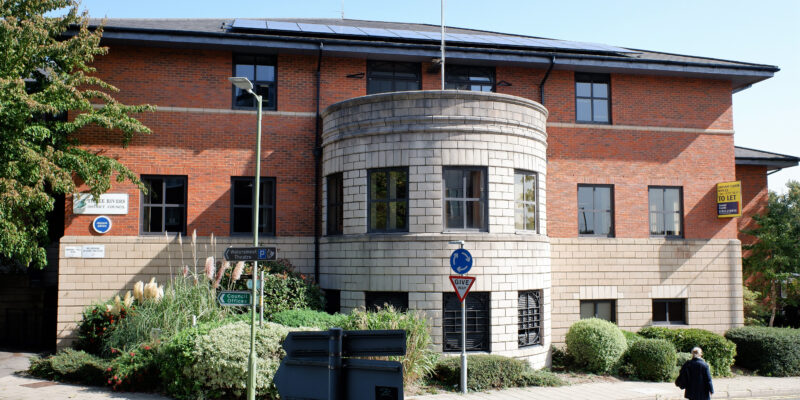


Nov 142025
 
DPAC Logo with text underneath "Disabled People Against Cuts" and then web address dpac.uk.net


SOS by Ian Stanton

SOS, SOS, Save these children in distress,

Dig deep into your largesse,

Keep them fed and keep them dressed.

Give a boost to your career

And keep the government’s conscience clear,

So they can boast with utmost clarity

Victorian values, hope and charity.

SOS, SOS,

Helpless cripples, all are blessed,

Smiles that must mean happiness

And can’t be screams of bitterness.

Keep the spastic slur in lights

& pay to keep us out of sight

Get your face on BBC,

No wonder stars turn up for free.

SOS, SOS,

Friends will bring you happiness,

Do they get on? Well, who cares less?

The able bodied know what’s best.

Hero children, medals bright,

Already taught that it’s their right

To make decisions, pull our strings,

And what rewards such action brings.

SOS, SOS,

If only you could see the mess ……

The money you raise

Pays people to oppress me!

Special nursery, special school,

Special college, learn the rules,

Special Adult Training Cesspit!

Real work for real wages?

You’re dreaming kid, forget it.

You’re safe in here, not like out there,

People laugh and people stare,

They don’t mean harm they’re just not used

To seeing someone jerk like you ……

Better stay here, out of the way.

That’s what’s bought with what you pay.

If only you knew!

Ian Stanton.


Nov 142025
 
DPAC Logo with text underneath "Disabled People Against Cuts" and then web address dpac.uk.net

Contents

Health and care funding crisis will create pressure to choose assisted suicide, MPs and peers are told. 1

Parliament has ‘dismissed and sidelined’ disabled people from assisted suicide bill debate, says letter. 4

Protection failure in DWP’s fraud and error bill ‘risks further tragic deaths’, MPs warn. 6

New investigation on NEETs will only target young disabled people, DWP document shows. 9

New project will research and reveal stories behind half a century of the disability arts movement. 10

Government must drop ‘economic burden’ narrative and sanctions, MPs are told. 12

Minister refuses once again to reveal truth about cuts to Access to Work. 14

Other disability-related stories covered by mainstream media this week. 16


Health and care funding crisis will create pressure to choose assisted suicide, MPs and peers are told

Many terminally-ill people would feel “duress” and “pressure” to choose an assisted suicide if it is legalised, because of the lack of funding for the NHS, palliative care and social care services, a disabled activist has told MPs and peers.

Liz Carr was giving evidence to the joint committee on human rights yesterday (Wednesday) just two days before the House of Lords begins the latest parliamentary stage in examining the terminally ill adults (end of life) bill.

The bill, which applies to England and Wales, has not been introduced by the government – although it is believed to be heavily-supported by the prime minister – but has instead been sponsored as a private members’ bill by Labour MP Kim Leadbeater and Labour peer Lord Falconer.

Carr, a disabled actor, writer and activist, told the committee that some terminally-ill people, faced with a lack of support, would feel they had no alternative but to choose an assisted suicide, if it was legalised.

She said they would feel “duress” and “pressure” because they were not able to secure the support package they needed, and because they felt they were a “burden on their loved ones”.

She told the committee there should be more focus on “providing support and a good death for people at the end of their lives rather than focusing on this one option for a small group of people, when there’s a much bigger group of people who are suffering at the end of life now.

“They’re dying in corridors, they’re dying because they don’t get the drugs because NICE is not approving them, they are dying because there is not the right support and funding into palliative care.

“That is suffering.”

Carr, who opposes legalisation, said the need for the evidence session was “testimony to the absence of the disability voice in the progress of the bill so far”.

She said that disabled people and disabled people’s organisations had “struggled to get heard” during the bill’s passage through the House of Commons.

She also told the committee that most disabled people had experienced “devaluation at the hands of the health professionals, and that is terrifying.

“The one safeguard that there currently is that I feel safe with… is that assisted suicide remains a criminal act.

“Once it becomes a medical treatment, then that’s when it terrifies me, because it happens behind closed doors and is based on medical subjectivity.

“And those doctors and whoever are making those decisions have the same biases and the same prejudices and pressures every single day that view disabled people often as better off dead and their lives as having less value.”

Jean Eveleigh, a patron of the pro-legalisation campaign group My Death, My Decision, who has a long-term health condition, said it was parliament’s job to provide the necessary funding to deal with the “very real pressures and very real problems” with the NHS and advocacy programmes, rather than using them as reasons not to introduce the legislation.

She told the committee: “And you not doing anything about it is your fault, not ours.”

Eveleigh said there were some people for whom “no matter how great palliative care is, no matter how loving their family is, no matter how much medication they’re given, they just cannot have what they would decide is a good death and they should be given the choice to decide how they want to die”.

Eveleigh said there were currently no safeguards to protect terminally-ill people who are considering taking their own lives, and no figures on how many of them are being coerced to take their own lives or refuse treatment.

She said: “This law is actually going to be improving things from the zero state we have now.

“Whether it’s a bad law or not is for other people to decide, but having nothing is causing problems.”

She said that data should be collected after assisted dying was legalised to see how the law was being implemented by doctors.

She said: “You’ve got the data, you can then see where the flaws of it are, you can then make improvements.”

The crossbench peer Baroness Hollins, a former president of the Royal College of Psychiatrists, who opposes legalisation, spoke about her husband, who died from motor neurone disease earlier this year.

She said he had still been waiting for a wheelchair when he died, because of an NHS waiting list.

She said: “You can imagine that you are there needing something and not getting it, and that is not going to help your mental state, it’s not going to help you to manage your everyday life.”

She said the much higher rate of suicide for disabled people compared with non-disabled people made her worry that some disabled people might choose an assisted death rather than wait for the care and support they needed.

She also spoke to the committee about her daughter, who was treated 20 years ago for a high-level spinal injury, and who is now “scared of what this bill could bring”.

When her daughter was injured, a neurosurgeon “did not want her to be resuscitated because he said the quality of her life would be so poor”.

Baroness Hollins told the committee: “Her life would not be worth living, he said, and he did not want to admit her.

“It’s only because I was there as an advocate, essentially, it’s only because I actually understood what he was talking about, that I said, please, please admit her, and 20 years on she’s got three children and she’s living a wonderful life.

“Yes, her life is different. But do you know what? She’s scared of this bill.”

Dr Henry Marsh, a neurosurgeon and supporter of legalisation, who was diagnosed four years ago with advanced prostate cancer, told the committee: “I see assisted dying as a form of treatment, a treatment for suffering, and it should be subject to the same analysis of cost and benefit on the basis of evidence as you do with any other treatment.”

He confirmed that he believed that if there were some cases of coercion, the greater public good would still be served by legalising assisted suicide.

He said: “In principle, yes. I know I made a very crass comment about sacrificing grannies*. I greatly regret it. I wish I hadn’t said it. It was very stupid of me.

“I didn’t realize it was going to get into the public domain, but the principle is there is always a cost.”

He said the “reality of normal medical practice” was that there was always a risk that a medical procedure “could make things worse”, but that risk was justified because “more people benefit”, even if “it sounds rather inhumane and utilitarian”.

He said later: “There are always risks. Nothing is perfect.

“A lot of people are suffering bad deaths in this country, I’m afraid.”

He said such a bad death could happen to him.

He told the committee: “The state of the NHS is abysmal and palliative care is not properly funded, but I think it’s highly unlikely there’ll be better funding of palliative care in the future.”

*He told The Times eight years ago in an interview that, if assisted suicide was legalised: “Even if a few grannies get bullied into it, isn’t that a price worth paying for all the people who could die with dignity?”

13 November 2025


Parliament has ‘dismissed and sidelined’ disabled people from assisted suicide bill debate, says letter

Disabled people’s organisations (DPOs) have united in opposition to attempts to legalise assisted suicide, after months of being excluded from parliamentary discussions.

In an open letter, DPOs from across England and Wales have declared opposition to the bill and are protesting at the continued lack of meaningful engagement with DPOs and disabled experts throughout its progress through parliament.

They spoke out as MPs and peers on the joint committee on human rights took evidence yesterday (Wednesday) on the potential impact of the terminally ill adults (end of life) bill on the human rights of disabled people (see separate story).

The bill, which applies to England and Wales, continues its progress through the Lords tomorrow, as peers begin to debate more than 700 proposed amendments.

The bill has not been introduced by the government – although it is believed to be heavily-supported by the prime minister – but has instead been sponsored as a private members’ bill by Labour MP Kim Leadbeater and Labour peer Lord Falconer.

The open letter was drawn up by Not Dead Yet UK, Disabled People Against Cuts (DPAC), Inclusion London, Disability Rights UK, Bromley and Croydon DPAC, and Greater Manchester Coalition of Disabled People, and highlights how disabled people have been excluded from parliamentary discussions on the bill.

They welcome the human rights committee’s decision to examine key aspects of the bill that were “dismissed and sidelined” as it passed through the House of Commons earlier this year.

They say the bill “discriminates against and has not meaningfully engaged with Disabled people”, even though they are “among those most at risk” from the legislation.

And they say it is vital that parliament understands the “human rights and equalities implications” of the bill for disabled people.

Among their concerns, the DPOs say the bill’s already limited safeguards had been “watered down” during its progress through parliament; that funding legalised assisted suicide would remove money from palliative care and “essential health and social care funding”; and that the bill fails to address the risks of disabled people being coerced into an assisted death.

They also raise the risks that the “very dangerous” bill poses to people with learning difficulties; warn that the judicial protection initially proposed by the bill has now been watered down; and say that disabled people’s voices and organisations have been excluded during the bill’s passage.

And they point out that no person with learning difficulties was asked to give evidence to the House of Lords during its select committee evidence sessions, despite the “significant impact” the bill will have on this group of disabled people.

They are now seeking other DPOs to sign the open letter and show their opposition to the bill.

By noon today, nearly 40 DPOs and disabled-led organisations had signed the open letter.

Meanwhile, in written evidence to the select committee set up by the Lords to examine the “safeguards and procedures” in the bill – which published its report this week – the Equality and Human Rights Commission warned that a private members’ bill was “an unsuitable vehicle for legislation of this importance, because of the reduced scrutiny offered”.

The commission said the legislation was “likely to particularly affect disabled people and older people”.

It said: “Peers should be aware that coercion or pressure is not always applied directly by other individuals.

“UN experts highlighted that individuals can feel subtly pressured to end their lives prematurely due to attitudinal barriers and a lack of services and support.”

And it warned that assisted dying could only be compatible with the European Convention on Human Rights if “high-quality health and social care, including palliative care” was “available to all, and patients informed about its availability”.

13 November 2025


Protection failure in DWP’s fraud and error bill ‘risks further tragic deaths’, MPs warn

Cross-party MPs have warned that ministers’ refusal to introduce a key protection into their new fraud and error bill could see a repeat of the countless deaths caused by the austerity measures of past governments.

The concern was raised by MPs debating one of the final parliamentary stages of the public authorities (fraud, error and recovery) bill last week.

They raised fears that future “authoritarian” governments could misuse the powers the Labour government is seeking through the bill.

One of those powers will allow the Department for Work and Pensions (DWP) to force banks to examine the accounts of claimants of means-tested benefits and then provide details of any accounts where there have been potential breaches of benefit eligibility rules.

Concerned MPs called on ministers to support an amendment introduced by peers that would have ensured an annual assessment of the new powers by an independent reviewer included checks on whether they were causing any harm.

One MP, Liberal Democrat John Milne, highlighted how “past DWP errors” had had “tragic consequences”, and he listed some of the disabled people whose deaths have been closely linked to DWP’s actions.

He particularly highlighted the deaths of Philippa Day and Krissi Hunt, but also mentioned Stephen Carré, David Holmes, David Clapson, Errol Graham, Kevin Gale, Jodey Whiting, Roy Curtis and James Oliver*, who he said were all “wrongly hounded by the DWP”, which contributed to their deaths.

Milne told fellow MPs: “The DWP has a long track record of badly handled mistakes.

“That is a cultural failing, and it is wildly optimistic to assume that everything is suddenly going to be fine going forward.

“Do the government really believe that this bill has enough checks and balances to protect vulnerable claimants?

“One thing is for sure: there will be more DWP mistakes.”

Labour’s John McDonnell told MPs: “For the life of me, I cannot understand why the government are resisting having contained within the annual review the question of whether harm is being done.”

He said this was “the only way we will learn whether the legislation is operating in the way the government wish it to, and then whether any changes in the system are needed”.

He added: “I do not want to exaggerate, but I was in the house throughout our discussions of the introduction of the work capability assessment [in the mid-2000s], and, although the last government refused to accept it, we now know that it resulted in a large number of suicides.

“In this instance, I would not want us to enter into a reform of the processes specified in the bill without a regular review of the harms that could be caused, which would enable us subsequently to adjust the legislation if necessary.”

The SNP’s Kirsty Blackman agreed that the disabled people whose names were read out by Milne were “failed by the system that was meant to support them”.

She said that many disabled people “have had to fight for so much, and the system that is meant to support them should not then be another battleground”.

Blackman made clear that her party did not support the bill, partly because of the “potential future risks”.

She said: “I said to the Conservatives when they were in government, and I will say again now that the Labour party is in government, that you will not be in government for ever.

“At some point, somebody else will be in government, and if it is somebody who shares the authoritarian ideas of some potential future leaders, I am not sure that I want them to have access to everybody’s bank accounts.”

Steve Darling, the disabled MP and Liberal Democrat work and pensions spokesperson, agreed.

He said: “I am not questioning the reasonableness of the current minister, or multiple ministers who preceded him, but I question what we are seeing on the other side of the Atlantic and the person who has the levers of power in the Oval Office.

“What may be seen as ‘reasonable’ in politics in the United Kingdom is sadly a distant memory in the United States of America.

“We must ensure that we guard against that future [in the UK] in the legislation we are putting forward now.”

But work and pensions minister Andrew Western refused to accept the Lords amendment.

He said the work and pensions secretary was already required to provide the independent reviewer with “all reasonably required material, so there is no need for the reviewer to write a statement to that effect in every report”.

But he said that “if they felt the need to, there is nothing to stop them doing so”.

Labour’s Neil Duncan-Jordan told MPs that several witnesses had said during the bill’s committee stage that the new powers “could result in serious harm to benefit recipients”.

He said: “If the algorithms are scanning the bank accounts of 10 million people, an error rate of just one per cent will result in 100,000 cases where innocent people are wrongly investigated.”

He said it was vital that the independent reviewer of the new powers “considers the harm to individuals, so that we can understand whether the powers being exercised are proportionate”.

But Western said the “question of whether actions taken as part of the eligibility verification measure are necessary and proportionate is baked into the bill” and that with “additional safeguards” that the government has now added to the legislation, ministers had “reached a point where the bill will achieve what it needs to while being fair and protecting vulnerable people”.

Despite that refusal, the government has agreed to remove plans to give some DWP staff “morally dubious” powers to use “reasonable force” against benefit claimants when exercising powers under the bill.

The bill was set to give authorised DWP staff the same powers of search, entry and seizure as the police.

Western claimed the government had never intended that DWP investigators should be able to use reasonable force against claimants but only to “allow them to gain access to property, such as locked filing cabinets or cupboards, when on premises to search for and seize critical evidence”, and then to rely on “the likes of the police” in situations “where force against a person might be needed”.

But following concerns raised in the Lords, he said the government had now introduced an amendment to the bill that will allow DWP investigators to use “force against property only, while retaining the police’s power to use reasonable force where necessary against people and property”.

He said: “I have repeatedly assured the house that the DWP policy position is that DWP authorised investigators will not use reasonable force against people, and I believe that the amendments put that beyond doubt.”

When the bill returned to the Lords on Tuesday, peers approved the government’s concession on reasonable force, but declined to push any further for the annual assessment of the new powers to include checks on whether they have caused any harm.

The bill is now awaiting royal assent.

*All of these deaths, apart from that of Krissi Hunt, are investigated in The Department: How a Violent Government Bureaucracy Killed Hundreds and Hid the Evidence, DNS editor John Pring’s book on the years of deaths linked to DWP’s actions and failings, which is published by Pluto Press

13 November 2025


New investigation on NEETs will only target young disabled people, DWP document shows

A new “independent” investigation into the rising number of young people who are not in jobs, training or education will exclusively target sick and disabled claimants, a government document has revealed.

A Department for Work and Pensions (DWP) press release had said the inquiry would “tackle the persistently high numbers of young people out of work, education and training”.

DWP said on Monday that the investigation, to be led by former Labour health secretary Alan Milburn and commissioned by work and pensions secretary Pat McFadden, would have a “particular focus on the impact of mental health conditions and disability”.

But the inquiry’s terms of reference, published the following day, make it clear that this will be its only focus.

They say the investigation will examine the “drivers of the increase in the number of young people who are Not in Education Employment or Training (NEET) and claiming health and disability benefits, including childhood experience”.

The terms of reference say that Milburn and his panel of “experts” – who have yet to be appointed – will “investigate the root causes of this rise in economic inactivity among disabled young people and those with health conditions”.

As part of its initial work, the Independent Report into Young People and Work will aim to identify “underlying factors which may drive these trends”.

DWP said this week that more than a quarter of NEET young people now say long-term sickness or disability is a barrier to their participation, compared to 12 per cent in 2013-14.

There are likely to be concerns among many disabled activists that Milburn is leading the review.

Last year, in a controversial report, which was welcomed by ministers, his Pathways to Work Commission focused strongly on the need to push more people with long-term health conditions into work, and it included a controversial recommendation for DWP to introduce a “duty to engage” with employment support.

Milburn’s report also called on the government to cut benefits for disabled people who are out-of-work – except for those with “severe disabilities” – so they could “close the financial gap between incapacity and unemployment benefits”, a recommendation which was taken up this year by ministers through their Universal Credit Act.

And it completely ignored the serious safeguarding issues within DWP, including those linked to the work capability assessment process and universal credit and associated with efforts to pressure disabled people into work or work-related activity.

There are already concerns over some of the language used by DWP this week in announcing the review, with McFadden describing the growing number of young people who are not in work, training or education as “a disease”, in an interview with the Sunday Times, and claiming that work was an “antidote” to many health conditions.

The terms of reference also say that the review will provide a “diagnosis” on the increase in the number of young ill and disabled people who are NEET.

But there will be hopes that the new investigation could unearth clear evidence linking the increase in young sick and disabled people forced to rely on out-of-work benefits with the impact of the Covid pandemic; the backlogs in mental health treatment; and increases in mental distress and ill-health among younger people.

This could provide ammunition to fend off the growing hostile and disablist attacks on young disabled people from politicians and the right-wing media, and on social media.

DWP promises that Milburn’s investigation will “engage with people with lived experience” as well as employers, and experts in the labour market, welfare and health sectors.

It said the review would “make practical recommendations to help young people with health conditions access work, training or education”.

The final report is due to be published next summer, although the government will see its interim findings in the spring.

McFadden said: “The rising number of young people who are not in education, employment or training is a crisis of opportunity that demands more action to give them the chance to learn or earn.

“We cannot afford to lose a generation of young people to a life on benefits, with no work prospects and not enough hope.”

Milburn said his review would be “uncompromising in exposing failures in employment support, education, skills, health and welfare and will produce far-reaching recommendations for change to enhance opportunities for young people to learn and earn”.

13 November 2025


New project will research and reveal stories behind half a century of the disability arts movement

A new project to research and reveal 50 years of stories behind the rise of the disability arts movement has been awarded nearly £250,000 of National Lottery funding.

Disability Arts Online (DAO) is hoping its project will collect previously untold stories and save them from being lost for ever, through a new accessible digital archive, an interactive timeline, and a series of podcasts.

Over three years, Cripping Culture: A Journey into Disability Arts Heritage will collect memories from disabled artists, allowing it to capture “previously untold stories and shedding new light on key moments in its history”, thanks to the £249,607 grant from The National Lottery Heritage Fund.

The project’s work will include an appeal for those involved in the movement to share their memories.

The plan is to capture the stories of disabled artists and activists who were involved with disability arts through a series of oral history interviews – to be made available through a podcast in accessible formats – but the project will also seek reflections and memories from allies and audiences who experienced the work.

The timeline will include pictures, videos and materials from the disability arts movement.

DAO will work closely on the project with the National Disability Arts Collection and Archive (NDACA), which has previously brought together original art works, photographs, film footage and other material.

NDACA’s archive material will feature as part of the Cripping Culture project, with the research helping to tell the stories of the NDACA material and creating a fuller picture of the disability arts movement and its key moments.

The project also hopes to seek out stories, people and key moments that DAO is not yet aware of, including more accounts from outside London and from an intersectional perspective.

In the project’s final year, a hybrid symposium will bring together the disability arts community and celebrate the history of the movement.

DAO has been documenting the growth of disability arts since 2004, by publicising and critiquing work, reporting developments in the movement, and publishing opinion pieces.

The project will be led by DAO’s founder, Colin Hambrook, who will move to a new role as heritage project director of Cripping Culture after more than two decades as DAO’s editor.

Hambrook said: “We are in imminent danger of losing our heritage as activists central to the movement are ageing and many elders have already died.

“Their memories, stories, and interpretation of artworks make a critical contribution to society and disabled people’s culture.

“There’s an urgent need for Cripping Culture to digitally preserve this heritage and present it through the prism of lived experience in accessible and inclusive forms.”

Trish Wheatley, DAO’s chief executive, said: “Cripping Culture is hugely significant for our organisation, alongside being of vital importance to the movement.

“My favourite part of the project is that we’ll be seeking out contributions from across the country to show how widespread this movement has been and still is today.”

Dennis Queen, DAO’s co-chair, said: “The stories and testimonies gathered through Cripping Culture will help to build a more widespread and nuanced understanding of the disabled experience.

“Anyone can become disabled at any time, yet it is very hard to find a sense of community and empowered disabled identity without a rich cultural heritage to refer to.”

To register interest in sharing your story about the disability arts movement, visit www.disabilityarts.online/cripping-culture

13 November 2025


Government must drop ‘economic burden’ narrative and sanctions, MPs are told

The government needs to change its “extremely damaging” narrative that suggests disabled people are an “economic burden”, and move away from threats and sanctions, if it wants to increase disability employment, MPs have been told.

Disabled people’s organisations (DPOs) told members of the Commons work and pensions committee yesterday (Wednesday) that the government needed to listen to DPOs on how to reduce the disability employment gap.

One DPO told the MPs that the under-fire Access to Work programme “needs rescuing”, with its lengthy backlogs and a refusal by ministers to accept that support packages are being cut.

Michelle de Oude, co-chair of Greater Manchester Disabled People’s Panel (GMDPP), told the committee that the government’s frequent use of the term “economic inactivity” to describe disabled people who were not in paid work wrongly implied that they are “not contributing to the economy” and are “an economic burden to the rest of us in society who are working”.

She said this “extremely damaging” narrative failed to recognise that many disabled people volunteer with charities or contribute to their community in other ways, and it failed to recognise the work of unpaid carers.

If these groups suddenly withdrew their labour, she said, it would cause a huge economic cost to the country.

And she said that all disabled people contribute to their local economy by buying services, and most of them spend money online, and are therefore “economically active”.

She awarded the government “two or three out of 10” for its record on disability employment because of its “narrative” that disabled people “are a problem because we are not employed or we’re not employed enough, or we are not doing enough to get employed”, which ministers claim is costing the country money.

She said that GMDPP was trying to challenge this narrative.

De Oude said a key issue the government needed to address was the lack of expertise among work coaches in how to support disabled people to negotiate with an employer on reasonable adjustments.

Currently, she said, disabled people and employers are not given the opportunity to test out what adjustments could work.

She said it was important for disabled people to understand that they have a right to reasonable adjustments in the workplace and are shown how to ask for them.

She said: “If you support them to ask for the right reasonable adjustments in the right way, and you support the employer to understand that ask and to implement it in the right way, then you’ll really start to tackle the employment gap [between disabled and non-disabled people].”

She told the committee that Department for Work and Pensions (DWP) employment support programmes treat disabled people as if they are being put through a “sausage machine”.

De Oude also said the government should ask DPOs how they would spend money to support disabled people to access jobs and persuade employers to remove barriers, rather than endlessly repeating the failed policies of successive governments over the last 30 or 40 years.

She said DPOs would instead focus on disabled people’s expertise and individual knowledge and work with employers to remove barriers and “explore things and try things”.

Geoff Fimister, head of policy for Inclusion Barnet and spokesperson for the Campaign for Disability Justice, highlighted the harm caused by conditions and sanctions imposed on disabled people by DWP.

He said that “as long as the system is backed up by the threat of work-related conditionality and sanctions, I think there’ll be a lack of trust, and getting that trust and engagement from disabled people is crucial.

“Moving away from pressure and towards support is where we need to be going.

“There needs to be a confidence that what is on offer will actually lead to employment, and decent employment, and is not backed up by the threat of loss of income.”

De Oude added: “If conditionality worked, if threatening people worked, then all of the conditionality that had ever been in place would have worked, wouldn’t it, [and] the employment gap would have reduced.

“The fact of the matter is it doesn’t work because what you’re… doing is penalising disabled people for the fact that there are consistent, persistent barriers across the employment market.”

Fimister said good quality employment support was important, but the readiness of employers to employ disabled people was “key”.

But he said that the specialist knowledge of work coaches was “very patchy, very variable”.

He also told the committee that the Access to Work disability employment scheme was “very important” but “needs rescuing”, because of its backlogs and “unofficial cutting back” of support.

He said: “People are finding when they have their packages reassessed, they’re getting much less than they were getting before.

“The DWP denies that this is happening. They say that they’re just trying to stick to the original policy objective, so we’re having some very surreal conversations.

“It’s like looking out the window and saying, ‘It’s raining,’ and the DWP saying, ‘Well, the policy intention is that it’s not raining.’

“That won’t do. Access to Work is in need of rescue.”

Conor D’Arcy, deputy chief executive of Money and Mental Health Policy Institute, told the committee that his organisation had asked its research community of 5,000 people with mental health conditions “whether they had felt like the support that they’d got from DWP had ever got them into a job that had actually understood and was suitable for their mental health, and only nine per cent said yes”.

And Evan John, policy and public affairs adviser for the disability charity Sense, said there was a lack of understanding within jobcentres of the support requirements of disabled people with “complex needs”, which can “leave them feeling discouraged and distrusted”.

13 November 2025


Minister refuses once again to reveal truth about cuts to Access to Work

The disability minister has refused once again to explain what role he played in his department’s secret programme to cut Access to Work (AtW) grants.

It is the latest failure by Sir Stephen Timms to clarify when and how the Department for Work and Pensions (DWP) took the decision that guidance should be “more consistently applied” and that AtW staff should be more “scrupulous” in applying the guidance.

That decision led to significant cuts to the number of AtW grants being awarded, and to the size of many grants being reduced.

Sir Stephen told Disability News Service (DNS) at Labour’s annual conference in September that he would provide the date on which he approved an order from senior DWP civil servants for AtW staff to be more “scrupulous” in how they applied guidance.

But he has failed to provide that date.

Instead, DWP provided background information which failed to clarify when, or if, Sir Stephen approved a document about the guidance, but which suggested that the changes were put into effect through additional training for AtW case managers.

It suggested – although it refused to clarify this – that he may have seen a document but did not have to approve it.

Now Sir Stephen is claiming that he did not go back on his word by failing to provide the date, even though the information provided by DWP’s press office offered no date or clarity on how and when the new AtW regime was introduced.

He told DNS that he was “disappointed” to see the DNS report “stating, incorrectly, that I had gone back on my word”.

He said: “After we met, I checked what had happened, as I said I would.

“What I established was, as stated in the note you had from the department’s press office, ‘No submission has been sent to the Minister seeking a decision on case manager training as this is standard practice to improve our service.’

“I did ensure that the information I promised reached you.”

But when DNS asked – yet again – for clarity on who made the decision to apply the guidance more scrupulously, when it was shared with AtW staff, in what form it was sent to them, when he saw this information, and whether he approved it or just read it, he refused to provide any further information.

Instead, he wrongly stated in an email to DNS: “I fully delivered – via the press office – on the assurance I gave you.”

He had failed to respond to a further request for clarity by noon today (Thursday).

The first signs of how the new AtW regime has been impacting disabled people seeking support through the disability employment scheme came last month when DWP figures showed the number of people who had had any AtW provision approved fell by more than 10 per cent in the year to March 2025.

It is thought that more up-to-date figures will show a much steeper fall since the new rules began to be applied.

13 November 2025


Other disability-related stories covered by mainstream media this week

Disabled workers will effectively work for free from today until the end of the year, according to fresh analysis of the disability pay gap. Earnings between disabled and non-disabled workers remains a significant £2.24 an hour, which means disabled employees working a 35-hour week have to get by with more than £4,000 less a year on average compared to those who are not disabled, according to the Trades Union Congress: https://www.independent.co.uk/news/uk/home-news/disability-pay-gap-workers-stop-earning-b2862889.html

Private companies operating care services in just three regions of England have taken more than £250 million in profits in three years, with more than a third going to providers owned by private equity firms or companies based in tax havens. New analysis by Reclaiming Our Regional Economies warned that public money is being rapidly funnelled out of the care system into the hands of private companies, rather than reinvested to improve services: https://www.theguardian.com/society/2025/nov/12/private-care-providers-in-three-english-regions-make-250m-in-three-years

Schools in England are steering away children with special educational needs (SEN), leading some to have six times as many pupils requiring learning or behaviour support compared with others, according to research. Local authority leaders told the National Foundation for Educational Research they knew of schools that were “happy” to see others take children requiring extra support detailed by education, health and care plans , including headteachers who feared the impact on exam results of enrolling children with SEN: https://www.theguardian.com/education/2025/nov/13/schools-steer-away-special-needs-pupils-research-finds

Care homes that are graded as inadequate or requiring improvement are often not being reinspected for a year or more, a BBC investigation has found. More than 2,100 care homes in England, as of October this year, were rated as “requires improvement” by the Care Quality Commission, but the BBC found three-quarters of those had not been reinspected within a year or more: https://www.bbc.co.uk/news/articles/c14pvyn473ro

Ministers could encourage employers to allow more hybrid and remote working to help get greater numbers of disabled people and carers into the workplace, according to a House of Lords committee. A report by a cross-party committee says the government should set out whether it has considered including remote and hybrid working in back-to-work initiatives to offer more working flexibility to disabled people and those with long-term health conditions: https://www.theguardian.com/business/2025/nov/13/hybrid-working-disabled-people-lords-committee

The pioneering actor and writer Nabil Shaban, who has died aged 72, co-founded the theatre company Graeae in the 1970s, which is now a firmly established platform for deaf, disabled and neurodivergent performers: https://www.theguardian.com/stage/2025/oct/30/nabil-shaban-obituary

13 November 2025


News provided by John Pring at www.disabilitynewsservice.com


Oct 162025
 
DPAC Logo with text underneath "Disabled People Against Cuts" and then web address dpac.uk.net

We now have a group dedicated to issues faced by deaf people, set up and run by deaf people

You can join the facebook group at this link  https://www.facebook.com/share/g/1Yh2K21U21/?mibextid=wwXIfr


Oct 162025
 
DPAC Logo with text underneath "Disabled People Against Cuts" and then web address dpac.uk.net

Contents

Disability hate crime prosecutions tumble again, three years after CPS admitted figures were ‘woeful’ 1

Government figures show first signs of ‘perverse’ cuts to Access to Work. 3

Disabled claimants losing out by hundreds of pounds a month through hidden impact of universal credit  6

Ministers leave door open to continuing ‘absolute scandal’ of inappropriate Mental Health Act detention   8

Concern over ‘deeply worrying’ omission of disabled people from Lords assisted dying committee. 10

Scotland’s next government must act on disability rights, says new disabled people’s manifesto. 12

Home Office ‘uses false claims’ about disabled campaigner to dodge disability hate crime meeting. 14

Other disability-related stories covered by mainstream media this week. 15


Disability hate crime prosecutions tumble again, three years after CPS admitted figures were ‘woeful’

Prosecutions of disability hate crime plummeted again last year, with less than 300 cases taken forward by prosecutors, despite police forces in England and Wales recording more than 10,000 offences.

It is now the seventh year in succession that Disability News Service (DNS) has raised the alarm about plummeting levels of prosecutions of disability hate crime, with little if any action being taken by the police or Crown Prosecution Service (CPS) to address the trend.

It comes three years after both CPS and the National Police Chiefs’ Council (NPCC) finally admitted their performance was not good enough and needed to improve.

Despite those pledges, their levels have continued to deteriorate.

The blame – in National Hate Crime Awareness Week – is centred mainly on the police, as in previous years, for passing on so few cases to prosecutors, despite huge numbers of recorded offences, at more than 10,000 a year.

Levels of disability hate crime estimated by the national crime survey are more than five times higher, at about 56,000 adult victims a year, which police believe is probably the true level of disability hate crime.

The number of disability hate crime prosecutions fell from 306 in 2023-24 to 279 in 2024-25, while the number of convictions has also fallen again, from 233 to just 214 in the whole of England and Wales.

But CPS has told DNS that police forces passed only 328 disability hate crime cases to prosecutors in the whole of 2024-25, another fall compared with 338 in 2023-24.

The Home Office and CPS reports* mean that, in 2016-17, there were about 5,400 disability hate crime offences recorded by police and 1,009 prosecutions (prosecutions making up 18.7 per cent of offences), compared with 10,224 offences and only 279 prosecutions in 2024-25 (with prosecutions just 2.6 per cent of recorded offences)**.

Both CPS and NPCC have been promising to improve their performance on providing justice for victims of disability hate crime since 2022.

CPS said three years ago that statistics that showed that less than 350 disability hate crimes had been prosecuted the previous year made “for woeful reading”, while NPCC said in the same year that the performance of police forces across the country in providing justice for victims of disability hate crime was “not good enough” and must improve.

Since then, the number of prosecutions has continued to fall.

A spokesperson for Inclusion London, which leads the Justice for Disabled Victims disability hate crime campaign, said: “Feeling safe in our community is something that many of us take for granted, but hate crime can tear that safety apart in a single moment.

“Even if somebody is able to report that crime, plummeting prosecution rates mean that we are unable to get justice.

“A new approach is needed, putting people with lived experience, including those who face intersectional hate, at the heart of a new, funded national hate crime strategy.

“Our communities and organisations have vital expertise that the government is missing; it must work with us to shape a better system.”

The National Police Chiefs’ Council refused to comment on the figures, the third consecutive year it has done so.

But a Home Office spokesperson said: “Whilst the police are operationally independent, we expect the police to fully investigate these appalling offences and work with the Crown Prosecution Service to ensure perpetrators of these abhorrent offences are brought to justice.

“We are absolutely committed to tackling all forms of hate crime, and have already committed to protect disabled people by making all existing strands of hate crime an aggravated offence.”

CPS declined to criticise the police, despite police forces only referring 328 suspects to prosecutors in the entire year in relation to disability hate crime.

But Lionel Idan, chief crown prosecutor and CPS hate crime lead, said in a statement: “Disability hate crime has a devastating and far-reaching impact and we will not hesitate to prosecute offenders.

“While we can only take action when passed a file from police, we consistently bring charges in over eight out of every 10 cases when a charging decision is made by the CPS, more than three quarters of which result in a conviction.

“Last year, we published a best-practice guide to investigating and prosecuting disability hate crime, which we developed in close collaboration with leading academic experts, disability charity representatives and the police.

“This has since been used by both CPS prosecutors and the police, to improve how these cases are handled.”

The Home Office figures also show that the number of disability hate crimes recorded by police fell by eight per cent, from 11,131 in 2023-24 to 10,224 in 2024-25, the second consecutive annual fall.

But separate figures from the Crime Survey of England and Wales (CSEW), which provides estimates of the actual levels of personal and household crimes experienced by adults in England and Wales, rather than those recorded by police, show – according to NPCC – a 12 per cent increase in disability hate crime when comparing the three years from April 2016 to April 2019 with the three years from April 2022 to April 2025.

The latest CSEW figures show an estimated 56,000 adult victims of disability hate crime a year, more than five times larger than the number of offences recorded by police.

NPCC said this suggested disability hate crime offences “are going unreported or unrecorded”, and that the Home Office release “does not reflect a true reduction in crime”.

An NPCC spokesperson said: “We are determined to understand the reasons for this gap in reporting and work with key partners to improve confidence in policing and access to our services.

“NPCC leads will be developing an action plan to ensure we work with stakeholders in this area to address this issue and improve our support for disabled victims of crime.”

Despite the recent rise, the CSEW figures show that disability hate crime did fall by 31 per cent between 2006-2009 and 2022-25.

The Home Office figures also show that 42 per cent of disability hate crimes recorded by police were for allegations of stalking and harassment and 29 per cent were public order offences, while 19 per cent were crimes of violence against individuals.

Overall, there was a two per cent increase in recorded hate crime in 2024-25, with a six per cent increase in race hate crimes and a three per cent rise in religious hate crimes.

There was a 19 per cent increase in hate crimes targeted at Muslims, and an 18 per cent fall in the number targeted at Jews, although the hate crime rate is still far higher for Jewish people, at 106 per 10,000 population, compared with Muslim people, at 12 per 10,000.

*See table 9.1

**The Home Office recorded hate crime figures exclude the Metropolitan police, for statistical reasons, so the true prosecution rate for 2024-25 will be even lower

16 October 2025


Government figures show first signs of ‘perverse’ cuts to Access to Work

Official government figures have shown the first signs that ministers have been engaged in a “perverse” programme to secretly restrict grants made by the Access to Work disability employment scheme.

The new Department for Work and Pensions (DWP) figures show that the number of people who had any Access to Work (AtW) provision approved fell by more than 10 per cent in the year to March 2025.

The figures show that the number of disabled people who had AtW requests for aids and equipment approved plunged by 16 per cent on the previous year, while approvals for support for travel to work fell by 14 per cent.

And, at a time when ministers and opposition politicians are repeatedly suggesting that not enough people with mental distress or ill-health are in work, the number of approvals for mental health support from the government scheme dropped by seven per cent.

One disabled campaigner who works with AtW claimants said figures from the last six months – not due to be published for another 12 months – will eventually show how the cuts to essential funding are “far more severe” than those shown in the new publication.

Only last week, evidence from the disabled people’s organisation Action on Disability (AoD) showed the average AtW support hours of disabled people it has been working with had plunged from 22.5 to just four in the last two-and-a-half years.

The previous week, Sir Stephen Timms, the social security and disability minister, admitted signing off on orders that have led to widespread cuts to AtW support packages since Labour came to power.

The number of disabled people receiving AtW continued to rise last year, from 67,240 in 2023-24 to 74,190 in 2024-25, but this appears to be because AtW grants are typically awarded over three years.

For the same reason, total AtW spending rose to £320.7 million, an increase of 17 per cent in real terms compared to 2023-24.

The group that received the largest proportion of AtW spending was claimants who were “Deaf or hard of hearing”, with 28 per cent, or £90.3 million; followed by those with a “mental health condition”, at 12 per cent of spending, or £38.3 million; people with “difficulty in seeing” at 12 per cent, or £38.2 million; and those with “learning disability” at 11 per cent of total spending.

DWP refused to say if the latest figures showed that the months of concerns over cuts to support were well-placed and whether the department was making it harder to claim AtW just at a time when ministers were trying to get more disabled people into work.

But it did confirm that Access to Work awards are approved for up to three years, so customers receiving payments in 2024-25 may have been approved for support at any point between 2021-22 and 2024-25.

This means there is likely to be a time lag between any cut in the number of awards approved and that showing up in DWP figures.

Disability consultant Alice Hastie, who specialises in providing AtW advice, said it was no surprise that the impact of the cuts was beginning to show up in the DWP statistics, although she said the “true extent of the reductions is being masked”.

She told DNS: “Current figures still include payments to existing claimants on three-year awards, and they don’t yet reflect the escalation in cuts that began after May this year; the published data only runs to April.

“What I, and many other supporting organisations, are seeing on the ground is far more severe: widespread and deep cuts to essential Access to Work funding.

“Every week, I speak to distressed claimants who have had long-standing support suddenly reduced or new applications refused altogether.

“One recent example involves a blind claimant who had their funded taxi travel removed after being told they could use public transport instead.

“Multiple case managers ignored the fact that this person requires staff support to reach, board, and disembark from trains – support that isn’t available late at night when their shift ends.

“As a result, they’ve been forced to pay £60 per journey out of their own pocket for over a year, while their case remains unresolved.

“Shockingly, a case manager even asked them whether they held a driving licence.

“Access to Work is supposed to remove barriers for disabled people, not create new ones.

“What we’re seeing instead is a system that’s being quietly dismantled – with devastating consequences for disabled workers and their ability to remain in employment.”

David Buxton, AoD’s chief executive, said: “The new figures confirm what many Deaf and disabled people and employers have been saying for months: Access to Work is being quietly squeezed.

“Fewer people are getting new support approved, and that’s having a real and damaging impact on people’s ability to start or keep their jobs.

“Access to Work should be opening doors, not quietly closing them.”

Caroline Collier, from Inclusion Barnet’s Campaign for Disability Justice, said: “Access to Work is a vital support that unlocks opportunities for disabled people.

“Given that there is ever-increasing pressure to find work, it seems perverse to be rationing this support when it plays a key role in so many disabled people’s working lives.

“We call on government to make adequate investment in this crucial scheme, speed up assessment times and embrace Access to Work as a real and effective enabler for disabled people.”

Despite Sir Stephen’s admission that he signed off on an order for AtW staff to apply guidance more “scrupulously”, the department claimed again yesterday (Wednesday) that no changes had been made to Access to Work policy.

A DWP spokesperson said in a statement: “Spending on Access to Work has risen year on year and is supporting thousands of sick or disabled people to start or stay in work, but the scheme we inherited is failing employees and employers.

“That’s why we’re working with disabled people and their organisations to improve the scheme – ensuring people have the support, skills, and opportunities to move into good, secure jobs as part of our Plan for Change.”

16 October 2025


Disabled claimants losing out by hundreds of pounds a month through hidden impact of universal credit

Disabled people have suddenly become up to £200 pounds a month worse off because of unexpected impacts of being moved from their old “legacy” benefits onto universal credit.

Disabled People Against Cuts (DPAC) has been hearing from disabled people who have been hit hard in two different ways by the migration process, neither of which appear to have been predicted by the Department for Work and Pensions (DWP).

The impact has come despite disabled people being told that they would – at least initially – be no worse off on universal credit than on their previous benefits.

The problems impact on support provided to disabled people by their local councils.

DPAC is now considering whether a legal action might be possible, and it is now looking for disabled people who are eligible for legal aid and might be willing to take a legal challenge with DPAC’s support.

DPAC has been hearing of two ways in which the migration process has hit disabled people in unexpected ways.

In the first, disabled people who are already forced to pay care charges to their local council have seen these charges increase after migrating from employment and support allowance (ESA) onto universal credit, in some cases by more than £50 a week.

The council often only becomes aware the claimant has moved onto universal credit months after the migration, which leaves the disabled person with large arrears of care charges to pay.

DPAC believes these increased charges could be because certain disability-related premiums awarded under ESA – and previously disregarded by councils when calculating care charges – no longer apply under the universal credit system.

A second group of disabled people – apparently some of those who do not receive council-funded social care – are receiving a lower discount under their local council tax reduction scheme after migrating onto universal credit.

DPAC says universal credit payments seem to be treated differently than legacy benefits and that some disabled people are now paying 40 per cent of their council tax bills when previously they would pay nothing, with some now paying as much as £200 a month more.

This week, DWP refused to say if it was aware of these two concerns, if it was concerned, and whether it would take any action.

It also declined to provide an update on how many ESA claimants are still waiting to be migrated onto universal credit.

But it said in a briefing note that councils are responsible for assessing how much a person can be charged for care, while the Care Act 2014 requires that care charges are affordable, clear and transparent.

And it said that local authorities are responsible for designing council tax reduction schemes to support low-income households, and that councils have discretion to apply different rules for treating benefits such as universal credit relative to previous legacy benefits.

DPAC also pointed this week to the impact of rent increases on disabled people who have moved onto universal credit.

DWP had previously warned about this impact.

When rent increases, the housing element of universal credit also increases, but the total universal credit a migrated claimant is paid can stay the same, which means they are left with less to live on.

This is because the transitional protection paid to many of those moved onto universal credit by DWP through the “managed migration” process – which ensures a claimant is initially no worse off when they move across to the new benefit – is eaten away over time by inflation and often by other changes in circumstances.

DWP said that transitional protection was designed to be temporary, gradually reducing over time, so all universal credit claimants in similar situations are treated equally, regardless of whether they moved from old benefits or applied as a new claimant.

It confirmed that the transitional element decreases as other universal credit elements increase.

A DWP spokesperson said in a statement: “We support millions of people through universal credit every year – including those who have moved from ESA – and it’s a top priority for us to ensure that people receive the help they are entitled to.”

Linda Burnip, a DPAC co-founder, said: “While transitional protection in universal credit is designed for people to get poorer slowly year by year as the top-up amount reduces when the basic universal credit rates increase, there seems to also be no tie-in between incomes remaining the same and actions by local authorities with regard to the loss of council tax reduction and social care charging.

“We have been told by numerous people that in some areas care charges have increased from around £46 a week to over £100 a week [and that some] people have lost all or most of their council tax reduction with people paying as much as £208 a month for council tax when before migration to universal credit they paid nothing.

“Rent increases too are having to be absorbed by disabled people from a limited pot of money which they’re paid, leaving less for them to spend on ever-increasing living costs such as food and fuel.

“These issues are obviously causing great anxiety as, although having been told they would be no worse off on universal credit, many people are now paying out significant amounts of money they didn’t have to pay before migration.”

16 October 2025


Ministers leave door open to continuing ‘absolute scandal’ of inappropriate Mental Health Act detention

A disabled MP has failed to persuade ministers to show exactly what progress they are making towards ensuring there are enough community services to halt the “scandal” of disabled people being inappropriately detained under the Mental Health Act.

Current mental health laws mean it is possible for an autistic person or someone with a learning difficulty to be detained under the act without any associated mental ill-health.

Labour MP Jen Craft told fellow MPs on Tuesday that this was “an absolute scandal” and “something from a previous age that should be a source of moral shame to everyone in our community”.

Although she said the government’s mental health bill seeks to address this by “removing autism or a learning disability, in and of themselves, as criteria for detention under the Mental Health Act”, a government impact assessment admitted that this measure “will only be switched on when systems are able to demonstrate sufficient level of community support”.

She said: “We know that this government and the Department of Health and Social Care have a number of competing priorities to deliver on, and the concern for people who fall into this bracket under the legislation is that their concerns just will not be addressed and that this absolute scandal will continue in perpetuity.

“People who have a learning disability or autism will be detained because our community services just are not up to snuff; we have so categorically failed them that the only thing we can think to do is to lock them away from society.”

She was hoping to secure the government’s support for her proposal to end the scandal, by adding a new clause to the bill as it passed one of its final stages in parliament.

Her clause would have ensured the government had to co-produce a “road map” that would describe what autistic people and people with learning difficulties need “to support them to lead independent dignified lives in the community”, with an annual report describing “how we are getting community services to a sufficient place so that these much-needed clauses in the bill can be switched on”.

But care minister Stephen Kinnock said the government would not support her new clause.

He told MPs: “I acknowledge the importance of having a clear plan to resource community provision for people with a learning disability and autistic people to implement these reforms.

“We have committed ourselves to an annual written ministerial statement on implementation of the bill post royal assent.”

He promised to “work with stakeholders, including people with lived experience, to shape our road map” for implementing the changes Craft referred to.

He said: “The written ministerial statements will give updates on progress, as well as setting out future plans.”

But he added: “It is not possible at this stage for us to commit ourselves to the specifics of implementation and community support, which depend on the final legislation passed, future spending reviews, and engagement with stakeholders to get implementation planning right.”

The bill – supported this week by both the Conservatives and Liberal Democrats – now passes to the Lords to vote on changes that have been made by MPs since peers passed the mental health bill earlier this year.

Based on draft legislation drawn up by the last Conservative government, the bill has passed almost unnoticed through the Lords and the Commons, despite significant concerns raised by disabled campaigners.

The UN committee on the rights of persons with disabilities raised serious concerns in July that the bill was breaching the international disability rights convention.

Disabled activists believe it falls far short of the fundamental reforms needed to ensure full human rights for disabled people, and that it will not stop them being subjected to forcible detention and degrading treatment.

There have also been protests by autistic people and people with learning difficulties, who believe the bill will not do enough to keep them out of mental health hospitals, or protect them from badly-run hospital services that have led to cruelty, abuse, and even deaths.

The user-led, rights-based organisation Liberation, which is run by people with mental health diagnoses, has led criticism of the bill for ignoring, dismissing and misrepresenting calls for “full human rights” for people experiencing acute mental distress or trauma, and autistic people and those with learning difficulties.

Dorothy Gould, founder of Liberation, said the passing of the bill by MPs was a “day of shame for all political parties”.

She said: “Not one of them has seized the opportunity to put forward legislation which finally gives disabled people the same human rights as other UK citizens.

“Instead, they have done the opposite.

“During parliamentary debates, too, there has not been any senior politician, nor any MP who has brought up, let alone supported, the serious human rights concerns which Liberation has raised on behalf of people experiencing mental distress and trauma.

“Nor has even one of them addressed the weak evidence base which lies at the heart of the bill’s continuing authorisation of coercion against us.

“Politicians’ entrenched emphasis on just ‘improving’ a fundamentally discriminatory law, the Mental Health Act 1983, instead of bringing in radical change, is sheer discrimination.

“It can only result in continuing trauma for people who are already in acute distress.

“It is utterly shameful and utterly devastating.”

16 October 2025


Concern over ‘deeply worrying’ omission of disabled people from Lords assisted dying committee

Campaigners say it is “deeply worrying” that there does not appear to have been a single disabled peer appointed to a new House of Lords committee set up to consider proposed new laws that will legalise assisted dying.

Peers this week agreed the 13 cross-party members of a select committee that will consider the “safeguards and procedures” contained in the terminally ill adults (end of life) bill.

The committee includes four Labour peers, three Conservatives, two Liberal Democrats, three crossbenchers, and one bishop.

It includes Labour’s Baroness [Luciana] Berger, whose amendment to the bill led last month to peers agreeing to set up the committee.

It also includes Baroness Finlay, a crossbench peer and consultant in palliative medicine, a  prominent opponent of legalisation; Lord Hope, another crossbencher and former deputy president of the Supreme Court; the Labour peer Baroness Scotland, former secretary-general of the Commonwealth; and Lord [Robert] Winston, a Labour peer and pioneering fertility scientist and TV presenter.

The committee is chaired by Conservative peer Lord [Nick] Markham, a non-executive director and board member of the Department for Work and Pensions for nearly 10 years, between 2013 and 2022.

The committee is likely to take oral evidence from professional bodies, ministers, and those with professional experience of inquests, and will report back to the House of Lords by 7 November.

About two-thirds of peers who spoke last month during the second reading of the bill – which has already been approved by MPs – suggested they were opposed to the legislation as it stood.

Yesterday (Wednesday), Not Dead Yet UK, the disabled people’s grassroots group which sees legalisation of assisted suicide and euthanasia as “deadly forms of disability discrimination”, raised concerns about the apparent failure of the House of Lords to include anyone who identified as disabled on the committee.

Phil Friend, NDY UK’s convener, said it was “deeply worrying that there appear to be no disabled people” on the select committee.

He said: “Disabled people will be among those most affected, yet once again our voices are missing from the table.

“Without lived experience, the committee risks overlooking the realities of subtle coercion and the daily pressures caused by inadequate care and support.

“Disabled people must be included in shaping any discussion of a law that could so profoundly affect our lives.”

But disabled crossbench peer Baroness [Tanni] Grey-Thompson, who has campaigned against legalisation for more than a decade, said she was not concerned with the committee’s membership.

She said she had decided not to nominate herself for a place on the committee so she could work on amendments to the bill.

She said she had worked with many of the committee members and believed “that they understand the issues within the remit of the committee”.

She added: “It is there to only take evidence not to comment on it.

“I will be closely looking at those who are going to be invited to give evidence to make sure that disabled people are represented in the evidence that is provided.”

A spokesperson for the House of Lords said in a statement: “The membership of the committee on the terminally ill adults bill was agreed by the house in the usual way.

“Its make-up reflects a diverse and balanced range of views on the bill and balance between parties and groups in the house.

“The committee’s role is to gather evidence on the safeguards and procedures contained in the bill.

“It will hear evidence from organisations with a wide range of views.

“It will then make that evidence available to inform the house’s scrutiny of the bill but will not make recommendations.

“The house’s further scrutiny of the bill at committee and report stage will be conducted by the whole house and all members will be able to take part.”

16 October 2025


Scotland’s next government must act on disability rights, says new disabled people’s manifesto

The next Scottish government needs to listen to disabled people and take action to ensure the systemic change needed to realise their rights, according to a new manifesto drawn up by a national disabled people’s organisation (DPO).

Inclusion Scotland says in its Manifesto for Inclusion 2026 – released ahead of next year’s Scottish Parliament elections – that disabled people and their organisations have been “deprioritised, underfunded and disregarded for too long”.

Its manifesto – developed over more than a year through workshops with disabled people across Scotland – calls for action across seven key areas.

It focuses on independent living; an adequate standard of living; co-production; education and employment; climate justice for disabled people; accessible communities; and human rights.

Inclusion Scotland said it was releasing the manifesto as disabled people’s rights were again under threat, with “renewed cruel attacks on essential support, the cost of living continuing to increase, a social care support system that is still inadequate, and an uncertain funding landscape for our disabled people’s organisations”.

Among its calls is for “radical reform” of the adult social care and support system, and the removal of all care charges for non-residential social care.

It also calls for an increase in the levels of adult disability payment – which has replaced personal independence payment in Scotland – to “uplift disabled people out of poverty”, and efforts to make sure everyone eligible is receiving it.

And it demands fair funding for DPOs, and for DPOs and disabled people to be involved “across the board” in policy development, planning and delivery.

On employment, it calls for the Access to Work scheme to be devolved to Scotland and a new version co-designed with disabled people.

The manifesto also warns that the Scottish government and local authorities have been “failing to consider the needs of disabled people when planning for climate disasters”, which “needs to change”, with lessons that must be learned from the COVID-19 pandemic and other crises, “in order to stop preventable harm and yet further violations of our human rights”.

The document also demands a commitment to a better accessible transport system after 2026, and improved availability of accessible and adaptable housing for disabled people.

And on rights, the manifesto calls for the UN Convention on the Rights of Persons with Disabilities to be “fully incorporated” into Scottish law and for there to be “accountability and responsibility” for disabled people’s rights “at the highest level of government”.

Heather Fisken, Inclusion Scotland’s chief executive, said: “We need to start seeing immediate systemic change to address the deep-seated inequality we face in every domain of life.

“The asks in this manifesto are not new.

“Disabled people have been demanding these changes for decades only to have commitments revoked, [and] policies scrapped or inadequately implemented.

“The next Scottish government needs to not only listen to disabled people but act.

“Change is the only way to ensure disabled people’s human rights are realised and we can be active and equal parts of our communities.”

16 October 2025


Home Office ‘uses false claims’ about disabled campaigner to dodge disability hate crime meeting

The government has been accused of “hiding behind false claims” and failing disabled people who are being targeted by disability hate, while dodging a meeting with a leading disabled people’s organisation.

The Home Office’s commitment to tackling disability hate crime has been questioned in National Hate Crime Awareness Week, after it said it was too busy to meet disabled campaigners over their calls for action.

Inclusion London, which leads the Justice for Disabled Victims campaign, had told the Home Office that far more needed to be done to address disability hate crime, and repeatedly requested a meeting to discuss strengthening the law.

It believes that not enough has been done in the government’s crime and policing bill to strengthen the law, and has also contacted MPs and peers to pass on its concerns.

Although one extension of the law on disability hate crime is set to be added to the bill, disabled people’s organisations say this is not enough.

A civil servant from the Home Office’s Neighbourhood Crime Unit told Inclusion London last month that the government was determined to tackle disability hate crime, and that it was considering further action.

They said the government was “considering how we can strengthen our engagement” with the disability sector, but they added: “Due to diary pressures, we are unable to offer a meeting.”

They also claimed that Dame Diana Johnson, the then minister for policing and crime prevention, met with members of the National Hate Crime Independent Advisory Group, including a disabled campaigner, in June.

But Inclusion London has since discovered that this disabled campaigner did not attend the meeting.

It said the Home Office had been caught “making false claims about engagement with disabled people”.

Louise Holden, Inclusion London’s senior policy officer for disabled people and crime, said: “With hate crime on the rise and increasing hostility in our society, it is vital for us to have better protections if we are targeted.

“The government’s lack of interest or willingness to understand the issues is yet more proof that disabled people just don’t matter to them.”

The government has promised to extend the law so that standalone “aggravated offences” would also apply to disability hate crime and hate crime motivated by sexual orientation or transgender identity.

This would mean an offender could be charged with an offence – such as assault, harassment or criminal damage – that was aggravated by hostility towards a disabled person, and they would then face a tougher sentence if convicted.

At present, aggravated offences only apply to racial and religious hostility, and a disability hate crime can only be addressed by a court during sentencing, where the sentence can be increased if prosecutors can prove the offence was motivated by disability-related hostility.

The extension is due to be made through an amendment to the crime and policing bill when it reaches the committee stage in the House of Lords in the next few weeks.

The aggravated offences change was recommended by the Law Commission nearly four years ago, but it also made two other key recommendations to strengthen disability hate crime laws.

It called for existing offences of stirring up hatred, which only apply to race and religion, to be extended to disabled and LGBT+ victims, and it said an offender should be found guilty of a disability hate crime offence if they had been “motivated” by “hostility or prejudice” towards disabled people, rather than – at present – only by hostility.

The Home Office claims it is “carefully considering” these two further extensions.

This week, the Home Office had refused to comment by noon today (Thursday) on the claims about the ministerial meeting in June, and that it had not told the truth about the presence of a disabled campaigner at the meeting.

But it said in a statement, which repeated the response it issued to a completely different story about disability hate crime (see separate story): “We are absolutely committed to tackling all forms of hate crime and have already committed to protect disabled people by making all existing strands of hate crime an aggravated offence.

“Whilst the police are operationally independent, we expect the police to fully investigate these appalling offences and work with the Crown Prosecution Service to ensure perpetrators of these abhorrent offences are brought to justice.”

16 October 2025


Other disability-related stories covered by mainstream media this week

Disabled people and campaign groups will have direct influence over the government’s forthcoming review of personal independence payment, Sir Stephen Timms has told The i Paper. The minister for social security and disability said the review would be led by two co-chairs and a steering group “of about a dozen people, most of whom will be disabled”, including representatives of disabled people’s organisations: https://archive.ph/er9jv

The number of people in England who are frightened of living near people with mental health conditions has nearly doubled to one in seven, which experts warn reflects an “alarming rise in stigma”. Even if the person had recovered from mental ill-health, one in 10 people said they would be unwilling to live next to them, according to new research from mental health charity Mind: https://www.theguardian.com/society/2025/oct/15/alarming-rise-in-mental-health-stigma-in-england-research-shows

Disadvantaged children are more likely to have special educational needs but are less likely to get specialist support, research shows today. The Sutton Trust said children from poorer homes “experience a double disadvantage” and are being failed by a system “beset with inconsistency and mind-boggling bureaucracy”: https://www.mirror.co.uk/news/politics/poorer-children-more-likely-send-36074147

The Civil Aviation Authority has launched a consultation on airlines’ mishandling of mobility aids, so it can assess the extent of loss, delay and damage. It said anxiety at the prospect of loss or damage affects mobility aid users’ willingness to travel, and greater transparency would help users “make an informed choice” about travelling and “incentivise airlines and airports” to improve the handling of aids: https://travelweekly.co.uk/news/more-than-100-disabled-air-passengers-wheelchairs-a-month-lost-or-damaged

16 October 2025


News provided by John Pring at www.disabilitynewsservice.com