ellen

Apr 302024
 
DPAC Logo with text underneath "Disabled People Against Cuts" and then web address dpac.uk.net

This report should make any government that deserves to hold power sit up, take
notice and drastically change course. The CRDP Committee has fully recognised:
 The government’s shameful failure to make any significant progress with
human rights for disabled people
 The signs of actual regression in the government’s approach
 The government’s continuing ‘grave and systematic violations’ of disabled
people’s human rights.

An enormous strength of the report is its balance. In its coverage of disabled
people’s right to independent living, equal access to work and employment and right
to an adequate standard of living, the CRDP Committee has looked widely and
comprehensively.

As the report rightly highlights, it is an utter disgrace that many of
us are forced into institutions, continue to be locked up against our will in places
such as psychiatric hospitals and continue to be forcibly treated and abused, in
complete breach of human rights which other citizens hold. It is an utter disgrace that
the socioeconomic conditions which we face as disabled people are so
disproportionately bad and that we face heavy penalties for not working when we so
frequently lack necessary support to do so, or genuinely cannot. It is still more of a
disgrace that some of us experience multiple discrimination because of our gender,
age, ethnic origin or refugee status. It is high time that the government moves out of
denial and takes urgent reparative action.

Dorothy Gould
Founder of Liberation
E: liberationrights@gmail.com

 Posted by at 20:32
Apr 252024
 
DPAC Logo with text underneath "Disabled People Against Cuts" and then web address dpac.uk.net

FOR IMMEDIATE RELEASE: 25 April 2024

UK Deaf and Disabled People’s Organisations’ Coalition


UN Committee slams government failure to address disability rights violations

A report published yesterday by the United Nations Committee on the Rights of Disabled People concludes that the UK Government has made “no significant progress” in addressing the grave and systematic violations of Deaf and Disabled people’s rights that it highlighted more than seven years ago.

Instead, the report notes areas of further regression and numerous issues of “deep concern”.

The report states that:

“The Committee finds that the State party has failed to take all appropriate measures to address grave and systematic violations of the human rights of persons with disabilities and has failed to eliminate the root causes of inequality and discrimination.”

The report is the outcome of a follow up to the Committee’s unprecedented special inquiry which in 2016 found evidence of grave and systematic violations of Deaf and Disabled People’s rights due to welfare reform and austerity measures.

The inquiry focused on three specific areas: equal chances to live and participate in the community; right to good work; and, adequate social protections and standard of living.

On publication of the 2016 report the then government dismissed its findings.

Andy Greene from the National Steering Group of Disabled People Against Cuts (DPAC), who triggered the special inquiry said:

“The process of evidence gathering, taking witness testimony and objective scrutiny of policy and its impact, is one that’s very difficult to ridicule or dismiss. The facts speak for themselves. As such, the inquiry vindicates the experiences of Deaf and Disabled people whose voices are too often ignored.”

John Kelly, musician and campaigner who also sits on the DPAC National Steering Group said the report is:

“…damning on the lack of this government listening to our real lived experiences as Disabled people and doing anything to support what we really need which is to live and contribute in our community as equal citizens along with our peers.”

Deaf and Disabled People’s Organisations (DDPOs) across the UK, who took part in reporting to the Committee, along with DPAC, through the UK DDPO Coalition, have welcomed the report.

Svetlana Kotova, Director of Campaigns and Justice, Inclusion London, said:

“This report is a damning verdict on the government’s track record in upholding our human rights…

“It is shocking that our country that positions itself as a world leader is yet again found to breach our rights on a systematic level.

“It is also shocking that the government has failed to listen to the UN in the past and has actively dismissed the previous recommendations….

“Inclusion London welcomes the report and urge the government and the opposition to take it seriously and develop policies on welfare reform, employment and independent living that comply with the UK’s obligations under the UNCRDP.

“The report shows that the current system is not fit for purpose and the government cannot carry on punishing Disabled people.”

Dermot Devlin, spokesperson for DPAC Northern Ireland said:

“ DPAC NI thank the UN Committee for their work and due diligence on our behalf and call on the Westminster Government to properly implement the recommendations of the 2016 inquiry and the current report.

“The absence of Government in Northern Ireland has failed Disabled people here. With the Executive now restored, bringing forward a Disability Strategy that addresses the Committee’s recommendations must be an absolute priority.”

The report documents how the UK government requested postponement of the session at which they were due to give evidence to the Committee in August.

Their request for postponement was just six days before the deadline for written evidence submissions to the inquiry was due and after many cash-strapped DDPOs had already booked their flights and accommodation to attend and give evidence.

The result was that the Committee, which is made up of Deaf ad Disabled members from around the world, had to split the oral evidence section of the inquiry into two separate sessions.

Rhian Davies, CEO for Disability Wales, said:

“The UK Government’s approach to this review has been utterly disrespectful and matches the contempt shown to Disabled people for over a decade. We deserve better and we demand better.”

Ellen Clifford, UK Coalition Co-ordinator, said;

“The government’s attitude towards the UN special inquiry is evidence that their treatment of Deaf and Disabled people is wilful and calculated. This is reflected in the damning findings of the report.

“The limitations of the inquiry process are that there are just too many deliberate rights violations to include in one report.

“However, the report validates the experiences of Deaf and Disabled people across the UK and is a much-needed counter to government rhetoric claiming they are “protecting the most vulnerable” when they are doing the exact opposite.”

The report highlights numerous areas of government policy that are not only failing Deaf and Disabled people, but that are causing serious rights violations.

Among the many areas where the Committee is “deeply concerned” are: the social care recruitment crisis follow EU withdrawal; the inadequacies of social care support provision to cover anything more than “bare subsistence”; incarceration of Disabled people “in secure psychiatric facilities due to a lack of community-based support”; “disabled people who are housebound due to inadequate support to access the community”; “abuse, mistreatment and the increasing use of restraints, restrictive practices and… unexpected deaths in the mental health care system”.

Dorothy Gould, founder of Liberation, a grass-roots organisation led by people with personal experience of mental distress/trauma, said:

“…it is an utter disgrace that many of us are forced into institutions, continue to be locked up against our will in places such as psychiatric hospitals and continue to be forcibly treated and abused, in complete breach of human rights which other citizens hold.”

The Committee’s recognition of the increasing barriers to employment have been welcomed by Deaf and Disabled trade unionists.

Natalie Amber, Co-chair, Deaf and Disabled Members Committee, Equity Trade Union, said:

“Ill-thought through cuts, particularly as a result of welfare reform, are making it impossible to work in the creative industries unless you have independent wealth.  This is directly and negatively impacting who we see on our stages and screens.”

The report acknowledges the devastating impact of previous welfare “reform” measures.

The report states that:

“The Committee is appalled by reports of “benefit deaths” referring to fatalities among disabled people in the State party, subsequent to their engagement with the process for determining eligibility for benefits…

“Testimonies have also been received regarding the minimal, unsuitable, and/or abusive responses to individuals’ mental health emergencies that are frequently precipitated by the benefits assessment procedure.”

It recommends that the UK government:

“Take comprehensive measures to ensure that persons with disabilities are adequately supported through social security payments, benefits and allowances,…  ascertain the additional costs of living with disabilities and adjusting benefit amounts accordingly to reflect these costs;”

Alison Turner, daughter-in-law of Errol Graham, who starved to death after his benefits were stopped, said:

“I am pleased that the report highlighted the need for proper review and monitoring of the deaths of benefit claimants… It shows that this government has learned nothing and cares not for its direct actions to cause harm.”

The report comes less than a week after the Prime Minister announced a new round of cuts to disability social security payments and amidst political and media rhetoric that directly contravenes the 2016 findings and recommendations by demonising disabled benefit claimants.

The report states that:

“There is a pervasive framework and rhetoric that devalues disabled people and undermines their human dignity. Reforms within social welfare benefits are premised on a notion that disabled people are undeserving and wilfully avoiding employment (“skiving off”) and defrauding the system. This has resulted in hate speech and hostility towards disabled people.”

Kamran Mallick, CEO of Disability Rights UK, said:

“Under this Government, the UK has lost its status as a nation that leads in disability rights to one that is actively attacking Disabled people.

“In just the last week we have seen an onslaught of new policy proposals and legislation which will not only harm us but also lead to avoidable deaths…

“At a time when we’re all struggling to make ends meet and cannot access the healthcare and support that we need, the Government are scapegoating Disabled people for a failing economy.

“We are not at fault for simply existing. The Government are at fault for their complete disregard for international treaties and contempt for Disabled people’s rights.”

John McArdle, spokesperson for the Black Triangle campaign in Scotland, said:

“To proceed with the plans announced by Conservative Prine Minister Sunak last Friday will definitely lead to a surge in deaths by suicide and other avoidable harm which falls short of death but is nonetheless catastrophic.

“The U.K. has abrogated the Convention on the Rights of Disabled People by its treatment of Deaf and Disabled people in the UK.”

Disabled President of the National union of Journalists (NUJ), Natasha Hirst, made a call to all journalists to reflect the evidence as reflected in the report rather than unquestioningly repeating inaccurate and harmful government rhetoric:

“There has never been a more important time for journalists and the wider media industry to tackle harmful negative rhetoric against disabled people.

“I call on journalists to take time to understand the concerns raised by the UN Committee and scrutinise why the Government is so keen to dismiss their failure to uphold disabled people’s human rights.

“Deaf and Disabled People’s Organisations have thoroughly evidenced the harm caused by policy changes and cuts to services and yet the UK Government is intent on pushing this even further.

“Disabled people’s voices need to be heard and not drowned out and demonised by people who have never experienced the sharp end of the social security system.

“As journalists, we should report ethically to hold power to account, and not be complicit in the scapegoating of disabled people.”

ENDS


For more information including speaking to people personally affected by issues covered in the report or to be put in touch with ‘;#anyone quoted above, contact:

Ellen Clifford, UK Coalition – 07505144371

Rensa Gaunt, Inclusion London – 07561 064227     `

Bethany Bale, Disability Rights UK – Bethany.bale@disabilityrightsuk.org

For Northern Ireland enquiries contact: Dermot Devlin – 07899 962209

For Scotland enquiries contact John McArdle – 07379 612778

For Wales enquiries contact: Megan Thomas – 07990 425823


Notes for Editors

  • The special inquiry was triggered under Article 6 of the Optional Protocol of the Convention on the Rights of Disabled People (CRDP). This was the first time an investigation into allegations of “grave and systematic violations” of CRDP rights had even taken place. Since then, following the precedent set by UK DDPOs, inquiries have taken place into allegations of breaches by Hungary and the EU and by the Spanish State.


  • The three articles of the CRDP which the special inquiry focused on are articles 19, 27 and 28.


  • The UK DDPO CRPD Monitoring Coalition co-ordinates written and oral evidence from UK DDPOs for examinations and inquiries by the UN Committee on the Rights of Disabled People.


  • The UK DDPO written submission to the inquiry can be found here: https://www.inclusionlondon.org.uk/wp-content/uploads/2023/08/UK-DDPO-CRDP-Special-Inquiry-Shadow-Report-final.docx


  • The deadline for written submissions to the inquiry was midnight on 1 August 2023. The report states that the UK government asked for postponement on 26 July 2023.


  • The special inquiry oral evidence session in August which heard from UK DDPOs as well as representatives from the equality and human rights commissions of the four nations can be seen here: https://webtv.un.org/en/asset/k1o/k1o8b7239p


  • Media reporting linked to the government’s welfare reforms plans has been found to be inaccurate and to incite hostility against disabled benefit claimants. For example: the Information Commissioners Office (ICO) ruled that it has upheld a complaint against the Department for Work and Pensions (DWP) in relation to media reports that appeared to be aimed at ‘stirring up hostility’ towards disabled people claiming benefit; the Independent Press Standards Organisation (IPSO) recently upheld complaints against The Telegraph for inaccurate and misleading articles about disability benefit entitlements that gave a false impression about eligibility and the generosity of the social security system.


  • For full quotes from all DDPO and trade union representatives received please see: https://docs.google.com/document/d/1-XkQNo2tXgRTQGARgtcpmF7m0qkDXJx5iuaEbstVdlo/edit?usp=sharing
Apr 192024
 
DPAC Logo with text underneath "Disabled People Against Cuts" and then web address dpac.uk.net

Emergency Social Security Campaigns Meeting

Sunday 21 April 2024 3 – 4.30pm

Join Zoom Meeting
https://us06web.zoom.us/j/88958156364?pwd=ah3dyMFY3y20G1HajLzZaLNVa3wKag.1

Meeting ID: 889 5815 6364
Passcode: 069808

We have called this meeting to bring together all those worried by and/or wanting to fight back against the Tories’ current all out assault on Disabled people, culminating in Rishi Sunak’s announcement today with plans to cut access to social security for millions of people.

For anyone who is worried, please remember that some of these changes may take time to roll out and others will only affect new claimants not existing ones.

For accurate information on what the key changes announced this week are see:

Tory plans: PIP no longer always cash, WCA harder to pass, UC migration sooner, no GP sick notes, DWP power to arrest and fine (benefitsandwork.co.uk)

 Posted by at 23:57
Mar 182024
 
DPAC Logo with text underneath "Disabled People Against Cuts" and then web address dpac.uk.net

FOR IMMEDIATE RELEASE

Deaf and Disabled People to witness United Nations scrutiny of UK Government’s human rights record

On Monday 18 March Deaf and Disabled campaigners and trade unionists from across the UK will gather in Geneva to watch the UK governments give evidence to the United Nations. The public session is part of a follow-up to the special inquiry undertaken by the UN Committee for the Convention on the Rights of Disabled People. The special inquiry report published in 2016 found the UK guilty of grave and systematic violations of Disabled people’s rights due to austerity and welfare reform measures.

Deaf and Disabled People’s Organisations gave their evidence to the Committee for its follow-up in August 2023 along with equality and human rights commissions from the four nations. The government did not attend, stating it was not ready and would instead appear before the Committee at its following session in March 2024.

The Committee’s scrutiny of the government’s human rights record is a rare opportunity to expose the worsening inequalities and injustice experienced by disabled people in the UK.

Linda Burnip, co-founder of Disabled People Against Cuts who triggered the special inquiry, said:

“The UK government’s failure to turn up in August showed the utter contempt they have, not only for Deaf and Disabled people but also for the UN Disability Committee. At this stage we’re not even sure if they will turn up on Monday. The last written report they sent to the Committee was in December 2022.

“The Convention holds great importance for us because it sets out a vision of full equality and inclusion. The Government’s record on disability since 2010 is of great international concern because they have so deliberately and flagrantly driven the UK backwards in terms of its treatment of Deaf and Disabled people with the Department for Work and Pensions leading the charge in callousness and sheer brutality.”

The special inquiry focuses on three specific areas: social security, employment and community living.

Burnip added:

“There have been massive cuts to Local Authority budgets, a failure to implement the appeals process in the Care Act 2014, and a massive increase in charges for social care with only one increase in the amount of money Disabled people should be left to live off in 9 years. This is leaving more and more Disabled people trapped not just in poverty but also in their homes without the support they need to take part in the community or stay in contact with family and friends.”

A consultation held to inform a report from disability organisations to the UN submitted at the end of March 2022 found that overwhelmingly Deaf and Disabled people across England had experienced life as getting worse since 2017.

Alongside continuing deterioration in living standards, incomes and community inclusion, respondents cited difficulties arising from EU withdrawal and the pandemic leading to a recruitment crisis in social care among other issues.

Worsening attitudes towards Deaf and Disabled people and a devaluation of the worth of our lives was also a common theme, sparked by denial of life saving treatment to Disabled patients and political and public debate blaming the “clinically vulnerable” for adverse economic impacts linked to lockdown.

One consultant respondent expressed their view that: “What unsettles me is that we have a government who would gladly drop help to those of us who are disabled while they are in power.”

Another said: “It feels like people hate you more than they did before.”

In the past year alone, several further regressive policies affecting large numbers of Disabled people across the UK have been announced alongside inadequate measures to mitigate the impacts of the cost of living crisis.

Transforming Support: the health and disability white paper published in March 2023 plans to cut benefits to around 632,000 Disabled people who have been unable to earn a living through paid employment.

Under the same plans all Disabled people, no matter how severely Disabled, will potentially be liable to having their benefits stopped if they don’t engage in activity to find work.

At the moment, medically qualified professionals are required to determine a person’s capability for work but the government wants to pass this responsibility onto already over-worked frontline work coaches to make judgement calls on what Disabled benefit claimants can and can’t do.

In November 2023, the government announced proposals to tighten the Work Capability Assessment which will cut benefits to an estimated 630,000 Disabled people.

Svetlana Kotova, Director of Campaigns and Justice for Inclusion London, who led on the 2022 report said:

“Deaf and Disabled people are very frightened about the planned changes to disability benefits.

“Half of all poverty in the UK is already linked to disability and new figures show a sharp increase in disability poverty even before the cost of living crisis. The recent budget announced an end to cost of living payments, despite the fact that Disabled people have been hardest hit by inflation.

“To then cut benefits to people with no realistic chance of employment through absolutely no fault of their own is inhumanly cruel and will undoubtedly lead to more benefit deaths.”

Ellen Clifford, co-ordinator for the UK Coalition who leads on UK-wide monitoring under the Convention said:

“Both of the main political parties in Westminster are competing over who can appear toughest on welfare. In the process, and with help from sections of the media, they are presenting an entirely skewed picture of the social security system.

Far from the record numbers of out of work benefit claimants the government claims, analysis shows that figures have remained fairly stable. However, we do know that disability prevalence is rising.

“A more responsible approach than disability denial would be to look into why that is happening. Instead, both parties are happy to punish Disabled people in order to get elected.

“All of this – the targeting of Disabled people to make budget savings when other choices could be made, and the unfounded rhetoric increasing hostility against Disabled people – is in direct contravention of the recommendations from the 2016 special inquiry. There is simply no credible way that the UK Government can defend itself against a charge of continuing, indeed worsening, grave and systematic violations of Disabled people’s rights”


For more information and access to case studies contact: Ellen Clifford 07505144371

The evidence session on March 18th can be viewed live online from 2-3:30pm GMT.

The UK DDPO shadow report can be found here: ​​crdp.org.uk


Notes for Editors

1)   The UK-wide delegation includes members from: All Wales People First; Black Triangle; CWU; Disability Rights UK; Disability Wales; Disabled People Against Cuts; DPAC Deaf Group; DPAC Northern Ireland; DPAC Cambridgeshire & Essex; Equity; Inclusion London; Inclusion Scotland; Liberation; Manchester RAPAR; North West Disability Forum; Omnibus Partnership; PCS union; People First Scotland; Reclaiming Our Futures Alliance; TUC Disabled Workers’ Committee; Unite the Union.


2)   The UN’s finding of grave and systematic rights violations was the result of a comprehensive investigation taking place over a number of years under the Convention on the Rights of Disabled People. The Committee reviewed thousands of pages of robustly evidence-based research and reports and met hundreds of people during their visit to the UK. The report and recommendations, published on 6 November 2016, were dismissed by the UK Government.


3)   In 2017, the UK was publicly examined as part of routine monitoring procedures to which all signatories to the Convention on the Rights of Disabled People are subject. The findings were again damning with the Chair of the Committee stating that “social cuts had caused a human catastrophe”.


4)   One of the 2017 recommendations was for the UK Government to report back to the Committee on its progress implementing the recommendations from the special inquiry. Three reports were submitted by the UK Government in December 2022.


5)   Written reports submitted by Deaf and Disabled People’s Organisations in 2022 evidence the retrogression of Deaf and Disabled People’s rights. Key findings:

  1. The situation for Disabled people got worse after 2017 when UN last looked at the UK’s progress.
  2. Westminster Government has taken some positive steps, but they have not addressed key problems.
  3. The COVID-19 pandemic response discriminated against Disabled people and violated our equal right to life
  4. Disability equality and human rights approaches towards disability have been further undermined since 2017
  5. There is insufficient monitoring and promotion of the CRDP by Westminster Government


6)   89% of respondents to the DDPO coalition consultation expressed the view that things have got worse, 9% that things have stayed the same and only 2% said they think things have got better.


7)   While the UK Government’s cuts to benefits and services have profoundly negative impacts across the UK, the devolved administrations have responsibility for some areas of policy that are of key importance to disabled people and different approaches have been taken. Journalists with questions about the devolved nations can contact: Scotland: John McArdle 07379612778, Wales: Megan Thomas 07990 425823, Northern Ireland: Michael Lorimer 07528464350.


Feb 132024
 
DPAC Logo with text underneath "Disabled People Against Cuts" and then web address dpac.uk.net

Online meeting

Date: Sunday 18 February 2024

Time: 3 – 5pm

Zoom Link:

https://us06web.zoom.us/j/83785735292?pwd=YjGm5MtbQiYOv1p6a9i1nClm3JrgQA.1

Meeting ID: 837 8573 5292

Passcode: 709981

British Sign Language Interpretation and palantypists provided

Speakers: Bill Scott, Senior Policy Advisor, Inclusion Scotland; Andy Mitchell (@BenClaimant), Unite the union; Michael Erhardt, Policy and Campaigns Officer, Disability Rights UK; Ellen Clifford, Disabled People Against Cuts and author of The War on Disabled People; La Toya Grant, DPAC Deaf group.


This meeting will go through the key changes currently planned for the social security system affecting Deaf and disabled people.

Topics covered will include:

  • Plans to tighten the Work Capability Assessment. Key groups of people affected by this will be those with mobility impairments or those at risk of harming themselves and others if forced to engage in work search activity.


  • Plans outlined in Transforming Support: the health and disability white paper published in March 2023. These include scrapping the Work Capability Assessment and replacing Employment and Support Allowance/Universal Credit Limited Capability for Work and Work–Related Activity with a new Universal Credit health component that is dependent on eligibility for Personal Independence Payment.


  • The roll out of in-work conditionality. This disproportionately impacts on disabled workers and women.


  • How Deaf and Disabled campaigners will be taking these plans and the harm they will cause to the United Nations Disability Committee in March.


There will also be a campaigns meeting in Parliament on Monday 19 February to explore how we can build a united resistance against these plans to punish hundreds of thousands of poor and disadvantaged people.

The meeting is open to all those who want to attend. Please let your MP know about the meeting and ask them to come along.

 Posted by at 03:55  Tagged with:
Feb 132024
 
DPAC Logo with text underneath "Disabled People Against Cuts" and then web address dpac.uk.net

Time: 6.30 – 8.30pm

Date: Monday 19 February 2024

Place: Thatcher room, Portcullis House, 1 Victoria Embankment, London SW1A 2JR

British Sign Language and Palantypist provided

Co-chairs: John McDonnell MP and Martha Foulds, Disabled People Against Cuts [DPAC]

Speakers: Martin Cavanagh, DWP President, PCS union; Ellen Clifford, DPAC and author of The War on Disabled People; Meg Thomas, Disability Wales; Andy Mitchell and Brett Sparkes, Unite the union; Paula Peters, DPAC; La Toya Grant, DPAC Deaf Group.


This meeting will explore how Deaf and disabled people and our allies can campaign against changes to the social security system which will punish and remove essential income from the poorest in society.

We’ve seen and experienced the cruelty of welfare reform now for over a decade. Now we are facing new government plans to shake up the disability benefits system that will unquestionably lead to further harms and avoidable deaths, to deeper and more widespread poverty and to greater inequality.

In one example of this, savings included in the November budget are linked to lowering benefits for 371,000 disabled people who are already on poverty level incomes.

Plans published in Transforming Support: the health and disability white paper in March 2023 shocked and terrified Deaf and disabled benefit claimants. These were followed by a consultation launched in early September 2023 to tighten the Work Capability Assessment. Key groups of people affected by this will be those with mobility impairments and those at risk of suicide and of harming themselves or others if forced to engage in work search activity.

The plans are justified by unevidenced government claims that Deaf and disabled people can be freed from poverty through lowering benefit payments and mandatory activity supporting them to find work. The reality for many, if not most, will be greater poverty and hardship.

The plans have also been accompanied by media attacks on disability benefit claimants. Covid made it acceptable to openly treat disabled people’s lives as dispensable. Whereas media attacks during early welfare reform inflamed hostility towards claimants in the guise of condemnation of benefit fraudsters, now those attacks are directly targeted at disability benefit claimants with accusations that the system is too generous and open debate about whether those on long-term disability benefits should be supported by the social security system at all.

We know that the majority of the public are in favour of a social security system that provides a genuine social safety net and is targeted at the most disadvantaged in society. However, too many people are unaware of what is happening or unsure how to show opposition to it.

This meeting will hear from campaigners and trade unionists about what we are doing to raise awareness and to challenge the proposed changes.

It will be a chance for Deaf and disabled people and our allies to discuss what more we can do and how to build a united resistance that demands a social security system that is fit for purpose and fair for all.


Please forward details about this meeting to your MP, explain it is important to you as their constituent and ask them to attend.

For those DPAC members who can come in person, reasonable travel costs can be covered. Please contact mail@dpac.uk.net for more information.

Please also share information about this meeting among your contact networks.


Jan 232024
 
DPAC Logo with text underneath "Disabled People Against Cuts" and then web address dpac.uk.net

This meeting is open to all DPAC members and allies in London and the South-East who want to get involved in campaigning against planned government changes to social security, with an immediate focus on activity ahead of the Spring budget on 6 March.

Date: Friday 26 January

Time: 6.30 – 7.30pm

Zoom:

https://us06web.zoom.us/j/82332513819?pwd=2OOWRepFhiccmuKMi82bunYikHIqVU.1

Meeting ID: 823 3251 3819
Passcode: 055427

Access: British Sign Language will be provided. For any other access requirements please message mail@dpac.uk.net

 Posted by at 18:23
Dec 102023
 
DPAC Logo with text underneath "Disabled People Against Cuts" and then web address dpac.uk.net

Date: Monday, 11th December 2023


Time: 3pm – 5pm


Place: Grimond Room, Portcullis House, SW1A 2LW


British Sign Language Interpretation will be provided


Co-chairs: John McDonnell, MP & Navin Kikabhai, Chair, Alliance for Inclusive Education [ALLFIE]


Speakers: John Harris, journalist; Ellen Clifford, Disabled People Against Cuts and author of The War on Disabled People; Chelsea Hughes (mother of survivor); Mark Harrison, Reclaiming Our Futures Alliance; Maresa MacKeith, ALLFIE Youth Parliamentary Officer; Lucy Wing, ALLFIE Our Voice, Simone Aspis, Inclusion London Free Our People Network; Sanneke Fidler, Free Our People Network; Asha Nauth, Deaf Ethnic Women’s Association; Tracey Norton, WinVisible


All too frequently we hear in the media about scandals exposed in under-cover reporting revealing abuse and torture of disabled people perpetrated by staff within institutional settings. The public are rightly outraged by such incidences of cruelty and neglect. Investigations, safeguarding reviews and public inquiries follow, yet the lessons are never learned and the scandals keep coming. This is because behind the public exposés is a system that relies on abuse and neglect in order to make up funding short falls and to maximise shareholder profits. The government has missed successive targets for de-institutionalisation. Disabled people and their families are told that institutionalisation is the only option because there is no available support in the community.


A number of Deaf and Disabled People’s Organisations [DDPOs] and allies have come together to form a campaign to end the torture and abuse.


This meeting will hear from DDPOs and from individual survivors about why we need a campaign and will be a chance to discuss how we can take action to secure justice for disabled people subject to torture and abuse and to prevent further rights violations.


Hashtags: #JusticeNotProfit #EndTortureOfDisabledPeople


Directions and access information

Nearest accessible tube station is Westminster accessible from platform to street level Jubilee line

Buses 3, 11, 12, 24, 53, 87, 88, 149, 211, 453 all stop near Parliament/Portcullis House

Nearest train stations: London Charing Cross (Southeastern), Waterloo (South West trains)


 Posted by at 23:18
Nov 202023
 
DPAC Logo with text underneath "Disabled People Against Cuts" and then web address dpac.uk.net

PRESS RELEASE
18/11/23

For immediate release.

Disabled people in Sheffield say they are not ‘coasting’ on benefits, in response to recent
comments made by The Chancellor, Jeremy Hunt. Hunt’s comments relate to the government’s
‘Back To Work Plan’ which DPAC say will see disabled people forced into job search activity which
they cannot cope with due to their medical conditions, leading to sanctions, loss of healthcare,
essential means of living, greatly increasing disabled people’s risk of death through poverty,
neglect and suicide.

A spokesperson for DPAC Sheffield said:

“ When Hunt spoke of people ‘coasting’ on taxpayers’ money, people may have thought he was
referring to corporations who dodge billions of pounds every year, bosses and shareholders of the
numerous companies that governments are so fond of bailing out with public money to the tune of
many billions and to whom they also give taxpayers’ money for crony contracts, people like
Sunak’s wife, or MPs and ministers like himself who receive a very generous salary from the public
purse each year along with heavily subsidised travel and meals, or The Royal Family who receive
over £86m a year from the public, enough to support thousands of families. However, Hunt was
dredging up his ideological obsession with punishing disabled people by forcing people who are
unfit to work into work, something that not even the Victorian workhouse system tried to do. So we
have the obscene sight of people who have everything taking everything off people who already
have very little.

This is part of the government’s well-worn tactic of creating scapegoats to cover up and distract
from the complete misery and mess they have created for most people in the country. We don’t
believe most people are willing to keep falling for it. Like most people, disabled people face a cost
of living disaster created by the government, trying to exist on incomes which are not keeping up
with true inflation, whilst the companies for which governments really work are increasing their
already obscene profits and shareholder payouts, living the high life and coasting off everyone
else’s efforts whilst people from all walks of life are becoming destitute because of daily living
costs.

We’ve seen Cameron retrod and reintroduced to the cabinet by Sunak, yet his
Conservative/LibDem coalition introduced the needless, ideological policy of austerity on behalf of
the bailed out financial institutions that caused the global economic crash in 2008. That ideology
has caused hundreds of thousands of deaths through cuts to social security, the NHS, social care
and other essential services, and it is still killing people. The ‘Back to Work Plan’ will lead to more
people like myself dying and our conditions deteriorating through forcing disabled people into job
search activity, looking for jobs that we cannot do and cannot cope with due to our medical
conditions, whilst Works and Pensions Secretary Mel Stride whose salary exceeds £150k before
expenses has threatened us with losing our NHS prescriptions if we don’t comply. The current
disability payments regime has already caused many people to take their own lives and put
thousands of disabled people into poverty. We know the sanctions system runs as a parallel penal
system for claimants, treating us worse than prisoners, causing misery and impoverishment for
people, a system that actually ends up costing the government money. None of this makes any
sense other than as an expression of hatred from government for disabled people. The biology of
disabled people’s bodies and medical conditions does not care about the ideologically warped
views of government ministers; if we are unfit for work then we are unfit for work, and we are not
going to be miraculously cured by a government white paper.

We urge all disabled people, their families and supporters to resist the government’s plans to vilify
disabled people as part of their ever advancing shift to the far-right.”

ENDS

 Posted by at 13:41
Nov 092023
 
DPAC Logo with text underneath "Disabled People Against Cuts" and then web address dpac.uk.net

Disabled activist Ellen Clifford has begun a legal challenge against the Department of Work and Pensions (DWP) for failing to consult fairly or lawfully on plans that could cut income for some disabled people by £390 a month.

Proposed changes to Work Capability Assessments will result in reduced benefits for many disabled people who qualify for Employment Support Allowance and the health element of Universal Credit, by changing how the DWP awards points for conditions such as incontinence, immobility, and social anxiety. The DWP also proposes to make it more difficult for individuals who do not score enough points, but who have in any case been assessed as not being able to work or do related activity due to a substantial risk to their health, to qualify for additional benefit payments.

Ellen Clifford’s lawyers at the Public Law Project say the consultation process may be unfair and unlawful.

  • At eight weeks, the time period was too short
  • Not enough information was provided for people to engage properly with the consultation – it did not make clear that some people could lose up to £390 a month or engage with other negative impacts on disabled people
  • No reasonable adjustments were made for the fact that the most important consultees are disabled people who may need additional support to respond
  • The consultation design shows no evidence that the Secretary of State gave due regard to his Public Sector Equality Duty

Ellen Clifford said:

“The DWP’s proposals will take much-needed money out of the pockets of disabled people. The proposals themselves do not stack up, and the way they have gone about consulting on the changes is unfair and unlawful. At the very least, the DWP must not pursue any proposals without proper, lawful consultation.”

The consultation proposes changes to how the system assesses ‘mobilising’, ‘absence or loss of bowel/bladder control’, ‘coping with social engagements’ and ‘getting about’ activities, by removing them entirely or reducing the points awarded for the descriptors.

People affected by these conditions may lose some benefits altogether or could be moved into a different benefit category which would require them to carry out mandatory ‘work related’ activities as a condition of receiving these benefits.

Ellen said:

“These proposals could harm many disabled people who rely on benefits, and push more disabled people into poverty.

“The consultation took place over less than 8 weeks. Deaf and disabled people’s organisations – DPPOs – had no advance warning. There was another consultation process running at the same time, in addition to lots of other competing demands on the time of under-resourced DPPOs’, of which DWP was well aware.

“For impairment-related reasons, I found it personally difficult to engage with the proposals within the short consultation period. All the DPPOs I spoke to who were able to respond said eight weeks was too short and didn’t give them the chance to consult properly with their members. A number of DDPOs (including DDPOs in the devolved nations) had to rely on a template response in support of key points made by DPO Forum England. This left them unable to provide DWP with the level of detail appropriate for a consultation on proposals with the potential to have such serious adverse impacts on the lives of disabled people. Some DDPOs were totally unaware of the consultation and others simply couldn’t respond at all within the given timeframe..”

“The DWP says that the increase in working from home means disabled people can access the world of work more easily. Research shows that disabled people are less likely to work from home than non-disabled employees, yet DWP made no attempt to engage with or even acknowledge those findings.

“The consultation papers do not make clear that the changes may mean a reduction in the amount of benefits a person receives, and that those impacted after undergoing a new Work Capability Assessment could become subject to mandatory activities in order to receive their benefits, and risk being sanctioned if they cannot comply with the conditions imposed. DWP make statements about how appropriate support will be available to help disabled people to get back into work, but there is no real detail on this, and they refer to existing projects like Access to Work (AtW). Difficulties accessing AtW consistent with my own personal experience have long been flagged by DDPOs without adequate remedy.”

Aoife O’Reilly, the PLP lawyer acting for Ellen said:

“There are principles of fairness that Government departments must follow when carrying out consultations like this.

The changes being consulted on will have life-altering consequences for disabled people. When you think about the diverse accessibility needs of the people the consultation was aimed at, consulting for just under eight weeks is wholly inadequate.

It is unclear why DWP thought it was appropriate to close the consultation after just eight weeks, given that it seems to not envisage actually bringing in any changes until 2025.

“We are very pleased to be working with Ellen on this important case and await DWP’s response to our pre-action letter so we can assess next steps.”

Backlash

In addition to DPPOs being concerned about the proposals, the Equality and Human Rights Commission and the Work and Pensions Select Committee have criticised the consultation process for being too short, and questioned whether it has grappled meaningfully with the impact that the changes will have on Deaf and disabled people.

Next steps

Public Law Project has written a pre-action letter to Mel Stride’s Department on behalf of Ellen Clifford, arguing that the consultation process was unlawful and that DWP must not pursue any proposals without further (lawful) consultation.

A response from the DWP is expected on 14 November 2023.

Ends


 Posted by at 16:46
Oct 232023
 
DPAC Logo with text underneath "Disabled People Against Cuts" and then web address dpac.uk.net

Many thanks to DPO Forum England for sharing the below template consultation response with us. Individuals and organisations are free to use all or parts of this as you need.

Information about the consultation including how to respond is here: https://www.gov.uk/government/consultations/work-capability-assessment-activities-and-descriptors

The deadline for the consultation is Monday 30 October 2023.


Consultation Response

We strongly oppose the proposed changes and believe this is a deliberate attempt to save money by risking Disabled people’s lives.

Concerns about this consultation

This consultation lasted only 8 weeks.  It proposed a huge change which will have a serious impact on thousands of people.  We did not have enough time to properly engage with our members in accessible ways.  Many of our organisations do not have the capacity to respond in such a short time.  This is why we are submitting this joint response. We find it totally unacceptable that such a short period of time is given, when the key audience are Disabled people with a range of access needs who will find it harder to respond and need more time, not less.


General points

We refute the government’s proposals to change the Work Capability Assessment descriptors.


The stated aim to “support more Disabled people into work” will not be achieved through subjecting people to greater sanctions and reducing their income. More Disabled people will be pushed into poverty, we will see more deaths and greater deterioration in health.


The proposals are ideological and will lead to serious consequences

The proposed changes are driven by two key elements:

A significant increase in the number of people who are economically inactive because of ill health and the desire to control welfare spending.

We believe reducing benefit payments and subjecting to conditionality to address economic inactivity is a political and ideological attack on Disabled people. It is especially true in the context of aggressive rhetoric towards Disabled people unable to work because of ill health.


These changes rushed through despite the proposal to abolish WCA altogether indicates to us that the primary aim is saving money on the backs of Disabled people’s lives and health.


The talk of employment support is misleading.  The easiest and most constructive way to help more people into work is to ensure the workplace is inclusive, Access to Work is working effectively, and provides good quality employment support to everyone on a voluntary basis.  Those of us who want to work and are able to do so will seek support if it is effective.

The growing number of people who are out of work because of ill health is a reflection of demographic changes and discrimination in the workplace. The focus needs to be on improving the workplace, not on cutting people’s finances and subjecting them to compulsion.


Some Disabled people will not be able to work, nor engage in any work preparation activities. This is equally true for those who just acquire impairments and those who have been claiming benefits for some time. The proposed changes will mean that thousands of Disabled people whose health conditions make it difficult or impossible to work will be forced to carry out work preparation activities without a real prospect of a job.

Thousands of people will be pushed further into deep poverty

The low capability to work related activity element, not only means the person does not have to fulfill job preparation requirements, it also means more money.  As a result of proposed changes people will lose £390 a month. It is shocking that the consultation proposal does not mention this at all.  It is also disappointing there is no clear indication of how many people will be affected.  This is crucial information and we seriously doubt the public can make informed contributions to this consultation without fully understanding the negative financial impact for future claimants.

An attempt to mirror WCA criteria with PIP now, is an attempt to deny as many people as possible transitional protection they may have if the WCA was abolished and PIP was used as a proxy to health element in UC.

Thousands of Disabled people will lose significant part of their income at a time of the cost of living crisis, where 34% of Disabled people are already materially deprived[1] and t 7 in 10 low income households with a Disabled person cannot afford the essentials and almost a half are in debt [2].


Manipulating evidence

The government justification for the reform is based on the research showing that 20% of people in the Support Group or on LCWA element said they would like to work at some point in the future.  The same research indicates that only 4% of those felt able to work now if the right job and the right support were available[3].

The reference to changes in the work conditions with an increase in home working is also not relevant to the cohort.  ONS data shows that home or hybrid working is much more prevalent among highly educated highly paid senior professionals.  This cohort or people are highly unlikely to even be entitled to Universal Credit.   On the other hand, the high number of people in low paid jobs are unable to work from home[4].  There is no evidence that the percentage of people working remotely is higher among Disabled workers.  Not all jobs can be done remotely and in any case remote working will still not be an option for the vast majority of Disabled UC or ESA claimants.


It is also striking that the only data about changes in the workplace cited in the consultation document is about an increase in home working. There is no data to show improvements in the workplace.  There is on the contrary plenty of evidence that Disabled people are overrepresented in low paid jobs[5], are paid less[6] and are subjected to discrimination[7].

The rising number of people leaving work due to ill health should also be interpreted as a sign of deep structural problems in the workplace.


Poor employment support

Under the proposed changes many more people will be subjected to conditionality.

Work coaches are not specifically trained, it is unclear how they will be able to help Disabled people to, for example, manage mental health at work.  It is also potentially dangerous to leave so many decisions on the level of conditionality to individual work coaches, as those decisions could be influenced by their knowledge or the lack of it, preconceived ideas and stereotypes.  It also reduces accountability, certainty and the ability of the claimant to challenge.  The DWP research showed that those people who wanted to engage in employment support thought that the most helpful support is when it is individualised, delivered over a substantial period of time and by Disabled people.

We believe it is important for many of us to be able to get good employment support, the support should result in getting good jobs that benefit health.  While there is evidence that work can improve health, it is only true if the job is the right kind of job and the work environment is inclusive.

The work coach will not be able to fast track people through waiting lists for medical treatment, they will not be able to put in place appropriate social care and other support.  This is why it is important that Employment programmes targeted at Disabled people need to be co-produced by Disabled people with Disabled People’s Organisations involved in their implementation.


The proposed approach to force support on people who are not able to work because of health conditions will lead to further deterioration in people’s health, greater pressure on the NHS and other services and will cause lost lives.  There is no evidence that sanctions work for Disabled people, there is plenty of evidence about the negative impact they have.

Employment programmes targeted at Disabled people need to be co-produced by Disabled people with Disabled Peoples Organisations involved in their implementation.


Subjecting Thousands to punitive conditionality regime

Sanctions are harmful and dangerous for Disabled people.

The work and pensions committee concluded in November 2018 that:

“Of all the evidence we received, none was more compelling than that against the imposition of conditionality and sanctions on people with a disability or health condition. It does not work. Worse, it is harmful and counterproductive.

We recommend that the Government immediately stop imposing conditionality and sanctions on anyone found to have limited capability for work, or who presents a valid doctor’s note (Fit Note) stating that they are unable to work, including those who present such a note while waiting for a Work Capability Assessment.

Instead, it should work with experts to develop a programme of voluntary employment support.”[8]


In December 2022 MPs were warned that the “aggressive attitude” on benefit sanctions that was taken by DWP in the coalition years of 2013 to 2015 was “back with a vengeance”[9].

The DWP’s own statistics show that more than 500,000 sanction decisions were made against universal credit claimants in the 12 months to January 2023.

In the Budget 2023 referred to strengthening and improving efficiency of the sanctions regime[10].  We are extremely concerned that changing WCA activities and especially changing non-functional criteria will lead to an increased number of Disabled people exposed to conditionality and sanctions.  Giving the huge extra costs of disability and more significant external barriers to work Disabled people face will be discriminatory and especially punitive and will lead move people further from the labor market.


Response to specific questions

Q1. What are your views on the three Mobilising options?


WCA activities and descriptors were designed as a proxy to understanding how difficult it would be for a person to work and take into account wider barriers a person might face.  We fundamentally disagree with activities being taken literally. Therefore we disagree with all proposed options. Difficulties with  mobilising may indicate other things, for example a level of social care support a person might need.

Difficulties with mobilising may mean that a person may need more time, extra support to move around their home.

As mentioned above, there is no evidence that greater number of Disabled people work from home.

WCA mobilising descriptor is different from PIP moving around descriptor.  They were designed for different purpose.  PIP descriptors act as a proxy to identifying extra costs of disability, when WCA descriptors are proxies to barriers to work.

The real outcome of any proposed changes is fewer people qualifying for the health element, greater number of people subjected to conditionality and greater number of people losing substantial amounts of money.  This is why we oppose those options.


Q2. What are your views on the three Absence or loss of bowel/bladder control (Continence) options?


We disagree with the proposed options. This activity again acts as a proxy to the level of support a person may need.  Continence can still be a problem during online meetings, it also will require time and sometimes extra support to deal with it.

The real outcome of any proposed changes is fewer people qualifying for the health element, greater number of people subjected to conditionality and greater number of people losing substantial amounts of money.  This is why we oppose those options.


Q3. What are your views on the two Coping with Social Engagement options?

Coping with social engagement is relevant in home working situations as well.  A person would need to communicate with their manager/employer in some way by having online meetings or engaging otherwise.

The real outcome of any proposed changes is fewer people qualifying for the health element, greater number of people subjected to conditionality and greater number of people losing substantial amounts of money.  This is why we oppose those options.


Q4. What are your views on the two Getting About options?


As stated above, there are many jobs that cannot be done online, very few Disabled individuals will be able to get those jobs.  Changes to this descriptor will mean that some people with sensory or cognitive impairments will be subjected to work preparation activities for jobs that may never exist or jobs they can never get to.

The real outcome of any proposed changes is fewer people qualifying for the health element, greater number of people subjected to conditionality and greater number of people losing substantial amounts of money.  This is why we oppose those options.


Q5. In addition to the above options for change, are there any other WCA activities or descriptors that you think we should be considering changes to and why?


We believe there is a need for a radical reform of benefits, based on the recognition of everyone’s right to an adequate standard of living and the social model of disability.  This reform must be co-produced with Disabled people and our organisations.  We do not think the current WCA is working well, but we strongly oppose any changes that would lead to people getting less money, fewer people qualifying or a greater number of people being subjected to compulsion and conditionality.


Substantial Risk


Q6. What are your views on how the LCWRA Substantial Risk regulations could be amended with the emphasis on what work preparation activity an individual is able to safely undertake?


Q7. What do you think would be the impact of these changes?

Q8. What could constitute tailored or a minimum level of work preparation activity?

Q9. What are your views on whether we should remove the LCWRA risk group and place the people in this group in LCW risk instead?

Q10. How can this group be safely supported within the LCW risk group?


We strongly disagree with any proposed changes to the risk criteria.  Restricting eligibility or removing it will put lives at risk.

The regulations as well as the DWP’s own WCA Health Assessment handbook is clear that this criterion only applies when there is good evidence


The substantial risk criteria should only be recommended if there is evidence that substantial risk to the mental or physical health of any person, by reason of some specific disease or bodily or mental disablement, would be triggered if the claimant were found not to have limited capability for work or work-related activity. 


The award under substantial risk cannot be made without good evidence. The only consequence of changing or removing this criterion will be that people’s health and lives will be put at risk.  This can lead to serious violations of their human rights.  The reason why 14% of people qualify under this provision is that functional activities and descriptors do not capture everyone who needs this support.


The consultation document says that removing this criterion is not to subject people to conditionality, however, if substantial risk is removed then we do not see what safeguarding will exist.  This will mean that people who have medical evidence saying taking part in work preparation activity could put their life or health at risk will be left to decisions of work coaches, who are poorly trained and do not have specific knowledge and skills to support a range of Disabled people with different impairments and needs.  Work coaches are not professional psychiatrists or psychologists, they won’t themselves be seeking evidence of possible risk.  All burden will be on claimants to negotiate the level of work related activity they can do.  This will lead to some claimants being forced to do activities that will lead to deterioration in their health.  Some people become ill at work and subjecting them to work preparation activities is completely inappropriate.

We strongly believe no one should be forced to participate in anything that could put their health or life at risk.  Needing to claim benefits to be able to meet basic needs should not be a justification for compulsion, especially where it can lead to deterioration in health.

The better approach would be to offer individualised support on a voluntary basis.


[1] O El Dessouky & C McCurdy, Costly differences: Living standards for working-age people with disabilities, Resolution Foundation, January 2023.

[2]  https://www.jrf.org.uk/blog/our-social-security-system-must-support-households-disabled-person-afford-essentials

[3] https://www.gov.uk/government/publications/work-aspirations-and-support-needs-of-claimants-in-the-esa-support-group-and-universal-credit-equivalent/the-work-aspirations-and-support-needs-of-claimants-in-the-esa-support-group-and-universal-credit-equivalent

[4] ONS, https://www.ons.gov.uk/employmentandlabourmarket/peopleinwork/employmentandemployeetypes/articles/characteristicsofhomeworkersgreatbritain/september2022tojanuary2023#characteristics-of-homeworkers

[5] https://www.tuc.org.uk/news/tuc-7-10-disabled-workers-earn-less-ps15-hour

[6] https://www.tuc.org.uk/research-analysis/reports/jobs-and-pay-monitor-disabled-workers

[7] https://www.tuc.org.uk/news/nearly-one-three-disabled-workers-surveyed-treated-unfairly-work-during-pandemic-new-tuc

[8] https://publications.parliament.uk/pa/cm201719/cmselect/cmworpen/955/95502.htm

[9] https://www.disabilitynewsservice.com/dwps-aggressive-post-2010-attitude-to-sanctions-is-back-with-a-vengeance/

[10] https://www.gov.uk/government/publications/spring-budget-2023/spring-budget-2023-html


Jun 302023
 
DPAC Logo with text underneath "Disabled People Against Cuts" and then web address dpac.uk.net

Tuesday 18 July 2023

7 – 8pm

Online:

https://us02web.zoom.us/j/81570206769?pwd=RXNuUVd4YlJ0My9BTzczRHNvNkxEZz09

Meeting ID: 815 7020 6769
Passcode: 910122


This webinar organised by DPAC and other Deaf and Disabled People’s Organisations (DDPOs) will provide an update on activities that are happening to monitor Deaf and Disabled people’s rights in the UK under the United Nations Convention on the Rights of Disabled People.

We will give feedback from the big consultation that our organisations carried out in 2021—22 into how far the major issues facing Deaf and Disabled people in the UK had changed since the last examination by the Disability Committee in 2017.

We will also provide information about the reporting that we are undertaking this Summer as the Disability Committee prepares for a special one day examination of the UK. This examination will focus specifically on the government’s progress implementing the recommendations from the Committee’s 2016 investigation which found evidence of grave and systematic violations of Deaf and Disabled people’s rights due to welfare reform and austerity measures.

Speakers: Linda Burnip (Disabled People Against Cuts), Ellen Clifford (UK DDPO CRDP Monitoring Coalition/Disabled People Against the Cuts)

Jun 282023
 
DPAC Logo with text underneath "Disabled People Against Cuts" and then web address dpac.uk.net

A 25-year-old man with autism has won his legal case which argued that the cost of activities related to attending a daily social and life skills group should be deemed disability related expenditure (DRE) and cannot be ignored when calculating how much he should pay towards the cost of his care.


The ruling in the High Court means the Royal Borough of Windsor and Maidenhead Council must now deduct the cost of these activities from his income when calculating how much money he has available to contribute towards the costs of his care.


The judge criticised the defendant’s decision to disallow the claimant’s activity costs, stating that the decision “suffered from the legal fallacy that the activities were not related to the claimant’s disability and were unnecessary and unreasonable”.


The ruling means local authorities must not assume that activities which may appear social in nature cannot be claimed as DRE if they are related to a person’s disability. Indeed, the court emphasised in its judgment that “the power contained in the DRE regulations has as its existential purpose the reasonable and fair assessment” of the ways in which people living with a disability should be supported.


When the council refused to allow the cost of the activities as DRE, the man’s care charges were so high that he could not afford the essential costs of living.


The claimant, who was represented in his legal case by law firm Leigh Day and barrister Emma Foubister from Matrix Chambers, is a vulnerable adult who has been diagnosed with Autism Spectrum Disorder.


He has difficulties communicating and can struggle to make himself understood, which causes him significant anxiety. He is unable to understand nonverbal communication, which makes it difficult to have and maintain friendships and means he can be vulnerable to exploitation.


A fundamental part of his care plan is attending the activities organised by his social and life skills group which the man usually attends three times a week.


His family say that since he has attended this group and the activities that it organises, the claimant is happier and more confident. Without these activities he can become withdrawn, isolated and depressed.


The claimant, who wishes to remain anonymous, said:


“I am very glad to have won this case and it will help me to continue attending my group without all the financial worry.”


Lucy Cadd, solicitor at law firm Leigh Day, added:


“The decision to allow the cost of the claimant’s social and life skills activities as disability related expenditure will have a significant and positive impact on his life. This is a very sensible and robust judgment that will have important implications for the way claims for disability related expenditure should be considered by local authorities. It confirms that the individual must be placed front and centre in the decision-making process and that their wishes and feelings be taken seriously.


“The local authority in this case argued that the claimant should be attending alternative activities purely because they were cheaper. The court robustly disagreed with this approach and found that expenditure must be viewed rationally as well as humanely and in keeping with the principle that outcomes and decisions should not be made exclusively for financial reasons. Going forward, local authorities will need to consider any claim for disability related expenditure on a case-by-case basis, fairly and sensitively examining the claimant’s needs by reference to their care plan and flexibly interpreting the regulations and guidance which have been informed by the UN Convention on the Rights of People with Disabilities.”


ENDS


For more information contact Leigh Day press office at pressoffice@leighday.co.uk

Jun 282023
 
DPAC Logo with text underneath "Disabled People Against Cuts" and then web address dpac.uk.net
LOOKING FOR RESEARCH PARTICIAPNTS

I’m looking for people to be interviewed as part of my master’s dissertation research at London School of Economics and Political Science.

The research is investigating the use imagination in political activism. If you are involved in a social or political group, organisation or movement then I would be interested to speak to you! 

Participants will be asked to complete one 60–90-minute interview. These can be held in-person or online.

You must: 

  • be over 18
  • be a resident of the UK
  • hold anti-capitalist views
  • currently be involved in at least one movement, group, or organisation that promotes social and/or political change

Participation is voluntary. If you are interested, please email e.fritsch@lse.ac.uk and I can share more information with you, or you can see the participant information here: https://docs.google.com/document/d/1APQG_uszq-gPY-2Rps0Uqsi6rxHggNU9D_dV5QOwCBg/edit?usp=sharing

 Posted by at 17:49
May 302023
 
DPAC Logo with text underneath "Disabled People Against Cuts" and then web address dpac.uk.net

Centre for Applied Philosophy, Politics and Ethics

Interventions in Disability Politics


This year CAPPE is hosting a series of monthly online talks on disability politics. These will take place on Wednesday evenings 6pm-7.30pm. Please contact z.sutherland@brighton.ac.uk with any accessibility requirements.


You can join this month’s talk using the Zoom link below:

https://us06web.zoom.us/j/86066159032?pwd=cU9qdUZJUHFiMEVIVlppSi8zTmZoQT09


Meeting ID: 860 6615 9032

Passcode: 395288


Wednesday 7th June:

Rebecca Yeo ‘A Social Model Response to Disability and Resistance in the British Asylum System’


The UK asylum system includes multiple restrictions that limit access to the services and support needed for physical and emotional health and wellbeing. At different stages in an asylum claim, people are systematically denied access to such necessities as housing, financial support, and sense of safety. These restrictions are not the result of oversights but of deliberate policy designed to create a ‘hostile environment’. The social model of disability highlights the disabling impact of barriers imposed on people with impairments. Similarly, restrictions imposed on people subject to asylum conditions, result in a system that is actively and deliberately disabling. This is not to negate the emotional and physical pain inherent in some forms of impairment or in being forced to flee one’s home, however effective resistance must challenge the socially constructed, and therefore changeable, injustices. Drawing on material from my forthcoming book about the knowledge and experiences of disabled people seeking asylum, I argue for a ‘social model of asylum’. This would bring together the insights and experiences of the disabled people’s movement, people in the asylum system, and a wider population seeking to resist the hierarchies of human value underpinning current injustices.


Rebecca Yeo is completing a postdoctoral fellowship at the University of Bristol: Refining and promoting a ‘social model of asylum’ as a tool to transform responses to disability and forced migration in the UK. Her work draws on her involvement in the disabled people’s movement and what she has learned from disabled people in the asylum system.


 Posted by at 17:56
May 162023
 
DPAC Logo with text underneath "Disabled People Against Cuts" and then web address dpac.uk.net
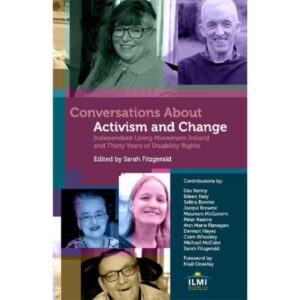
Picture of the front cover of the book "“Conversations About Activism and Change”

Based on a podcast series capturing the voices of disability activists from across Ireland and edited by Sarah Fitzgerald a disabled author, this book is authentic in every aspect of its creation and a true oral history of the disability rights movement. The book was launched on the 5th of May 2023 which is also European Independence Day.

Sarah Fitzgerald Author “Activism is not easy, it’s a commitment, and I wanted to know what motivated a whole generation of disabled people to come together and change things.”

Conversations about activism and change is the first step in proudly reclaiming some of the narrative of the societal changes that disabled people have brought about in Ireland, and ways that disabled people are leading change in the 21st Century. Featuring pieces from eleven disabled activists, Conversations About Activism and Change is a unique book capturing the voices of disabled people and their Movement for Change.

ILMI’s Vice Chair Selina Bonnie said “Ireland is a land of storytellers but until now, most of the Irish disability rights movement’s stories have only been shared orally, transmitted mainly from activist to activist, or have been lost when treasured comrades have passed.”

The journey for disabled people’s equality in Ireland pre-dates the formation of ILMI and much has been achieved by disabled people in making Ireland more inclusive. However, much of that memory hasn’t been documented or recorded and many of the projects, campaigns and actions led by disabled people are often unknown by younger disabled people looking to further advance their rights. This book is part of reclaiming that “hidden history” about the struggle for the liberation and self-determination of disabled people in Ireland. Des Kenny ILMI’s Chairperson said “Disability rights are now an obligation to be implemented by the State since Ireland ratified the United Nations Convention on the Rights of Disabled People in 2018.” Jacqui Browne ILMI Board member added “This book provides an insight into the experiences and issues that disabled people went through and It also presents an opportunity for younger disabled people to keep the torch alight”

Book: Published by Martello Publishing, this book will be available to buy or order in all good bookshops  https://linktr.ee/ilmiconversations

Conversations About Activism and Change was edited by Sarah Fitzgerald, and features a foreword by Niall Crowley with contributions from Des Kenny, Eileen Daly, Selina Bonnie, Jacqui Browne, Maureen McGovern, Peter Kearns, Ann Marie Flanagan, Dermot Hayes, Colm Whooley, Michael McCabe and Sarah Fitzgerald

Published by Martello Publishing

– ISBN 9781739608606
– €12.95 RRP

Mar 072023
 
DPAC Logo with text underneath "Disabled People Against Cuts" and then web address dpac.uk.net

For International Women’s day we are re-posting the following article written by DPAC member Saliha Rashid originally posted here: Impact of gender-based violence on the mental health of disabled women (womensaid.org.uk)

A new outlook: shining a light on the impact of gender-based violence on the mental health of disabled womenBy survivor and campaigner, Saliha Rashid

Disabled women are nearly three times more likely to experience domestic abuse (including honour-based abuse), in comparison to non-disabled women, according to data from the Office for National Statistics. Shockingly, in the majority of cases, the perpetrators are those who supposedly care for and love these women the most. Many victims are subject to various forms of abuse for long periods of time, which leads to feelings of worthlessness, isolation, and low self-esteem. Yet the impact upon the mental health of disabled survivors is rarely spoken about and is an area which is extremely under-researched.

For many disabled women, the abuse they endure is compounded by their disability or health condition. This may include physical abuse such as taking away their walking aids or moving them out of reach, withholding medication, and physical violence. Psychological abuse includes taunts related to having a disability, being made to feel incapable, and being told that you will not amount to anything. It may also include financial abuse –through withholding their money/benefits. This often coincides with controlling behaviour, including not being allowed to leave the house, and having day-to-day activities monitored. Dangerously, perpetrators will often argue that they are protecting the victim and acting in their best interests, resulting in women not being believed by professionals when seeking help. This exacerbates the feelings of isolation and entrapment, as well as feelings of worthlessness.

In September this year, I was invited to a weekend in the beautiful Lake District — my favourite place on earth! This was not just any weekend; it was a weekend volunteering with the Outlook Trust — a charity founded by teachers from the school I attended when I was a child. The charity provides short breaks for young people who are visually impaired, like me. For the weeks leading up to this, I felt child-like excitement and joy at the prospect of water sports, something I always felt when I was young. Sadly, as a teenager, this wonderful activity was taken away from me.

Coming from a community that upholds an honour system, my life drastically changed during my teenage years, when I was seen as a woman – and no longer a girl – in the eyes of my community. An honour-based system is one that is particularly used to control the behaviour of women and girls within families, to protect supposed cultural and religious beliefs, values and social norms in the name of ‘honour’. Consequently, everything in my life was restricted, so that everyday things that people take for granted – from going out with friends, to the time I went to bed and the books I read – were under constant scrutiny. More significantly for me, being prevented from going on school trips had a detrimental impact upon my mental health. Whilst my peers would excitedly relay what they got up to during these trips, I would listen enviously. I lost my self-confidence during this time, and, for many years, I forgot what it meant to have fun. I look back at my teenage years as the most isolating period of my life.

During my teenage years, I would reach out to my teachers about the abuse I was experiencing at the hands of my own family, some of whom believed me, but were powerless to take action. However, the response from other staff members was not so positive, they thought that I was exaggerating my circumstances.

When I reached out to other organisations, they did not know how to support a disabled person. I felt trapped, and like there was no way out.

It takes tremendous bravery and courage for all women and girls to take steps to leave an abusive situation. Disabled survivors face additional barriers, such as inaccessible refuge accommodation—less than 10% of refuges are accessible to disabled women. Accessing necessary care and support also takes time, and often requires women to relocate, resulting in women feeling isolated in an unfamiliar town or city. This is in addition to the continued abuse faced by survivors, often lasting for many years after leaving a relationship. Other survivors lose their whole family overnight, and are forced to build their lives back up, miles away from everything they have known. All these factors negatively impact the mental wellbeing of survivors, and in many cases, lead to feelings of anxiety and depression.

It took me three attempts to leave behind my abusive home environment and gain independence. I made two attempts to leave during my late teenage years, and returned home each time, due to the lack of support available to me. I finally left in 2012 whilst at university, and didn’t look back. I am extremely fortunate to have rebuilt my life – it has taken a huge amount of healing and self-reflection. For me, becoming a campaigner was my therapy, and I am extremely lucky to have been given the platforms to speak out. Finally, it is of great significance to me that I am now involved with the Outlook Trust, the same charity that I was prevented from accessing, with the aim of empowering young people to embrace this adventure we call life.

[Image Description: Saliha is sat in a rubber boat, she is wearing a life jacket]
Feb 032023
 
DPAC Logo with text underneath "Disabled People Against Cuts" and then web address dpac.uk.net

Centre for Applied Philosophy, Politics and Ethics

Interventions in Disability Politics

This year CAPPE is hosting a series of monthly online talks on disability politics. These will take place on Wednesday evenings 6pm-7.30pm. Please contact z.sutherland@brighton.ac.uk with any accessibility requirements.

You can join this month’s talk using the Zoom link below:

https://us02web.zoom.us/j/83648886512?pwd=cGdXVGpPVFhMSUtvd2VMYWkyczFLZz09

Meeting ID: 836 4888 6512

Passcode: 859591


Wednesday 8th February:

Lucy Burke, ‘Genetic Fictions: Imagining Disabled Lives in Contemporary Debates about Prenatal Diagnosis’

This talk will explore the complex entanglement of new reproductive technologies, genetics, health economics, rights-based discourses and ethical considerations of the value of human life with particular reference to representations of Down’s syndrome and the identification of trisomy 21. Prompted by the debates that have occurred in the wake of the adoption of non-invasive prenatal testing (NIPT), the talk will consider the representation of Down’s syndrome and prenatal testing in bioethical discourse, feminist writings on reproductive autonomy and disability studies and in popular fiction. Burke will argue that the conjunction of neo-utilitarian and neoliberal and biomedical models produce a hostile environment in which the concrete particularities of disabled people’s lives and experiences are placed under erasure for a ‘genetic fiction’ that imagines the life of the ‘not yet born’ infant with Down’s syndrome as depleted, diminished and burdensome.


Lucy is a Principal Lecturer in the Department of English at Manchester Metropolitan University. She specialises in the areas of critical medical humanities, literary and cultural disability studies and critical and cultural theory. Her research considers representations of dementia and cognitive disability in contemporary literature, life writing and film. She is also interested in cultural representations of disability more generally and in the impact of new medical technologies on the ways in which we think about ourselves and others.


 Posted by at 23:44
Jan 182023
 
DPAC Logo with text underneath "Disabled People Against Cuts" and then web address dpac.uk.net
As a family doctor soon to have been in my practice for 20 years, I can only recall a single conversation with a fearful and terminally ill patient who asked whether ‘I could help to speed things along’. After further discussion it became clear his motivation was to spare emotional distress for his family of a long decline death and not wanting to be a burden. Thankfully he was reassured by my explanation of the palliative care services and support available to him and his family when needed. I strongly oppose the concept of assisted dying because there is a great risk that the patient’s decision is shaped by many external factors including the sense of guilt and anticipation of suffering. Modern palliative care strives to prevent suffering and ensure a peaceful death and I do not recall any of the patients I have cared for over the last two decades experiencing a bad death or going without support.
The wider political context is also worth consideration. Right wing governments as we have had in the United kingdom for the last forty years have widened inequality and removed social safety nets by defunding public services. The value for human life has been cheapened and policies open to abuse. Lord Prem Sikka in December 2022 outlined the devastating impact of over a decade of austerity and the cost of human life in terms of excess death totalling around 500,000 made up largely of the most disadvantaged in society. Introducing legalised assisted dying normalises the concept and risks tempting the sick into an act previously not available through guilt for carers or financial hardship. The introduction of the welfare state and the National Health Service in 1948 saw a steep decline in suicide rates of elderly and sick people who now had hope their suffering could be ameliorated.
Our fight should be for better funding and access social services, restoration of benefit payments and high-quality public services but not legal changes capable of being used by the same sociopathic political class who erode quality of life, impoverish and finally nudge people into opting for the escape of early state assisted death.
Dr Bob Gill
MRCGP, DRCOG, DFFP, PGCer
Jan 132023
 
DPAC Logo with text underneath "Disabled People Against Cuts" and then web address dpac.uk.net

Centre for Applied Philosophy, Politics and Ethics 18th Annual Interdisciplinary Conference

8th, 9th, 10th September 2023

Online

Over the past decade, the cumulative brutalities of various crises, austerity measures and
organised abandonment through the Covid-19 pandemic, have pushed disabled people and
activists in many parts of the world to re-assess theories of disability, and reflect upon their
respective histories of political struggle. From Europe and the USA, to Southern Africa and
Central America, disabled people are scrutinising assumptions about the relationship between
disability, and disabled people’s movements, to capitalist nation states, welfare regimes,
labour markets, political parties, and justice systems. Processes of disablement, and the
alliances necessary for their overcoming, have, once again, become the focus of practical
discussion and collective action.

This opens the possibility for a renewed research programme for disabled people and their
allies; where political struggle and committed research can mutually inform transformative
practice, and where discursive or scholarly boundaries are elided. In the hope of furthering
such a programme, we invite presentations addressing the following, and related, questions:
– What is disability/disablement?
– What is the relationship between disability, capitalism and the state – historically and
currently?
– What are the key issues facing disabled people today – locally, regionally, globally?
– Which contemporary movements, campaigns or protests – around disability, race,
gender, sexuality – can inform our conceptions of disability politics and theory?
– Which theories or concepts can be imported/adapted from analyses of other social
movements?
– Do we need to revise longstanding analyses of ‘medicalisation’ in the construction of
disablement in the face of retreating welfare states, the global pandemic and shifting
institutional control?
– How can we construct a theory of disability that avoids ontological essentialism?
– What can a renewed disability theory and politics learn from recent analyses of
disablement in critical political economy, labour history, and social movement
theory?

We recognise that disabled people continue to be left out of debates that directly concern
them, in the academy, as much as any other part of our social world. We thus particularly
encourage disabled people, and disabled activists, to submit abstracts. If you identify as
disabled, neurodivergent, D/deaf, Mad or distressed, note this in your abstract.
300-word proposals for papers (20 mins), or panels (3 papers) should be sent to
cappe@brighton.ac.uk by 1
st May.

If you have any general questions about the conference, or any accessibility requirements,
please contact the organisers: z.sutherland@brighton.ac.uk or lukebeesley@outlook.ac.uk

Jan 132023
 
DPAC Logo with text underneath "Disabled People Against Cuts" and then web address dpac.uk.net

The Health and Social Care Committee has launched a new inquiry to examine different perspectives in the debate on assisted dying/assisted suicide.

The inquiry will explore the arguments across the debate with a focus on the healthcare aspects of assisted dying/assisted suicide. It intends to consider the role of medical professionals, access to palliative care, what protections would be needed to safeguard against coercion, and the criteria for eligibility to access assisted dying/assisted suicide services. MPs will also look at what can be learnt from international experiences.

Evidence sessions are expected to begin in the new year 2023. MPs will make their recommendations to the government on the next steps in a report following the inquiry.

We urge all of our supporters to contact their MPs to explain why the present law should be retained.

[Reposted from Not Dead Yet UK website]


SUBMITTING YOUR VIEWS

If you are an individual, you can let the government know your views by completing this online form. The responses will not be published but extracts from individual responses may be quoted anonymously in our report. An Easy Read version is available upon request, please email the Committee team on hsccom@parliament.uk.

If you are submitting on behalf of an organisation or as a researcher, or wish to make a detailed submission, you can submit formal written evidence through the portal.  Please make sure your written submission is no more than 3,000 words and addresses the terms of reference below.  Your submission does not have to answer every question; it can focus on as many or as few as you want.

  1. To what extent do people in England and Wales have access to good palliative care? How can palliative care be improved, and would such improvements negate some of the arguments for assisted dying/assisted suicide?
  2. What can be learnt from the evidence in countries where assisted dying/assisted suicide is legal?
  3. What are the professional and ethical considerations involved in allowing physicians to assist someone to end their life?
  4. What, if any, are the physical and mental health criteria which would make an individual eligible to access assisted dying/assisted suicide services?
  5. What protections could be put in place to protect people from coercion and how effective would these be?
  6. What information, advice and guidance would people need in order to be able to make an informed decision about whether to access assisted dying/assisted suicide services?
  7. What capabilities would a person need to be able to consent to assisted dying /assisted suicide?
  8. What should the Government’s role be in relation to the debate?

Terminology

The Parliamentary Office of Science and Technology briefing note on assisted dying defines the term as follows:

“Assisted dying refers here to the involvement of healthcare professionals in the provision of lethal drugs intended to end a patient’s life at their voluntary request, subject to eligibility criteria and safeguards. It includes healthcare professionals prescribing lethal drugs for the patient to self-administer (‘physician-assisted suicide’) and healthcare professionals administering lethal drugs (‘euthanasia’). It is an offence (in England and Wales) to assist or encourage another person’s suicide under section 2(1) of the Suicide Act 1961. Euthanasia is illegal across the UK under the Homicide Act 1957 and could be prosecuted as murder or manslaughter.”


ABOUT THE ISSUES

Not Dead Yet UK resources including Frequently Asked Questions and videos – Resources – Not Dead Yet UK

Article by Jamie Hale in The Guardian – We are told we are a burden. Legalising assisted suicide would further devalue our lives | Jamie Hale | The Guardian


Jan 112023
 
DPAC Logo with text underneath "Disabled People Against Cuts" and then web address dpac.uk.net

Interventions in Disability Politics

This year CAPPE is hosting a series of online talks on disability politics. All are welcome. The talks will take place every 4-6 weeks on Wednesday evenings 6pm-7.30pm. Please contact us if you have any accessibility requirements: z.sutherland@brighton.ac.uk

Wednesday 18th January:

National Coalition for Latinxs with Disabilities

Zoom link to join webinar: https://us02web.zoom.us/j/85893421054?pwd=VkpiNUVZZTBxSVJEbkhrM3hPelIrQT09

Meeting ID: 858 9342 1054

Passcode: 068631


It has been over 30 years since the passage of the ADA, but it has only been within the last decade that disabled Latinxs are becoming more visible and demanding disability justice. According to a 2016 national telephone survey conducted by the Behavioral Risk Factor Surveillance System (BRFSS), 61 million adults identified as having some type of disability, which means that 1 out of 4 people have a disability in the U.S. When we look at the 2010 census, 1 out of 6 people are Latina/o. Looking at the BRFSS data from 2016 to 2018 and comparing the Latino population with the rest of the country, there are now 11.8 million Latinas/os who identify with some type of disability— the two most frequent disability types being mobility impairments (15.5%) and cognitive impairments (13.3%). Although both the number of Latinxs, people with disabilities, and disabled Latinxs are increasing, we have yet to unify and position ourselves and leverage our power in the public and private sectors.


Within this context, the National Coalition for Latinxs with Disabilities (CNLD) has emerged as the first national organization whose sole mission is “to affirm, celebrate, and collectively uplift Latinxs with dis/abilities through community building, advocacy, protection of rights, resources, and education.” In this webinar hosted by the Centre for Applied Philosophy, Politics and Ethics: Interventions in Disability Politics, we will discuss the purpose and goals of CNLD, its growing pains, its importance within the current U.S. sociopolitical climate, and the intersection of Latinidad, language, and disability identity.


Other talks in this series:


8th February – Genetic Fictions: Imagining disabled lives in contemporary debates about prenatal diagnosis – Lucy Burke.

Lucy is a Principal Lecturer in the Department of English at Manchester Metropolitan University. She specialises in the areas of critical medical humanities, literary and cultural disability studies and critical and cultural theory. Her research considers representations of dementia and cognitive disability in contemporary literature, life writing and film. She is also interested in cultural representations of disability more generally and in the impact of new medical technologies on the ways in which we think about ourselves and others.

15th March –– The Centrality of Disablement: Subjectivation to the Reproduction of Capitalist Social Relations. Ioana Cerasella Chis.

Ioana is a doctoral researcher at the University of Birmingham within the Department of Political Science and International Studies. She is interested in social & political theory; the philosophy of technology, and the politics of work and disablement.


5th April – “Co-Operation For Liberation? Disabled People And Co-Ops In The UK” https://www.isrf.org/2022/10/14/co-operation-for-liberation/ – Steve Graby.

Steve Graby is an independent scholar-activist in the field of Disability Studies and the Disabled People’s Movement. Their PhD thesis, ‘Personal Assistance: The Challenge of Autonomy’, led to their current ISRF-funded research project on disabled people’s involvement in co-operatives (of all kinds) in the UK. Their other research interests include neurodiversity, the social model of disability and its intersections with queer and trans-inclusive feminist theory, anarchism and psychogeography.


3rd May – The intersections of art and labour – Sophie Carapetian.

Sophie is an artist whose work seeks to interrogate the relation between art and capital through reflections on labour and wage struggles within the arts economy.


7th June – Disability and migration – Rebecca Yeo. Rebecca is a Senior Research Associate (ESRC Postdoctoral Fellow) within the School of Sociology, Politics and International Studies at the University of Bristol.

Her research interests are centre around experiences of disability and forced migration in the UK, and exploring how intersectional injustices could be addressed. She is currently undertaking a research project on ‘Refining and promoting a ‘social model of asylum’ as a tool to transform responses to disability and forced migration in the UK’.


5th July – Disabled People, Labour Markets and Exploitation in the late 20th Century – Kirstie Stage.

Kirstie’s thesis examines the labour and livelihoods of disabled people between 1970 and 2015, investigating the mechanisms through which disabled people expressed, understood, and engaged with important issues within their social and professional lives.

 Posted by at 00:13
Jan 112023
 
DPAC Logo with text underneath "Disabled People Against Cuts" and then web address dpac.uk.net

This call is for expressions of interests and for papers to be delivered at an online seminar once a month throughout 2023 (with the possibility of an in-person event in the summer. It seeks to build a collection of contributions that could form an edited collection, with an international publisher already showing initial interest. There has been significant rapprochement between Marxism and identity focused politics at the beginning of the 21st Century, with social reproduction, racialised capitalism and queer Marxism amongst those initiatives that provide a critical foundation for contemporary theory, politics and struggle.

Disability studies developed in an uneasy relationship with Marxism, though many of its founding figures draw from Marxist influences (Mike Oliver, Lennard J Davis, Margaret Shildrik, Fiona Campbell, Tanja Aho, David Mitchell and Sharon Snyder) or identify directly with Marxist approaches (Marta Russell, Staffan Bengtsson, Roddy Slorach, David Matthews).

At the same time, disability studies have developed its own distinctive critiques, including radical iterations such as crip theory (Robert McRuer, Simi Linton, Dan Goodley, Shelley Tremain, Gregor Wolbring, Alison Kafer) and critical disability studies.

The purpose of this initiative is to explore how disability and Marxist analyses create fruitful bases for an inclusive, creative, and critical approach to the inequalities, alienation, and oppression of disabled people under contemporary capitalism, as well as to the central place of disability politics within working-class and anti-capitalist struggles.

We welcome contributions cross and trans-disciplinary in nature, drawing from all Marxist traditions and strands of disability theory and focused on both philosophical/theoretical and political/empirical questions.

We very much welcome work in progress.

We are looking, specifically, for two types of contribution:

1.Willingness to give a paper at the seminar series online

2.Willingness to attend sessions each month in order to build a critical mass of intellectuals and activists (we regard the division as porous) engaged with the subject matter.

Please send expressions of interest in the project to arianna.introna@open.ac.uk. We will compile an email list who will receive notifications of monthly seminars and the programme of papers. These expressions of interest might include titles and 250-word abstracts of contributions to the seminar series. Each seminar will be 90 minutes with 45 minutes for papers and 45 minutes for discussion.

Arianna Introna – arianna.introna@open.ac.uk

Paul Reynolds – paul.reynolds@open.ac.uk

Jan 082023
 
DPAC Logo with text underneath "Disabled People Against Cuts" and then web address dpac.uk.net

Join us in London or call a protest in your local area

Saturday 11 February, Assemble 12 noon
Department of Levelling Up, 2 Marsham St, London SW1P 4DF

  • Rent Freeze Now! – Service Charge Freeze Now! – Stop the Evictions!
  • Demand the Government funds a rent freeze!

As the social emergency intensifies, more and more of us find it harder to cover the basics – living on poverty wages and inadequate benefits. In many places rents are rising faster than inflation, private landlords force prospective tenants to pay for viewings and tenants in social housing are faced with a 7% rent rise in April 2023. We came together to protest at the Department of Levelling Up in October and we supported the London Renters Union and Greater Manchester Tenants Union on their Rent Freeze Day of Action on 3 December.

Homes for All invited housing groups and trade unions to a Round Table to talk about what we could all do next. We were joined by representatives from Defend Council Housing, Social Housing Action Campaign (SHAC), Grenfell Community Campaigners, UNISON, the New Economics Foundation (NEF), UNITE Community, Action on Empty Homes, Fuel Poverty Action, University of Manchester Rent Strike, Southwark Group of Tenants Organisations (SGTO), Disabled People Against Cuts (DPAC), NASUWT, Deputy Leader of Islington Council, Labour Campaign for Council Housing and others.

The group agreed to call a Day of Action on 11 February 2023 to demand a rent freeze and call attention to associated housing issues such as poor conditions, mould, reduced services and fire safety. A letter has been written to Michael Gove, Secretary of State for Levelling Up, Housing and Communities to demand that the government fund a rent and service charge freeze.

This demand builds on the example from Scotland where the Cost of Living (Tenant Protection) Act was passed on October 2022,  freezing rent until March 2023, with regulations allowing an extension until March 2024. This is a fantastic win for Living Rent Scotland, shows the impact of political pressure from the housing movement and also how the Labour Party, who proposed the policy, can support a 0% rent rise. We also welcome Sadiq Khan’s call for a rent freeze for private renters and a rent rebate for social housing which in effect is a rent freeze.

Facebook event: London Demonstration- please share

Use these hashtags: #RentFreezeNow #ServiceChargeFreeze #StopEvictions #FundRepairs

Contact us to support the rent freeze,  join the Day of Action on Saturday 11 February 2023 in London or to organise in your own area infohfanew1@gmail.com